Richard Bratby

Richard Bratby is the chief classical music critic of The Spectator

Divine comedy | 12 May 2016

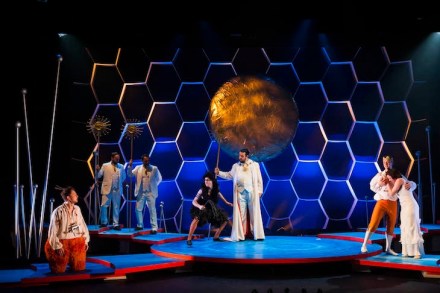
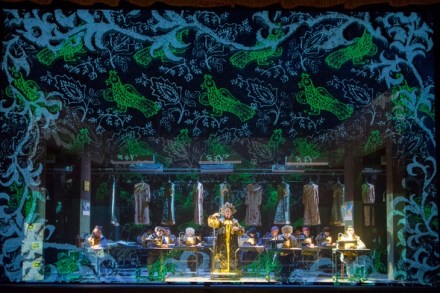
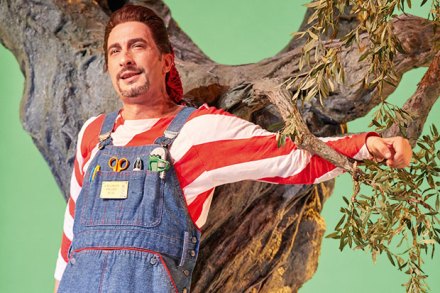
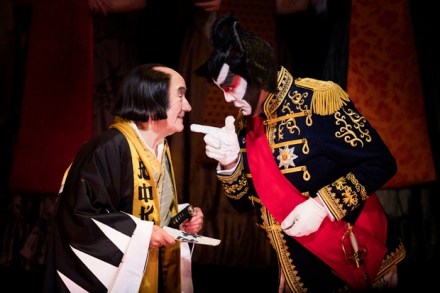
You have to be quite silly to take Gilbert and Sullivan seriously. But even sillier not to. G&S is still a litmus test for a particularly British type of operatic snobbery: ‘Is there a place for Gilbert and Sullivan in the 21st century?’ asked a Radio 3 presenter last year, about the time that ENO’s new Pirates of Penzance broke all audience records for live cinema relays in the UK. The Royal Opera, of course, won’t touch it. Which, considering how comprehensively it botched Chabrier’s L’Étoile, is probably just as well. Scottish Opera’s new Mikado is very silly indeed. Nanki-Poo (Nicholas Sharratt) simpers and lisps like Gussie Fink-Nottle. A puppet bird flaps its wings to ‘Willow, titwillow’.

The kids are all right

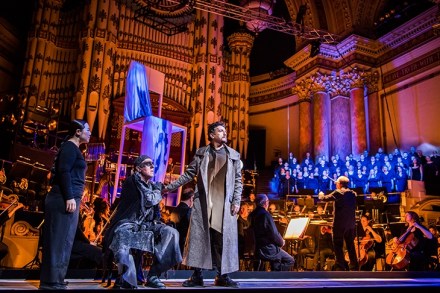
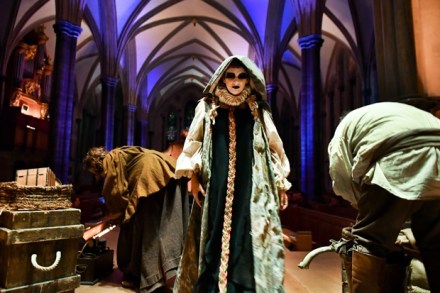
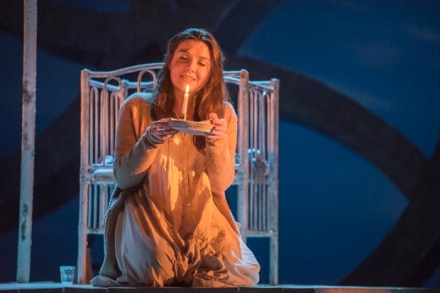
In a remote fishing village a lone figure confronts an unexplained death, standing tormented but unbroken against fate, the community and the elements of sea and wind that surge through every note of the score. No, not Peter Grimes: this is Vaughan Williams’s 1932 operatic setting of Synge’s Riders to the Sea. But Vaughan Williams’s operas are undramatic, runs the received wisdom. There were no great British operas between Purcell’s Dido and Aeneas and the premiere of Grimes in 1945, we’re repeatedly told. This student production of Riders to the Sea didn’t just refute those assumptions: it threw them into a riptide and watched them being dragged under and swept away.

Excess baggage

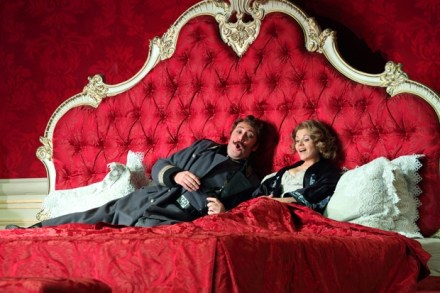
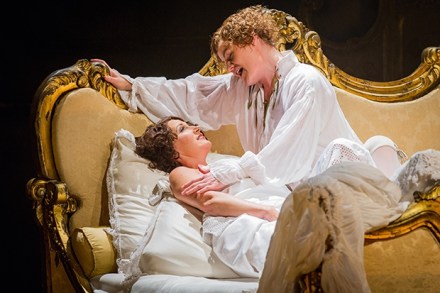
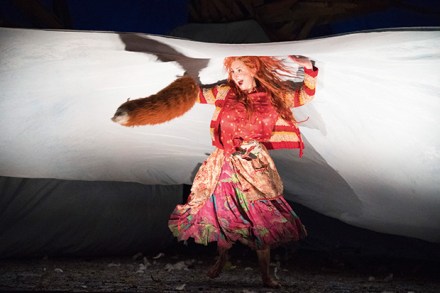
Near the end of Elena Langer’s new opera Figaro Gets a Divorce, as the Almaviva household — now emigrés in an unnamed 1930s police state — prepares to flee, the Countess announces that she intends to leave her trunk behind. It’s not the subtlest moment in David Pountney’s libretto. Any opera that sets itself up as a sequel to The Marriage of Figaro is already courting comparisons that are both completely unavoidable and massively unfair. When the production of Figaro is as good as this one, that baggage can become so heavy that it’s immovable.

Mozart magic | 11 February 2016

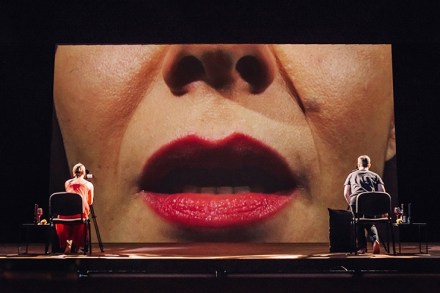
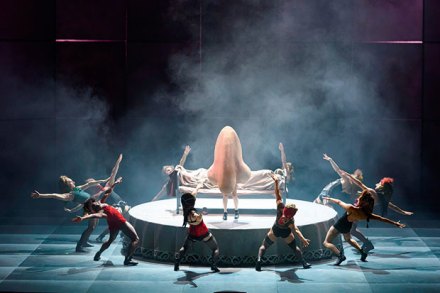
Centre stage, there’s an industrial-looking black platform, secured by cables. The Three Ladies snap the unconscious Tamino on a mobile phone. The Three Boys look like Gollum in a fright wig. And Papageno, dressed as an ageing vagrant, simulates urination (at least I hope that’s what it was) into an empty wine bottle. Simon McBurney’s production of The Magic Flute could have been designed to raise the collective blood pressure of Against Modern Opera Productions, the Zeffirelli-worshipping Facebook group that’s opera’s equivalent of the Mail on Sunday letters page.

Double trouble | 7 January 2016

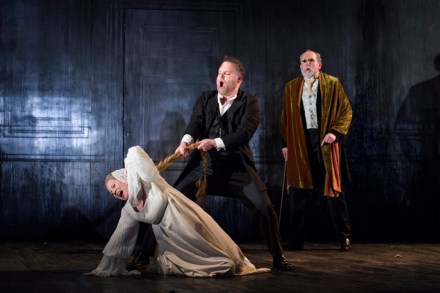
It’s scene five of Kasper Holten’s production of Tchaikovsky’s Eugene Onegin and Michael Fabiano’s Lensky is alone with a snow-covered branch and his thoughts. Well, not quite alone. At the other side of the stage stands the man he is about to face in a duel: his friend Onegin, who’s apparently arrived ahead of the appointed time and is listening to every word of Lensky’s anguished soliloquy. Except he isn’t: this is the Onegin of the present, looking back on a tragedy in his past. Or possibly imagining it? He can’t, after all, have heard Lensky’s words, for the practical reason that he wasn’t there. Can he? Oh, is that applause? The aria’s over.

Lost in translation | 3 December 2015

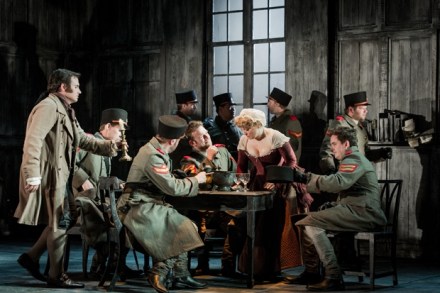
About 15 minutes into act one of Jenufa, the student in the next seat leaned over to her companions and whispered, ‘They’re singing in English!’ And so they were, in Otakar Kraus and Edward Downes’s translation. Janacek was obsessed with the shapes and intonations of speech; for a non-Czech speaker, a first-rate singing translation is really the only way to make Jenufa strike home with anything like the immediacy and realism he intended. But even with surtitles, the effort is useless if — as was the case throughout much of act one of this performance by Opera North — the singers are almost inaudible. It might have sounded clearer in the circle. From the front stalls, however, the situation was impossible.

Stravinsky’s ingenious toy

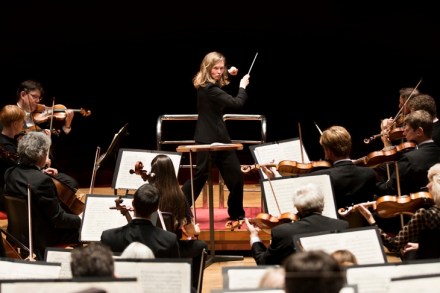
Is Stravinsky’s The Rake’s Progress anything more than an exercise in style? ‘I will lace each aria into a tight corset,’ Stravinsky told Nicolas Nabokov, and for most of three acts that’s pretty much what he does, deftly fitting W.H. Auden and Chester Kallman’s libretto to a steadily chugging parade of his smartest, pertest neoclassical tricks. The motor-rhythms, the acid harmonies, the borrowings from Mozart, Rossini and Handel: it’s all brilliantly accomplished and supremely knowing. In small doses, it’s appetising enough, and even at full length there’s much to enjoy — especially when played with the relish that Sir Andrew Davis and the Scottish Chamber Orchestra brought to this concert performance.