Richard Bratby

Richard Bratby is the chief classical music critic of The Spectator

Sugar rush | 7 December 2017

To get a flavour of Joseph Marx’s An Autumn Symphony, picture the confectionery counter in a grand Viennese café. Beneath the glass lies sweetness beyond imagining: towers of sponge cake, billows of whipped cream, and icing that shines red and orange. You wander down the display: there are Sachertortes, petits fours, candied angelica and glacé cherries. It goes on — dark chocolate glints over golden pastry and pink marzipan cushions swell beneath tangles of spun sugar. At which point you realise that what you really want is an espresso and a bread roll. And it looked like it would be such a treat, too.

Inviting Jansons to the Barbican was like pouring vintage Pol Roger into a throwaway plastic cup

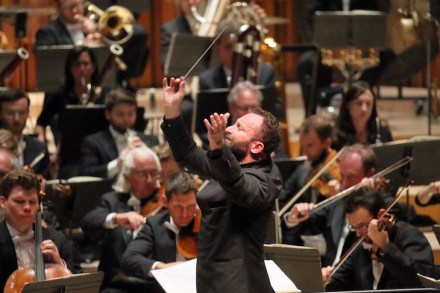
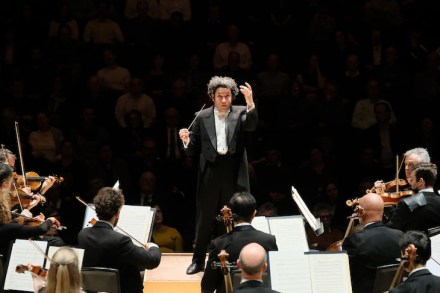
Bavarian Radio Symphony Orchestra / Mariss Jansons Barbican NDR Radiophilharmonie Hannover / Andrew Manze Symphony Hall At the end of Prokofiev’s Fifth Symphony Mariss Jansons asked the Bavarian Radio Symphony Orchestra to stand up, and they refused. That’s not something that occurs in every concert; in fact, you might never see it happen. But this act of low-key mutiny is about the highest tribute an orchestra can pay to a conductor – to decline credit for the applause, handing it over in its entirety to the old maestro standing in their midst, looking shattered. A few moments later, Mitsuko Uchida presented Jansons with the Gold Medal of the Royal Philharmonic Society, but that gesture from the band was the real accolade.

Talking down to God

‘There is something enviable about the utter lack of inhibition with which Leonard Bernstein carries on,’ wrote the critic of the Boston Globe after the US première of Bernstein’s Third Symphony, Kaddish, in February 1964 — and looking at the forces arrayed at the Barbican, he had a point. In addition to the full LSO there was the London Symphony Chorus, a narrator, a solo soprano and the Tiffin Boys’ Choir. It barely fitted on stage. And if you thought the set-up was extravagant, a glance at Bernstein’s self-written text would probably have sent you screaming from the hall. ‘Lenny’ was classical music’s original bleeding-heart superstar: the man for whom Tom Wolfe coined the phrase ‘radical chic’.

Hearts and minds | 9 November 2017

Debussy’s Prélude à l’après-midi d’un faune begins with a sigh: a long, languorous exhalation played on the lower notes of a solo flute. The flute’s usual brightness and brilliance is gone. It’s a dusky, breathy sound, made of half-shades and velvet: the musical embodiment of luxe, calme et volupté. And it’s completely impossible to imitate on a piano. Not so much because of the tone-colour — the best pianists can create wonders — but because no piano in existence can play an unbroken melody. Wind and string players, like singers, produce and control a near-continuous stream of sound. A piano, though, is essentially a box of hammers. It hits notes, and then they decay.

Irish ayes | 26 October 2017

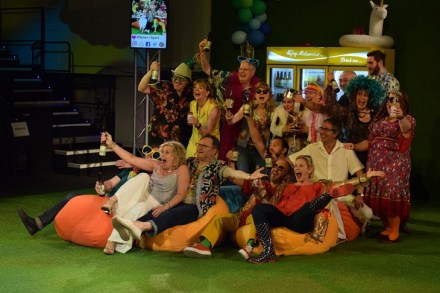
Luigi Cherubini is the pantomime villain of French romantic music. As head of the Paris Conservatoire in the 1820s he was the embodiment of obsolescence: Berlioz’s Memoirs recount an occasion when some state functionary told the ageing master that he should really write an opera. ‘One can dimly imagine the indignant consternation of the author of Medea, Les deux journées, Lodoïska, Mont Saint-Bernard…’ writes Berlioz with twinkling malice, though most modern operagoers, if they’re honest, won’t be any wiser. The one exception is Medea, which has never quite dropped into obscurity. Fiona Shaw’s new production at the Wexford Festival shakes it brusquely back to life. We’re at a hen party at a day spa.

Mad Men – The Opera

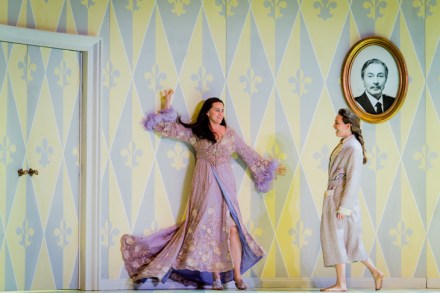
Leonard Bernstein’s Trouble in Tahiti begins not with a prelude, but a jingle. In Matthew Eberhardt’s production a trio of session singers clusters around a studio microphone. A clarinet throws out a slinky riff, the ‘On Air’ light blinks on, and they’re off: a swinging hymn to postwar suburbia, in Andrews Sisters close-harmony. Then we see a scene familiar from a hundred sitcoms and movies: all-American domesticity, 1950s-style. Clean-cut Sam is in his business suit, his prettily dressed wife Dinah fixes breakfast, and Junior scampers about in a cowboy costume. Bernstein establishes his world instantly, and Eberhardt sets it up with a deft touch. This is basically Mad Men — The Opera. So you know the deal.

Pole position | 5 October 2017

Did you know that they used to make the Fiat 126 in the Eastern bloc? They did, apparently. There was a plant at Bielsko-Biala, and the car was widely driven throughout Poland in the 1970s, when you only had to wait a couple of years to buy one. It became an emblem of personal freedom, and Poles even gave it a nickname: Maluch, or ‘little one’. That’s the principal insight that I gleaned from director Karolina Sofulak’s decision to set Cavalleria rusticana in communist Poland. She explains her thinking in the programme book: essentially, 19th-century Sicily was Catholic and repressive, and 1970s Poland was Catholic and repressive, so why not? Cue the latest one-size-fits-all operatic design cliché — fastidiously rendered depictions of 1970s squalor.

The sound of no hands clapping

‘We’re going to live for ever!’ declares Robert Powell as Gustav Mahler at the end of Ken Russell’s 1974 biopic. We’ve just had the big reveal (Russell said it ‘out-Hollywoods Hollywood’) in which Mahler admits to his young wife Alma that she inspired the lyrical theme in the first movement of his Sixth Symphony. It’s a tale for which the only source is Alma herself, but hey, over the course of the movie we’ve already had exploding garden sheds, interpretative dance and Cosima Wagner in fetish gear. Russell cues the music, and few film-makers have understood better how to cut to a composer’s emotional core. As the credits roll, the first movement of Mahler’s Sixth blazes triumphantly to its close, glockenspiel jangling.

Viennese whirl

‘First performance: Vienna, October 3, 1880’ declares the programme for Opera della Luna’s new production of Johann Strauss’s The Queen’s Lace Handkerchief. ‘First British Performance: Wilton’s Music Hall, London, August 29, 2017’. They’re not joking: this really is the first full UK staging of the Waltz King’s single most successful (in his lifetime, anyway) operetta. It’s a major event, and the director Jeff Clarke duly follows up with one of those quasi-academic articles that you get in programme books at big opera houses explaining how La bohème predicted Mussolini, or whatever. Still kept awake at night by the liberal reform agenda of Crown Prince Rudolf of Austria-Hungary?

Twin peaks | 24 August 2017

Schoenberg began Gurrelieder in 1900, but he didn’t hear it until 1913. By then, he’d moved on, and he ostentatiously refused to acknowledge the applause for what (as it turned out) would be the greatest public triumph of his career. Radical artist snubs ignorant masses: it’s a gesture that could stand for much of classical music’s post-1913 history. Even today, you won’t get far into a discussion with contemporary music buffs before someone declares that concertgoers need to be ‘educated’. Which always reminds me of a friend’s account of the night at Reading when Guns N’ Roses decided to play new material instead of the hits that the audience felt they’d paid to hear.

Wilson’s sparkle and snap

Back in the period-instrument wars of the 1980s and ’90s, when the forces of historically informed performance smashed out of their baroque beachhead and started to annex romantic repertoire, the insurgents split into two factions. Roger Norrington and the London Classical Players were the shock troops: their Berlioz Symphonie Fantastique, with its filthy, rasping ophicleide, exploded like a tactical nuke. John Eliot Gardiner and his Orchestre Révolutionnaire et Romantique went in later as peacekeepers, altogether smoother and more reassuring. Norrington’s discs started arguments; Gardiner’s won awards. As an A-level music student drunk on the hot-blooded idealism of Berlioz’s Memoirs, I was certain which one the composer would have preferred.

Classy and classic

The Edinburgh International Festival began with a double helping of incest. Curiously, Greek — Mark-Anthony Turnage’s East End retelling of the Oedipus myth, which was greeted with universal acclaim at its premiere in 1988, and which has gone on to be one of British opera’s biggest export success stories — was tagged on the Festival website as being suitable for ‘risk takers’. Whereas Wagner’s Die Walküre — which ends its first act in ecstatic celebration of a sex act so transgressive that even in 2017 it can draw appalled gasps from an audience — was described as being ideal for ‘traditionalists’. Bizarre. Perhaps brothers and sisters sleep together all the time in Morningside; I couldn’t say.

Strong stuff

The strings sweep upwards, the horns surge, and Leoncavallo’s Zaza throws itself into your arms. We don’t know it yet, but we’ve just heard the drama’s focal point: what David Lynch would call its ‘eye of the duck moment’. The same music recurs near the end of Act One, as the fumbling attempts at seduction of the small-time showgirl Zaza finally come good, and she locks lips with Milio Dufresne, the Parisian dandy who she imagines will take her away from the seedy, bustling demi-monde that we see laid out around her.

Hadyn recreated

‘Rarely, rarely, comest thou, Spirit of Delight!’ wrote Elgar, quoting Shelley, at the top of his Second Symphony. He should have listened to more Haydn. Sir Simon Rattle certainly has. Rattle becomes music director of the London Symphony Orchestra in September, and for the last concert before their union becomes official, he’d trawled through Haydn’s immense back-catalogue to assemble an unbroken 55-minute sequence of orchestral movements from Haydn’s symphonies, oratorios and half-forgotten operas.

Let there be light | 13 July 2017

If you’ve never heard the John Wilson Orchestra, it’s time to experience pure happiness. Buy their 2016 live album Gershwin in Hollywood — seriously, just do it. Play the first track: a medley arranged by Ray Heindorf for Warner Brothers’ 1945 Gershwin biopic Rhapsody in Blue. One by one the great melodies glide past and you’ll already know them, of course: ‘Swanee’, ‘Embraceable You’, ‘I Got Rhythm’. There’s something different, though, about the way they sound here. The brass swaggers; the strings melt and swoon. It’s a sound that most of us have only ever heard through the crackle of a vintage-movie soundtrack, or on a Capitol-era Sinatra LP. But this is fresh — in fact, it gleams.

Roll over Beethoven

If you want to see an opera director kicking a genius when they’re down — and I mean really sticking the knife in and giving it a good old twist around — Fidelio is usually a safe bet. It’s one of Beethoven’s few undisputed masterpieces in which he’s not in absolute command of his medium; instead, the sheer moral and emotional conviction of the music carries it through. Confronted with such blazing sincerity, the instinct (possibly defensive) of many modern directors seems to be to subvert, to undercut, to belittle. I haven’t seen a production of Fidelio this century that’s been content simply to help the work speak (and Fidelio does need some discreet help).

His Master’s Feet

Gerald Barry once licked Beethoven’s carpet. At least, that’s what he told me, and I’m as sure as any interviewer of Gerald Barry can be that he wasn’t pulling my leg. While showing him round a museum, a guide pointed out said floor-covering. Whereupon — Barry being Barry — he was overcome by an urge for tangible, physical contact with a relic that had, after all, once been trodden by the Master. ‘So, once everyone was out the room, I got down and had a quick lick.

Art of darkness | 15 June 2017

Brett Dean’s new opera for Glyndebourne is a big-hearted romantic comedy, sunny and life-affirming. Only joking — this is contemporary opera, after all. It’s about the usual stuff: neurosis, violence and toxic sexuality. Those seem to be the emotions most naturally suited to the language of mainstream contemporary classical music, and Dean speaks that language as brilliantly as Richard Strauss handled the idiom of an earlier generation. Whatever else this operatic adaptation of Hamlet might be, it’s a polished piece of work. That takes some doing: Shakespeare isn’t naturally suited to the opera house.

White-knuckle ride

Playing in an orchestra that disintegrates mid-concert is not an experience you forget. One moment everything’s motoring along nicely. Suddenly a harmony doesn’t quite fit, the soloist enters on the wrong beat: it doesn’t matter, because before you can work out what to do next the confusion spreads, the conductor signals frantically and with a pit-of-the-stomach lurch the floor drops out of the music and you’re all sat there facing the audience amid the one sound that no one present has paid to hear: mortified silence. The Aurora Orchestra has worked out a way to monetise that sensation. Well, maybe that’s putting it a bit cynically.

Around the horn

The concert began with a flourish and a honk. Well, of course it did. Telemann wrote his last Ouverture-Suite in F major for the Landgrave of Darmstadt. The Landgrave loved hunting, and in the 18th century hunting meant horns. And horns mean honks. If you’ve ever played the horn — applied 12 feet of coiled metal tube to your face and tried, through a combination of lip muscles and willpower, to make the damn thing sing — you’ll know that no amount of hoping, praying or practice can prevent the occasional squawk. The two excellent players in Florilegium’s concert at St John’s Smith Square, moreover, were using 18th century-style horns — without the valves and additional plumbing that render the modern beast just about controllable.