Philip Hensher

Philip Hensher is professor of Creative Writing at Bath Spa University and the author of 11 novels including A Small Revolution in Germany.

Garbriel García Márquez has been ill-served by his sons

From our UK edition

I blame Kafka. When he died in 1924, the vast majority of his imaginative work remained unpublished, including three novels and a substantial number of remarkable short stories. He left instructions, however, for Max Brod, his literary executor, that all his unpublished work should be destroyed. Brod ignored this, and brought some classics of German literature into print after the author’s death. He sensibly concluded that if Kafka had been serious about wanting his work destroyed he wouldn’t have appointed Brod as literary executor in the first place. Much of the story seems like something that floated into Márquez’s head and then drifted off The case was a good one; but it has undoubtedly had some ugly consequences.

Max Jeffery, Lisa Haseldine, Christopher Howse, Philip Hensher and Calvin Po

From our UK edition

43 min listen

This week: Max Jeffery writes from Blackpool where he says you can see the welfare crisis at its worst (01:29); Lisa Haseldine reads her interview with the wife of Vladimir Kara-Murza, whose husband is languishing in a Siberian jail (06:26); Christopher Howse tells us about the ancient synagogue under threat from developers (13:02); Philip Hensher reads his review of Write, Cut, Rewrite (24:34); and Calvin Po asks whether a Labour government will let architects reshape housing (34:42).  Produced by Oscar Edmondson and Margaret Mitchell.

It feels somehow improper to witness an author groping for the right words

From our UK edition

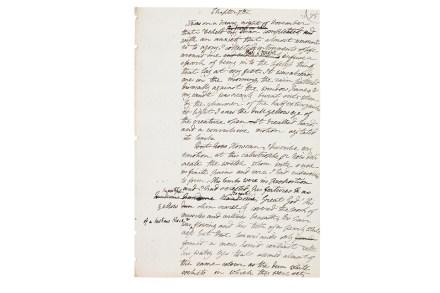
The early stages of a literary work are often of immense interest. It is perhaps a rather tawdry kind of interest, like paparazzi shots of a Hollywood starlet taking the bins out before she’s put her make-up on. Of course it’s extraordinary to think that some of the most famous characters, events and lines in literature weren’t as we now know them but had to be struggled towards. Sometimes these efforts have the anachronistic but unavoidable sense of somebody getting it wrong. Textual bibliographers have carefully classified the different steps a work takes from manuscript to first edition and subsequent versions. Perhaps we could go further in search of a writer’s progress.

The beauty – and tragedy – of our nesting swans 

From our UK edition

There won’t be any cygnets this year. The cob was on the lake this morning on his own, occasionally slapping the water, floating without any evident purpose. His last children were taken away to new homes a year ago. His mate of years, the pen, died last spring. People who live in the country always assume that no one in inner London has much idea of the seasons. But everyone who goes to the park notices some annual events. One used to be the nesting of the pair of swans, and the laying of eggs. The swans look like ballerinas to many people, but to me they always look like London policemen It’s hard not to look at some animals in your own terms, from a different species.

With Philip Hensher

From our UK edition

31 min listen

Philip Hensher is a novelist and regular contributor to The Spectator’s books pages. His books cover a variety of subjects and often deal with important historical change, such as the fall of the Berlin wall and the war in Afghanistan. His most recent novel is To Battersea Park.  On the podcast, he discusses how he developed an affection for offal as a small child, the secret to an ‘austerely perfect’ carbonara, and why food is a such a great character device for novelists.

The British Empire’s latest crime – to have ended the Enlightenment

From our UK edition

What is the Enlightenment, and when did it come to an end? Neither are easy questions to answer. The Enlightenment, as a historical phenomenon or a phenomenon of ideas, coalesced into an attempt to rid humanity of rigid superstitions and fanaticism and liberate it from tyranny of every sort. Its first movements were discernible in Europe in the 17th century, and it became a continent-wide experiment of thought in the following one. But when did it end – as the title of Richard Whatmore’s book takes for granted? There’s a good case for stating that it never came to an end. Once tyranny and religious certainty were dismissed as universal conditions of existence by the thinkers and writers who followed Voltaire, they could never be reinstated.

The shame of Ian, the lockdown pup

From our UK edition

The park we go to every day is Victorian – large, full of mock landscapes and extravagantly diverse settings, lakes, woodlands, formal gardens and tiny wildernesses. We went on a guided tour of Buckingham Palace’s gardens three years ago, and afterwards my husband said: ‘Well, it was very nice. But Battersea Park is nicer.’ Above all, it’s capacious – of different tribes, who only very occasionally meet. The woman owner was clasping her hands, and pink with shame. ‘Ian? Ian? Ian, why won’t you listen?’ It was a Sunday morning, and the anglers were in place in their sullen portable canvas caves, backs to the world, staring at the water. The lake isn’t their personal fiefdom, though; dogs are fascinated by it. Mine  will sniff at it, but never plunge in.

The brilliance of A.S. Byatt lives on in her writing

From our UK edition

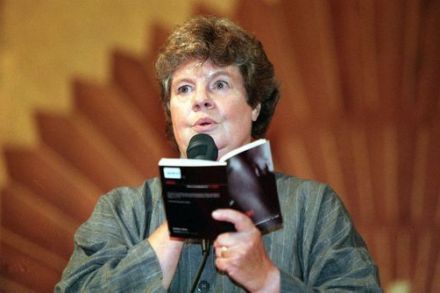
Dame Antonia Byatt, the novelist A.S. Byatt, has died after a long illness. With her goes part of the conscience of English fiction; its heart, its power to think, its capacity for feeling both wild and exact. She was one of the most generous people I ever knew.    One of the things you had to accept if you were a friend of Antonia’s was that she was interested in a lot of things that you knew nothing about. One of these, in my case, was sport. One day I dropped in on her in her house in Putney, and found her glued to the TV, bright, almost gleeful with attentiveness.

How has the Conservative party’s ‘Dr No’ escaped everyone’s notice for so long?

From our UK edition

The reason conspiracy theories are so resilient, reproducing themselves from one generation to another, is that they are unfalsifiable. Evidence against them, however solid, has obviously been faked. Anyone who tries to demonstrate that Americans did land on the moon or that J.F. Kennedy was killed by Lee Harvey Oswald is obviously in the pay of people who stand to benefit. If you ask who those people are, since there seems to be no evidence of their existence, the answer is always the same: they are very good at concealing themselves. And so the theory finds credulous punters.

How Vegemite took over the world

From our UK edition

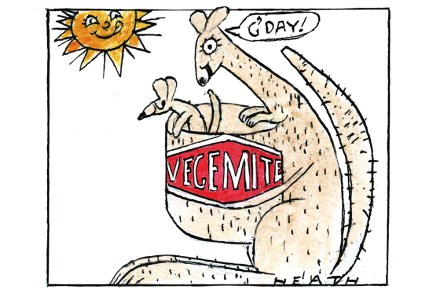
Vegemite is 100 years old. The first yeast paste, Marmite, was introduced in the UK in 1902, named after the French cooking pot; New Zealand Marmite, currently a quite different product, emerged in 1919. The mite suffix had nothing to do with might, but the association was irresistible, and Vegemite was created in Australia in 1923, to take up an apparently indelible, salty place in its nation’s dreams. The economic logic of producing and selling yeast pastes was compelling. The German chemist Justus von Liebig had discovered that waste yeast from brewing could be turned into an edible paste. If people could be made to like it – strange to say, some people still don’t – a by-product could be utilised and fortunes could be made.

Why did Jon Fosse win the Nobel Prize for literature? It’s baffling.

From our UK edition

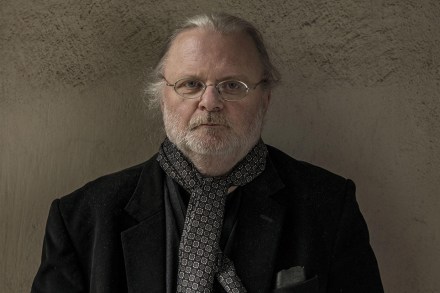
The Nobel Prize for Literature this year was awarded to the Norwegian novelist and playwright Jon Fosse (pictured). He has long been admired by anyone in the literary world keen to advertise their seriousness. The Canadian critic Randy Boyagoda, writing of Fosse’s Septology in the New York Times, said that he’d ‘come into awe and reverence myself for idiosyncratic forms of immense metaphysical fortitude’. The technique is to bury statements of mystic vision or horror in piles of mostly tiny and uninteresting events Fosse is published in Britain by Fitzcarraldo Editions, that elegant firm bringing all sorts of high-minded writers to our attention in matchy-matchy formats.

The astonishing truth about 007

From our UK edition

The novel as a form is a fundamentally capitalist enterprise. It was invented at the same time as capitalism – Robinson Crusoe tots up his situation in the form of double-entry bookkeeping. Its interests dwell on the disparate and unequal natures of human beings and feed off rivalry, social transformation, moneymaking, profit and loss. No rigid feudal society has managed to create an effective school of novelists; and having once struggled through Cement, Fyodor Gladkov’s classic of socialist Soviet literature, I would say that systems dedicated to forcible equality also struggle.

Click bait: confessions of a Lego addict

From our UK edition

The empire of Lego has many dominions and protectorates, with every year, it seems, new territories to conquer. There are theme parks; there are films of excruciatingly ironic sophistication; there are competitions to make bizarre tableaux that grip nations; there are highly controlled TV documentaries about life at the heart of Lego in Denmark. I don’t feel my life will be complete until I’ve spent a week constructing Hagia Sophia out of plastic bricks It is an astonishingly powerful brand and its growth has been extraordinary to watch. Many years ago, it was just one building toy among many, like Meccano or Fischer Technik. Now, it is supreme. Some tremors were, however, observed last week when a plunge in profits was reported.

The phoney mystics who fooled the West

From our UK edition

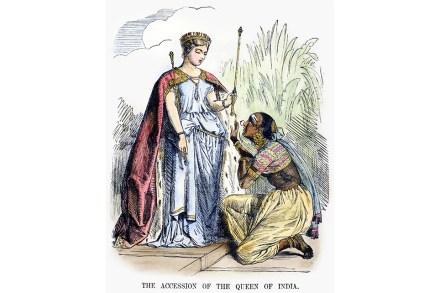
In recent years when we’ve talked about the relations between India and the West, we’ve gone back to stressing the impossibility of interchange. A hundred years ago, E.M. Forster ended A Passage to India with the certainty that Aziz and Fielding could not be friends. Forster thought things would be different after Indian independence, but the spectres of cultural appropriation and the assertion of ongoing imperialist guilt have discouraged equal exchange.  Meher’s spiritual energy was soon devoted to persuading Hollywood to make a massive movie about his life That may explain why the excellent story Mick Brown tells in The Nirvana Express has hardly been covered in the past.

Cheerful meanderings: Caret, by Adam Mars-Jones, reviewed

From our UK edition

The novelistic tube or nozzle through which experience is squeezed in order to be bletted on the page in words, and in turn create the illusion of experience in the reader, is a slender one. Novelists have often perversely focused on the narrowest of lives. Xavier de Maistre wrote an entire travelogue in the 1790s about 42 days spent in his room, while Jean-Philippe Toussaint’s debut novel in 1985 was about a character refusing to leave his bathroom.  Should undertakers ever have suntans? And when does ‘mummy’ become ‘mum’ as a form of address? These spectacular exercises in technique present a parallel to what has always been the case, the existence that contains, as it were, few plot options.

Philip Larkin, the Poet Laureate who never was

From our UK edition

We’ll never know if Philip Larkin, one of the greatest English poets of the twentieth century, would have been a success as Poet Laureate. Larkin, as well as several other poets like WH Auden and Robert Graves, was deemed unsuitable for the role by Downing Street, according to documents released today by the National Archives. No. 10 was warned that Larkin disliked public speaking and that he was a ‘reserved’ man who would not be an ambassador for poetry. While there is no doubt of Larkin’s talent, this is no guarantee that he would have succeeded as Laureate. Twenty men and one woman have been appointed Poet Laureate. Probably only three of those have been a complete success.

Barbie’s world: the normalisation of cosmetic surgery

From our UK edition

39 min listen

This week: Ahead of the release of the Barbie movie, Louise Perry writes in her cover piece about how social media is fuelling the cosmetic surgery industry. She argues that life in plastic is not, in fact, fantastic. She joins the podcast alongside the Times’s Sarah Ditum, author of the upcoming book: Toxic: Women, Fame and the Noughties, to discuss the normalisation of plastic surgery. (01:11) Also this week: In anticipation of the BBC Proms Philip Hensher writes in The Spectator that classical music has gone from being a supreme cultural statement, to just another curious musical genre.

The changing face of the BBC Proms

From our UK edition

There are two faces of the BBC Proms. The faces are somewhat at odds with each other. The one that everyone knows, whether they have an interest in music or not, is the Last Night of the Proms. It’s a concert consisting of a series of small musical items, or ‘lollipops’ as Sir Thomas Beecham used to call them. It culminates in a sequence of sea shanties, ‘Rule, Britannia’, ‘Land of Hope and Glory’ and ‘Jerusalem’. Classical music has gone from being a supreme cultural statement to just another curious musical genre The other face, much more substantial, is the series of concerts that precede that last one, from mid-July to mid-September, still centred on the Royal Albert Hall. Surprisingly, many people don’t seem to know anything about that aspect at all.

Lorrie Moore’s latest novel is deeply troubling, but also consoling

From our UK edition

Sometimes a novel’s means are so strange, however compelling its final effect on the reader, that a straightforward account of it will be most helpful. I’ve read, or part-read, this novel three times now. On the first reading I gave up, shaking my head. On the second I got to the end, but thought it absurdly wilful, self-absorbed and idiosyncratic to the point of whimsy. The third reading – something, after all, must have drawn me back – exerted an appalling power, and I emerged shaken, troubled, but also consoled. Take your pick. This is a book that is going to divide people, and one that can look very different to the same reader in different lights. Finn visits the cemetery – and there is Lily.

In memory of Martin Amis

From our UK edition

37 min listen

In this week’s Book Club podcast, we celebrate the life and weigh the literary reputation of Martin Amis, who died at the end of last week. I’m joined by the critic Alex Clark, the novelist John Niven, and our chief reviewer Philip Hensher – all of whom bring decades of close engagement with Amis’s work to the discussion.