Philip Hensher

Philip Hensher is professor of Creative Writing at Bath Spa University and the author of 11 novels including A Small Revolution in Germany.

Why are we so squeamish about describing women’s everyday experiences?

From our UK edition

The way that language is shaped by the facts of biological sex is a rich subject. (The way that biological sex is framed, and sometimes refuses to be shaped, by language is perhaps one for another day.) Some languages have evolved forms which are distinctly those of male or female users. Japanese has speech patterns described as male or female, such as (male) the informal use of da instead of desu. There are scripts used exclusively among women, such as the syllabic Nüshu in Hunan, China. Many languages have gendered grammatical forms in ways that are not just metaphorical. Nouns such as ‘boy’ and ‘girl’ are masculine and feminine in French, but ‘girl’ is neuter in German. Some have masculine and feminine forms of adjectives and other parts of speech.

The new elite: the rise of the progressive aristocracy

From our UK edition

40 min listen

On the podcast this week:  In his cover piece for The Spectator, Adrian Wooldridge argues that meritocracy is under attack. He says that the traditional societal pyramid – with the upper class at the top and the lower class at the base – has been inverted by a new culture which prizes virtue over meritocracy. He joins the podcast alongside journalist and author of Chums: How a tiny caste of Oxford Tories took over the UK, Simon Kuper, to debate (01:04).  Also this week:  In the magazine, ad-man Paul Burke suggests how the Tories should respond to Labour’s attack adverts. Released last week, the adverts have caused a stir for attacking the Conservative's recent record on curbing child abuse, and accuses Rishi Sunak directly of negligence on the issue.

The attraction of freethinking humanism

From our UK edition

One rather surprising fact emerges from a history of humanism: most humanists were nice people. This might, on the surface, appear a totally fatuous observation. There is not much value in debating whether, say, architects, chancellors of the exchequer, engineers, surgeons or gardeners have been obviously nice people, and we would roll our eyes if a reviewer started speculating whether Wagner or Dickens were personally agreeable. But perhaps humanists are in a different category.

The biography Noël Coward deserves

From our UK edition

‘In the prison of his days,’ W.H. Auden wrote, ‘teach the free man how to praise.’ Noël Coward’s last performance, possessing, like so much of his work, a scene-stealing quality, was in the 1969 film The Italian Job. He plays the gangster Mr Bridger, masterminding a gold robbery in Turin from his prison cell. In his final appearance he walks like a Ziegfeld heroine down the central stairs of the jail to the fervent acclamation of the other inmates, acknowledging the ovation to left and right. Coward had abundant worldly acclaim; and he knew very well where the walls lay, and the doors that would not be breached. That knowledge has served him extremely well.

Who’s afraid of Keir Starmer?

From our UK edition

41 min listen

This week: Who's afraid of Keir Starmer? In his cover piece for the magazine, The Spectator's Editor Fraser Nelson says that without a Labour demon to point at the Tories stand little chance in the next election. He joins the podcast alongside journalist Paul Mason, to discuss why Keir Starmer is so hard to vilify (01:10).  Also this week: In the magazine, The Spectator's newsletter editor Hannah Tomes exposes the social media campaign targeting young women, such as herself, to freeze and donate their eggs. She joins the podcast alongside Sophia Money-Coutts, host of the Freezing Time podcast, to consider whether it is right to market this as an altruistic undertaking (16:58).

Spare reviewed: Harry is completely disingenuous – or an idiot

From our UK edition

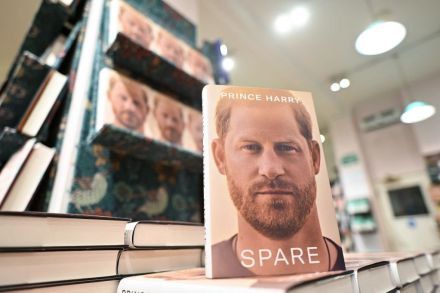
A surprising number of royal personages have published books under their own names, and sometimes they have even been written by the purported authors. The first, I think, was the Eikon Basilike, published shortly after Charles I’s execution and presented as his account of himself and of events. The authorship of this highly effective piece of propaganda has been questioned, but its simple, direct, haughty tone is very similar to the king’s recorded speech at his trial. After Prince Albert’s death, Queen Victoria published two journals of her life in the Highlands. We know that she was an enchantingly vivid writer from her diaries and letters, with a novelist’s ear for dialogue.

A sunken wreck of a novel: Cormac McCarthy’s The Passenger reviewed

From our UK edition

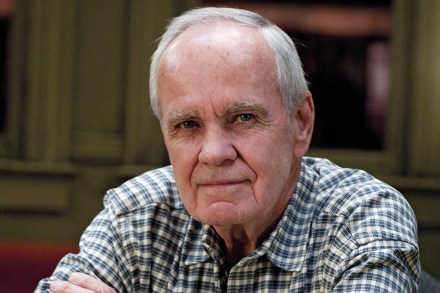
Is Cormac McCarthy among the last generation of novelists to possess a Style? Of course all writers have a characteristic style, however unassuming; but not many these days have a Style in the grand manner, the sort that Kingsley Amis (I think writing about Nabokov) described as a high level of flutter and wow. There are conversations about what I think of as ‘novelists’ science’, not really intended to be understood The great beasts of American literature have often aimed for prose that couldn’t be mistaken for anyone else’s – Hemingway, Faulkner, Bellow, Updike. Though there were always intensely mannered novelists in England, they had less of a heroically manly quality – Firbank, Wodehouse, Elizabeth Bowen, Henry Green.

The unpleasant truth about Joseph Roth

From our UK edition

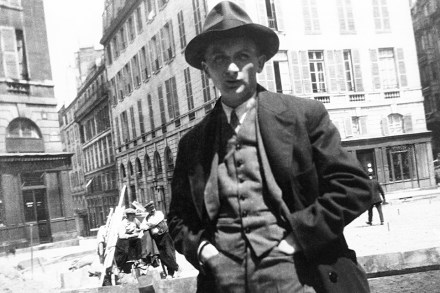
Endless Flight is the first biography in English of the novelist Joseph Roth. This is very surprising, since Roth’s short, violent life traverses some of the most compelling episodes in 20th-century European history. He was a supremely elegant, intelligent and clear-sighted writer, despite living out of suitcases, in hotel rooms, always on the run. If most of his novels are flawed in one way or another, they are all interesting in others. He also wrote what must be one of the dozen greatest European novels, The Radetzky March, translated at least three times into English since 1933. (We are now lucky to have Michael Hofmann’s superb, comprehensive translations, which perfectly convey Roth’s native skill in language.

‘Jerusalem’ is a rousing anthem – but who knows what the words mean?

From our UK edition

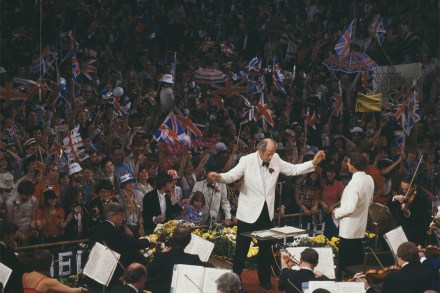
The spontaneous mass adoption of deep feeling is always interesting. Jason Whittaker has a very good subject, in the journey of the cryptic lyric section of the preface to William Blake’s incomprehensible epic Milton, written and illustrated between 1804 and 1810, to its becoming the de facto national anthem of England. ‘And did those feet...’ only took on its familiar title ‘Jerusalem’ (which has nothing to do with Blake’s poem entitled ‘Jerusalem’) after it was set to music by Hubert Parry on 10 March 1916. The following day, Parry handed over his composition to his colleague Walford Davies, saying insouciantly: ‘Here’s a tune for you, old chap. Do what you like with it.

The intense Englishness of Philip Larkin

From our UK edition

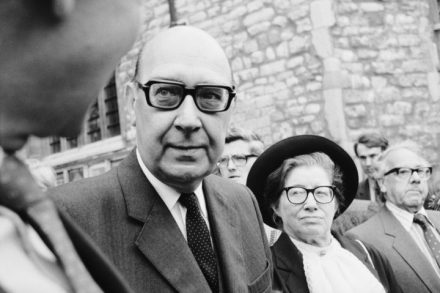
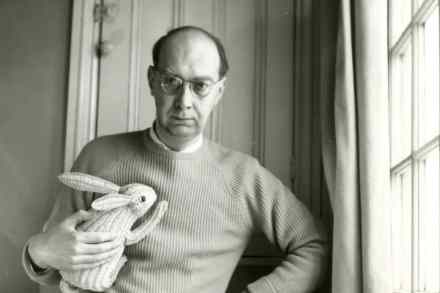
The English language has a curious feature, called the phrasal verb. It consists of a plain verb plus a preposition; to go up, to get over, to find out. They are quite often more vivid than their simple synonyms – to ascend, to recover, to discover. New ones are constantly being thought up; they are also totally irrational – get on with or get off with? Most serious writers spend a lot of time thinking about them. One day, the story goes, the poet Philip Larkin was challenged by his secretary at work. She had discovered a cache of pornography in his office cupboard. ‘But what’s it for?’ she asked. Larkin considered. ‘To wank’ – he paused – ‘to wank to, or with, or at.

Is T.S. Eliot’s great aura fading?

From our UK edition

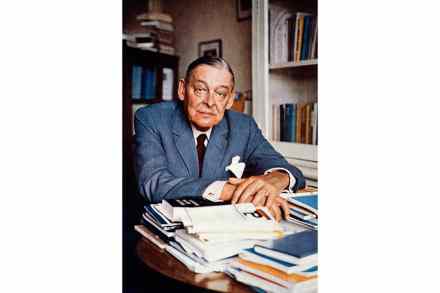
For much of his life T.S. Eliot was surrounded by an aura of greatness: people accepted it, and behaved accordingly. That kind of consensus is not helpful for a writer or his works, as Eliot himself clearly saw, observing that nobody had ever written anything significant after winning the Nobel Prize for Literature – true at the time and mostly true since. His work is now in the position of Hamlet when he wrote a famous essay on the play: that the universal agreement of its greatness had hidden an understanding of its failures, its strangeness and what it couldn’t do. We take the greatness of Eliot’s poetry pretty much for granted; but in the centenary of The Waste Land, some cracks are beginning to appear in a once unassailable reputation.

You can make anything up about the royal family and it will be printed as fact

From our UK edition

There are quite a few things that Tina Brown doesn’t know: what ‘jejune’ means; when Louis XIV came to the throne; what the passive voice in prose is (not ‘recollections may vary’); what members of the aristocracy are called (Lady Romsey becomes Lady Penelope Romsey) or what members of the royal family are called (the ‘Dowager Duchess of Gloucestershire’ puts in an appearance).

Graham Robb deserves to be a French national treasure

From our UK edition

This is a ceaselessly interesting, knowledgeable and evocative book about France over thousands of years. Is it at all likely to have been produced by a French writer? Though it’s about some deeply serious subjects, it’s very amusing; it makes no attempt to constrain itself within an overarching theoretical framework; it would be impossible to extract from it a grand statement beginning ‘The French are all…’; it is pragmatic, full of enterprising scholarly initiative and a gift for observation without intruding. Most strikingly, it’s a book about France in which the author has profitably spent a good deal of time outside Paris.

Watcher of the skies: John Constable, painter and meteorologist

From our UK edition

A surprising amount of classic painting turns out to have specific, often literary meaning, even in genres which tend to strike us as innocent observations of reality. Dutch flower paintings, for instance, might be celebrations of wealth or contemplations of mortality; still lifes were seldom just renderings of a few bits of fruit and vegetables lying around on the kitchen table; and landscapes were hardly ever merely depictions of handsome tracts of land, whether by Rembrandt or Richard Wilson. John Constable’s work, which rarely emphasises explicit significance, was something new.

Marmite man

Marmite is one of very few manufactured foods to have become an idiom. British people think of the black stuff as a national idiosyncrasy, entirely unknown to horrified foreigners: there are many videos on YouTube in which outsiders have Marmite inflicted on them for the first time. In fact, there are a large number of pastes based on yeast extract in different countries, each with its passionate devotees. British Marmite may have been the first to go into production, but it did not stay unique for long. A German chemist, Justus von Liebig, influential in the propagation of meat essences, discovered that yeast could be concentrated.

marmite

The first fairy stories were never intended for children

From our UK edition

Stories are fundamental to humanity and no one can guess how far back they go — long before they were first recorded, no doubt. As Thomas Mann says at the beginning of Joseph and his Brothers: The further down into the lower world of the past we probe and press, the more do we find that the earliest foundations of humanity, its history and culture, reveal themselves unfathomable. The existence in different cultures and remote places of tales similar to Cinderella, for instance, suggests ur-stories, common ancestors millennia old. There is no accessing those original folk tales. All we can say is that they were already very deep-rooted when they first appeared in recorded culture. The routes by which they did so vary in nature and, apparently, in authority.

The life of René Magritte was even more surprising than his art

From our UK edition

We live at a time in which we could (until recently) travel without difficulty and take for granted access to cultural treasures. It’s easy to forget that this wasn’t always the case, and minds were shaped by what possibilities were available. The Belgian painter René Magritte is a good example of huge talent pushed through a very narrow opening. His art has now become an exemplar of the striking image that commerce can feature. Advertising regularly uses his paradoxical visual combinations of faces replaced by apples, of skies in the shape of doves, of roses filling rooms and, supremely, the conundrum of the pipe demurely labelled ‘Ceci n’est pas une pipe’.

Far from being our dullest king, George V was full of surprises

From our UK edition

‘Victorian’ stuck, and ‘Edwardian’ too. But ‘Georgian’, as an adjective associated with the next monarch in line, never caught on. It was already assigned, of course, but George V very strikingly didn’t embody his time in the way that his father and grandmother did. The adjective only really succeeded in one specific instance: as the name of a school of poets. The anthologies Harold Monro published between 1911 and 1922 under the title ‘Georgian Poetry’ created a lasting school of poets — like the King, well-made, efficient, reticent and given to outbursts of intense romantic emotion. George V is not much associated with poetry; but his character is more complex than many of his contemporaries understood.

Baby doomers: why are couples putting the planet ahead of parenthood?

From our UK edition

38 min listen

In this week’s episode: Why are a growing number of people putting the planet before parenthood? Madeleine Kearns writes about this phenomenon in this week’s issue and thinks that some of these fears might be unfounded. Tom Woodman author of Future is one of these people that Madeleine’s piece talks about. Tom has very real worries about bringing a child into the world. It's not only the least green thing he could do but also that the standard of living for that child could be severely limited due to a climate catastrophe. (00:47)Also this week: Has Boris Johnson brought Conservatism full circle? That’s the argument Tim Stanley makes in this week’s Spectator. He joins Lara on the podcast along with one of the MPs mentioned in the piece, Steve Baker.

Another haphazard Booker shortlist lacks literary competence

From our UK edition

The Booker used to be more enthusiastic about the historical novel than it now is. Maggie Shipstead’s Great Circle (Doubleday, £16.99) is about an imagined woman pilot who makes her way in the first years of aviation and is thought to have died in a daring feat of navigation from Pole to Pole in 1950. It’s an enjoy-able example of a genre that was popular in the 1990s: the historical novel interspersed with a present-day story — this one about a film star who has made a PR mess, loses her role in a series of teen movies and tries for redemption through a film about the aviator. The best of those novels tended to show events of the past reaching out and shaping present lives.