Philip Hensher

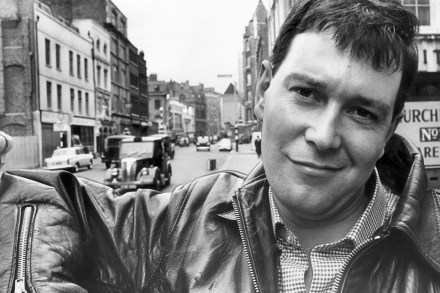
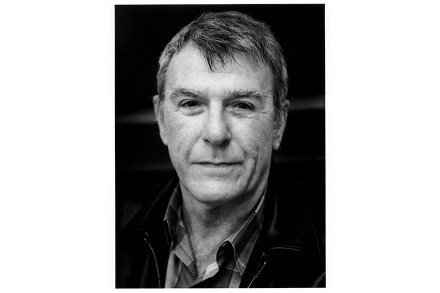
Philip Hensher is professor of Creative Writing at Bath Spa University and the author of 11 novels including A Small Revolution in Germany.

Why Britain riots

From our UK edition

33 min listen

This week: The Spectator’s Gus Carter was in Rotherham and Birmingham in the days after the riots. Locals tell Gus that ‘violent disorder isn’t acceptable but people from down south don’t know what it’s like up here’. A retired policeman in Birmingham adds that ‘it’s just yobs looking for an excuse – and yobbos come

The dark side of your local dog show

From our UK edition

Over at the judging for Waggiest Tail, things were getting acrimonious. ‘That bloody woman,’ my new acquaintance muttered. We were sitting behind the rope barrier in the front row and had formed a bond over a serious injustice in Prettiest Bitch. ‘I’m pretty sure she threw this category three, four years back. I happen to

James Heale, Svitlana Morenets, Philip Hensher, Francis Beckett and Rupert Christiansen

From our UK edition

38 min listen

On this week’s Spectator Out Loud: James Heale analyses the state of the Conservative leadership race (1:09); Svitlana Morenets reports from the site of the Kyiv children’s hospital bombed this week (5:56); Philip Hensher examines the ‘Cool Queer Life’ of Thom Gunn (12:13); Francis Beckett reviews ‘The Assault on the State’ arguing in favour of bureaucracy

Dedicated to debauchery: the life of Thom Gunn

From our UK edition

In 1876, writing to his friend Gertrude Tennant, Gustave Flaubert set down a principle that artists and writers should live by: Soyez réglé dans votre vie et ordinaire comme un bourgeois, afin d’être violent et original dans vos œuvres. (Be regular in your life and ordinary as a bourgeois, in order to be violent and

The reckoning: it’s payback time for voters

From our UK edition

39 min listen

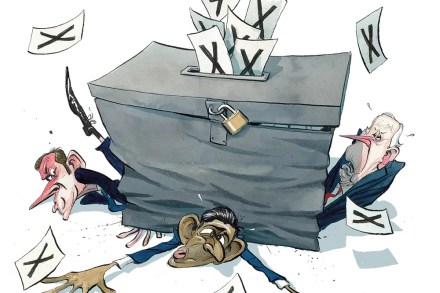
This week: the reckoning. Our cover piece brings together the political turmoil facing the West this week: Rishi Sunak, Emmanuel Macron, and Joe Biden all face tough tests with their voters. But what’s driving this instability? The Spectator’s economics editor Kate Andrews argues it is less to do with left and right, and more a problem

The clue to Shakespeare’s sexuality lies in the sonnets

From our UK edition

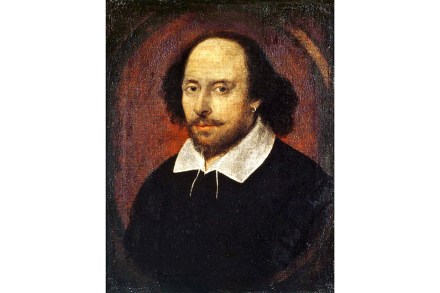
The question ‘Was Shakespeare gay?’ is not very rational. It might be a little like asking ‘Was Shakespeare a Tory?’. Some of his scenarios might coincide with later developments – Jaques trying to pick up Ganymede in As You Like It (gay), or Ulysses’s speech on degree in Troilus and Cressida (Tory). But the historical

The art of talking to strangers

From our UK edition

About halfway round the park, by the last spindly remnants of the Festival of Britain, I bumped into my Scandinavian acquaintance. ‘Beautiful day,’ I said. ‘I thought you’d be in Sweden by now.’ ‘No,’ she said. ‘Not quite. My daughter’s going for midsummer – it’s her first time on her own. We’re going a little

What’s really behind the Tories’ present woes?

From our UK edition

The problem is, we really need a Tory party. Whether we have one at the moment is another question. Political debate requires a significant and trustworthy proponent of personal freedom, of the limits of government, of personal responsibility, of strict limitations of government expenditure, of independent enterprise which may succeed through a lack of intrusive

Slavoj Zizek, Angus Colwell, Svitlana Morenets, Cindy Yu, and Philip Hensher

From our UK edition

32 min listen

On this week’s Spectator Out Loud: Philosopher Slavoj Zizek takes us through his diary including his Britney Spears Theory of Action (1:08); Angus Colwell reports from the front line of the pro-Palestinian student protests (8:09); Svitlana Morenets provides an update on what’s going on in Georgia, where tensions between pro-EU and pro-Russian factions are heading to

Drama students: how universities raised a generation of activists

From our UK edition

39 min listen

This week: On Monday, tents sprung up at Oxford and Cambridge as part of a global, pro-Palestinian student protest which began at Columbia University. In his cover piece, Yascha Mounk, a professor at Johns Hopkins University, explains how universities in both the US and the UK have misguidedly harboured and actively encouraged absurdist activism on

My vote winner? Banning ‘fun’ runs

From our UK edition

One of us must once have told a political pollster: ‘I really have no idea at all who I’m going to vote for.’ A moment of mild exasperation put us down as ‘Don’t knows’. Forever afterwards, the prospect of an election, whether for Wandsworth council, the Mayor of London or the Battersea parliamentary constituency, brings

Exploring the glorious literary heritage of Bengal

From our UK edition

The first time I went to India, nearly 30 years ago, I was sent as a young novelist by the British Council. Unusually, my first encounter with the country was Kolkata, a city I loved instantly. At the first event, after I had finished reading, an audience member gently asked if I liked Indian novels.

Sean Thomas, Kara Kennedy, Philip Hensher, Damian Thompson and Toby Young

From our UK edition

35 min listen

On this week’s Spectator Out Loud: Sean Thomas worries that Paris has lost some of its charm (1:21); Kara Kennedy reports on US-style opioids arriving in Britain (8:43); Philip Hensher describes how an affair which ruined one woman would be the making of another (15:32); Damian Thompson reflects on his sobriety and his battle with British

The naming of cats

From our UK edition

All sorts of animals have been kept as pets over the centuries. We know of sparrows in Catullus and John Skelton. There is a badger with a collar in a fresco by Signorelli – probably not much more biddable than the lobster Gerard de Nerval supposedly took for walks in Paris. The word ‘puss’ seems

Garbriel García Márquez has been ill-served by his sons

From our UK edition

I blame Kafka. When he died in 1924, the vast majority of his imaginative work remained unpublished, including three novels and a substantial number of remarkable short stories. He left instructions, however, for Max Brod, his literary executor, that all his unpublished work should be destroyed. Brod ignored this, and brought some classics of German

Max Jeffery, Lisa Haseldine, Christopher Howse, Philip Hensher and Calvin Po

From our UK edition

43 min listen

This week: Max Jeffery writes from Blackpool where he says you can see the welfare crisis at its worst (01:29); Lisa Haseldine reads her interview with the wife of Vladimir Kara-Murza, whose husband is languishing in a Siberian jail (06:26); Christopher Howse tells us about the ancient synagogue under threat from developers (13:02); Philip Hensher

The beauty – and tragedy – of our nesting swans 

From our UK edition

There won’t be any cygnets this year. The cob was on the lake this morning on his own, occasionally slapping the water, floating without any evident purpose. His last children were taken away to new homes a year ago. His mate of years, the pen, died last spring. People who live in the country always

With Philip Hensher

From our UK edition

31 min listen

Philip Hensher is a novelist and regular contributor to The Spectator’s books pages. His books cover a variety of subjects and often deal with important historical change, such as the fall of the Berlin wall and the war in Afghanistan. His most recent novel is To Battersea Park.  On the podcast, he discusses how he developed an affection