Philip Hensher

Philip Hensher is professor of Creative Writing at Bath Spa University and the author of 11 novels including A Small Revolution in Germany.

‘Too bohemian for Bournemouth’: the young Lawrence Durrell

From our UK edition

These legendary lives need the clutter cleared away from them occasionally. Lawrence Durrell and his brother Gerald turned their family’s prewar escape to an untouched Corfu into a myth that supplied millions of fantasies. It still bore retelling and extravagant expansion recently, if the success of ITV’s series The Durrells is any sign. (One indication of that pleasant teatime diversion’s accuracy: the actor playing Larry, Josh O’Connor, is 6ft 2in. Larry himself was a whole foot shorter.) How Louisa Durrell, struggling with life in Britain after returning from India, went in a bundle with her children to a Greek island of cheap Venetian mansions, heat and innocent adventure is always going to have its appeal.

A.C. Benson enters the pantheon of great English diarists

From our UK edition

All great diarists have something intensely silly about them: Boswell’s and Pepys’s periodic bursts of lechery and panic; Chips Channon’s unrealistic dreams of political greatness leavened with breathless excitement over royal dukes and handsome boys; Alan Clark’s fits of romantic, almost Jacobite, dreaming; James Lees-Milne’s absurd flights of rage. I dare say the mania that drove the Duc de Saint-Simon in his demented campaign against Louis XIV’s attempts to create a place in court hierarchy for his bastards seemed ridiculous to his more sober contemporaries. Often the silliness comes from a mad overestimation of the writer’s ability. There is no more fascinating diary than Benjamin Haydon’s. He was an indifferent painter who never achieved the success he dreamt of.

Nigel wants YOU, secularism vs spirituality & how novel is experimental fiction?

From our UK edition

52 min listen

How Reform plans to win Just a year ago, Nigel Farage ended his self-imposed exile from politics and returned to lead Reform. Since then, Reform have won more MPs than the Green Party, two new mayoralties, a parliamentary by-election, and numerous councils. Now the party leads in every poll and, as our deputy political editor James Heale reveals in our cover article, is already planning for government. The party’s chair, tech entrepreneur Zia Yusuf, describes the movement as a ‘start-up’; and like a start-up, Reform is scaling up at speed. Among the 676 councillors elected last month, a number are considered more than ready to stand as MPs.

Spare us from ‘experimental’ novels

From our UK edition

Some sorts of books and dramas have very strict rules. We like a lot of things to be absolutely predictable. In romantic comedies, a girl chooses between a charmer who turns out to be a rotter and another man she hates at first but then falls for. In the BBC’s long-running Casualty, if a worried patient turns up with his put-upon wife who coughs twice, it’s the wife who’s got an undiagnosed fatal disease. Bertie Wooster falls for a girl that Jeeves doesn’t care for and the valet goes to some lengths to detach his employer. We like these things because they’re safe and a little bit cosy and we all know what the rules are. One of the most rigid genres at the moment is slightly different.

What Mark Twain owed to Charles Dickens

From our UK edition

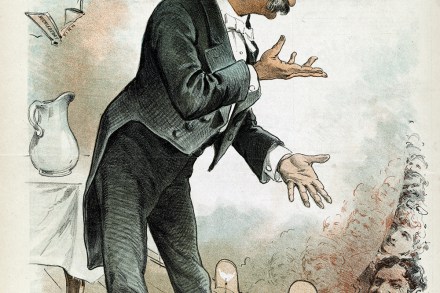
You know Mark Twain’s story. You’ve got no excuse not to; there have been so many biographies. Starting in the American South as Samuel Clemens, he took his pen name from the call of the Mississippi boatmen on reaching two fathoms. His lectures, followed by his travel pieces and novels, enchanted America and then the world. As a southerner, his principled stance against slavery gave him moral authority. The famous ‘Notice’ to The Adventures of Huckleberry Finn – ‘Persons attempting to find a motive in this narrative will be prosecuted; persons attempting to find a moral in it will be banished’ – was swept aside, so that persons like H.L. Mencken could straightfacedly describe it as ‘the greatest novel ever written in English’.

Scuzz Nation, the death of English literature & are you a bad house guest?

From our UK edition

40 min listen

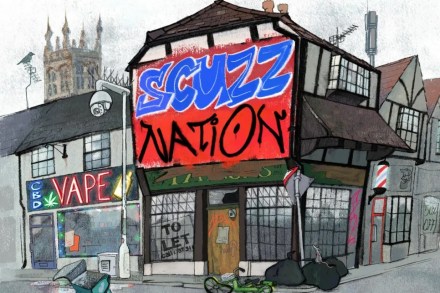
Scuzz Nation: Britain’s slow and grubby declineIf you want to understand why voters flocked to Reform last week, Gus Carter says, look no further than Goat Man. In one ward in Runcorn, ‘residents found that no one would listen when a neighbour filled his derelict house with goats and burned the animals’ manure in his garden’. This embodies Scuzz Nation – a ‘grubbier and more unpleasant’ Britain, ‘where decay happens faster than repair, where crime largely goes unpunished, and where the social fabric has been slashed, graffitied and left by the side of the road’. On the podcast, Gus speaks to Dr Lawrence Newport, founder of Crush Crime, to diagnose the issues facing Britain – and offer some solutions to stop the rot. (01:28) Next: is it demeaning to study Dickens?

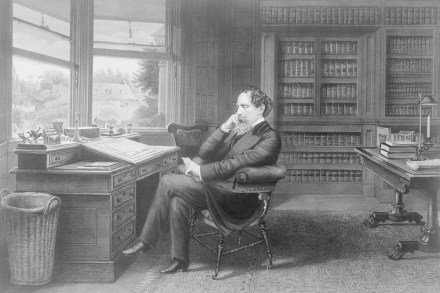
Studying Dickens at university was once considered demeaning. Now it’s too demanding

From our UK edition

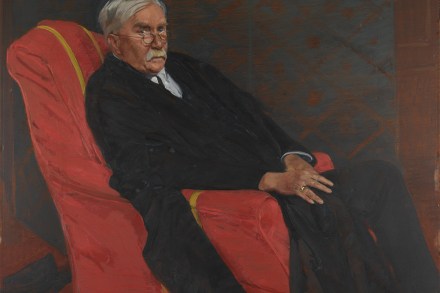
Any consideration of Stefan Collini’s subject has surely to address a major recent issue. The academic study of English, both at school and university, has fallen away significantly, with the numbers opting for it greatly diminishing. Anecdotal evidence from even the most serious institutions suggests that many students are now finding previously accessible texts impossible to read or understand – because of their length (Charles Dickens), their complexity of meaning (Alexander Pope) or remote sensibility or politics (Joseph Conrad). Collini has been given a generous amount of space to write his history. Despite this, he has chosen to end it more than 50 years ago. His subtitle is quite misleading.

Chambers of horrors, the ‘Dubai-ification’ of London & the enduring obsession with Diana

From our UK edition

37 min listen

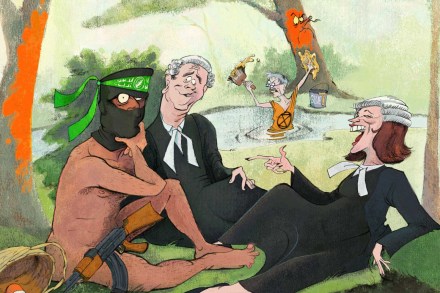
This week: the left-wing radicalism of Garden CourtGarden Court Chambers has a ‘reassuringly traditional’ facade befitting the historic Lincoln’s Inn Fields in the heart of London’s legal district. Yet, writes Ross Clark in the cover article this week, ‘the facade is just that. For behind the pedimented Georgian windows there operates the most radically effective cell of left-wing activists in Britain’. Ross argues that cases taken on by Garden Court lawyers raise questions of impartiality. Is this just another example of ‘law’s expanding empire’ over the domain of elected politicians, as former Supreme Court judge Jonathan Sumption has warned? The Spectator’s editor, and former Justice Secretary, Michael Gove joined the podcast to discuss.

Whether adored or despised, Princess Diana is never forgotten

From our UK edition

What happened to the condolence books? They swiftly multiplied, that mad week in September 1997. The original four at St James’s Palace had to be increased to more than 40. People queued for hours and often spent many minutes composing their contributions. That’s not even to mention the thousands of similar books organised by councils, embassies and private businesses. The official set were ‘offered’ to the Spencer family. Perhaps they are at Althorp. Edward White’s Dianaworld, about the phenomenon of the former Princess of Wales, shows an indefatigable resourcefulness. It is not really about the woman herself but about the effect she had on people who never laid eyes on her.

Why the Japanese flock to Battersea Park

From our UK edition

They weren’t familiar park visitors, but a couple with a specific purpose, laden down with camera equipment. They unpacked carefully, without the swift expertise of a professional photographer and his model, working on the clock. Years ago, we went to Japan on our honeymoon, and the girl’s outfit was something I’d seen before in Tokyo – a pink and white frilly knee-length crinoline, flailing with ribbons. In Harajuku, it used to be called Lolita-style, and the girls parade up and down competitively. In this country, I don’t suppose anyone has dressed like that since Bubbles Rothermere died. The only sign of embarrassment was that they would not catch anyone’s eye.

A novel in disguise: Theory & Practice, by Michelle de Kretser, reviewed

From our UK edition

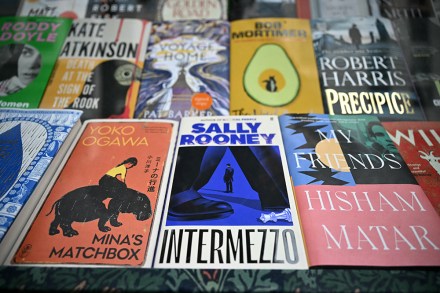
Michelle de Kretser, of a Sri Lankan family living in Australia, is an exceptional novelist – perhaps among the ten best at work in English today. She has been recognised with literary prizes, but it’s surprising that she hasn’t made quite the impact on the public she deserves. She is one of those writers who one presses upon intelligent acquaintances and whose books reward rereading. One of her regular subjects – she is a novelist of bookish, intelligent lives – is the inability of the Australian intelligentsia ever to read an Australian novel. As the author of The Life to Come, perhaps the best Australian novel since Tim Winton’s Cloudstreet, she does well to present this worrying disengagement with amusement.

Massacre of the innocents, saving endangered languages & Gen Z’s ‘Boom Boom’ aesthetic

From our UK edition

37 min listen

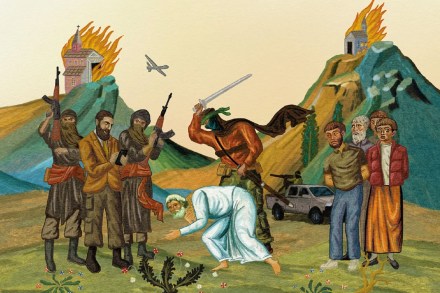
This week: sectarian persecution returnsPaul Wood, Colin Freeman and Father Benedict Kiely write in the magazine this week about the religious persecution that minorities are facing across the world from Syria to the Congo. In Syria, there have been reports of massacres with hundreds of civilians from the Alawite Muslim minority targeted, in part because of their association with the fallen Assad regime. Reports suggest that the groups responsible are linked to the new Syrian president Ahmed al-Sharaa (formerly known as Abu Mohammed al-Jolani). For some, the true face of the country’s new masters has been revealed. Whether the guilty men are punished will tell us what kind of country Syria has become since the fall of Assad’s dictatorship.

The pointlessness of the German Peasants’ War – except in Marxist ideology

From our UK edition

The preservation of a strict social hierarchy rests very often on the enforcement of correct modes of address. In America today any university student may address any other as ‘dude’, but those who have attained a certain level of prestige will object if an unwary low-status blunderer ventures to call them ‘bro’. Rebels seeking to overturn rigid class systems will often start by violating such regulations. The German revolutionaries of 1968, for example, made a point of addressing everyone as arschloch, or ‘arsehole’ – a radical usage I remember being startled by it in mid-1990s Kreuzberg bars until it was explained to me that I wasn’t being insulted. Their other move, to use the intimate du, rather than the formal Sie, for ‘you’, has taken much stronger hold.

The beauty and tedium of the works of Adalbert Stifter

From our UK edition

A commercial publisher bringing out a book of old academic essays on Austrian writers, some completely unknown to English readers, might need an explanation. In this case the author is W.G. Sebald, who produced a series of cogitative books that made his name in the 1990s. Before he acquired the worldwide authority of The Emigrants, The Rings of Saturn and Austerlitz, Sebald had a career in the academic proponency of German literature. Silent Catastrophes is the first English translation of two essay collections from 1985 and 1991, The Description of Misfortune and Strange Homeland. (‘Uncanny’ would be a better translation than ‘strange’, but neither title goes easily into English.

Catherine Lafferty, Michael Simmons, Paul Wood, Philip Hensher, Isabel Hardman and Damian Thompson

From our UK edition

39 min listen

On this week’s Spectator Out Loud: Catherine Lafferty argues that the drive to reduce teenage pregnancies enabled grooming gangs (1:27); following Luke Littler’s world championship victory, Michael Simmons says that Gen Z is ruining darts (6:32); Paul Wood looks at the return of Isis, and America’s unlikely ally in its fight against the terrorist group (10:35); Philip Hensher reviews a new biography of the Brothers Grimm by Ann Schmiesing, and looks at how words can be as dangerous as war (17:57); Isabel Hardman highlights the new garden now open at the Natural History Museum (26:57); and, Damian Thompson reveals he watched videos of plane crashes to distract himself from the US election coverage – why? (31:40).  Produced and presented by Patrick Gibbons.

Once upon a time in Germany: the Grimms’ legacy of revenge and gory redemption

From our UK edition

It might help if we stopped calling them ‘the Brothers Grimm’, which always makes them sound like characters in one of their fairy tales. We don’t talk about ‘the Sisters Brontë’, after all. In reality, Jacob and Wilhelm Grimm have been described, very accurately, as ‘visionary drudges’. The Children’s and Household Tales, the first edition of which was published in 1812, was only a part of their grand project to establish a German cultural and linguistic identity. The brothers were primarily philologists, concerned with the meaning and history of words, and their investigation of German folk culture, narratives, myths and legends was rooted in an austere examination of language.

Alexandra Shulman, Sean Thomas, Matthew Parris, Adrian Dannatt and Philip Hensher

From our UK edition

34 min listen

On this week’s Spectator Out Loud: Alexandra Shulman reads her fashion notebook (1:13); Sean Thomas asks if a demilitarised zone in Ukraine is inevitable (6:02); Matthew Parris argues against proportional representation (13:47); Adrian Dannatt explains his new exhibition Fresh Window: the art of display and display of art (21:46); and Philip Hensher declares he has met the man of his dreams: his Turkish barber (28:17).  Produced and presented by Patrick Gibbons.

The joy of the Turkish barber

From our UK edition

Just as you always hope will happen, I knew I had met the man of my dreams almost on sight. I had made a booking the day before. I arrived. Burak was just finishing the previous customer and gestured with a comb towards an armchair. A Turkish coffee was brought. The customer paid and left and I took his place in the chair before the mirror. ‘Now, sir,’ Burak said, with an ingratiating formality not quite his own. ‘What can I...’ But as he was asking about the haircut, the nervous pale English boy at the next station in the barber’s interrupted. ‘Er, Burak,’ he said, tremulously. ‘I wonder, er, would you mind if I borrowed your...’ ‘Nah,’ Burak said, all ingratiation gone in a fierce flash. ‘Nah. Fuck off.’ He turned to me. ‘I’m sorry, sir,’ he said.

Reading the classics should be a joy, not a duty

From our UK edition

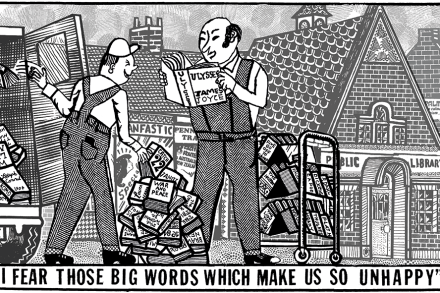
Writing the history of the novel, even covering a limited period, is a challenge. No one could possibly read every novel that has been published. Even if you read 100 a year you would scarcely scratch the surface. It isn’t like writing a history of most other subjects, where the important matters select themselves. You wouldn’t guess from this book how hilarious Lolita is, or some of the best passages of Ulysses No one could say with certainty that the most noteworthy novels are those which once made, or now make, the most impact. Indeed, a history that included many of the bestsellers of the day would be unusual – one, for instance, that took in G.W.M.

Richard Dawkins, Nicholas Farrell, Mary Wakefield, Lisa Hilton and Philip Hensher

From our UK edition

33 min listen

On this week’s Spectator Out Loud: Richard Dawkins reads his diary for the week (1:21); Nicholas Farrell argues that Italy is showing the EU the way on migration (6:33); Mary Wakefield reflects on the horrors, and teaching, of the Second World War (13:54); Lisa Hilton examines what made George Villiers a favourite of King James I (19:10); and a local heroin addict makes Philip Hensher contemplate his weight (27:10).  Produced and presented by Patrick Gibbons.