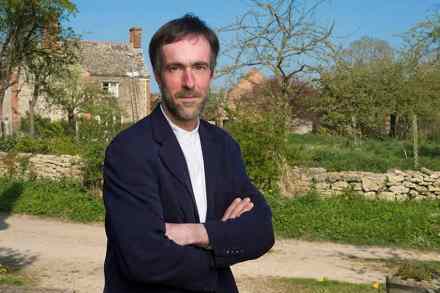
Philip Hensher

Philip Hensher is professor of Creative Writing at Bath Spa University and the author of 11 novels including A Small Revolution in Germany.

Graham Robb deserves to be a French national treasure

From our UK edition

This is a ceaselessly interesting, knowledgeable and evocative book about France over thousands of years. Is it at all likely to have been produced by a French writer? Though it’s about some deeply serious subjects, it’s very amusing; it makes no attempt to constrain itself within an overarching theoretical framework; it would be impossible to extract from it a grand statement beginning ‘The French are all…’; it is pragmatic, full of enterprising scholarly initiative and a gift for observation without intruding. Most strikingly, it’s a book about France in which the author has profitably spent a good deal of time outside Paris.
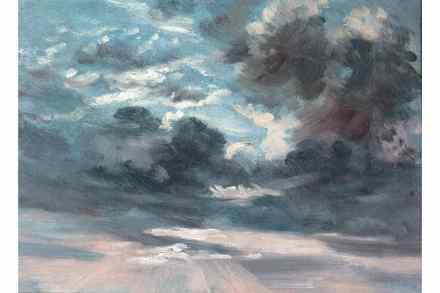
Watcher of the skies: John Constable, painter and meteorologist

From our UK edition

A surprising amount of classic painting turns out to have specific, often literary meaning, even in genres which tend to strike us as innocent observations of reality. Dutch flower paintings, for instance, might be celebrations of wealth or contemplations of mortality; still lifes were seldom just renderings of a few bits of fruit and vegetables lying around on the kitchen table; and landscapes were hardly ever merely depictions of handsome tracts of land, whether by Rembrandt or Richard Wilson. John Constable’s work, which rarely emphasises explicit significance, was something new.

Marmite man

Marmite is one of very few manufactured foods to have become an idiom. British people think of the black stuff as a national idiosyncrasy, entirely unknown to horrified foreigners: there are many videos on YouTube in which outsiders have Marmite inflicted on them for the first time. In fact, there are a large number of pastes based on yeast extract in different countries, each with its passionate devotees. British Marmite may have been the first to go into production, but it did not stay unique for long. A German chemist, Justus von Liebig, influential in the propagation of meat essences, discovered that yeast could be concentrated.

marmite

The first fairy stories were never intended for children

From our UK edition

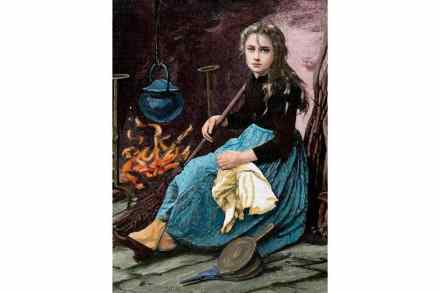
Stories are fundamental to humanity and no one can guess how far back they go — long before they were first recorded, no doubt. As Thomas Mann says at the beginning of Joseph and his Brothers: The further down into the lower world of the past we probe and press, the more do we find that the earliest foundations of humanity, its history and culture, reveal themselves unfathomable. The existence in different cultures and remote places of tales similar to Cinderella, for instance, suggests ur-stories, common ancestors millennia old. There is no accessing those original folk tales. All we can say is that they were already very deep-rooted when they first appeared in recorded culture. The routes by which they did so vary in nature and, apparently, in authority.

The life of René Magritte was even more surprising than his art

From our UK edition

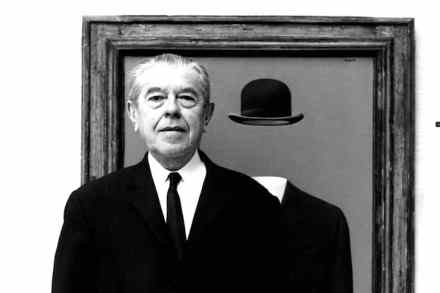
We live at a time in which we could (until recently) travel without difficulty and take for granted access to cultural treasures. It’s easy to forget that this wasn’t always the case, and minds were shaped by what possibilities were available. The Belgian painter René Magritte is a good example of huge talent pushed through a very narrow opening. His art has now become an exemplar of the striking image that commerce can feature. Advertising regularly uses his paradoxical visual combinations of faces replaced by apples, of skies in the shape of doves, of roses filling rooms and, supremely, the conundrum of the pipe demurely labelled ‘Ceci n’est pas une pipe’.

Far from being our dullest king, George V was full of surprises

From our UK edition

‘Victorian’ stuck, and ‘Edwardian’ too. But ‘Georgian’, as an adjective associated with the next monarch in line, never caught on. It was already assigned, of course, but George V very strikingly didn’t embody his time in the way that his father and grandmother did. The adjective only really succeeded in one specific instance: as the name of a school of poets. The anthologies Harold Monro published between 1911 and 1922 under the title ‘Georgian Poetry’ created a lasting school of poets — like the King, well-made, efficient, reticent and given to outbursts of intense romantic emotion. George V is not much associated with poetry; but his character is more complex than many of his contemporaries understood.

Baby doomers: why are couples putting the planet ahead of parenthood?

From our UK edition

38 min listen

In this week’s episode: Why are a growing number of people putting the planet before parenthood? Madeleine Kearns writes about this phenomenon in this week’s issue and thinks that some of these fears might be unfounded. Tom Woodman author of Future is one of these people that Madeleine’s piece talks about. Tom has very real worries about bringing a child into the world. It's not only the least green thing he could do but also that the standard of living for that child could be severely limited due to a climate catastrophe. (00:47)Also this week: Has Boris Johnson brought Conservatism full circle? That’s the argument Tim Stanley makes in this week’s Spectator. He joins Lara on the podcast along with one of the MPs mentioned in the piece, Steve Baker.

Another haphazard Booker shortlist lacks literary competence

From our UK edition

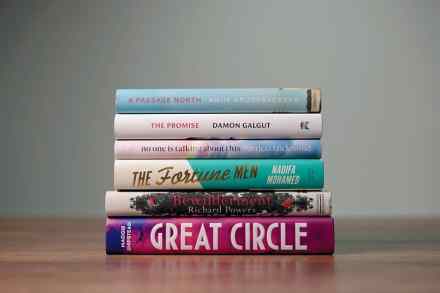
The Booker used to be more enthusiastic about the historical novel than it now is. Maggie Shipstead’s Great Circle (Doubleday, £16.99) is about an imagined woman pilot who makes her way in the first years of aviation and is thought to have died in a daring feat of navigation from Pole to Pole in 1950. It’s an enjoy-able example of a genre that was popular in the 1990s: the historical novel interspersed with a present-day story — this one about a film star who has made a PR mess, loses her role in a series of teen movies and tries for redemption through a film about the aviator. The best of those novels tended to show events of the past reaching out and shaping present lives.

A dutiful exercise carried out in a rush

From our UK edition

Like department stores, empires and encyclopaedias, the multi-volume narrative national history is an invention of the later 18th century. It reaches its apogee, promising to bring everything important within a single enclosure, in the 19th and early 20th century. After that, ambitious examples appear to be fighting against a general lack of enthusiasm. Most of these works are little read now, from David Hume’s 1750s The History of England all the way through to Winston Churchill’s idiosyncratic A History of the English-Speaking Peoples in the 1950s. The grand sweep has a tendency to define the significant in advance.

An interest in the bizarre helps keep melancholy at bay

From our UK edition

If you crush the right testicle of a wolf and administer it in oil or rose water it will induce a loathing for sex. The Turks have a drink called coffee (for they use no wine). The Chinese have no nobility, or only those philosophers and doctors who have raised themselves by their worth. If you allowed a human being 25 square feet each, the Earth could bear 148,456,800,000,000 people. The Persian kings trained sparrows to hunt butterflies, inspired by hunting with hawks. Speaking of sparrows, the reason they are so short-lived is because of their salacity, which is very frequent.

Oh! Calcutta! Amartya Sen’s childhood memories brim with nostalgia

From our UK edition

Santiniketan, in West Bengal, about 100 miles from Kolkata, is one of the most magical places on Earth. The Bengali writer Rabindranath Tagore used a stretch of family land there to set up a great university. Modestly scaled buildings are scattered among groves; classes are conducted under the trees. The last time I was there, our rickshaw driver puttered to a halt outside a handsome residence. That, he said with some pride, was the house of Professor Amartya Sen. I’m not sure that there are many professors of economics, even in university towns, whose presence inspires the cab drivers like that. Sen, over the past decades, has earned the gratitude of ordinary people by his honesty of thought and dedication to how their lives in general might be improved.

How William Hogarth made Britain

From our UK edition

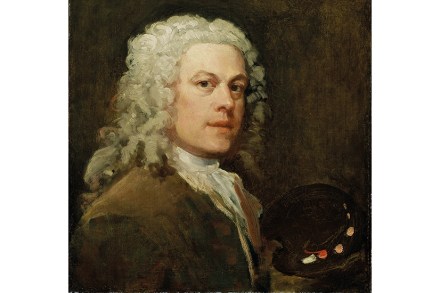
Has any artist ever had a wider impact on the world than Hogarth? He was the motivator behind the most important legislation protecting artists’ copyright, meaning that artists from ordinary backgrounds no longer had to depend on the whims of rich patrons. Like Dickens, he used his art to laugh at and root out abuses — the proposals for electoral reform in the great ‘Humours of an Election’ series are as specific as satire ever gets (the haggling over the bribes, the man who somehow votes despite being dead). His early and energetic commitment to Thomas Coram’s Foundling Hospital did much to discourage the widespread practices of infant abandonment and murder.

Over the rainbow: D.H. Lawrence’s search for a new way of life

From our UK edition

When it comes to biography, some authors draw the punters, and others leave the mob cold. D.H. Lawrence has been written about a lot, from the moment he died. At least ten memoirs were published in the five years after his death by authors ranging from his sister and his wife to patrons such as Mabel Dodge Luhan. More followed, and only professional Lawrence scholars will have read all of them. There must be dozens of them, and some, such as the Cambridge three-volume effort by different authors, are immensely long. By comparison, there are only a handful of full-scale lives of James Joyce, and poor old Arnold Bennett has only one (excellent) biography, by Margaret Drabble. What is it about Lawrence that draws them so?

Can the Mayr diet work at home?

About five years ago, just after my 50th birthday, I noticed that I was extremely fat. Not ‘overweight’, not ‘heavy’, not ‘big-boned’, not possessed of a ‘good sense of humor’; fat is what it was. It was down to a long-undiagnosed medical condition and the attendant medication. It was also down to enjoying food a lot. What to do about it? Like a lot of men, I like a solution. I fundamentally believe that if you have a problem, you just need to find the right expert, who will lift the hood, run a few tests, give you a schedule to follow and it’ll be right as rain. ‘Go to the Mayr,’ a friend said. ‘They’ll put you right.’ And so it was. The Mayr Clinic is a celebrated health farm on the shores of the Wörthersee, a lake in eastern Austria.

mayr diet

An unsuitable attachment to Nazism: Barbara Pym in the 1930s

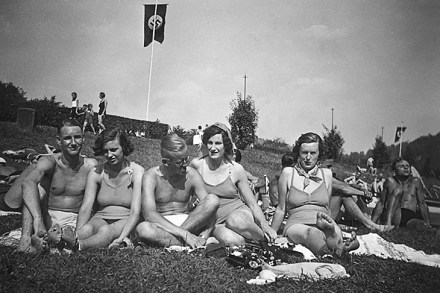
Novelists’ careers take different paths, and sometimes don’t look much like careers at all. It’s true that some start publishing between 25 and 35, and write a novel respectably every two or three years until they die, like Kingsley Amis. Others don’t start until they are 60, like Penelope Fitzgerald, or stop abruptly without warning, like Henry Green, or write one novel and no more, like Harper Lee. Inspiration, or interest, comes and goes, and both the audience and the industry will have their wilful way with creativity. The ultimate aim of a novel, to be read with pleasure decades after its creator’s death, is reached in tortuous ways.

Leading article, Douglas Murray and Philip Hensher

From our UK edition

26 min listen

On this episode, Cindy Yu starts by reading the leader - The Spectator has a fight on it's hands as the Scottish Crown Office threatens a six-figure fine. (01:30) Then, Douglas Murray says the Church of England has morphed beyond recognition. (06:40) Finally, Philip Hensher says Jordan Peterson's new book, Beyond Order, is 'pretty odd'.

Unopposed: Why is Starmer making life easy for the PM?

From our UK edition

42 min listen

Is Keir Starmer becoming irrelevant? (00:50) Do the Oscars really celebrate the best that film has to offer? (15:55) Jordon Peterson is back with his new book, Beyond Order, but is it beyond readable? (25:40)With the Spectator's political editor James Forsyth; broadcaster and former Labour adviser Ayesha Hazarika; writer Fiona Mountford; the Spectator's arts editor Igor Toronyi-Lalic; novelist Philip Hensher; and the Spectator's associate editor Douglas Murray. Presented by Lara Prendergast.Produced by Max Jeffery, Sam Russell and Arsalan Mohammad.

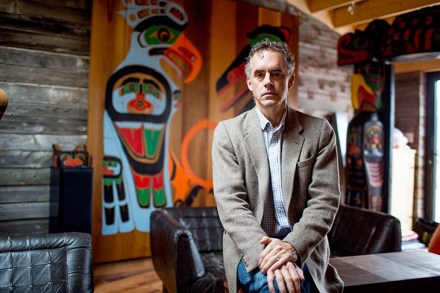
Jordan Peterson is the Savonarola of our times

From our UK edition

Like most novelists, I am a firm adherent to the W.H. Davies principle of finding time to stand and stare. I was once sauntering down Regent Street when a gentleman hared out of a department store, closely followed by two rather healthier specimens. They flung him to the ground, upon which large quantities of merchandise started falling from his pockets. I was fascinated, both by the level of violence the shop’s security was using and by what a captured thief actually says when he’s being subdued. (Clue: not ‘You got me bang to rights.’) After a moment or two another bloke came over to me and a couple of others gawping on the public pavement. ‘Move along there,’ he said. ‘There’s nothing for you to see here.

Imagining a future for John Keats — the novelist

From our UK edition

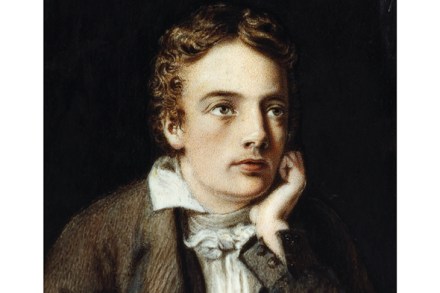
Keats long ago became the meaningless emblem of poetic genius. When the poet Amanda Gorman appeared at President Joe Biden’s inauguration, both detractors and admirers wanted to set her against the highest possible comparison. They didn’t reach for the US’s new Nobel laureate, Louise Glück. They went for Keats: either ‘Amanda Gorman is Keats-level brilliant’ or ‘Well, it’s not exactly Keats’. But what is Keats, exactly? It seems to me that there is a difference between the 5ft English poet who worked for a very few years before dying at 25 in 1821, and the idea of ‘Keats’.

Dolly Parton represents all that’s best about America

From our UK edition

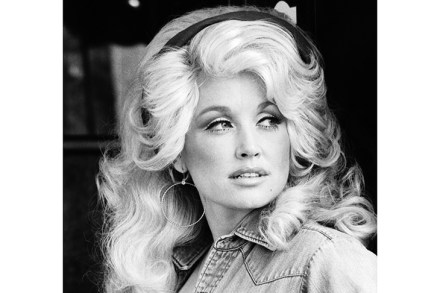
After the storming of Congress last week, numerous American commentators looked at the Proud Boys, the QAnon Shaman and Trump himself and said, in so many words: ‘This is not who we are.’ Undoubtedly true. It raises, however, an interesting supplementary question: who, in fact, are you? Looking through the ranks of those who might represent the best values of America, we arrive quite quickly at Dolly Parton. She came from a family in rural Tennessee of both grinding poverty and honest, decent aspiration. Sacrifices on their part, and a 30-hour bus journey to Louisiana, let her make her first recording in 1959, at 13.