Peter Hoskin

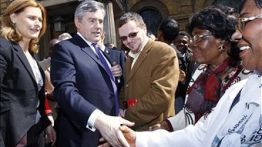
And so to Brown…

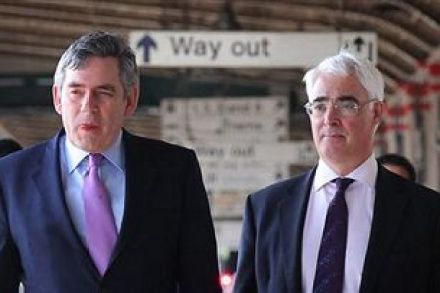
Haven't we been here before?  Investment versus cuts, I mean.  Because that appears to be the main message of Labour's press conference this moring.  Gordon Brown set about the Tories' Big Society, claiming that it "means big cuts in public services".  Hm. It's certainly a punchier, if similar, message to the "agenda of abandonment" one that Labour roadtested last week.  But will voters listen?  Well, amid all the excitement about Clegg and the Lib Dems, it's easy to forget that Labour are now polling third – with a vote share which recalls the days of Michael Foot's leadership.  They seem to be in a pretty desperate position themselves. This may suit Labour, so far as the chances of a hung parliament are concerned.

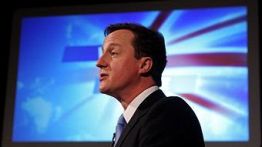
Cameron’s two-pronged counterattack

A freewheeling, shirt-sleeve kind of speech from Cameron in Kennington this morning. But not one that was without substance. His main purpose was, as he put it, to "redouble the positive" - which meant more about the Big Society. Cameron has fashioned a persuasive narrative out of this, but question marks still remain over whether it will mean much to voters who just want CHANGE, without the nuance and jargon. As I suggested earlier, this is perhaps the biggest question hanging over the election campaign right now. The other part to Cameron's speech was a warning about a hung parliament. Or as he put it: "If we get any other result, then we could be stuck with the problems we've got now." I lost count of how many times he used the word "decisive" as part of this.

Can the Tories turn things from personality to policy?

If the Lib Dem surge shows anything, then it's the growing power of personality politics in this country.  A few days ago, they're languishing in third place with around 20 percent of the vote.  One dose of TV razzmatazz later, and they're topping the polls on over 30 percent.  Yes, even though I admire much of what Nick Clegg has done with his party, there's little doubt that all this has been catalysed by simply putting him in front of the cameras.  Like someone with an okay singing voice reaching the X-Factor final, the Lib Dem leader triumphed in what was essentially a clash of personalities.

YouGov have the Lib Dems on top

Tonight's YouGov tracker has the Lib Dems on 33 percent (up 4), the Tories on 32 percent (down 1) and Labour on 26 percent (down 4).  So the topsy-turviness continues – but for how long?

Mandelson contra Cameron

So far as the Tories are concerned, Peter Mandelson is the political equivalent of an itch that you can't scratch: irritating, elusive and impossible to ignore.  And he's at it again today, with an article in the Independent on Sunday chiding the Tories' over their Big Society agenda.   It's not the "agenda of abandoment" attack that Mandelson made a few days ago.  But, rather, a return to the "cross-dressing" territory of last year.  As Mandelson puts it, "[Cameron's] tightly knit group of associates has simply pinched a few ideas from our campaign manual, rather than fundamentally reforming the party to make it fit for office.

Responding to the Lib Dem surge

We've had the insta-polls and that eyectaching YouGov poll, and now we get the political reaction to Thursday's TV debate.  Interviewed in the Times, Alan Johnson plays up what Labour and the Lib Dems have "in common," and opens the door on a potential coalition.  While, in the Telegraph, David Cameron sets about Lib Dems policies – attacking, for instance, the "flimsy backing" to their plan for making the first £10,000 of income tax-free These different responses to the Lib Dem surge are stiking, if predictable.  Labour see Clegg as an opportunity: an opportunity to whitewash Brown's mechanical performance in the TV debate, and to keep the Tories out of government.

The case for Nick Clegg

Ok, this won't be one of my more popular opinions, but here goes ... Nick Clegg is a Good Politician.  And I don't mean that in some Machiavellian sense – although, for all I know, that might be true.  But, rather, that he's got some decent ideas and ideals, and he presents them convincingly.  This is why he deserved his victory in yesterday's TV debate.  It wasn't the novelty factor, as Fraser claimed last night.  It wasn't even really his plague-on-both-your-houses positioning.  No, last night was the culmination of two years in which – politically speaking – Clegg has kneaded and pulled his party into one which can stand, unashamed, on a platform beside the Big Two.

So what’s changed?

The question is: how much has really changed after last night?  And the answer is hard to pin down.  There are the plastic, surface changes, of course.  Nick Clegg may now be recognised by more that one-third of the nation.  His party will probably come under greater scrutiny from the media and his opponents.  And the leaders' debate is here to stay; a defining feature of this election which will become a standard feature of future contests. But what about deeper change?  Well, I can understand the argument – made punchily by Gideon Rachman here – that this will increase the likelihood of a hung Parliament.  That's probably true.  But there's also a chance that it might help the Tories pull clear of their opponents.

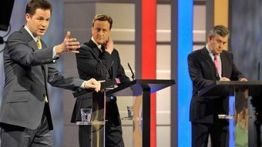
Nick Clegg triumphs – and Cameron gains – in the first TV debate

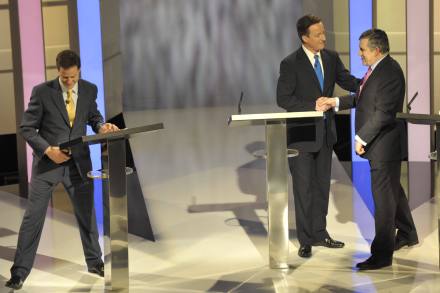
So, who won?  Well, hold your horses, dear CoffeeHouser.  First, it's worth noting that that was a good shade more compelling than I thought it would be.  There were moments of heat, drama and political tension, of course.  But there was also a sprinkling of light as well.  I suspect anyone watching that would have picked up a working sense of the differences and similarities between the parties and their leaders. So, who won?  Well, it depends what you mean by "won".  Nick Clegg certainly gained most from the evening.  He was confident, coherent and had a strong line on almost every policy area, whether you agreed with those lines or not.

Take your seats

Right – the pizza has been ordered, my glass is overflowing with raspberry Ribena (New! And delicious!), and I've fired up the old cathode ray tubes. But, somehow, I'm still feeling quite ambivalent about tonight's TV debate. Maybe it's because I still suspect it will be a cautious affair – with neither side wanting to risk the kind of mistake which could define their evening. Maybe it's because of the wall-to-wall coverage of the past few days. Or maybe it's because the New York Times has a (deliciously arch) point when it writes that UK politics is finally "moving into the television age".

Goldsmith’s declaration of independence

Make what you will of his political agenda, but I think this is quite a refreshing admission from Zac Goldsmith today: "There are various things I have said in this campaign with absolute certainty. I said there will be no Heathrow expansion under our Government, there will be no charges for parking in Richmond Park and Kingston Hospital will be safe. If any of those promises are broken I will trigger a by-election and allow people to penalise my party." It's bound to rile some of his Tory colleagues, of course – particularly this close to the election.  But one of the upshots of Parliament's recent spate of scandals is that they – and we – will have to come to accept more independent, and independent-minded, MPs.

Brown’s signature parade

Only 58? Labour's last letter attacking Tory spending cuts this year had 60 economists' signatures attached to it. Their latest, released today, has only 58. Number 10's signature-marshalling skills are clearly on the wane. I sincerely hope that the Tories don't marshal some economists of their own. The last time that happened, back in February, we witnessed the low point of the fiscal debate – with both sides using a bunch of academics as a substitute for a proper conversation with the public. And, lest we forget, Guido's handy graph reminds us just what those economists were and are quibbling over anyway. This is a phoney war, so it's little surprise that Brown has resorted to it once again. Thankfully, signs are that Tories won't pay heed to the bait.

First poll since all the manifesto launches has the Tories ahead by 9 

The figures from YouGov's daily tracker have just been released, and they have the Tories on 41 percent (up 2), Labour on 32 (up 1), and the Lib Dems on 18 (down 2) – so a lead of 9 points for Cameron & Co.  It's worth noting, as well, that the Tory manifesto comes out on top in supplementary questions about which has the best policies, which is most honest and which is the best for the country.  But, to my eye, the most striking result is that relatively low level of support for the Lib Dems.  I imagine that they'd certainly hope for better as they continue peddling their anti-"Labservative" message.

The Lib Dems have found their issue

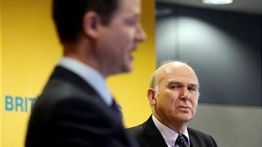
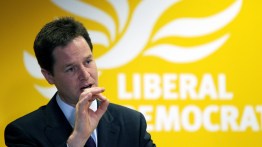
Well, that was quick.  After the Tories' one-hour-and-forty-minutes-long manifesto launch yesterday, and Labour's comparable event the day before, it was quite a relief that the Lib Dems got through theirs in a nerve-soothing 45 minutes.  And that included introductions from Sarah Teather, Danny Alexander and Vince Cable, and a speech from Nick Clegg - all of them short, sharp and snappy.  The only thing which seemed to drag was the Q&A session at the end. But timings aside, it was clear that the Lib Dems have hit on an issue which - they think - separates them from the other parties.  In 2005, it was Iraq.  This time around, deserved or not, it's fiscal responsbility.

Labour’s response to the Tory manifesto

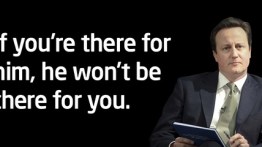
Anyone else think that Labour's latest poster is like a negative of the Tories' "Vote For Me" effort?  White text on a black background, instead of black text on a white background.  A picture of Cameron, instead of Brown.  I mean, the only thing that isn't swapped over is the tone: both go on the attack, rather than presenting a positive vision. Labour's message here is that the Tories' Big Society manifesto washes its hands of the people.  Which echoes the caricatures - "an agenda for abandonment" - that Peter Mandelson wheeled out yesterday, and which you can expect to hear again and again between now and polling day.  The question is whether this attack will connect at a time when people trust politicians - and their capabilities - less than ever.

The Lib Dems’ turn to convince?

So now it's the Lib Dems' turn to present their prospectus for the country.  And, in some respects, I expect they'll want a fairly uneventful day.  They have, after all, endured the most topsy-turvy campaign of the three main parties so far.  Brown has given us no more, and no less, than what we expected.  The Tories have been riding the crest of a national insurance wave.  But the Lib Dems have bounced around from the highs of Nick Clegg's performance on Newsnight to the lows of their misleading VAT poster, from their continuing Labservative attacks to Ed Balls describing their schools policy as "creditable" on Sky this morning.

Counting the cost of Labour’s national insurance hike

Insightful work from the FT's Chris Giles, who has dug out a couple of academic articles - including one co-authored, in 2007, by George Osborne's current chief of staff, Rupert Harrison - to work out how many jobs Labour's national insurance rise might cost the economy.  The results?  Well, according to Giles, one says that 23,000 jobs will be lost, and the other comes up with 22,000. Neither of these are figures that Labour will want to crow about.  But, as Giles points out, they are below the "57,000 jobs in small and medium-sized businesses alone" that the Conservatives predict in their manifesto.

The return of Chris Grayling

Adam Boutlon's interview with Chris Grayling this afternoon felt like a pressure valve being released.  Grayling's recent low profile had already become a rolling story, and his absence from the speaking line-up at his party's manifesto launch was bound to fuel more murmuring and speculation – so the Tories clearly decided to wheel him out in front of the cameras to calm things down a bit.  As it happened, Boulton was on combative form – arguing that elected police commissioners would just add "another layer of bureaucracy" to society – but Grayling sounded quite reasonable in response.