Peter Hoskin

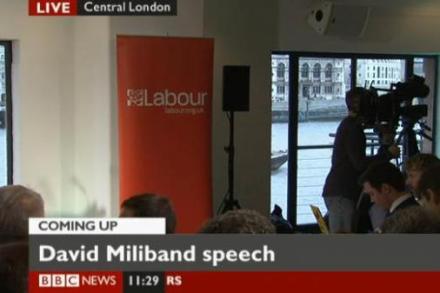
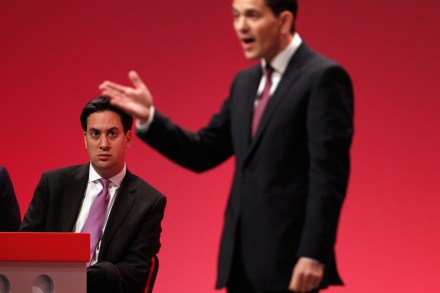
Enter, David Miliband?

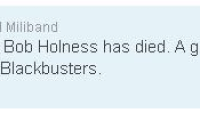
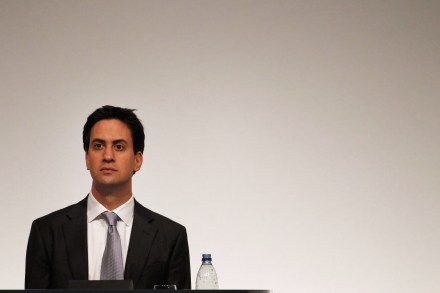
‘Every day, in every way, it's getting worse for Ed Miliband.’ That's what I said last Thursday, and it has been more or less borne out since then. Friday, of course, brought that Twitter embarrassment. Saturday, the subsequent headlines, as well as Miliband's unconvincing attempt to push back against them. Sunday featured some of the most vicious attacks on his leadership by Labour MPs so far. And even today we've got the sort of ‘helpful’ advice from a senior Labour figure — in this case, Alan Johnson, suggesting that ‘too often we sound like a debating society rather than a political party’ — that comes across as frustrated criticism.

Cameron’s balancing act over Scotland

The Cabinet is meeting about 5 miles away from Downing Street today, at the Olympic Park in Stratford. But its collective mind will be on a patch of land another 270 miles further on still. Yep, Scotland and Scottish independence are the matters at hand today. According to the Beeb, David Cameron and his ministers will discuss their ideas for the referendum, its content and its timing. It's thought that they may allow a referendum that's binding on the UK government – but only so long as it takes place in the next eighteen months, and offers a simple ‘Yes’ or ‘No’ vote on independence.

What’s more important to Cameron: actual fairness or presentational fairness?

James has already blogged the Sunday Telegraph's interview with David Cameron, but some other things stand out from it — and not just the PM's unthinking attack on Ed Balls either, for which he has since apologised. Take these paragraphs on tax, for instance: ‘The Prime Minister effectively rules out any move towards a “mansion tax” — a levy on high-priced properties proposed by the Liberal Democrats — or indeed any new tax on wealth. “I don’t believe, generally speaking, we should be looking at endless additional taxes.

Ed under siege — and under threat

There was a fun game we used to play during Gordon Brown's premiership: counting the number of ‘buck up, or we kick you out’ ultimatums that Labour MPs delivered to their leader. There were, suffice to say, a lot of them. And tallying them up illustrated two things: the constant, sapping pressure that the Brown leadership was under, and Labour's persistent inability to actually finish him off. I mention it now because of this story in today's Mail on Sunday. It collects the increasingly public criticism of Ed Miliband by his own MPs, including Graham Stringer's warning that ‘Ed has got to get a grip and turn it around before the May elections.’ It's not at the level of the Brown Ultimatums yet, but it's certainly remiscent of them.

From the archives: The great Ronald Searle

Earlier this week we ran a blog post by our cartoon editor Michael Heath, marking the death of the Ronald Searle. As an accompaniment, here's the interview that Harry Mount conducted with Searle for The Spectator two years ago: ‘I went into the war as a student and came out as an artist’, Harry Mount, The Spectator, 13 March 2010 High in the mountains of Provence, in a low-ceilinged studio at the top of his teetering tower house, Ronald Searle is showing me the simple child’s pen he uses. As he draws the pen down the page, the ink thickens and swerves; a few sideways strokes, a little cross-hatching, and suddenly the famous Searle line comes to life: part Gothic, part anarchic, part comic.

Dave talks film, finances and Europe

It was the second of the Today Programme's New Year's interviews with the three party leaders today; this one with David Cameron. And there was plenty to digest from it. So much, in fact, that we thought we'd bash out a transcript, so that CoffeeHousers can read it through for themselves. That's below, but before we get there it's worth highlighting a couple of things that Cameron says. First, his point that ‘we've seen a level of reward at the top that just hasn’t been commensurate with success’, which is another volley in the battle against the ‘undeserving rich’ that James mentioned yesterday.

Murphy sets Labour’s new strategy a-rolling

A few weeks ago, a shadow minister urging Labour to avoid ‘shallow and temporary’ populism over spending cuts might have seemed like a sally against the party's Ballsist wing. But given that Ed Balls has since said that ‘Labour will give more details of its tough spending decisions [in 2012]’, then Jim Murphy's intervention in the Guardian today is a little less provacative than that. In truth, the shadow defence secretary's words fit perfectly into Labour's plan to sound more fiscally responsible this year. It is, most likely, party policy dressed up as a clarion call. What's striking is that Murphy goes beyond this simple rhetoric, becoming the first shadow minister to give some of those ‘details’ that Balls mentioned.

Why Tom Baldwin reckons Labour shouldn’t give up on Miliband

Before Christmas, The Times's Sam Coates managed to get his hands on Labour's ‘media grid’ for the week — and much Westminster-y fun it was too. But now he's gone one better, by publishing a strategy memo that Ed Miliband's director of communications, Tom Baldwin, has produced for his Labour colleagues. It's well worth reading in full, here and here, not least because it outlines the party's argument for the coming year. In summary, though, it's much like Miliband's New Year's address: more of the same, with a side order of fiscal responsibility.

Every day, in every way, it’s getting worse for Ed Miliband

Unless one of Ed Miliband's New Year's resolutions was to ignore absolutely everything going on around him, I expect the Labour leader will be in a particularly glum mood this morning. And it's not just that Maurice Glasman article — which has inspired the headline ‘Miliband's former guru says he has “no strategy”’ on the front of today's Guardian — either. It's the, erm, questionable tweets from one of Miliband's shadow ministerial team. It's the LabourList poll that finds scant support, and much disapproval, for his leadership. It's that John Rentoul column suggesting Yvette Cooper for the throne. It's the Tory minister who said to Iain Martin that ‘Keeping Ed Miliband in his job must be one of our biggest priorities this year.

Gove versus the ‘enemies of promise’

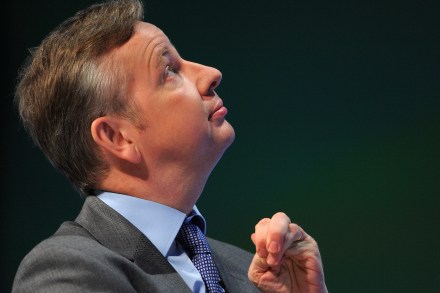
Michael Gove has never been timid in confronting the education bureaucracy, but his attack on them today is particularly — and noteworthily — unforgiving. Referring to those truculent local authorities that are blocking his schools reforms, he will say in a speech that starts in about ten minutes: ‘The same ideologues who are happy with failure — the enemies of promise — also say you can't get the same results in the inner cities as the leafy suburbs, so it's wrong to stigmatise these schools. Let's be clear what these people mean. Let's hold their prejudices up to the light. What are they saying? “If you're poor, if you're Turkish, if you're Somali, then we don't expect you to succeed.

The Taliban’s peace offering

‘Taliban’ and ‘peace mission’ — the words sure don't fit very well together. But they're the words that you'll see in tomorrow's papers, given that the Taliban have today revealed their intention to open a peace mission in Qatar. The idea is that foreign diplomats can stop by, share a cup of tea and some Ferrero Rocher, and talk about ending the insurgency in Afghanistan. The news ought to treated with caution for now. After all, the Taliban haven't given a date for when their Qatar office will be open, and they're making noises about prisoners being released from Guantanamo Bay in return. But it's a still a significant moment, whatever happens. For the first time in public, the Taliban appear to be broaching the possibility of peace talks.

Where ‘constructive engagement’ could become destructive

Those ‘cross-party talks’ over social care haven't started quite yet, but the positioning has already begun in earnest. In response to a letter by a gaggle of experts in today's Telegraph — which urges politicians to ‘seize this opportunity for urgent, fundamental and lasting reform’ — both David Cameron and Andy Burnham have tried to sound utterly reasonable and mutually accommodating. The word ‘constructive’ is being deployed generously by all sides. In his interview with the Today Programme, however, Burnham did also hint at what's likely to be the main area of contention.

Byrne offers ‘something for something’ — but what does it mean?

What's this? Seems like Liam Byrne has emerged from his policy review with an idea. He calls it, in an article for the Guardian today, ‘something for something’: ‘…“something for something” means reward for those who are desperately trying to do the right thing, saving for the future and trying to build a stable, secure home. Right now, these families are offered too little reward and incentive — in social housing and long-term savings — for the kind of behaviour that is the bedrock of a decent society.’ In truth, it's not a new or surprising idea at all.

Happy New Year, CoffeeHousers!

A quick post to wish CoffeeHousers a very happy New Year, and to thank you for reading and commenting in 2011. The blog may be a bit quieter over the next day or two (although there will be some posts); but, rest assured, we'll come roaring back to normal service early next week. In the meantime, there's still time to enter our New Year competition. Or how about sifting back through the ten ‘most-read’ articles from all across the website this year? Here are the links: 1) What the papers won't say — Peter Oborne 2) The footballer is named — Alex Massie 3) More like Veena, please — Nick Cohen 4) Ten myths about Cameron's EU veto — Mats Persson 5) Forget Mandarin.

A year of Spotify Sundays

As the name suggests, our Spotify Sunday posts normally run on a Sunday. But let's make an exception for this round-up of all the Spotify Sundays that have featured on the Arts Blog in 2011. You're probably familiar with them already — but if you're not, then they're the Spectator website's equivalent of Desert Island Discs. One of our writers or friends selects ten songs, often with a unifying theme, and writes a sentence or two about each. Provided you've downloaded Spotify (for free!) onto your computer then you can listen to those songs (for free!) by following the link at the end of each Spotify Sunday post. The selection will automatically start playing within your own Spotify program. We're particularly pleased with our Spotify Sunday series.

The cross-party talks that may test the coalition

Whenever politicians talk about social care, they tend to promise ‘cross-party talks’. It's their little euphemism for ‘we don't want to commit to a policy by ourselves.’ Don't get them wrong, it's not that they don't have ideas for fixing a system that is straining under the weight of an ageing population; the Dilnot report, released earlier this year, gave them plenty of recommendations to work with. It's just that they don't want to be the ones to implement the tax hikes or spending cuts that will be necessary to fund it. If they can talk it through with the other parties — the thinking goes — then this crucial policy area can be detoxified, the blame spread more or less evenly.

What are your predictions for 2012?

The Christmas double issue of The Spectator has now been retired from newsstands, and today our New Year edition emerges in its place. Among its articles casting forward into 2012 is a list of ten predictions by James Delingpole. Here's just one of them, as a taster: ‘Ukip will become Britain’s third largest party. This will go almost completely unreported in the media. Other headlines you won’t read: “Climategate scientists: ‘Oh all right. We confess. We’ve just been making it up as we go along’”; “Vince Cable: ‘Only the free market can save us now’”; “Archbishop of Canterbury: ‘If water cannons don’t shift ’em then we should try napalm.

Miliband’s New Year message: The same, but different

Well, folks, the 2012 model of Ed Miliband looks and sounds rather like the unfancied 2011 model. Just compare the New Year message that he released today with the one that he issued a year ago; the similarities are plenty. His main argument this year is that the Tories are the party of gloom — resigned to years of stagnancy, unemployment, pestilence, etc — whereas Labour are the party of a bright new future, there to show that ‘optimism can defeat despair’. Or, as he put it at the end of last year, ‘Even in these tough times, we must keep the flame of optimism burning.’ There are some differences, though. Compared with last year, Miliband talks much less about the coalition going ‘too far, too fast’ with deficit reduction.