Patrick West

Patrick West is a columnist for Spiked and author of Get Over Yourself: Nietzsche For Our Times (Societas, 2017)

BBC Bitesize’s communism blindspot

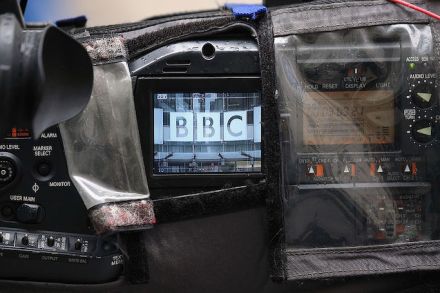
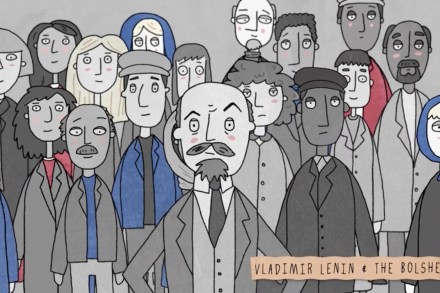
A great exhortation of our times is the need to ‘be kind’. It manifests itself among those who cry ‘refugees welcome’, who urge for ‘compassion’ for the feelings of those deemed oppressed, and for those who regard Paddington Bear as the embodiment of everything good in the world. More sinisterly, however, this mentality still shows up in those who would excuse the crimes of communism. According to a Sunday Telegraph report, one of the BBC’s online resources for children, which provides an overview of communist ideology and history, glosses over the mass murders committed in its name.

Trans activists won’t be silenced by the Supreme Court ruling

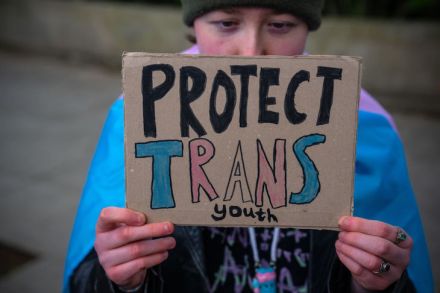
Many people have been celebrating after the Supreme Court’s declaration that the definition of a woman will indeed be based on biological sex. Some have heralded it as signifying the end of radical trans ideology, or even the end of woke politics altogether. All this remains to be seen. What we certainly won’t see, however, is the language of emotion in politics finally being put to bed, as reason and common sense make a welcome return to our lives. In fact, the tyranny of feelings is likely to get much worse. Before Wednesday's landmark ruling, radical trans activists had invariably deployed feelings and emotive words to advance their cause.

‘Stop Brexit Man’s court victory is a win for free speech

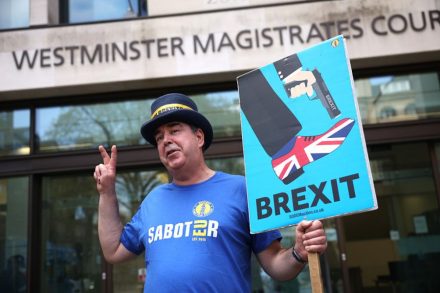
From today, ‘Stop Brexit Man’ is free. This character, whose real name is Steve Bray, the long-standing bane of broadcasters, politicians and pedestrians on account of his persistent and clamorous pro-EU protests, has been cleared of flouting a police ban after playing anti-Conservative and anti-Brexit songs outside Parliament. Bray was apprehended after blaring loud music through speakers last March, when the then prime minister Rishi Sunak arrived for Prime Minister's Questions. Today, Westminster Magistrates’ Court found him not guilty of failing without reasonable excuse to comply with a direction given under a 2011 Act on ‘prohibited activities in Parliament Square’.

Have we got worse at dealing with stress?

Barely a month seems to pass without a public exhortation to ‘raise awareness’ about the plight of some marginal section of society, or for some worthy cause on behalf of the vulnerable. If you find this trend tiresome, irritating or indeed stressful, then help is at hand: April has seen the arrival of Stress Awareness Month. Bearing in mind that we are said to be undergoing a mental health crisis, with one in five 16-25 year-olds now citing poor mental health as a reason for not seeking work, the timing couldn’t be better. As a nation, we clearly aren’t coping, so some reflection and introspection is surely in order. Stress is neither abnormal, nor is it inherently a bad thing And help is indeed on hand.

Why is Keir Starmer wishing us Eid Mubarak?

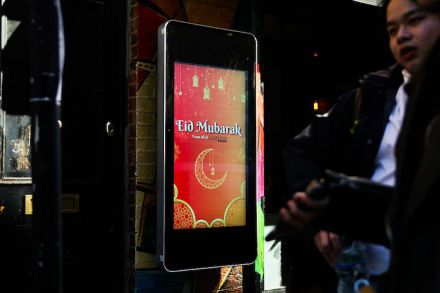
In case you hadn’t noticed, it's Eid. But of course you noticed. You’d have to be living in a cave not to be aware that today marked the end of the Muslim holy month of Ramadan. That’s because nearly all public bodies, along with a plethora of private institutions, have been busy on social media reminding you of the fact. From the Prime Minister, the Royal Family, the Army to the BBC, all the principal manifestations of the state have been at it. Our public broadcaster put on a special Eid Live show on BBC1, followed with another programme, Celebrity Eid. Our private bodies have been following suit, with such unlikely candidates as the Formula 1 team McLaren and Leeds United football club among those joining in the chorus of ‘Eid Mubarak’.

Why are police targeting a school WhatsApp group?

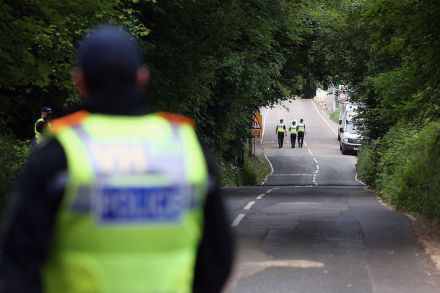
The heavy-handed conduct of the police these days often provokes accusations of ‘Orwellian’ behaviour – and with good reason. There has been a litany of reports in recent years of people being investigated and cautioned for remarks, often made in private, that have been adjudged ‘offensive’ or 'hurtful'. In the eyes of many, we now have a de facto thought police in this country, with their disproportionate response to people’s sentiments and words indeed warranting comparisons to Nineteen Eighty-Four.

London is not as bad as people say

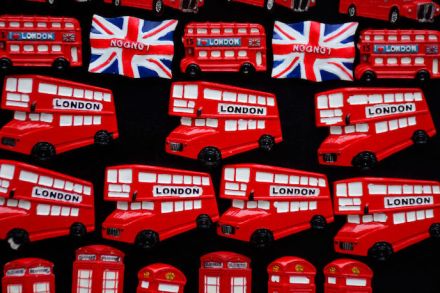
Complaints that ‘London isn’t what it used to be’ or ‘London is a hell-hole these days’ are hardly original or new, but reports keep giving succour to this perception. The news that the capital has recorded its highest-ever level of mobile theft will only confirm what nostalgics and those who regularly watch TV already know: that our once-great capital is overcrowded, overpriced, crime-ridden and barely English anymore. While this stereotype is founded on much truth, I think some redress is in order, not least an infusion of nuance. By way of putting perspective on matters, here’s my story. London has unquestionably changed.

The audacity of ‘decolonising’ Shakespeare

It seems to have become an unspoken requirement of recent that anyone in charge of promoting or putting on the plays of Shakespeare must first of all hate him and his works. We have long grown accustomed to the Royal Shakespeare Company prefacing his plays with trigger warnings reminding us of what a terrible man he was, that his works contain all manner of bigotry, sexism and racism. So it was no surprise to read yesterday that his birthplace is now being ‘decolonised’, in response to concerns that the playwright is being used to promote ‘white supremacy’.

Why Henry Kelly was popular

Henry Kelly was a well-loved personality in Britain. The Irish television and radio presenter, who died this week, came to prominence in this country in the 1980s in the ITV show Game For A Laugh, consolidating his popularity on BBC’s Going For Gold and on the airwaves as a presenter on Classic FM. And intrinsic to Kelly’s appeal was his unmistakeable Irish persona. Kelly has been variously described in his obituaries as ‘jovial’ and ‘ebullient’, blessed with ‘humour’ and a ‘cosy Dublin charm’. Such appraisals could have easily been invoked to described Dave Allen or Terry Wogan, his co-patriots who also endeared themselves to the British public, entertainers who similarly embodied a benign Irish stereotype.

Keir Starmer is right to cut foreign aid

It was inevitable that the announced cut to Britain’s international aid budget would cause a stir. The curtailment earlier this month of the USAID programme provoked outrage among progressive voices worldwide, despite the fact that scheme funded some dubious causes. Why, then, would our compassionate classes react any different? Yesterday, Prime Minister Keir Starmer explained that his plan to increase defence spending would be partly balanced by a reduction in the aid budget, from 0.5 per cent to 0.3 per cent of GDP. Some of his Labour colleagues aren’t happy.

Sam Fender is right about white privilege

Teaching working-class young men that they benefit from ‘white privilege’ is having a detrimental effect on a generation of boys, leading to feelings of negativity and worthlessness, and driving them into the hands of dangerous influencers such as Andrew Tate. This is the claim made by Sam Fender, the best-selling, 30-year-old musician from North Shields. As the singer told the Sunday Times yesterday, this teaching has resulted in boys from poor white backgrounds being ‘made to feel like they’re a problem’, with those from ‘nowhere towns’ being ‘shamed’ and told they weren’t underprivileged because of their skin colour.

Why progressive activists feel superior

Left-wing activists are less likely to understand or listen to people with conservative beliefs, compared to the rest of the population. They are more inclined to view them negatively, and to dismiss them as having ‘been misled’ in forming their opinions. This is the revelation on the front page of the Guardian today. Reporting on a study by the political group More in Common, it relates how the liberal-left are ‘out of step’ with most people in the country when it comes to cultural matters and immigration. When it comes to conservatives in particular, progressives are more prone to misunderstand them, criticise them and even refuse to campaign alongside them.

Why is Tom Hanks mocking Trump supporters?

We have long become accustomed to actors holding and sharing their progressive political views. So when David Tennant opened the Bafta awards on Sunday with a dig at Donald Trump, repeating the line that the American President is a dangerous moron, many people were annoyed, but few were surprised. Mechanically reciting fashionable mantras is what actors do, and Tennant, hitherto known for his vocal support for the trans movement, is no exception. The entire film Team America: World Police (2004) was founded on this reality about thespians.  When his counterpart on the other side of the Atlantic, Tom Hanks, did similarly at the weekend, there was, however, genuine shock.

The irony of the backlash against the DEI rollback

It was only a matter of time before the rollback of Diversity, Equity and Inclusion (DEI) policies in the workplace provoked a backlash. Following an ongoing reversal on the matter in recent months, seen on a global scale at Google, Facebook and Amazon, and here in Britain at BT and Deloitte UK, the head of the Co-op group has spoken of her alarm at this development. As reported in the Guardian over the weekend, Shirine Khoury-Haq, the CEO of the retailer, warns of the grave implications of this turnaround: The medium-term consequences for institutions that employ DEI policies are already proving deleterious Rolling back on DEI isn’t just an internal business decision, it has real-world consequences.

In defence of The Apprentice’s Jana Denzel

The front page of the Sun today pronounced that a star on the television show The Apprentice has quit for using ‘racist language’, specifically for employing a ‘highly offensive term’ to describe a black person. One can only recoil in imagining what a foul and obscene word the contestant must have used. But you needn’t be unduly nervous. The offending word was ‘coloured’. According to the story, Jana Denzel, a dentist of Sri Lankan heritage, was reported by two ‘shocked’ female teammates after making the utterance. Bosses at the show took ‘swift action’ and made him undergo diversity training. Following discussions with producers, who explained to him the offensive nature of the remark, Denzel announced his departure from the programme.

What Gen Z gets wrong about ‘racist’ Britain

Nearly half of Generation Z believes that Britain is a racist country, and a similar proportion say that they aren't proud to be British. This is the grim finding of a study published in the Times yesterday, based on a YouGov survey and research by the opinion consultancy Public First of 18- to 27-year-olds. The revelation sits in stark contrast with a study undertaken by the Times twenty years ago, in which 80 per cent of young people said that they were proud to be British. The discrepancy is even more stark when contrasted with a general consensus that Britain has become a less racist and more racially-aware place in the intervening period.

Generation Bland: the inevitable rise of ‘Palentine’s Day’

As we approach with anticipation or dread 14 February, the day we traditionally celebrate love and all things amorous, a certain demographic will instead be observing a rather less passionate and altogether more bland occasion: ‘Palentine’s Day’. Commemorated on 13 February, this is apparently the date upon which to honour platonic friendships instead of romantic engagements – and it’s proving increasingly popular among Generation Z. It all started with ‘Galentine’s Day’, a celebration of female friendship invented by the character Leslie Knope in American political satire mockumentary Parks and Recreation in 2010. As the concept moved from comedy to real life it morphed into the gender-neutral ‘Palentine’s’ – lest anyone should feel left out.

Why children peddle conspiracy theories

Teenagers today are more likely to believe in conspiracy theories, and that is a very bad thing indeed. This was the unmistakeable message conveyed by a story in the Times yesterday. Citing a report published by the Commission into Countering Online Conspiracies in Schools, it related how ‘conspiracy theories are rife in classrooms’. Young people, we're told, are more inclined to trust social media influencers than the government when it came to news sources and forming their views of the world. Teachers ‘need urgent support’ to prevent children ‘falling down rabbit holes online’ and succumbing to ‘misinformation’ they discover therein.

Lego isn’t homophobic

To the surprise of millions of children today, and to their parents who loved the toy when they were youngsters themselves, it turns out that Lego can be homophobic. This is the conclusion of a self-guided tour of the Science Museum in London. The tour, which explores ‘stories of queer communities, experiences and identities’, warns that the plastic blocks can also reinforce the idea that heterosexuality is the norm. As reported in the Daily Telegraph this morning, the ‘Seeing Things Queerly’ tour, devised by the Gender and Sexuality Network, also cautions that Lego can add credence to the view that there are only two genders. The logic behind such assertions is fantastical, but there is some tenuous reasoning afoot – or at least a laboured inference.

Why Britons can’t stop stealing

We were once known as a nation of shopkeepers. We are now a nation of shoplifters. As the Times reported last week, citing two recent reports from criminologists, ‘Britain is an increasingly dishonest society’, where ‘stealing from self-service supermarket check-outs has almost become a national sport.’ It didn’t need academics to tell us what we already know, what we’ve read repeatedly in the newspapers, and what we’ve seen before our very eyes: theft has become commonplace and normalised. But we should still ask ourselves why. Many factors are at play.