Olivia Potts

Olivia Potts

Olivia Potts is the Guild of Food Writers’ Cookery Writer of the Year 2025. She hosts The Spectator’s Table Talk podcast and writes Spectator Life's The Vintage Chef column

Madeleines: the miniature French cake that majors on flavour

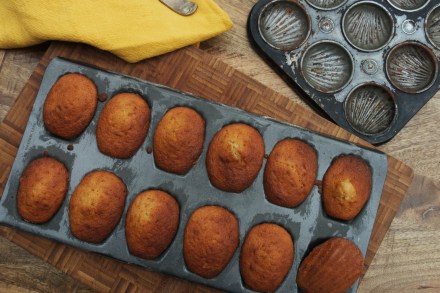
In one sense, a madeleine is simply a small cake. In fact, it’s an extremely classic cake, made with the genoise method. But there’s more to a madeleine than that: the proportions of madeleines, their miniature nature and scalloped shape, mean that they have a perfect contrast between their slightly sticky, almost crisp outside, and impossibly light and soft interior. Traditionally they are made with browned butter, which does what browned butter does best, bringing depth and complexity to a straightforward sponge. The dark muscovado and honey in the recipe elevate these little sponges from a miniature cake into something really special. The holy grail when madeleine making are those characteristic bumps in the centre of the cake, sitting like pregnant tummies.

Nanny Boris: the PM’s alarming flight from liberalism

42 min listen

What are the pros and cons of vaccine passports?(00:33) Also on the podcast: Is it time for restaurant kitchens to ditch their toxic masculinity?(18:00) And finally... Cricket, what does the new tournament, the Hundred mean for the sport?(30:14)With: Fraser Nelson; Melanie Phillips; Olivia Potts; the chef and owner of Darjeeling Express, Asma Khan; Freddie Wilde, an analyst for Cricvis and legendary sports journalist Henry Blofeld.

Will abusive chefs get their just deserts?

Professional kitchens have always seemed like pressure cookers: hot, sweaty, stressful. The caricature of a head chef is angry, sweary, unable to keep a lid on his temper. He shouts at underlings for the most minor of infractions. Recent events have shown how pervasive that stereotype still is. A number of ex-employees of the Kitchin Group, the set of restaurants owned by celebrity chef Tom Kitchin, have made allegations of a range of abuse, from being denied food, drink and breaks to deliberate burning and sexual harassment. Two senior members of staff have been suspended pending investigation. But the response from the food industry has been muted. Many have simply ignored the claims; others have made excuses.

Gala pie: a dish that deserves an audience

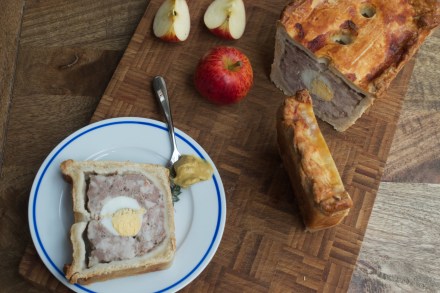
Some dishes are just meant to be shared. I’m not talking about those items you buy on a hangover from the corner shop that sanctimoniously declare ‘meant for sharing’ or ‘share size’ on their passive aggressive packaging (I’ll be the judge of that, cheese and onion crisps and chocolate fingers). I mean something that you’ve invested energy and love into, something which demands to be passed around, praised and enjoyed; something impressive and delicious. A homemade cassoulet. A perfect chocolate cake. A batch of scones. A gala pie. The moment of cutting into a gala pie, and revealing the perfect row of eggs suspended in meat minced by your own fair hands is one of serious culinary pride.

With Jack Whitehall

18 min listen

Jack Whitehall is an actor and comedian, however during the pandemic he has also started a food blog, FoodSlut. On the episode, he talks to Lara Prendergast and Olivia Potts about his public love of McDonalds, his secret love of The Ivy and the time he once saw a man attempt to make a grilled cheese with his feet.

A lesson in understanding serial killers and child molesters

True crime is having a moment: every day there’s a new documentary, book, podcast, or blockbuster film announced, detailing the grisliest, most depraved actions imaginable. Once only the domain of fanatics, true crime is now mainstream. At its best, it’s fascinating, shining a light on human behaviour, but at its worst, it can be voyeuristic and dehumanising. So I approached The Devil You Know, Dr Gwen Adshead’s memoir of forensic psychotherapy charting her encounters with serial killers, murderers and paedophiles with a little trepidation. The book is divided into 11 chapters, each telling the story of an (anonymised) patient of Adshead. They come from her time spent working in prisons, secure hospitals such as Broadmoor and private practice.

Vichyssoise: a cool soup for balmy days

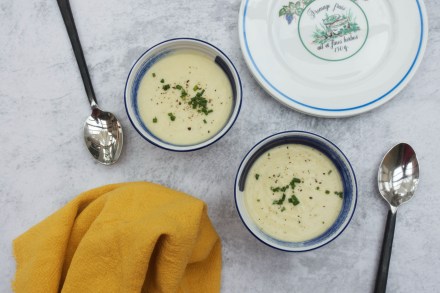
I have never been a huge fan of cold soup. It has always seemed to me to be contrary to everything good about soup: soup is inherently warming and cheering. It demands large portions and an accompanying doorstep of bread. Who on earth would want to chill it down and serve it in tiny portions – and without bread and butter? Madness! Historically, I have made an exception for gazpacho and salmorejo on the basis that they hail from hot countries, and that they aren’t thickened with dairy. But I drew the line at what I thought of as hot soups served cold. Vichyssoise was doubtless the worst of them: give me a vat of hot leek and potato, but spare me the cold stuff. Sometimes, we don’t get what we want, we get what we need.

Ratatouille: a versatile Provençal one-pot

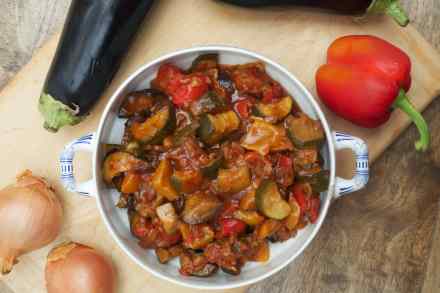
There aren’t many veggie stews that can lay claim to being immortalised in popular culture. Fewer still that could then complain about being grossly misrepresented. But then ratatouille is no ordinary vegetable stew. Ratatouille is a Provençal dish, made by gently cooking aubergine, courgette, and red peppers, with a tomato sauce flavoured with onion, garlic and herbs. It is, in many ways, extremely simple. But for all its simplicity, it remains the subject of confusion. If you watch Pixar’s Ratatouille, you will see the terrifying food critic, Anton Ego, reduced to a Proustian state of rapture when served what we are told is ratatouille, making him recall his childhood and his mother’s cooking.

With Calum Franklin

25 min listen

Calum Franklin is executive head chef at Holborn Dining Room, and an internationally renowned pie-maker (dubbed 'The Pie King' by Jamie Oliver). On the episode, he talks to Lara Prendergast and Olivia Potts about how his menus try to recreate the nostalgia of his simple childhood meals, like fish pie; the centrality of pies to British cuisine; and why his restaurant is inspired by the copper and brass fronts of Parisian antique stores.

Coconut ice: a no-bake treat made for the heat

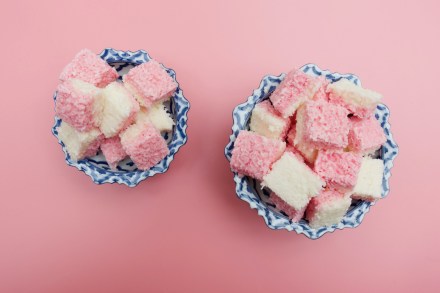
I don’t know about you, but I find that many of the things I enjoy eating most in the summer, those things I crave when the weather is blazing hot or just plain muggy, still require some level of cooking. Those chilled soups, or sticky ribs, or even ice creams still mean standing over a hob or a barbecue or turning on the oven. Mostly, I embrace it: a hot means to a greedy end. As someone who finds relaxation in baking and cooking, I’m not big into no-bake dishes. I’m willing to turn the oven on if it means soft, baked fruit that I can chill and serve with swoops of cool softly-whipped cream, or to light my barbecue if it means beautiful, charred fish alongside a sharp, zingy dressing.

Swedish meatballs: a taste of Ikea at home

It’s thought that meatballs were brought to Sweden by King Charles XII. After a disastrous attempt to invade Russia in 1709, he fled in exile to the Ottoman empire. There he fell for a dish very similar to the Swedish meatballs we now know and, when he returned from exile five years later, he took those meatballs back with him. The meatballs grew in popularity and eventually became so closely associated with the country, that they took on the ‘Swedish’ name. But it would be disingenuous to write about Swedish meatballs and not mention that bastion of storage, that flatpack palace: Ikea. It’s no exaggeration to say that Ikea brought the Swedish love for meatballs to the rest of the world.

What makes a pasty Cornish?

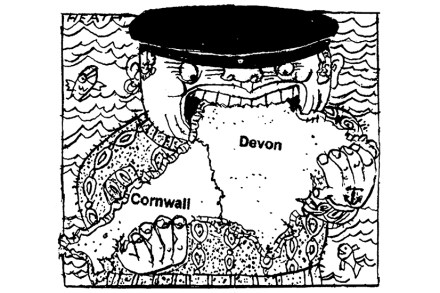
This week, world leaders are doing what countless Brits do every summer: unpacking their bags in a charming corner of Cornwall. The G7 summit — Joe Biden’s first, and Angela Merkel’s last — is taking place in the resort town of Carbis Bay, a stone’s throw from St Ives. Between the speeches and the roundtables, will the world leaders find time to tuck into Cornwall’s proudest and most popular export, the Cornish pasty? Boris Johnson talked about the region’s industrial history in the run-up to the event: ‘Two hundred years ago Cornwall’s tin and copper mines were at the heart of the UK’s industrial revolution and this summer Cornwall will again be the nucleus of great global change and advancement.

With Craig Brown

24 min listen

Craig Brown is an awarding winning critic, satirist and former restaurant reviewer. His most recent book One Two Three Four: The Beatles in Time, won the Baillie Gifford Prize for Non-Fiction.On the podcast, he talks to Lara and Olivia about the horrible food at Eton, his utter failure to bake a cake, and proposes that one of the least important things to him when he was reviewing a restaurant was the food.

Petits pois à la Française: a sumptuous twist on summer greens

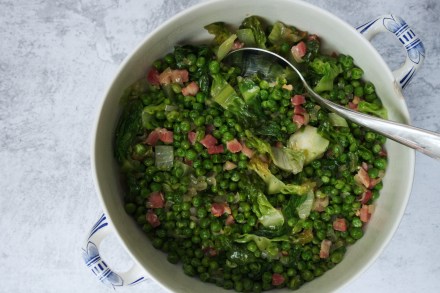
Early summer crops have been delayed in many places this year, thanks to the brutal rain and cold that preceded the recent heat wave, but finally, we’re starting to see tiny tomatoes, baby figs, and the first perfectly formed pea pods bursting into life. Of course, when it comes to seasonal eating, you can argue that it’s best to keep it simple, to allow the produce to ‘speak for itself’ – but, there is little that butter, shallots, and little cubes of smokey, fatty bacon can’t make even better. And that’s where petits pois à la Française comes into its own. The name rather gives it away: it’s a classic French dish, showcasing the best of the season’s first peas.

Broken Trust: the crisis at the heart of the National Trust

33 min listen

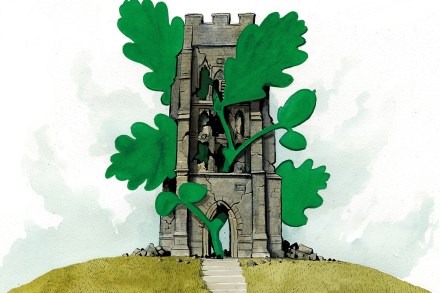
On this week’s podcast, we start with Charles Moore’s cover story on the failings of the National Trust. Why is the Trust getting involved in culture wars, and can it be fixed? Lara speaks to Charles, a Spectator columnist and former editor of the magazine, and Simon Jenkins, who was chair of the Trust between 2008 and 2014. Simon says that it’s ‘very odd’ for the organisation to become embroiled in controversy over Britain’s colonial past and contested history. ‘The National Trust’s relationship with the British Empire, let alone with slavery, is pretty tenuous. I don’t take this accusation against the Trust terribly seriously. This is just currently what I regard as a sort of cult’, he adds.

Bourbon biscuits are better home-made

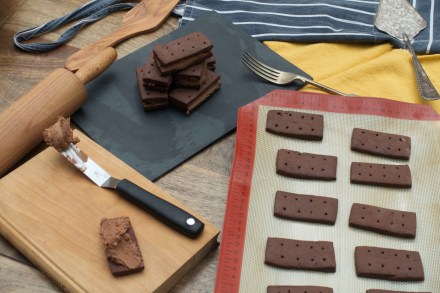
I am a big fan of a tea break. I don’t mean afternoon tea or high tea (although I’m never going to say no to a finger sandwich or a tiny cake), and I don’t mean a mug of tea at my desk or standing up in the kitchen while I do something else. I believe passionately in the restorative powers of just sitting down for fifteen minutes with a mug of something hot and a plate of biscuits. Tea and biscuits have always held an important place in my days. When I was very little, I had a Spot the Dog tea set that, every morning, my mother would fill with warm milk when she made her own morning brew. At college, our librarian insisted on tea breaks in her office to carve up the days of studying – or, in my case, procrastination while waiting for the bar to open.

Is France’s answer to Bake Off worth a watch?

If, like me, you’ve watched every episode of the Great British Bake Off (twice), all the professional series, Junior Bake Off, and the celebrity charity episodes, you might need to look further afield for your next fix of television baking competitions. Fear not, because the GBBO franchise is wide-reaching: the format has been sold in 20 territories, and I have found myself hooked on the French offering: Le Meilleur Pâtissier (‘The Best Baker’). At first glance, it appears identical to the British version. In a tent, bedecked with bunting, a bunch of amateur bakers are collected together at pastel-hued baking benches.

With Patrick Jephson

33 min listen

Patrick Jephson is a consultant, journalist, broadcaster and New York Times best selling author. From 1988 to 1996, Patrick worked first as Princess Diana's equerry and then as her private secretary. He is also currently a historical consultant on Netfilx's The Crown.On the podcast, he talks to Lara and Olivia about bonding over mealtimes with his fellow seamen when in the Navy, having ambassadorial dinners and English Rail sandwiches with the royals, and being cooked for by Pavarotti's personal pasta chef.

The secret to making mint chocolate chip ice cream

It used to drive me mad that, whenever my husband and I would go out for dinner, no matter how fancy or lowbrow the place, he would always ignore the puddings on offer in favour of a single scoop of ice cream. He can overlook crème brûlées, lemon meringue tarts, sticky toffee puddings – even eschew a cheese plate – if ice cream is a possibility. It just always seemed quite a boring choice to me – you can keep a tub of ice cream in your own freezer, or maybe get a cone on the beach. Why would you plump for something so simple (so boring!) when there were so many more exciting options? Of course, as is so often the case, I was wrong.

Potatoes Dauphinoise: a rich dish made for sharing

There’s no getting away from the fact that potatoes dauphinoises is a rich dish. It’s a celebration of richness, of creaminess, and of carbs. If you recoil from richness, or are the first person at the table to bring up calorie counts, potatoes dauphinoises is probably not the dish for you – and frankly, any attempts to lighten it, or slim it down are misguided. But if you can resist bronzed slabs of thin, tender, perfectly cooked potato, with a garlic-infused creamy sauce bubbling up around the edges, you’re made of sterner stuff than I am. Dauphinoises hails from the historical Dauphiné region in South-East France; the region dissolved in 1789 but its potato namesake has lived on.