Olivia Potts

Olivia Potts

Olivia Potts is the Guild of Food Writers’ Cookery Writer of the Year 2025. She hosts The Spectator’s Table Talk podcast and writes Spectator Life's The Vintage Chef column

With Rachel Roddy

30 min listen

Rachel Roddy is an author and food writer based in Rome. She has written for several publications, including the Financial Times, the Telegraph, Food and Wine, The Spectator, and has a weekly column in the Guardian. On the podcast, Rachel talks to Lara and Liv about growing up in Hertfordshire, coping with an eating disorder, why she chose to move to Italy and life under lockdown there over the past 18 months. Her latest book, An A to Z of Pasta, is available to buy now.

The devil’s food cake: a frightening amount of flavour

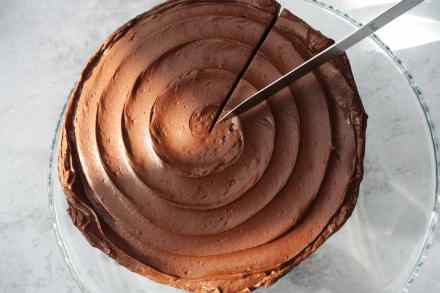
Chocolate cake comes in many different guises: from the dark and rich, to the sweet and simple. For me, it’s not like the ultimate cookie, or the perfect brownie: I don’t believe that there is one, definitive chocolate cake. I do not spend my days searching for the platonic version; trying to rank a chocolate fudge cake above or below a a cream-filled Yule log or a chocolate chunk-studded, plain loaf cake is like comparing apples and oranges. I think, instead, that there is a perfect chocolate cake for every mood. For a party, I want something crowd-pleasing, sweet and tender, with old-fashioned milk chocolate icing; it must cut cleanly, and not crumble.

Plan Z: the rise of Éric Zemmour

34 min listen

In this week’s episode: Who is Eric Zemmour – can he take on President Macron? In our cover story this week, Freddy Gray looks at the rise of Eric Zemmour, the TV presenter who looks set to stir up French politics ahead of next year’s election. Freddy is joined on the podcast by Sophie Pedder, Paris bureau chief for The Economist and a biographer of French President Emmanuel Macron to discuss. (00:46) Also this week: Is the Prevent anti-radicalisation programme failing?Douglas Murray says in this week’s issue that Prevent is failing to tackle Islamic extremism in the UK. He talks about the changes Prevent needs to make along with William Baldet, a Prevent Coordinator. (11:46) And finally: what’s it like to dine naked?

Recipe: Chicken Marbella

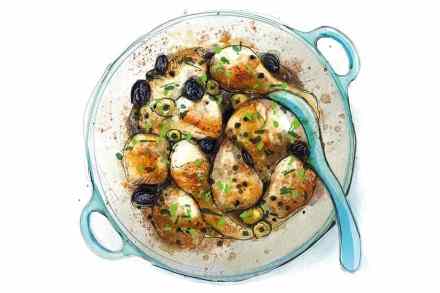
What is it about retro food? I don’t mean nostalgic food, from school dinner favourites to your grandmother’s signature dishes. I mean food you’ve probably never even tried. Thoroughly old-fashioned dishes that nevertheless light up your culinary imagination — or at least mine. I’m talking devilled eggs. Prawn cocktail. Beef stroganoff. Perhaps it’s because many of these recipes hail from the golden age of dinner parties. They speak of glamour, excess, a touch of kitsch, all washed down with a snowball. These are dishes that should be accompanied by shoulder pads and strong opinions about the royal wedding. Following a long period in which it was illegal to hold a dinner party, I crave retro food more than ever.

With Laurie Woolever

29 min listen

Laurie Woolever is a writer and editor, and for nearly a decade worked as the assistant to the late author, TV host and producer Anthony Bourdain. On the podcast, she talks to Lara and Liv about tending to garden peas from the age of four, finishing co-writing a book with Bourdain after he passed away, and finding comfort at a local bakery during the pandemic.

No Christmas turkey? No problem

According to recent reports, we might be looking down the sharp end of a turkey-less Christmas. Kate Martin of the Traditional Farm Fresh Turkey Association has warned that a lack of European farmhands means that Britain could be facing a turkey shortage this December. Turkeys have been synonymous with British Christmas dinners since the Victorian era; what do we do without them? For many, this won’t be too much of a loss: a lot of people actively dislike turkey (although they dislike it even more when you tell them that’s just because they’re not cooking it properly). I confess, I’m a turkey evangelist: I love turkey. I think it’s juicy and full of flavour, and makes fantastic leftovers.

Apple Charlotte: a thoroughly regal pudding

It’s not terribly surprising that the apple Charlotte is often mistakenly attributed to French chef Marie Antoine Carême; the so-called first celebrity chef is credited with inventing everything from the chef’s tall toque hat to the taxonomic arrangement of sauces, via creating an entirely new system of dining and service. Some of these have more credence than others; the Charlotte, however, does not have Carême to thank. The first recipe for an apple Charlotte appears in 1802 in at a time when Carême was still an apprentice, in The Art of Cookery Made Easy and Refined by John Mollard. In fact, the apple charlotte comes from British shores, and it was likely named after George III’s wife, Charlotte.

Power grab: who’s hoarding all the gas?

38 min listen

In this week’s episode: with the energy crisis picking up pace who are set to be the winners and losers in this cold war for gas? Domestically we are seeing queues for petrol, rising gas prices all in the face of the Government’s net-zero agenda. And internationally things are looking just as turbulent, with China buying up as much fuel as possible, America becoming more isolationist when it comes to its energy supply, and Russia feeling more powerful in its place thanks to its Nord Stream 2 pipeline. These are the issues that Seb Kennedy, the founding editor of Energy Flux, addresses in his cover piece this week for The Spectator.

Why I retrained as a butcher

Two years ago, I enrolled on a butchery course. I rather fancied seeing how the sausage was made, and also envisaged taking home handsome pork chops and having an ‘in’ when I needed to order my Christmas turkey. But the amateur course was no longer offered by my local college. So instead of a four-week, two-hour evening course, I signed up for a year-long Level 2 NVQ in craft butchery that involved a lot more anatomical theory and hairnets than I had anticipated. Butchery work is physically demanding — I wasn’t made for carrying beef forequarters over my shoulder — and comes with the usual risks of a job involving knives and saws. It can be smelly and messy and bloody. It can also be hugely satisfying, but it is definitely not glamorous.

Chicken forestière: a deeply autumnal dish

I have always been a bit of a stew-pusher; it tends to be my answer to any of life’s dilemmas, culinary or otherwise. Friends coming round? Stew. Cold and dark outside? Stew. Feeling sad? Stew. To be honest, it doesn’t matter whether or not the weather demands it, I am always in the mood for stew. I’d eat mince and dumplings in June, a slow-cooked sticky oxtail ragu in high Summer. But once Autumn arrives, and my obsession is legitimised by the cold and the dark evenings, there’s no stopping me. In our household, it’s casseroles from now until Spring. I struggle to think of something more comforting and cosy than a big, generous dish of braised meat, tender vegetables and a beautiful sauce arriving at the table.

Carbonnade à la Flamande: give your stew a Flemish makeover

‘Casseroles,’ Julia Child wrote to her long-term penpal Avi DeVotos, ‘I even hate the name, as it always implies to me some god awful mess.’ On this, Julia and I are in full agreement: I have a real problem with the word ‘casserole’. And ‘stew’ for that matter. Both of them sound so unappetising, so school dinners. But Child and I are also aligned in our hypocrisy, because actually, deep down, I love a casserole, as long as you call it anything else. Like me, despite her vocal opposition to the casserole, Child loved bourguignons and carbonnades, coq au vin and poulet poele à l'estragon, and wrote about them with enthusiasm and appetite. Of course, all of these are casseroles, just with fancy (or specific) names.

With Grizelda

24 min listen

Grizelda is an award-winning cartoonist for publications including The Spectator, the New Statesman and Private Eye. She was Pocket Cartoonist of the Year in 2018. On the podcast, she tells Lara and Liv about her brother's infamous cooking, how she comes up with ideas for cartoons, and why she only knows four recipes.

Forget London – why foodies are flocking to the North

If you only read restaurant reviews, you might be forgiven for thinking that the North is a culinary wasteland: despite a few intrepid reviewers venturing further than the Watford gap, restaurant reviewing remains firmly London-centric. But there is life (and culinary prowess) beyond the outer zones of the London underground. Last month Moor Hall in Lancashire was named ‘National Restaurant of the Year’ at the prestigious Estrella Dam National Restaurant Awards. When it comes to the top spot, this is nothing new: Moor Hall has retained the top spot since 2019, when the last awards took place.

The trick to making blackberry pie

There are some fruits which, while lovely cooked, are probably at their best fresh: nectarines and peaches, raspberries, mango. But blackberries, as delightful as they are eaten fresh from the bush mid-forage, come alive when cooked. As you heat blackberries, and they break down and give up their juices, begin to smell like violets and wine. They become more complex, perfumed; their sweet-sour flavour is softened into something more elegant, even more irresistible than when fresh. Normally in a pie, those beautiful juices are a cause for concern. They’re a one-way ticket to a soggy bottom, something we try to avoid with careful blind-baking, or pre-cooking, or layering the base with something like ground almonds to soak up any liquid.

French toast: an easy-peasy bougie brunch

A rose by any other name may smell as sweet, but somehow, eggy bread just doesn’t hold the same appeal as French toast, does it? The latter has become a bougie brunch dish, while the former languishes in second-hand student cookbooks. At heart, they’re the same thing: slightly stale bread soaked in an egg-based custard, then fried. Whatever pretensions French toast may have (and however delicious it might be), its origins are a cheap dish that improves and extends the life of stale bread with just a couple of eggs and a knob of butter.

With Ed Balls

18 min listen

Ed Balls is an acclaimed broadcaster, writer, economist, professor and former politician who served as shadow chancellor from 2011 to 2015. On the podcast, he tells Lara and Liv about the importance of Sunday lunches growing up, his long history of making bespoke children's birthday cakes and the times he turned his campaign team into a makeshift kitchen staff. All this and more is documented in his new book Appetite, out now.

Jam Roly Poly: why it’s time to revive this retro pudding

More than new pencil cases, name tapes, and the smell of school halls, back to school season always makes me think of proper puddings. There’s a category of pudding that seems reserved for properly old cookbooks, a handful of old-fashioned pubs, and dinner ladies. Spotted dick, cornflake tart, and jam roly poly. Perhaps its ubiquity at school lunches accounts for its ghoulish alias: dead man’s leg or dead man’s arm. School children have a taste for the macabre, but to be fair to them when the pudding is unwrapped and before it is sliced, it does look fairly uninspiring, and not a hundred miles away from a pallid limb. This probably wasn’t helped by the fact that, before baking parchment and foil were widespread, the pudding would be steamed in a shirtsleeve.

French connection: how to make cherry clafoutis

My daydreams at the moment follow a predictable theme. I am on holiday somewhere balmy, with a carafe of cold white wine in front of me. Someone handsome has just brought me a large bowl of salted crisps, unbidden but very welcome, and the greatest responsibility I have is finishing the book that I’m reading. The reality has been a little more prosaic. I am at my Manchester dining table, nursing a cold cup of tea, as the rain falls so heavily it’s like sitting in a drum. I’m sure I’m not alone: changing rules, quarantines, vaccination certificates, or simply the sheer weight of anxiety mean that the majority of us have spent this summer in the UK. I would give my eye teeth for a proper holiday. If I could choose, I’d be in France.

The surprising history of Garibaldi biscuits

I’m not sure that many people would choose the unassuming garibaldi as their favourite biscuit. Garibaldis aren’t flashy: there’s no luxury chocolate, no pretty, brightly-coloured icing, no fancy-pants shapes. They aren’t squidgy, trendy cookies, or wholesome buttery shortbread. In fact, they’re often called squashed-fly biscuits because the currants baked into the dough resemble, well, squashed flies. And yet, they persist. Garibaldi biscuits have stuck around for 150 years, outseeing fads and fickle consumers, keeping their place on supermarket shelves for longer than almost any other biscuit. The biscuits have an unlikely namesake: Giuseppe Garibaldi, an Italian General, who fought for Italian unification.

With Charlie Stebbings

41 min listen

Charlie Stebbings is an acclaimed food director and photographer. On the podcast, he talks to Lara and Liv about photographing M&S's melt in the middle chocolate puddings, treating himself to baked beans and red wine and measuring mayonnaise from a syringe.