Olivia Potts

Olivia Potts

Olivia Potts is the Guild of Food Writers’ Cookery Writer of the Year 2025. She hosts The Spectator’s Table Talk podcast and writes Spectator Life's The Vintage Chef column

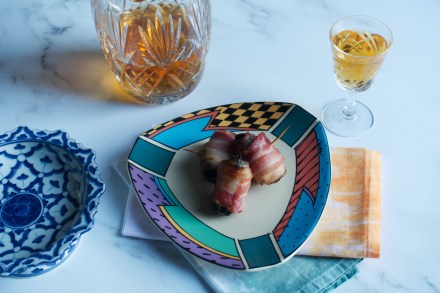
Devils on horseback: the most retro of canapés

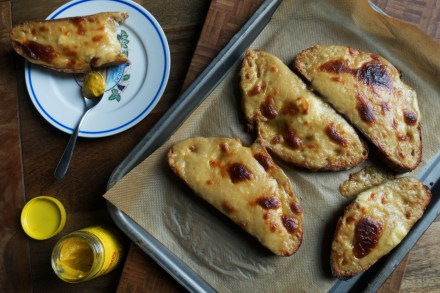
Christmas is probably the only time I bother with appetisers or canapés proper; usually I am quite content to stick a bowl of fancy crisps on the dining table, and let my husband make sure everyone’s drinks are topped up. But Christmas is different. Christmas demands canapés. And, given the Vintage Chef moniker, I tend to favour the old-fashioned, the retro, the kitsch; the deviled eggs, the vol au vents – and the devils on horseback. The dish is thought to date back to Victorian times, when it would be served not as an appetiser or hors d’oeuvre, but as a savoury: a kind of palate-cleanser that came after the main meal to be eaten with the dregs of wine; they have since migrated to canapé status.

With Tom Kerridge

30 min listen

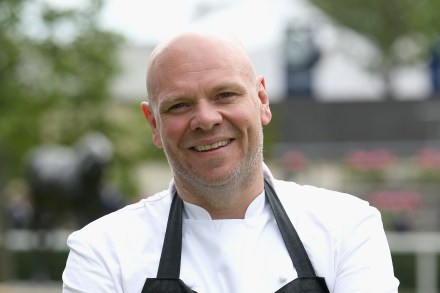
Tom Kerridge is a Michelin-starred chef. He opened The Hand & Flowers in 2005, and now has another restaurant and a butchers in Marlow, Buckinghamshire, alongside spots in London and Manchester. On the podcast, he tells Lara and Liv about growing up on free school meals, falling in love with hospitality, and catering for NHS staff during the coronavirus pandemic.

With Jeffrey Archer

21 min listen

Jeffrey Archer is a novelist, former politician, and peer of the realm. He has sold 275 million copies of his books - in 97 countries and more than 30 languages. On the podcast, he tells Lara and Liv about food in prison, his wife's jacket potato, and why he loves shepherd's pie.

Brandy snaps: the festive lift we all need

From our US edition

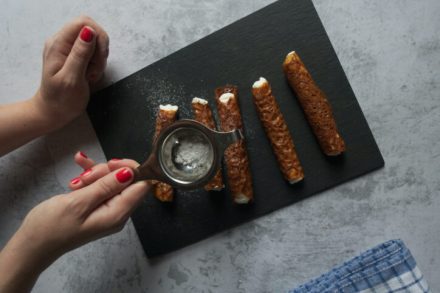
I’m not sure what it is about brandy snaps that have placed them so firmly in the Christmas culinary tradition: this simple biscuit lacks the dried fruits and nuts of other yuletide stalwarts, its spicing is minimal, and its shelf life is fleeting compared to the cakes and puddings that require festive forethought months in advance. But whatever the reason, I can’t imagine making or eating brandy snaps at any other time of the year. In fairness, my brandy bottle is rarely used other than in the lead up to Christmas — when it gets sloshed into every cake and bake that stands still for long enough — but the brandy in the name is misleading.

brandy snaps

With Henry Jeffreys

26 min listen

Henry Jeffreys is features editor of Masters of Malt, and author of The Cocktail Dictionary. On the podcast, he tells Lara and Livvy about living like the Goodfellas in Leeds, being 'portly' at university, and enjoying his mum's apple and bramble pie.

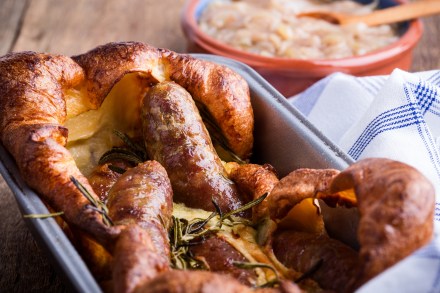
Toad-in-the-hole: don’t judge a dish by its name

The name ‘toad-in-the-hole’ suggests something a little more whimsical (or saucy) than its reality. The origins of the name are spurious and, to be honest, a little tenuous: I’ve seen theories that the hole is a hungry stomach and the toad a ‘substantial meal’, another that suggests the dish resembles the way toads peep their heads out of burrows, and another which attributes the name to a trend in the eighteenth century for live toads to be incased in stone.

How to make a substantial Scotch egg

From our US edition

Many moons ago, long before I learnt how to cook properly, I took it upon myself to make Scotch eggs. It seemed like a nice little weekend activity but, looking back, it was doomed from the get-go. My boiled eggs were too soft and threatened to splurge their yolks. The meat I used was mealy, not fatty enough, and crumbled when I tried to press it onto the eggs. I didn’t really understand how you coated food for frying so haphazardly stuck breadcrumbs to what little meat was forlornly clinging to my misshapen egg. I tried to fry them anyway: it did not go well. Scotch eggs shouldn’t be this hard, I thought. Who can be bothered with this? I ended up smashing the whole thing up (in resignation rather than anger), and turning it into a slightly strange hash.

scotch egg

With Pen Vogler

25 min listen

Pen Vogler is the author of Scoff, which describes the history of food in the British class system. On the podcast, she tells Lara and Liv about being vegetarian for a year, eating at Oxford colleges in the 1980s, and why avocados are so popular.

Braised lamb shanks: a sumptuous weekend one pot

Braising isn’t a terribly glamorous way of cooking: you’re not flipping steaks over an open fire, flambéeing alcohol, or shucking oysters. No one is going to gasp at your cheffy technique if you plump for braising. And when you pull the dish from the oven, it may not look any more exciting: no soaring soufflés, or mahogany egg-washed wellingtons. It’s just a jumble of meat and veg in a single dish, cooked until the meat is yielding and the sauce luscious. Braising is pretty unassuming both before and after cooking – but for all its culinary modesty, it packs a real punch. Braising is an old-as-the-hills way of cooking meat or vegetables in a covered pot with a little liquid (this could be stock, wine or water).

Cook like a royal: inside the Queen’s Christmas pudding recipe

From our US edition

This Sunday was the last Sunday before advent, making it Stir-up Sunday, the day when Christmas puddings are traditionally made and cooked. This year, the British royal kitchens stirred up their own excitement by taking to Twitter, using the official Royal family account (@royalfamily) to share their special Christmas pud recipe. https://twitter.com/RoyalFamily/status/1330432598552809472 An emoji-filled tweet told us that, for all their embracing of modern social media, the royals are traditionalists when it comes to their puddings: suet may have fallen out of fashion with many, but the royals still favor a suet-based pud, rather than butter.

christmas pudding

With Marcus Wareing

36 min listen

Marcus Wareing is a celebrated, Michelin-starred chef, a judge on Masterchef: The Professionals and Chef Patron at Marcus in Knightsbridge. On the podcast, he tells Lara and Livvy about eating in school canteens, working with Gordon Ramsay, and catering during coronavirus.

Cornflake tart: a retro dish that conjures up British schooldays

From our US edition

When we talk to guests on The Spectator’s food and drink podcast, Table Talk, school dinners never fail to elicit strong opinions: from those who loved spam fritters, stodgy crumble and vats of custard, to others who shudder at the mere thought of a gloopy, tepid rice pudding. One dish that seems to have the fewest detractors is cornflake tart: a cheap and cheerful pudding, that required little more than store cupboard staples to make, and satisfied generations of children with its sky-high sugar levels. Food has the power to evoke nostalgia like almost nothing else. Dishes can be a shorthand to memory, to shared experience — good and bad; smells and tastes bringing back things we thought we’d forgotten.

With Sharmadean Reid

35 min listen

Sharmadean Reid is an entrepreneur and the founder of Beautystack. On the podcast, she tells Lara and Livvy about her grandfather's allotment, cooking roasts and trying crab for the first time.

With Dan Keeling

23 min listen

Dan Keeling is a wine writer behind the magazine and restaurant Noble Rot. He tells Lara and Livvy about how he discovered his love of wine; working in the music industry; and how to start a restaurant with zero experience. Presented by Lara Prendergast and Olivia Potts.

Homemade honeycomb is the perfect lockdown pick-me-up

From our US edition

Bonfire night in Britain this year, like most of the occasions we celebrate, was a little different to previous years: no hustling lines to public displays, squeezing spectators in like sardines, standing shoulder-to-shoulder. Many of us can’t have people round to ours, even in our gardens. It’s never been more important to lean into a shorthand to create a sense of occasion, something that reminds us of the rhythms and rituals of our year. Those foods that we eat at certain times are an ideal shorthand, filled with memory, nostalgia and the ability to transport us. And when it comes to Bonfire night, you can see why honeycomb has become so associated with it: bright, smokey and with more than enough sugar to gird you against the cold, it’s the perfect November treat.

honeycomb

Chicken forestière: a simple yet sophisticated stew

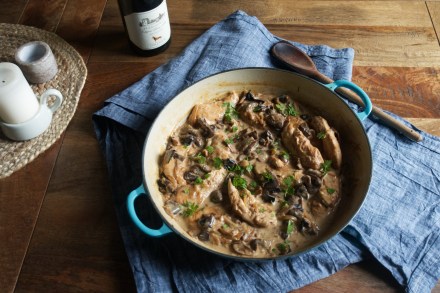
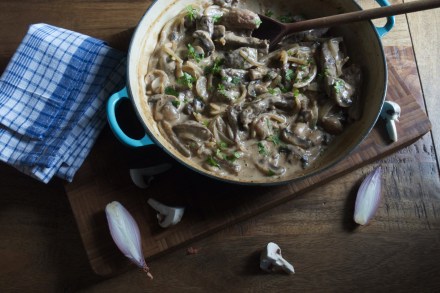
I have always been a bit of a stew-pusher; it tends to be my answer to any of life’s dilemmas, culinary or otherwise. Friends coming round? Stew. Cold and dark outside? Stew. Feeling sad? Stew. To be honest, it doesn’t matter whether or not the weather demands it, I am always in the mood for stew. I’d eat mince and dumplings in June, a slow-cooked sticky oxtail ragu in high Summer. But once Autumn arrives, and my obsession is legitimised by the cold and the dark evenings, there’s no stopping me. In our household, it’s casseroles from now until Spring. I struggle to think of something more comforting and cosy than a big, generous dish of braised meat, tender vegetables and a beautiful sauce arriving at the table.

Comforting brown food from the Domestic Goddess

Nigella Lawson is many things to many people: the perfect hostess, the TV star, the thinking man’s crumpet. To me she’s always embodied the joy of sharing food with friends and family. Her books and television shows burst with conviviality, with parties and suppers. Now we are in the middle of a pandemic that has all but taken that pleasure away, but luckily the Domestic Goddess has always had an uncanny knack for moving with the times. Cook, Eat, Repeat, Lawson’s 12th book, is a celebration of home cooking — a defence of repetition in the kitchen and on the dining table which couldn’t feel more apposite.

With Olia Hercules

20 min listen

Olia Hercules is a chef and food writer. On the podcast, she tells Lara and Livvy about growing up in Cyprus; being disappointed by British ingredients; and teaching her son to love Ukrainian cooking.

With Ian Rankin

20 min listen

Ian Rankin is a bestselling crime writer, most known for his Inspector Rebus novels. On the podcast, he tells Lara and Livvy about living in a motel during his first year at university; how eating curry for the first time was 'a revelation'; and the snacks that keep him going while he writes. Tell us your thoughts on our podcasts and be in for a chance to win a bottle of Pol Roger champagne by filling out our podcast survey. Visit spectator.co.uk/podcastsurvey.

With Dolly Alderton

44 min listen

Dolly Alderton is an author, journalist and podcaster who hosts 'The High Low' podcast. On the episode, she talks to Lara and Livvy about campaigning for gender equality (and cooked breakfasts) at her boarding school; how taste in food can make or break the attractiveness of a man; and the importance of planning a desert island dish.