Olivia Potts

Olivia Potts

Olivia Potts is the Guild of Food Writers’ Cookery Writer of the Year 2025. She hosts The Spectator’s Table Talk podcast and writes Spectator Life's The Vintage Chef column

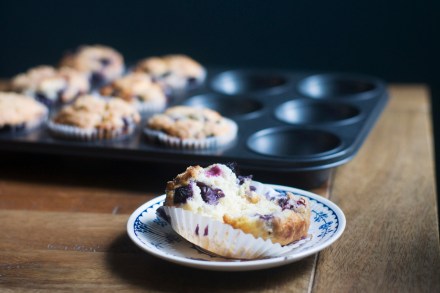
The trick to making blueberry muffins

I don’t quite know how the Americans got away with it: convincing first their own people, and then the rest of the world that a muffin is a suitable breakfast food? A foodstuff which is, let’s be honest, cake. But then, we are quite happy to sprinkle our worthy porridge liberally with demerara sugar, to use yoghurt in our overnight oats or alongside granola, to combine butter and flour in any manner of breakfast staples from toast to pancakes, what’s so different about combining all those things?

Steak Diane: the perfect date-night dish

Cooking for romance is no laughing matter. The stakes are high. Get it right and woo the love of your life — lifelong happiness, marriage, kids. Get it wrong, and who knows what will happen? At best, you’re serving up a disaster sometime around midnight. You’re not getting lucky. You may be poisoning your intended. Romantic meals should be for all year round, not just for Valentine’s Day — but there are a few rules that it’s wise to follow. Date night is not the time to try shucking oysters for the first time (unless you’re willing to risk a trip to A&E). Chocolate fondants, as dozens of disappointed MasterChef contestants will attest, are hard to pull off in a panic. What you need is something fun, something fast, something flashy.

With Rory Stewart

17 min listen

Former Tory MP, Rory Stewart, has played many roles throughout his life. An academic, a diplomat, and a soldier. Rory is currently a senior fellow at Yale University's Jackson Institute for Global Affairs.On the podcast, he talks about eating sandwiches on a homemade raft as a boy in Malaysia, his university days spent talking to girls in Pizza Express and his revelation that he doesn't really like pudding.

Eggs en cocotte: the perfect Valentine’s breakfast

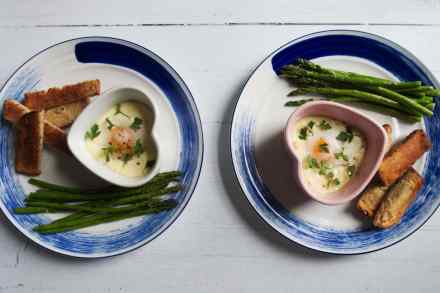
There’s something inherently romantic about eggs: whether you’re preparing them for another person, or being served them, they always strike me as a little act of love. Maybe it’s that they suggest breakfast in bed. Breakfast in bed is not about flirting or seduction, it’s more than that. You don’t make breakfast in bed for someone in whom you’re uninterested. Breakfast in bed is not a collaboration, it’s a gift from one person to the other, reserved for those you wish to impress, or to whom you wish to signal your love. That said, while in theory I like the idea, in practice I can feel a little allergic to breakfast in bed: the prospect of crumbs dropped and discovered the following evening is about the least romantic thing I can imagine.

How to make chocolate truffles

There is a very particular fear that runs down your spine when you realise you've forgotten to buy a gift, be it for a birthday, Christmas or as a surprise for a special someone. Whatever the occasion, the same panic spreads through you, the social anxiety of knowing that you have failed in gift-giving etiquette, that you’re going to have to receive their present with nothing to hand over in return. Having learnt the hard way, this is why I like to have a little stash of homemade edible presents at home, ready to swerve such an occasion. Over the years I’ve done jams and jellies, fudges and toffees, little jars and crinkly cellophane bags, all bedecked with ribbons, ready to be doled out.

With Russell Norman

31 min listen

Russell Norman is an award-winning restauranteur, writer and broadcaster, and the founder of the Polpo restaurant group. Last year he launched Trattoria Brutto. On the podcast, he tells Lara and Liv about enjoying Spam fritters, blagging his way onto the Orient Express, and how he changed careers from teaching to cooking.

Coq au Riesling: a casserole made for cold nights

My casserole dish is seeing heavy use at the moment: with each day seeming colder than the last, a blipping stew sitting on the hob feels like a defence against midwinter. This week I’ve been making a variation on coq au vin: coq au riesling. As the name would suggest, coq au vin is a French dish, made by cooking chicken in wine. Traditionally, that ‘coq’ would be a cockerel, older and tougher than the chicken, but the slow braising in the liquor-rich sauce renders it tender and flavoursome. But then, traditionally, the dish would also use blood for thickening. Don’t worry: I’m not going to suggest you try to procure either an ageing rooster or a bag of blood. Some traditions are products of their time, and best consigned to it.

The final word on Colin the Caterpillar

Our friend Colin is back in the news again. This time, it's not his name that has caused a storm – Colin's many fans may remember M&S filed an intellectual property claim against Aldi back in April in an attempt to stop them from selling their copy cat-erpillar Cuthbert. Rather, it's the suggestion that he may have been present at the Prime Minister's impromptu birthday party,  that is raising eyebrows. Like Prince, Madonna and Boris, in birthday party circles, Colin needs no second name, with over 15 million sales under his belt during his 30 year life. I’m only slightly older than Colin, and he’s been present at perhaps half the birthday parties I’ve ever attended, plus more than one wedding.

The secret to making perfect chocolate chip cookies

If these chocolate chip cookies are my only achievement for the entirety of last year's lockdown, I think I’ll be satisfied: crisp and buttery on the outside, fudgy and sweet within, with pools of dark chocolate, and just the right amount of salt. As ever, with baking, there are always substitutions you can make, if you don’t mind a slightly different (but still delicious) end product. Sub in the light brown sugar for dark brown sugar for an even deeper toffee flavour, or swap out the caster sugar for granulated or demerara. Strong white bread flour will work, if you can spare it, and rye or spelt flour will produce a damper but nuttier cookie (a delightful variation, in my books).

Lardy cake: a royal favourite

Lardy cake has a branding problem. We don’t mind puddings or cakes which explicitly announce their richness or decadence — death by chocolate, chocolate nemesis and devil’s food cake all remain popular. We actively embrace the hedonistic butteriness of croissants, along with brioche and puff pastry. Or consider the Betty’s Fat Rascal, which has achieved cult status despite (or because of) its unabashed fatty cheekiness. But attach the word ‘lard’ and it’s a different story — a horror story. Those who wouldn’t think twice about accepting a hot cross bun or a piece of shortbread recoil at the prospect of lardy cake. ‘Lardy’ sounds inelegant, lumpen and, well, fatty.

The women who changed American cuisine forever

What is ‘immigrant food’? In America, the answer can be just about anything — from burritos to bibimbap to burgers. In a country shaped by immigrants, there is little else but immigrant food. But while some food cultures are firmly embedded in the American mainstream, well-mixed into the fabled ‘melting pot’, others are not. This is ever-changing: a few decades ago the ubiquity of sushi, for example, would have been unthink-able. Is this a good thing? It depends who you ask. Assimilation can bring belonging, but also compromise. Greater knowledge and appreciation of different food cultures doesn’t just happen. People make it happen.

How to make a classic pork pie

The humble pork pie has held its place in English culinary history for hundreds of years and now it finds itself embroiled in the latest Westminster plot to oust the Prime Minister. This iconic lunchtime staple may look simple to pull off but, just like the current political manoeuvres of SW1A, it's far from a small undertaking. Although crust pastry predates the pie itself, it wasn't pastry as we now know it, but a water-flour-oil mix used by the Romans to cover their meat during cooking. This protected the meat from burning during the cooking process and helped it retain moisture; it wasn't intended for consumption, and was discarded after baking.

With Ed Smith

25 min listen

Ed Smith is a food writer and chef who started his acclaimed blog Rocket and Squash while he was working as a solicitor. On today’s podcast, he tells Liv and Lara about how his passion for good food started, why he left the world of law, the changing nature of the London food scene, and the ingredients for the perfect restaurant review. Since 2017, he has authored On the Side and The Borough Market Cookbook, and his latest book, Crave: Recipes Arranged by Flavour, to Suit Your Mood and Appetite, was published last May.

A week of winter dishes from The Vintage Chef

Chicken forestière Unlike loads of my other favoured stews, this one doesn’t take hours on the stove or in the oven. I can’t pretend it’s a ten minute start-to-finish dish, but it is one you can start after work and comfortably finish in time for dinner – and after the initial time investment, you can leave it to do its thing. Recipes differ as to the cut of chicken you use: I’ve used fillets here which are not normally my favourite cut, but here it helps the quick cooking process, and means that you don’t have to faff around with bones when eating. The ‘forestière’ in the dish title means ‘of the forest’ and is really a reference to the mushrooms in the sauce.

The surprising ingredient that transforms Shepherd’s Pie

I’ve said many times that I am not a food purist: I like shortcuts and variations, I have a massive soft spot for oven pizzas, and no time at all for those who are sniffy about prepared food or ingredients. I don’t think there’s anything to be gained by being categorical or dictatorial about food – what is the point in me insisting you cook your thick steak rare if you can’t bear to eat it that way? Eating and cooking should be about enjoyment, and I don’t get to decide what you do or do not enjoy, what is to your taste. So I try my very best to be flexible, to offer up alternatives, and not to make pronouncements from on high. However, I draw the line at shepherd’s pie.

Galette des rois: a perfect epiphany pudding

There’s always a bit of a post-Christmas sag, isn’t there? The presents have been piled up but not actually put away yet, the tree is dropping needles like there’s no tomorrow, and those final bits and bobs of leftovers in the fridge aren’t looking terribly appealing (a weary parsnip and some withered peas do not a Christmas sandwich make). So it’s no surprise that the French have made sure there’s something to look forward to before we pack away the festive season for another year: the galette des rois. Named after the three kings of the nativity story, galettes des rois are traditionally eaten on 6 January, or Epiphany, the day that the magi were supposed to have visited Jesus in his stable.

With Poppy Cooks

24 min listen

Poppy O'Toole runs Poppy Cooks on TikTok, where she shares cooking videos with her two million followers. She trained as a chef at a Michelin-starred restaurant, and lost her job in March 2020 because of Covid. She started Poppy Cooks to pass the time during lockdown. Her potato series, which got millions of views, made her a viral sensation. This led to her publishing her first cookbook, Poppy Cooks: The Food You Need. On the podcast, Poppy talks to Lara and Liv about how her grandmother taught her to cook, what makes the perfect TikTok video, and the pressures of cooking in a bank.

How to master Boeuf bourguignon

It is undeniably stew weather. I am, I’m afraid, one of those people who grimace all the way through summer, longing for autumn, thinking of fall-clichés: big cosy jumpers, afternoons spent reading on the sofa with a blanket, an excuse to bring out my knitting, rain drumming on the windows. Predictably, my greatest reason for embracing this time of year is the food it brings with it, and above all, is the presence of a casserole on the hob, bubbling away, slowly gaining body and flavour, and filling the kitchen with boozy, meaty, smoky smells. I have a lot of love in my heart for all kinds of stews, but boeuf bourguignon probably takes the crown.

Tartiflette: a French winter warmer perfect for New Year

Well, Christmas may be complete, but the festivities are far from over: the new year is just around the corner. As we stare down the barrel of the end of the decade, we’re not quite ready to give up the cheese board, the doorstep-sized leftover sandwiches, or remove our hand from the Quality Street box. But although the food might be the same post-Christmas, the tone of our eating has changed slightly. Christmas cooking (and eating!) can turn into a logistical marathon: juggling pans and hob space, reconciling wildly different cooking temperatures for items that need to be in the oven at the same time, catering to a raft of traditions and preferences, all of which need to be satisfied in this single, momentous meal. Preparing Christmas lunch can feel like a maths GCSE problem.

Hummingbird cake: a bake from America’s Deep South

I’d always assumed that the hummingbird’s cake derived its name from its unapologetic sweetness: a cake so singing with fruit juice and soft caramelly sugar that it charms the (humming)birds from the trees. The origins may in fact be more prosaic: originally called the Doctor Bird cake, it was named after the national symbol of Jamaica, a type of hummingbird, only found on the island, and it first came to fame outside of Jamaica thanks to a bit of a PR stunt. It was a marketing tool, really: one of a number of recipes exported by the Jamaican Tourist Board in 1968 in little press packs sent to the USA.