Michael Simmons

Michael Simmons

Michael Simmons is The Spectator's economics editor.

‘Bring back shame!’ – is Britain’s social contract broken? | with Trevor Phillips

From our UK edition

45 min listen

In this week’s podcast, William Moore is joined by The Spectator’s economics editor Michael Simmons, assistant editor Isabel Hardman and Times columnist and Sky News presenter Trevor Phillips. The panel unpacks Mary Wakefield’s cover story on the rise of shoplifting – and what it reveals about’ shameless Britain’. After a Morrisons manager was reportedly sacked for stopping a thief, they ask whether petty crime, fare-dodging and everyday rule-breaking are eroding the social contract.Also on the episode: Tim Shipman’s latest piece on Labour after Starmer.

‘Bring back shame!’ – is Britain’s social contract broken? | with Trevor Philips

The Bank of England holds interest rates – for now

From our UK edition

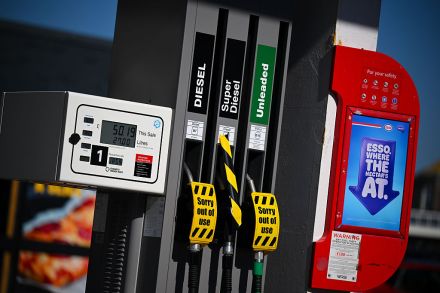
In a relief for mortgage holders, anyone with a job and the government, the Bank of England’s Monetary Policy Committee (MPC) has voted 8–1 to hold interest rates at 3.75 per cent. That is despite rising inflation thanks to the Iran war, which is likely to hit Britain worse than almost anywhere else. Had it not been for the war and the disruption to energy supplies through the Strait of Hormuz, April was to be the month when the Bank of England finally met its 2 per cent inflation target. Instead, prices are shooting in the wrong direction as energy costs feed through to the wider economy – most notably in fuel.

Polanski slams the ‘war on drugs’ – here’s why he’s wrong about legalisation

From our UK edition

Britain has recorded the highest drug deaths in Europe. Green Party leader Zack Polanski has declared that this means the so called 'war on drugs' is not working, and favours a more liberal approach of legalisation. Michael Simmons is joined by John Power to look at the numbers and show why Polanski would likely make drug deaths rise under his policy. This episode is brought to you by Artemis Fund Managers, for more information on our fund range please click here https://www.artemisfunds.com/ .

Polanski slams the 'war on drugs' – here's why he's wrong about legalisation

Why is Rachel Reeves flirting with rent controls?

From our UK edition

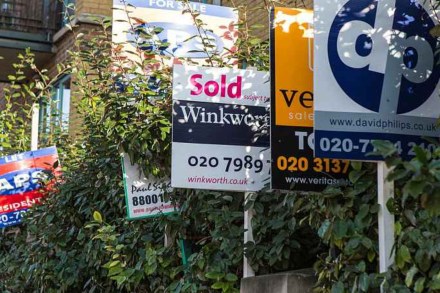
Rachel Reeves may have lost the plot. The Guardian reports that the Chancellor is considering a one-year rent freeze on private-sector flats and houses in England, as fears mount in government about the economic effects of the Iran war. Meanwhile, Angela Rayner, Andy Burnham and the Green party, flanking Reeves and Keir Starmer from the left, risk pushing the Chancellor towards economic madness. The one-year freeze – which would exempt new-builds – is being debated in the Treasury among other options to control housing costs. But according to the Guardian, it is Reeves’s preferred option. My view of Reeves has always been that she is not economically illiterate, but politically weak. She understands how this works.

Don’t believe the headline: the truth about unemployment data

From our UK edition

Unemployment unexpectedly fell to 4.9 per cent this week. Some in government may been using this to mark a healthy economy but don't believe the headlines. Whilst unemployment may be down, economic inactivity is up. And figures show its predominately graduates who are struggling to find work. Michael Simmons looks at the data and explains why youth employment is in crisis, and why the government can't blame AI.

Don't believe the headline: the truth about unemployment data

The Iran war hits inflation

From our UK edition

The Iran war is being felt in Britain’s economy. Figures just released by the Office for National Statistics (ONS) show inflation rose to 3.3 per cent in March – up from 3 per cent the month before.  The rise was mainly driven by fuel prices, which jumped at their fastest rate in more than three years. Plane tickets and food prices shot up too as rising energy and input costs were felt across the raw materials that drive the economy.  A Consumer Prices Index increase thanks to the oil price spike was expected but the trouble is these higher manufacturing input costs take time to feed through into the economy meaning this new bout of inflation could be a prolonged one.

Unemployment has fallen – but not in a good way

From our UK edition

On the face of it, the Office for National Statistics (ONS) have just released great news on unemployment. The rate – against all expectations – has fallen from 5.2 per cent to 4.9 per cent. Radio 4’s Today programme welcomed the ‘surprising’ news. But this is no good news story. To be classed by statisticians as unemployed you have to be actively seeking work. If you’re not then you’re put in the ‘economically inactive’ category. And that’s the bad news: whilst the unemployment rate has decreased, so too has the employment rate. What’s gone up is the inactivity rate – accounting for almost all of the change in unemployment. So what’s going on?

How the leasehold mafia screwed a generation of homeowners

From our UK edition

Buying a flat in Britain has increasingly become a fool's errand, driven in part by the leasehold system trapping homeowners into flats. When Labour wrote their manifesto they promised reform to the leasehold system, but it remains a sticking point in Westminster due to heavy lobbying. Michael Simmons is joined by Harry Scoffin, founder from Free Leaseholders who makes the case for the common law system.

How the leasehold mafia screwed a generation of homeowners

Britain’s economy is growing – but not for long

From our UK edition

It must be bittersweet being Rachel Reeves. Figures just released by the Office for National Statistics (ONS) show the economy grew by 0.5 per cent in February. That is significantly better than economists had expected and, coupled with the fact that January growth has been revised up, it marks probably the first piece of seriously good economic news for the Chancellor since she entered No. 11 Downing Street. Pretty much everything other than manufacturing saw improved performance and demand at the start of the year. Car sales, publishing and real estate helped drive services up by 0.5 per cent. Production grew too and even construction, which has been shrinking, saw one per cent month-on-month growth. The trouble is, of course, this is data from a different world.

The IMF growth downgrade is more bad news for Rachel Reeves

From our UK edition

Rachel Reeves lands in Washington tonight to be greeted with bad news. The International Monetary Fund (IMF) – whose spring meeting the Chancellor is attending – has just handed Britain the largest GDP downgrade of any G7 country.  In the freshly released update to their world economic outlook, the IMF forecast growth for the UK this year of just 0.8 per cent – down from the 1.3 per cent they’d previously projected. Things don’t get much better next year either, with just 1.3 per cent growth forecast, again downgraded from 1.5 per cent.  This downgrade singles out Britain and our European neighbours.

Is Britain losing its sense of fairness?

From our UK edition

49 min listen

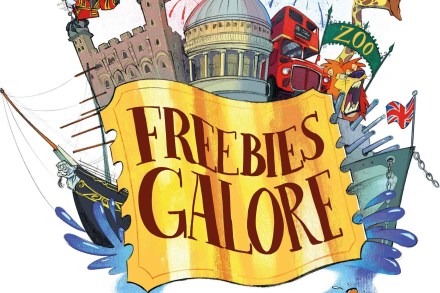
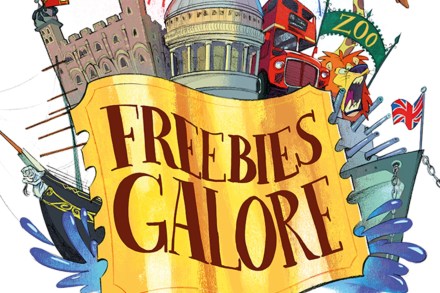
Has Britain become a freeloader’s paradise, asks the Spectator’s economics editor Michael Simmons in our cover piece this week. Michael analyses ‘the benefits of benefits’, at a time when Britain’s welfare bill is burgeoning and most households are struggling with cost of living. For example, while a family of four can expect to pay £111 to visit the Tower of London, that is just £4 total on Universal Credit (UC), and for London Zoo it is £108 compared to £26. Michael is not arguing against the idea of helping those in need, but pointing out that – as the benefits bill continues to increase – this is another case of governments prioritising ‘welfare over work’ and ultimately squeezing the working poor.

Is Britain losing its sense of fairness?

Benefits Britain exposed: are you paying for someone else’s day out?

From our UK edition

Britain has become a freeloader’s paradise. A working family of four will fork out £111 for a trip to the Tower of London, or £108 to visit London Zoo. With one parent on Universal Credit (UC), however, that drops to just £4 and £26 respectively. Welfare-advice websites expose how the public sector is ‘geared permanently to making welfare an increasingly attractive way of living’. Those on welfare are not enduring the cost-of-living crisis in the same way as the rest of us, with successive governments fiddling with prices and prioritising claimants. On its own, UC is not particularly generous by international standards, but health-related top-ups transform the picture, while it is our failure to incentivise people back to work that really makes us stand out.

Benefits Britain exposed: are you paying for someone else's day out?

Benefits treats: how Britain became a freeloader’s paradise

From our UK edition

Plastered around Westminster this Easter were adverts for the Tower of London. ‘The perfect place for troublemakers – pre-book now,’ the poster read. ‘Members go free.’ So too – near enough – do those on Universal Credit (UC). Easter-holiday treats can be expensive for hard-working families. For those on benefits they’re a breeze. A trip to the Tower of London for a family of four costs £111. But if one of the parents is on UC (or a long list of other benefits), a £107 saving is applied and the whole family can get in for just £4. Visit the Tower’s café for fish and chips and UC bags you a half-price meal (£16.95 for the rest of us).

Could the Iran war wreck your mortgage?

From our UK edition

What has the war in Iran got to do with Britain’s house buyers? Michael Simmons takes a look at conflicting predictions from economists and the markets on the impact rising oil prices could have on interest rates. 2026 was expected to be one of the best years for first-time buyers to finally get on the property ladder. Now it looks as if Trump’s war could bring that to an end. But there is a small window for optimism – are the markets wrong?

Could the Iran war wreck my mortgage?

Why is Britain so exposed to rising energy prices?

From our UK edition

The IMF has warned Britain is particularly vulnerable to another spike in energy prices, and is more exposed than many of its European neighbours. Why is that the case? And does the government have any real plan to shield households and businesses from the fallout? With the Tories and Reform calling for the government to drill baby drill, why is the government avoiding a pretty obvious solution? James Heale speaks to Tim Shipman and Michael Simmons.

Why is Britain so exposed to rising energy prices?

Energy crisis: are we in 1973 territory?

From our UK edition

10 min listen

The panic has set in around the cabinet table about this energy crisis, and fears of history repeating itself. Tim Shipman writes in the magazine about the comparisons being made to 1973 and the Opec oil shock, with the government preparing for oil prices to reach £150 a barrel. What levers are available to the government to ease the economic fallout and 1970s-style inflation? And why is it that the UK is so uniquely impacted by this crisis? Oscar Edmondson speaks to Tim Shipman and Michael Simmons. Produced by Oscar Edmondson.

Energy crisis: are we in 1973 territory?

Reeves’s energy bailout risks solidifying Britain’s welfare trap

From our UK edition

This week Rachel Reeves ruled out a blanket energy bailout to manage the fallout from the Iran war. That’s the right approach. But her targeting of a bailout – reportedly to those on benefits – risks solidifying Britain’s welfare trap. When the Chancellor gave her economic update to the Commons on Tuesday following an emergency Cobra meeting, she took a potshot at Liz Truss. Not for the ex-prime minister’s mini-Budget but for her multi-billion-pound energy price guarantee that sent the gilt market into meltdown. ‘As we respond to this crisis, we must learn from the mistakes of the past,’ Reeves told MPs. The previous government pushed up borrowing, interest rates, inflation and mortgage costs with an unfunded, untargeted package of support under Liz Truss.

Why is Britain so ill-equipped to deal with economic shocks?

From our UK edition

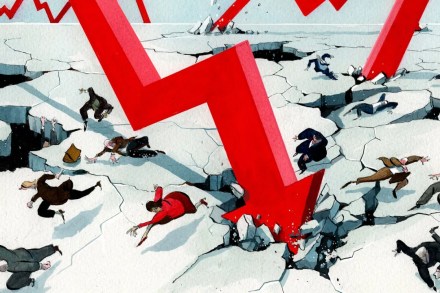
The Organisation for Economic Co-operation and Development (OECD) has just confirmed what we already knew: Britain will be hit harder than almost anywhere else by the economic fallout triggered by the war in Iran. Updated OECD forecasts released today slashed predictions of UK growth for this year to just 0.7 per cent from the 1.2 per cent previously expected. That’s a larger downgrade than any other G20 country. On inflation, the Washington-based organisation expects UK inflation to hit 4 per cent – the second highest in the G7. The causes are clear: an energy price hike, prolonged in nature, that simultaneously makes everything more expensive, reduces supply and destroys consumer demand. The result is even more stark: stagflation.

To drill or not to drill, that is the question

From our UK edition

15 min listen

In the final Prime Minister's Questions before Easter recess, Kemi Badenoch pushed Keir Starmer to commit to new oil & gas drilling licences. The Conservatives spot an easy win here – cost of living concerns are rising as America's war with Iran continues. Plus, with a burgeoning welfare bill, the trade-offs are even trickier for Labour to resolve. Who should Labour target? Tim Shipman and Michael Simmons join Patrick Gibbons to discuss. Come for Tim's impression of the Prime Minister, and stay for Michael's very strong response when asked if renewables are the answer. Produced by Patrick Gibbons.

To drill or not to drill, that is the question

Inflation stalls before the energy shock hits

From our UK edition

Prices rose by 3 per cent last month – the same rate as the month before. Figures just released by the Office for National Statistics (ONS) show that – ironically – falling petrol costs were one of the main things keeping the Consumer Prices Index (CPI) from climbing. This data was, of course, collected before the latest conflict in the Middle East – and we can soon expect the numbers to start heading in the wrong direction. Elsewhere, clothing costs were the largest upward driver of inflation, while food inflation remained broadly flat. In good news for drinkers, the cost of alcohol came down thanks to increased promotional activity in February. In a different world, the government would be cautiously welcoming today’s figures.