Michael Simmons

Michael Simmons

Michael Simmons is The Spectator's economics editor. Contact him here.

How Rachel Reeves shrank the economy

From our UK edition

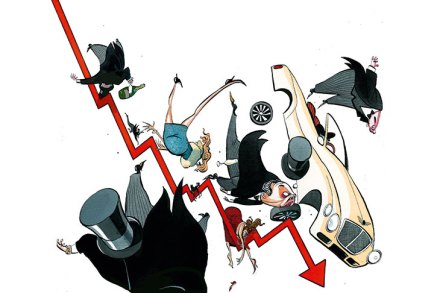
The British economy is shrinking. Figures just released by the Office for National Statistics (ONS) show that GDP fell by 0.1 per cent in the three months to October. The contraction came after growth of 0.1 per cent in the three months to September. On a monthly basis the economy shrank by 0.1 per cent in both September and October after remaining flat in August. Most economists had expected Britain's economy to grow. The slow-down was driven by production, which shrank 0.5 per cent, as well as construction, which shrank by 0.3 per cent. Meanwhile, services remained flat. Liz McKeown, Director of Economic Statistics at the ONS, said the production sector slowdown was driven by ‘weakness’ in the car industry.

Is the superflu really ‘unprecedented’?

From our UK edition

The NHS is facing a ‘worst-case scenario’ for flu this winter. That was the verdict of Professor Meghana Pandit, national medical director for the NHS, this morning as she warned the tsunami of ‘super-flu’ cases sweeping the UK is ‘unprecedented’. Worse still, the peak of this wave is ‘not in sight’. Her warning came as NHS figures revealed the number of patients in hospital with flu in England is up 55 per cent compared with last week – meaning an average of 2,660 patients are in hospital every day. Internal NHS forecasts predict that, by the end of the week, that number could have risen as high as 8,000 – surpassing the previous record of 5,400.

Kemi wins PMQs

From our UK edition

12 min listen

Kemi Badenoch’s good form continues at Prime Minister’s Questions. The Tory leader was once more visibly enjoying herself today as she feasted on Labour misfortune, and she did a good job in covering the breadth of problems in the government. She used her six questions to ask about different departments and how they were faring: an approach that can often risk diluting the overall attack. But today, Badenoch had an overarching theme to those questions, which was that the Prime Minister and his colleagues are failing to meet their own promises.  To discuss, James Heale is joined by Tim Shipman and Michael Simmons.

Post-Budget briefing: what will it mean for your finances?

From our UK edition

40 min listen

In the wake of an extraordinary Budget – leaked an hour before the Chancellor addressed Parliament – The Spectator brings clarity to a turbulent political and take stock of how the announcements will impact you. Michael Simmons speaks with John Porteous of Charles Stanley and James Nation, formerly of the Treasury and No. 10, to discuss how the events unfolded and the deeper implications for long-term financial planning, taxation and market confidence. The conversation explores whether the government’s approach represents a credible fiscal strategy, what savers and investors should infer from changes to ISAs and pensions, and whether concerns about a growing UK ‘brain drain’ are justified.

Are thousands of kids really living in poverty?

From our UK edition

10 min listen

The Chancellor laid our her plans to scrap the two-child benefit cap in the Budget last week. Previously Rachel Reeves and the Prime Minister were against lifting the cap, but pressure from Reform and the back benches meant the government u-turned. The Resolution Foundation has backed this policy, arguing that it will help lift children out of poverty. But is this based on dodgy data? Michael Simmons investigates.

Labour is now the party of welfare, not work

From our UK edition

Keir Starmer and Rachel Reeves have gone into bunker mode. The pair – whose political fortunes are so tightly bound – have been forced all week to defend the Chancellor’s claims at last week’s Budget that there is a black hole in the country’s finances. Mendacity soon gave way to something closer to bewilderment. Neither can grasp why they are being called out for their omissions and dishonest briefings – always more fiction than fiscal – about the state of the economy. Their new argument is this: once you factor in the Budget’s own measures – welfare increases, the U-turn on winter fuel payments and the desire to increase headroom – a hole did indeed appear. They insist they had no choice.

The black hole myth & the brain drain conundrum

From our UK edition

16 min listen

With Budget week finally at an end, certain mysteries remain. Chief among them is why the Chancellor decided to give an emergency speech preparing the public for a rise in income tax. On 4 November, Rachel Reeves summoned journalists to Downing Street early in the morning to warn that ‘the productivity performance we inherited is weaker than previously thought’. She then refused to rule out hiking income tax rates – sending a clear signal to markets that rises were coming. Nine days later, however, the Treasury let it be known via the FT that income tax increases would not be needed after all.

Young people are fleeing Britain

From our UK edition

Net migration has fallen to its lowest level in four years. Figures released this morning show that 204,000 more people arrived in the UK than left in the 12 months to June – a drop of more than two-thirds compared with the year before. The real story, though, is that inward migration remains close to record highs. Some 898,000 people arrived in the UK over the year, but the net figure dropped because an unusually large 693,000 people left, with the rate particularly high among young people. Some 59,000 16–24-year-olds left the country along with a further 52,000 25–30-year-olds. The Office for National Statistics described this as part of a ‘gradual increase in levels of emigration’. Fewer non-EU nationals came to the UK to work or study too.

Rachel Reeves’s Budget is a shambles

From our UK edition

As Budget days go, today was unprecedented. The complete list of measures announced by Rachel Reeves – along with their costings and economic impacts – was leaked by the Office for Budget Responsibility (OBR) an hour before the Chancellor took to her feet. The OBR apologised and called it a ‘technical error’. The headline is tax hikes to the tune of £26 billion, income tax thresholds will be frozen again and the tax burden will hit a record high at 38 per cent of GDP. Was this the most farcical Budget in history?

Rachel Reeves’s farcical Budget

From our UK edition

15 min listen

As Budget days go, today was unprecedented. The complete list of measures announced by Rachel Reeves – along with their costings and economic impacts – was leaked by the Office for Budget Responsibility (OBR) an hour before the Chancellor took to her feet. The OBR apologised and called it a ‘technical error’. The headline is tax hikes to the tune of £26 billion, income tax thresholds will be frozen again and the tax burden will hit a record high at 38 per cent of GDP. Was this the most farcical Budget in history? Michael Simmons speaks to James Heale and Tim Shipman.

Rachel Reeves’s Budget is a shambles

From our UK edition

What we have seen today is unprecedented. The entire list of Budget measures announced by Rachel Reeves – along with their costings and economic impacts – were leaked by the Office for Budget Responsibility (OBR) an hour before the Chancellor took to her feet. The OBR apologised and called it a ‘technical error’, but make no mistake: this is perhaps the biggest scandal in Britain’s Budget history. Make no mistake: this is perhaps the biggest scandal in Britain’s Budget history The headlines from the Budget are: Reeves will hike taxes by a total of £26 billion. Income tax thresholds will be frozen again, raising £8 billion and dragging nearly 800,000 more people into paying tax. The tax burden will hit a record high at 38 per cent of GDP.

How bad will Rachel Reeves’s Budget be?

From our UK edition

After a needlessly long run-up, Budget day is finally here. Investors, bond traders and house builders are breathing a collective sigh of relief – not because of what the Chancellor will say at around 12.40 p.m., but because the speculating, pitch-rolling and U-turning is finally over. Under the rules of engagement between the Treasury and the Office for Budget Responsibility (OBR), the fiscal watchdog must be given ten weeks to produce forecasts. After dithering over when to trigger the process, Reeves decided to give them 12. I’d argue that decision has proved close to catastrophic. Her hope that good news might materialise in the meantime has, in fairness, partly paid off: gilt yields have improved slightly and wage growth projections have strengthened.

Why Reeves’s smorgasbord Budget won’t fix Britain

From our UK edition

14 min listen

James Nation, managing director at Forefront Advisers, and Michael Simmons join James Heale to analyse what we know, one day ahead of the Budget. James – a former Treasury official and adviser to Rishi Sunak – takes us inside Number 11, explains the importance of every sentence and defends the Budget as a fiscal event. Plus, Michael takes us through the measures we know so far – but is the chaotic process we've seen so far just symptomatic of 'broken Britain'? Produced by Patrick Gibbons.

Benjamin Disraeli to Rachel Reeves – how each Chancellor drank their way through the Budget

From our UK edition

Rachel Reeves is due to deliver her budget this Wednesday. Throughout the years, the only person permitted to drink inside the House of Commons is the Chancellor. What has been the tipple of choice for each Chancellor dating back to Benjamin Disraeli? Michael Simmons and James Heale drink their way through the ages, discuss the historical context of each budget, and question whether Rachel Reeves has the toughest job yet.

Britain’s expensive energy problem – with Claire Coutinho

From our UK edition

16 min listen

Britain has an energy problem – while we produce some of the cleanest in the world, it's also the most expensive, and that's the case for almost every avenue of energy. On the day the Spectator hosts its Energy Summit in Westminster, a report commissioned by the Prime Minister has found that the UK is the most expensive place to produce nuclear energy. This is important for so many avenues of government – from future proofing for climate change, to reducing the burden households are facing through the cost-of-living crisis. Claire Coutinho, shadow secretary of state for energy, and political editor Tim Shipman join economics editor Michael Simmons to talk about tackling Britain's energy crisis and how energy policy could feed into Labour's budget in two days time.

Why Britain needs more Yimbys

From our UK edition

21 min listen

Chris Curtis and Maxwell Marlow may have different political ideologies, but they agree on one key diagnosis: Britain is broken. Their solution can be found on baseball caps and bucket hats across social media and SW1: ‘Build Baby Build’. Less than a week before the Budget, Chris – MP for Milton Keynes and chair of the Labour Growth Group – and Maxwell – policy fellow of the Yimby Initiative, alongside his day job at the Adam Smith Institute – join our economics editor Michael Simmons to talk about the pro-growth measures they champion to radically change Britain. Produced by Patrick Gibbons.

Covid report: ‘a £200 million I told you so’

From our UK edition

15 min listen

Yesterday we had the publication of the second module of the Covid Inquiry on the decision-making at the heart of government. It confirmed a toxic and disorganised culture at the heart of No. 10 and the headline is that the government acted ‘too little, too late’, costing as many as 23,000 lives in England. That figure is already disputed, not least by our economics editor Michael Simmons who argues on the podcast that the inquiry is a ‘disgrace’ and demonstrates a lack of domain knowledge about the limitations of modelling. Where else does the inquiry fall short? What will be the political ramifications in Westminster? James Heale speaks to Michael Simmons and Isabel Hardman. Produced by Oscar Edmondson.

Britain will never clear its debts

From our UK edition

It’s hard to think of a more shambolic budget than the one Rachel Reeves will deliver next week. His Majesty’s Treasury has spent the last month pitch-rolling policies in the Financial Times – using the paper as a sort of town crier – then pulling them back as the OBR’s forecasts have wobbled.  Directly, the cause for this volatility is the wafer-thin headroom the Chancellor left herself after her first Budget and the Spring Statement. The markets quickly eroded the slack in the face of persistent inflation and a government politically incapable of reining in Britain’s stratospheric spending. Beneath all that is the staggering amounts we’re spending on debt interest.

Labour’s toxic budget, Zelensky in trouble & Hitler’s genitalia

From our UK edition

39 min listen

It’s time to scrap the budget, argues political editor Tim Shipman this week. An annual fiscal event only allows the Chancellor to tinker round the edges, faced with a backdrop of global uncertainty. Endless potential tax rises have been trailed, from taxes on mansions, pensions, savings, gambling, and business partnerships, and nothing appears designed to fix Britain’s structural problems. Does our economics editor Michael Simmons agree? Host Lara Prendergast is joined by co-host – and the Spectator’s features editor – William Moore, alongside associate editor Owen Matthews and economics editor Michael Simmons.