Price caps are pointless – why Reeves is wrong to attack supermarkets
10 min listen
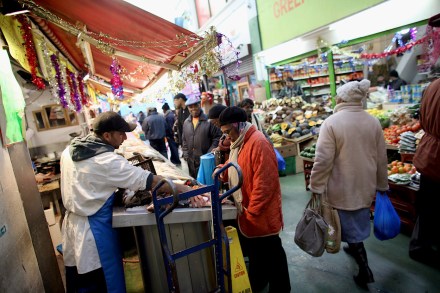
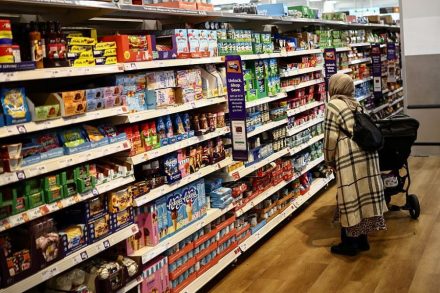
The government have rolled back on plans to impose price caps in supermarkets. Was Reeves wrong to go after them for price gouging? Michael Simmons has the data.
Michael Simmons is The Spectator's economics editor. Contact him here.
10 min listen
The government have rolled back on plans to impose price caps in supermarkets. Was Reeves wrong to go after them for price gouging? Michael Simmons has the data.
12 min listen
Peter Murrell, the SNP’s former chief executive and Nicola Sturgeon’s estranged husband, has admitted embezzling £400,000 in party funds. The guilty plea has revived questions about what senior figures in the SNP knew, how long the scandal had been going on, and what happens next. To discuss the story, including some of the ridiculous purchases including a couple of hairdryers (for a bald man) and £2600 salt and pepper shakers, James Heale and Michael Simmons join Megan McElroy.
16 min listen
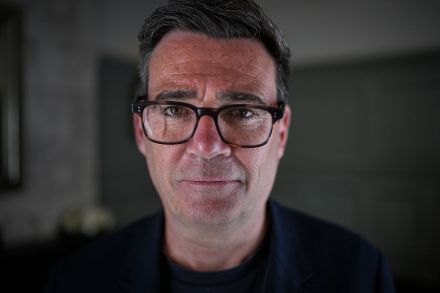
Andy Burnham has officially launched his campaign today to be MP for Makerfield (read: Prime Minister). But what does he actually stand for? We’ve had briefings that, despite being the candidate of the soft left, he will stick to Rachel Reeves’s fiscal rules and keep Shabana Mahmood’s immigration reforms. He’s flirted with nationalisation of utilities, but which exactly? What’s the big pitch? Burnham’s launch comes the day after some good news for the government, after net migration hit its lowest level since the pandemic. The number of people moving to Britain dropped to 171,000 in the 12 months to December, nearly half the figure recorded the year before. So why isn’t the government shouting about it? Oscar Edmondson speaks to Michael Simmons and Noa Hoffman.
Reprieve! The British consumer has received a stay of execution. Figures just released by the Office for National Statistics (ONS) show inflation last month fell to 2.8 per cent – down from 3.3 per cent in March and by more than most economists had forecast. But don’t bother reading the ‘corner has been turned’ press release that the government will issue later, because today’s improvement is sadly not about to become a trend. Rachel Reeves has played some part in these figures: by removing various energy levies from household bills and freezing some other regulated costs. That's meant price rises in April were not as bad as they might otherwise have been. But the real reason the figures have come down is because of how bad Awful April was last year.
Is the US economy immune to harm? It has been tested this year under Trump's trade tariffs, and inflation fears. Kate Andrews, former economics editor of The Spectator now opinion journalist at the Washington Post and host of the Make it Make Sense podcast returns to Spectator TV with Michael Simmons to discuss the US economy, whether Mamdani is as bad as Zack Polanski, Andrew Bailey vs Kevin Warsh the UK's growth figures.
13 min listen
Andy Burnham’s campaign for Makerfield is already gathering pace, complete with Oasis soundtrack to a new campaign video. But as Labour’s would-be challenger tries to pitch himself as the man to replace Keir Starmer, questions remain over his economic credibility. Michael Simmons and Tim Shipman join Noa Hoffman to Burnham, the bond markets, and if Starmer can really dig in if Burnham wins the by-election.
When Labour MPs eventually hoof Keir Starmer out of office, the Prime Minister and his neighbour in No. 11 will surely come to be remembered for one failing above all others: the youth unemployment crisis. Look at unemployment among Britain’s young and an even bleaker, yet more concrete, picture emerges Figures just released by the Office for National Statistics (ONS) show the unemployment rate climbed again to 5 per cent – up half a percentage point on a year ago. Worse: the true unemployment figure is probably a tad higher. The single-month estimate for February is implausibly low compared with neighbouring months (it's 5.5 per cent in March) and so, when it falls out of the three-month average next month, an even worse picture will likely emerge.
‘Politics needs to change,’ Andy Burnham, our presumptive next prime minister, told the ‘Great North Summit’ in Leeds this afternoon. Burnham used the event to declare that what is set to be ‘no ordinary by-election’ should set the stage for a ‘bigger debate about how politics needs to change if it is to work properly for the north of England’. The Manchester mayor argued that Britain had been on the ‘wrong path’ for the last 40 years and that change was needed. He pointed to the ‘devastating deindustrialisation’ of the 1980s that has been ‘compounded’ by ‘deregulation, privatisation and austerity’. His remedy, then, is presumably to attempt to reverse all that.
This may be barely concealed trauma from my time as a Scottish civil servant but, when I look at Andy Burnham, I see Nicola Sturgeon. The cultivated public image of Labour’s miracle man in the north is a powerful one. He pulls off the ‘one of us’, ‘man of the people’, ‘our lad done good’ shtick better than most politicians – in spite of his Blairite origins. Sturgeon wielded a similar power. It always surprised me how popular she was with the mums. As long as she said ‘sorry’ occasionally, most people – even those who did not vote for her – were sympathetic and felt she was often unfairly criticised during her nine-year tenure as first minister. Burnham seems to possess some of that voter appeal and, in turn, that political immunity too.
30 min listen
As Keir Starmer's government implodes, the Prime Minister has outlined his vision to regain support – one of which is to nationalise British steel. Michael Simmons is joined by SDP leader William Clouston to discuss the case for nationalisation, how Britain has become the entitlement state and how the SDP can cut through to the public.
Reality Check verdict: false You know things are hotting up in Westminster when reporters start unironically using the word ‘febrile’. Today, we’re well past febrile. So much so that Westminster turmoil seems to be spilling out into the markets, sending gilt yields (the government borrowing cost) skywards. For one Labour MP though that’s no problem. Speaking on Times Radio yesterday, Paula Barker claimed ‘the markets will have to fall into line’ and that investors would flood to Britain for ‘progressive policies that do speak to our communities’. Reality Check asked one investor for their views of the MPs comments and the response was unprintable.
11 min listen
May local elections have finally arrived. As 5,066 seats are contested in local councils many are wondering whether there is any point in voting at all. These councils manage budgets worth hundreds of millions of pounds – budgets decided by national government. Given the amount of statutory spending on areas like SEND and care homes, there is very little room for change inside local government. Michael Simmons has the data. This episode is brought to you by Artemis Fund Managers, for more information on our fund range please click here https://www.artemisfunds.com/ .
45 min listen
In this week’s podcast, William Moore is joined by The Spectator’s economics editor Michael Simmons, assistant editor Isabel Hardman and Times columnist and Sky News presenter Trevor Phillips. The panel unpacks Mary Wakefield’s cover story on the rise of shoplifting – and what it reveals about’ shameless Britain’. After a Morrisons manager was reportedly sacked for stopping a thief, they ask whether petty crime, fare-dodging and everyday rule-breaking are eroding the social contract.Also on the episode: Tim Shipman’s latest piece on Labour after Starmer.
In a relief for mortgage holders, anyone with a job and the government, the Bank of England’s Monetary Policy Committee (MPC) has voted 8–1 to hold interest rates at 3.75 per cent. That is despite rising inflation thanks to the Iran war, which is likely to hit Britain worse than almost anywhere else. Had it not been for the war and the disruption to energy supplies through the Strait of Hormuz, April was to be the month when the Bank of England finally met its 2 per cent inflation target. Instead, prices are shooting in the wrong direction as energy costs feed through to the wider economy – most notably in fuel.
Britain has recorded the highest drug deaths in Europe. Green Party leader Zack Polanski has declared that this means the so called 'war on drugs' is not working, and favours a more liberal approach of legalisation. Michael Simmons is joined by John Power to look at the numbers and show why Polanski would likely make drug deaths rise under his policy. This episode is brought to you by Artemis Fund Managers, for more information on our fund range please click here https://www.artemisfunds.com/ .
Rachel Reeves may have lost the plot. The Guardian reports that the Chancellor is considering a one-year rent freeze on private-sector flats and houses in England, as fears mount in government about the economic effects of the Iran war. Meanwhile, Angela Rayner, Andy Burnham and the Green party, flanking Reeves and Keir Starmer from the left, risk pushing the Chancellor towards economic madness. The one-year freeze – which would exempt new-builds – is being debated in the Treasury among other options to control housing costs. But according to the Guardian, it is Reeves’s preferred option. My view of Reeves has always been that she is not economically illiterate, but politically weak. She understands how this works.
Unemployment unexpectedly fell to 4.9 per cent this week. Some in government may been using this to mark a healthy economy but don't believe the headlines. Whilst unemployment may be down, economic inactivity is up. And figures show its predominately graduates who are struggling to find work. Michael Simmons looks at the data and explains why youth employment is in crisis, and why the government can't blame AI.
The Iran war is being felt in Britain’s economy. Figures just released by the Office for National Statistics (ONS) show inflation rose to 3.3 per cent in March – up from 3 per cent the month before. The rise was mainly driven by fuel prices, which jumped at their fastest rate in more than three years. Plane tickets and food prices shot up too as rising energy and input costs were felt across the raw materials that drive the economy. A Consumer Prices Index increase thanks to the oil price spike was expected but the trouble is these higher manufacturing input costs take time to feed through into the economy meaning this new bout of inflation could be a prolonged one.
On the face of it, the Office for National Statistics (ONS) have just released great news on unemployment. The rate – against all expectations – has fallen from 5.2 per cent to 4.9 per cent. Radio 4’s Today programme welcomed the ‘surprising’ news. But this is no good news story. To be classed by statisticians as unemployed you have to be actively seeking work. If you’re not then you’re put in the ‘economically inactive’ category. And that’s the bad news: whilst the unemployment rate has decreased, so too has the employment rate. What’s gone up is the inactivity rate – accounting for almost all of the change in unemployment. So what’s going on?
Buying a flat in Britain has increasingly become a fool's errand, driven in part by the leasehold system trapping homeowners into flats. When Labour wrote their manifesto they promised reform to the leasehold system, but it remains a sticking point in Westminster due to heavy lobbying. Michael Simmons is joined by Harry Scoffin, founder from Free Leaseholders who makes the case for the common law system.