Matthew Lynn

Matthew Lynn is a financial columnist and author of ‘Bust: Greece, The Euro and The Sovereign Debt Crisis’ and ‘The Long Depression: The Slump of 2008 to 2031’

Rachel Reeves could be Trump’s first tariff crash victim

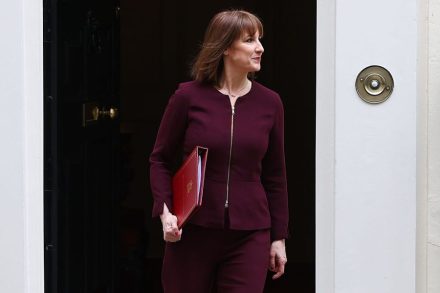
There will be plenty of victims of the crash currently playing out across the global financial markets. A few hedge funds may well fail. The trading desks of the main investment banks will be watching their annual bonuses disappear. And ordinary investors will be nursing some big losses on their investment portfolios. But the most prominent victim might well be the British Chancellor Rachel Reeves. She staked everything on meeting her ‘fiscal rules’ – and it now looks certain her gamble has been lost.  Only a few weeks ago, in the Spring Statement, Reeves reassured everyone that she had made all the adjustments necessary to make sure she stayed within her fiscal rules, and to keep the economy on a stable path.

Trump can’t ignore the stock market carnage forever

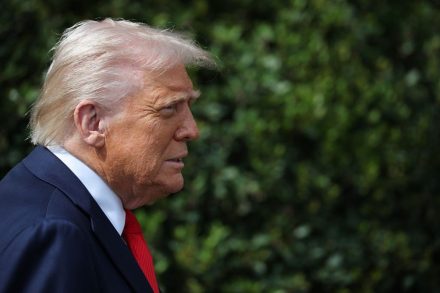
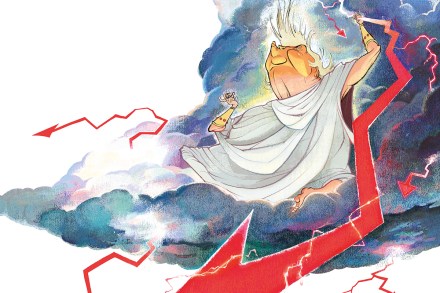
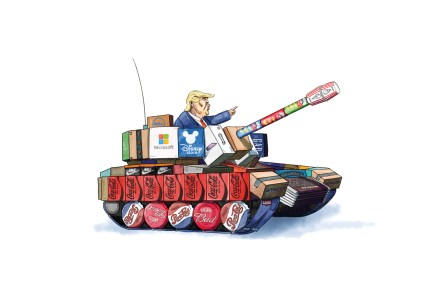
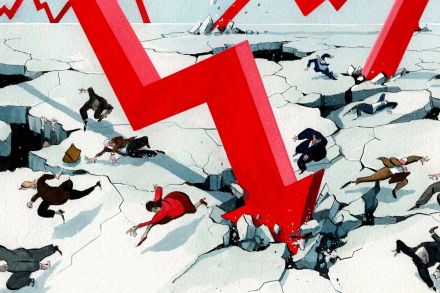
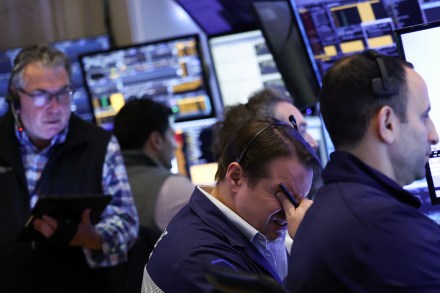
As it turned out, the only thing Liberation Day was actually liberating anyone from was their money. In the wake of President Trump's imposition of a massive round of tariffs on America’s trading partners the stock market has been in freefall. For the moment Trump is ignoring that. But he won't be able to forever – a bear market is too damning a verdict on his presidency.  You can’t ‘make America great again’ in a bear market Investors, to put it mildly, took one look at the latest round of tariffs, and dumped equities as fast as possible. In the wake of the tariffs announcement, the Dow Jones Industrial Average plunged 1,679 points, or 4 per cent while the S&P 500 sank 274 points, or 4.8 per cent, its biggest one-day drop since the Covid collapse in 2020.

Trump’s tariffs are just bizarre

They would restore manufacturing, force trade barriers to be taken down, and allow new industries to be created. There have been various different explanations for why President Trump's new tariff regime made sense. And yet when they were finally revealed yesterday one point was clear. There was no logic. The tariffs were just weird. The big reveal turned out to be a board that flapped around in the wind outside the White House. Donald Trump marked Liberation Day by holding up a placard with a list of countries – each one with a number next to it. The White House has worked out the tariffs it estimates American goods face in each market, and then come up with a retaliatory tariff that it will impose in response. The trouble is, none of it makes sense.

The minimum wage is too high

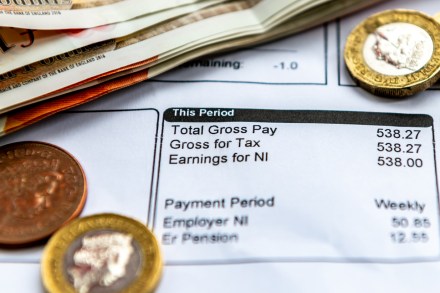
Council tax is going up. Train fares are rising. Broadband will cost more, and so will electricity and water. April opens with a blizzard of price rises that will make it far harder for everyone to make ends meet, especially if they are on a low income. The one compensation is that the minimum wage is going up as well. There is just one catch, however. The UK now has one of the highest minimum wages in the world – and very soon it is going to become painfully clear it will start costing jobs. It is the one statistic the government will be boasting about on Tuesday. The National Living Wage is rising from £11.44 an hour to £12.21, a rise of 6.7 per cent, significantly ahead of inflation, currently running at 2.8 per cent.

Starmer’s costly failure to get a Trump tariff carve-out

The UK should have been doing everything possible to secure an exemption from Trump's tariffs. We could have scrapped the digital services tax that is largely levied on the American tech giants. We could have opened our agricultural markets – even to chlorinated chicken. Heck, we could have offered President Trump his own apartment in Buckingham Palace, given how much he loves the royal family. This was the opportunity of the decade – but the Starmer government has already blown it. We will find out the full extent of the tariffs Trump plans to levy on all of America's main trading partners tomorrow on what he has oddly termed ‘Liberation Day’. Given how chaotic the White House often is, the final details are probably still being worked out. One point is clear, however.

Give holiday home owners a break

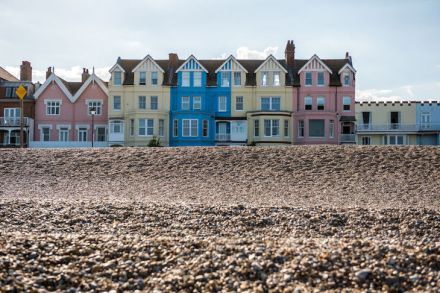
If you have had your eye on a bungalow along the Devon coast, a cottage in the New Forest, or a tastefully painted terrace in one of the sea-facing villages in Norfolk, this could be your moment. Many holiday home owners are choosing to sell up to avoid a hike on council taxes. From next week, local authorities will be allowed to charge double the normal rate for second home owners. Average bills are set to rise from £2,280 to £4,560. This crackdown is likely to be popular. After all, who has sympathy with those who own two homes, when many young people are struggling to get on to the housing ladder? Despite the temptation, we should resist joining in the cheering: instead of declaring war on second home owners, why don’t we encourage people to own holiday homes?

Who’s going to miss WH Smith?

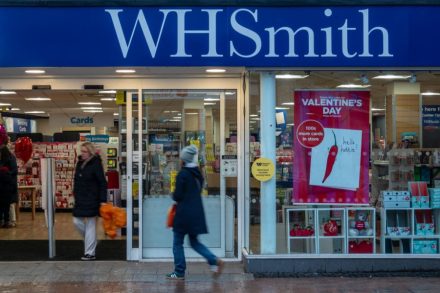
WH Smith is opting for the oldest trick in the corporate playbook. It is changing its name. It might have been better to get some new carpets – or at least to freshen up some of the display counters. As the chain's high street shops are sold off, they will be rebranded as TG Jones, whoever the heck he was. Sure, a few nostalgics might mourn the passing of one of the oldest names on the British high street. And yet, the blunt truth is that the brand was already dead – and no one will miss it now.  If you want to buy some over-priced water, or pick up a chocolate orange from WH Smith, they will still be operating at train stations and airports.

If Bailey won’t call for radical growth reforms, no one will

It was hardly the message Chancellor Rachel Reeves would have been looking for a day before a Spring Statement which could well make or break her political career. The Governor of the Bank of England, Andrew Bailey, delivered a speech yesterday warning that growth was going to prove very hard over the next five years. The Governor is completely right to emphasise how hard it will be to expand the economy. But he should be making the case for far more radical reforms. If he won't, no one else will. Bailey is staying within the ‘managed decline’ consensus To paraphrase PG Wodehouse on Scotsmen, ‘the difference between the Governor and a ray of sunshine is not hard to detect’.

Is the Trump Slump over?

From our US edition

Tariffs would destroy supply chains and drive up inflation. Elon Musk’s savage cuts would bring the government machine grinding to a halt. And chaotic policy making would drive investors out of the United States. As the Dow, the S&P 500 and the Nasdaq all fell sharply over the last month, there were plenty of factors driving the “Trump Slump,” as it became known on Wall Street. But hold on. Sure, equities have corrected. But right now it looks as if the rout is already over, and the markets have steadied again.  Last week, US stocks finished in positive territory for the first time in a month, chalking up modest gains over five trading days. On Monday, they carried on climbing, with the Dow up by more than 500 points, and the Nasdaq by more than 300.

Trump witkoff

The flaw in Labour’s plan to fix potholes

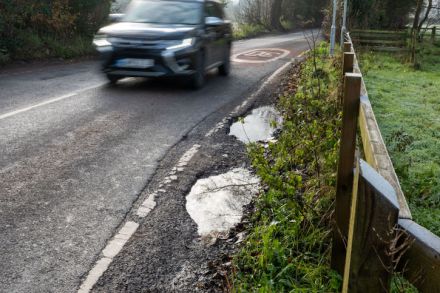
Ahead of last summer's election, the Labour party made lots of grand promises about how it was going to fix the pothole crisis plaguing Britain's roads. Finally, eight months on, Keir Starmer's government has revealed its plan to woo drivers: councils will get an extra £500 million from mid-April to fill in the holes. Yes, that's it. The extra cash falls well short of the £17 billion the Local Government Association (LGA) has estimated is needed to mend all the potholes in Britain. Expect to be dodging potholes for some time to come.

China’s BYD could kill Tesla

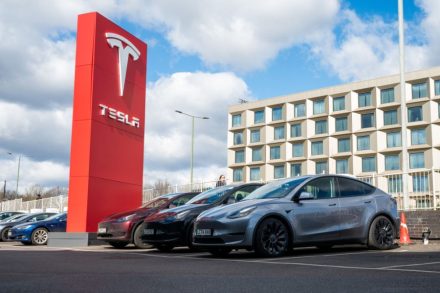
Tesla and its hyper-active boss Elon Musk are having a bad month. On both sides of the Altantic, there have been protests against the ‘Nazi-mobile’ and the ‘Swasti-car’. The electric vehicle (EV) manufacturer's sales are collapsing across Europe, and its stock is in freefall. On top of all that, its main rival, China’s BYD, has just announced a super-faster charger that allows you to 'fill up' your EV as quickly as you once could your petrol car. All companies go through bad patches, especially when they are leading a new industry. But Tesla is losing its technological lead to China. That could prove fatal.

China’s BYD could kill Tesla

From our US edition

Tesla and its hyperactive boss, Elon Musk, are having a rough month. On both sides of the Atlantic, there have been protests against the “Nazi-mobile” and the “Swasti-car.” The electric vehicle (EV) manufacturer’s sales are plummeting across Europe, and its stock is in freefall. On top of that, its biggest rival, China’s BYD, has just announced a super-fast charger that allows you to “fill up” your EV as quickly as you once could your gas-powered car. All companies go through rough patches, especially when they are leading a new industry. But Tesla is losing its technological edge to China— and that could prove fatal. If it performs as advertised, BYD’s rapid charging system could revolutionize the EV industry.

It’s impossible to make Scottish politicians financially literate

Even the OECD has finally noticed. The Paris-based policy forum is normally always in favour of higher taxes and more government spending. But the Scottish parliament has clearly pushed even the left-leaning think tanks too far. The OECD has just recommended that MSPs be given training in financial literacy. If the OECD gets its way, there could soon be a classroom outside the Holyrood building, and any MSPs who don’t do their prep will have to stay behind. As part of a review of the Scottish Fiscal Commission, it has recommended that the country’s politicians be trained in finance and economics.

It’s been a poor five years from Andrew Bailey

The pound has not collapsed. You can still trade shares, bonds and currencies in the City of London. And inflation, while still high, at least doesn’t come with ‘hyper’ as a prefix, at least not yet. If the Governor of the Bank of England Andrew Bailey wants to celebrate today's fifth anniversary of taking charge of the UK’s central bank he can at least reflect on a few modest achievements. The trouble is, they are very limited. In reality, Bailey has proved a poor if not catastrophic Governor – and everyone in the City knows it. When Bailey took over, he was the antithesis of his predecessor.

Why John Lewis’s profits have soared

Growth has ground to a halt, manufacturing is collapsing, and the government is desperately scratching around for ways to save some money so it can balance the books. There is not much to make anyone feel optimistic about the state of the British economy right now. Except, that is, for the healthy performance of the UK’s traditional, mid-market retailers. Marks & Spencer and Tesco are both in rude health. Now, John Lewis, which has reported a rise in pre-tax profits of 73 per cent to £97 million, is the latest retailer to demonstrate its ability to bounce back.  After years of steep losses under the hapless leadership of the former civil servant Dame Sharon White, John Lewis has finally turned the corner.

Trump’s Tesla stunt won’t help Musk

Tesla’s share price has halved, sales have slumped, boycotts are being organised and Chinese rivals are ready to steal the market. It has been a rough few weeks for the electric vehicle manufacturer, but Tesla's CEO Elon Musk has been handed a lifeline by Donald Trump: the US president gave his full-backing to the company by buying one of its cars. Heck, he might even have used his own money. There is just one snag: Trump’s high-profile support will make things worse for Tesla, not better. Outside the White House yesterday, Trump chose from five shiny new Teslas. A day earlier, Trump had posted on his Truth Social feed that ‘radical left lunatics’ were trying to damage the business and that its boss has been ‘penalised for being a patriot’.

Does Trump want a stock market crash?

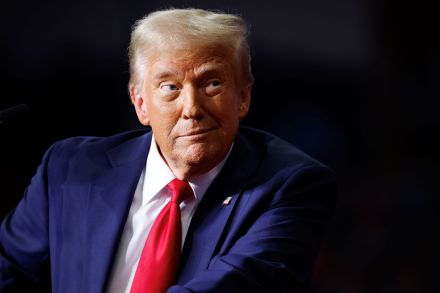
There ‘could be a recession’, said President Trump over the weekend with the kind of nonchalant shrug that suggested he was not too bothered one way or the other. He was even going to buy a Tesla to help out his ‘first buddy’ Elon Musk as the company’s share price collapsed. The markets had assumed there was a ‘Trump put’ – that is the President would always ride to the rescue to keep the bull market running. But there is no sign of it. Instead Trump seems perfectly relaxed about the huge losses, even encouraging the sell-off. Of course, it might just that he does not know what to do. But it is also possible that he wants a correction if not a full-blown crash, and is happy to see the indices fall. It has been a very rough few days for Wall Street.

Europe could pay the price for Germany’s debt shake-up

Germany has finally decided to join the party – but Europe may come to regret it. After two decades of limited borrowing and fiscal restraint, Europe's biggest economy is finally joining the high-debt club. Incoming chancellor Friedrich Merz will borrow €800 billion (£670 million), and perhaps much more, to pay for extra spending on defence and infrastructure. Sure, Germany needs to spend more on its armed forces and on restructuring its economy. But it will also likely mean the euro-zone no longer has a single solvent member to anchor it. It is hard to see how this situation will end well for Europe. Merz is a centre-right, pro-business leader, but you might not know that from his decision to start borrowing on a massive scale.

The fatal flaws in Trump’s crypto reserve plan

President Trump was very bullish about his decision over the weekend to create a 'crypto reserve'. It will legitimise crypto currencies, he said. It will turn the United States into the global hub for trade. And it will build the national wealth. In effect, the American government will build up a stock of Bitcoin and other digital currencies, much like the gold held in Fort Knox. But Trump's promise is too good to be true: it is a dangerous scam. Trump's crypto reserve will be wide open to market manipulation by the tech tycoons around him 'I will make sure the US is the Crypto Capital of the World,' Trump wrote on Truth Social. 'We are MAKING AMERICA GREAT AGAIN.

Will Labour MPs scupper a US-UK trade deal?

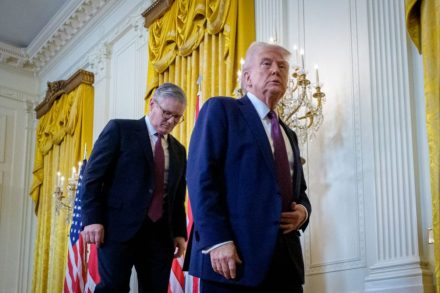
A UK-US trade deal is on the table. On a surprisingly successful trip to Washington, US President Donald Trump made it clear to the Prime Minister Sir Keir Starmer that a trade agreement with the United States was close. “We could very well end up with a real trade deal where the tariffs won’t be necessary,” Trump said after his meeting with the British delegation. “We’ll see.” Britain's dire economic performance means that the UK is hardly in a position to turn down a deal With our economy in dire trouble, Britain needs this agreement more than ever. There is just one problem: Sir Keir will have to take on his own party to get it over the line. It is far from clear that he is brave enough to do so.