Matthew Lynn

Matthew Lynn is a financial columnist and author of ‘Bust: Greece, The Euro and The Sovereign Debt Crisis’ and ‘The Long Depression: The Slump of 2008 to 2031’

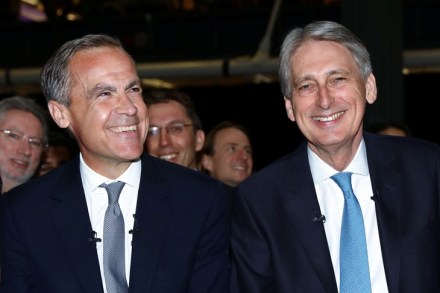
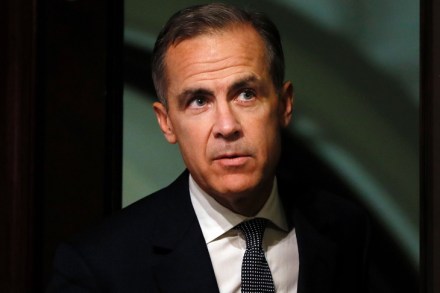
Mark Carney finally gets it: the real risk is a Brexit boom

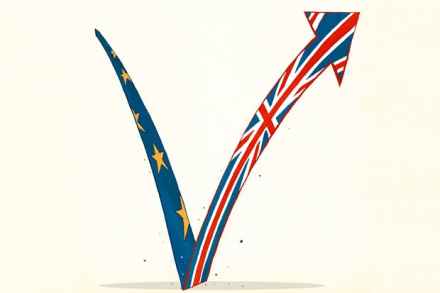
It is possible that Mark Carney is not quite the last person to notice that the post-Brexit economy is positively booming. Jean-Claude Junker might be too busy working out new ways to ‘punish’ Britain to have paid attention to the statistics. Gina Miller is possibly working on some bizarre High Court action to keep us in the EU. There might even be a leader writer somewhere at the FT who is still worrying away about the collapse of the economy. But just about everyone else has woken up to the fact that ever since we voted to leave the EU, the British economy, far from falling off a cliff, seems to have got markedly better. So Carney may not be absolutely the last person to the party.

Marine Le Pen’s plan to leave the euro is deranged

Unemployment is crucifyingly high. Factories have lost competitiveness. The share of euro-zone exports is in relentless decline. Industrial production is still lower than it was in 2008. The euro might have been a French idea – but France has turned into one of its main victims. The National Front Leader Marine Le Pen is certainly right to insist that France can’t recover while it is inside the single currency. There is a problem however. Her plan for getting out is completely deranged. The first round of voting in the Presidential election is only three months away, and the National Front leader seems almost certain to make the second round.

If the single market is so great for Wales, why is it so poor?

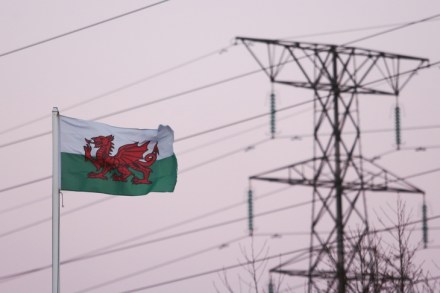
Industry will shrivel. Exports will dry up. The few remaining steel works will be closed down. And rugby will be banned. Okay, I made that last one up. But in a report today, the leaders of Welsh Labour and Plaid Cymru have laid out the case for keeping the principality in the single market - and warned that the economy will be virtually destroyed if they come out. 'Severing ties with the single market to control our borders would be an act of catastrophic self-harm,' according to the Welsh First Minister, Carwyn Jones. Like a kind of mini-me Nicola Sturgeon, it is possible to see what Jones, or certainly the Plaid leadership, might be playing it. They see membership of the single market as a way of driving a wedge between Cardiff and London, and winning more power for themselves.

After Brexit and Trump, it’s time for Davos Man to admit defeat

Business cards. Check. Contacts book. Check. Stylish ski jacket. Check. If it is mid-January, the global elite, and certainly anyone who aspires to membership of that slightly nebulous group, will be packing their bags and flying, preferably by private jet, to the chic Swiss ski resort of Davos. Over the course of a few days, they will sort out the world’s problems, between munching canapés, and bagging some lucrative contracts for their bank. If globalisation has a spiritual headquarters, it is the World Economic Forum, to give it its full name. When the political scientist Samuel Huntingdon coined the term 'Davos Man', he turned it into a short-hand for the globe-trotting elite that moves seamlessly from business, to policy work, to academia and consultancy.

Economists called Brexit wrong, but so did the Bank of England

As confessions go, it was hardly the most revelatory. Cheryl Fernandez-Versini admits she has problems with relationships. Sir Philip Green accepts he made a bit of a hash of BHS. Ed Miliband owns up to struggling with bacon sandwiches. They would have all come as more of a surprise than the chief economist of the Bank of England, Andy Haldane, finally admitting that when it came to forecasting the impact of Brexit they were a couple of alphas short of a full algorithm. Well, thanks Andy. Who knew? The problem is that Haldane, and more importantly the Bank, is still deflecting the blame. Haldane argues there is a general problem with economic forecasting. There is some truth in that.

A Brexit bust? No, the real danger lies in the debt-fuelled boom

At the Westfield shopping centre in east London, the queues started at 2 a.m. on Christmas night. In Wrexham, people started lining up at three, getting ready for a six o’clock start. In Edinburgh, hardy shoppers braved flurries of morning snow to make sure they were first in line for Boxing Day bargains. Whatever else is happening at the close of this year, British shoppers are as indefatigable as ever in their determination to keep spending. Surely it wasn’t meant to be like this? In the wake of the vote to leave the EU back in June, mainstream economists were unanimous in their view that we would be in a recession by now.

The real Brexit risk

At the Westfield shopping centre in east London, the queues started at 2 a.m. on Christmas night. In Wrexham, people started lining up at three, getting ready for a six o’clock start. In Edinburgh, hardy shoppers braved flurries of morning snow to make sure they were first in line for Boxing Day bargains. Whatever else is happening at the close of this year, British shoppers are as indefatigable as ever in their determination to keep spending. Surely it wasn’t meant to be like this? In the wake of the vote to leave the EU back in June, mainstream economists were unanimous in their view that we would be in a recession by now.

Scotland has nothing to gain from staying in the single market

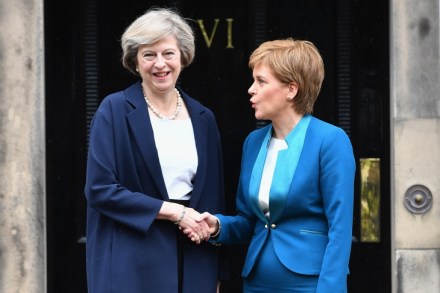
The Scottish economy will be left in ruins. Tens of thousands of people will be thrown out of their jobs. The tax base will shrivel. To listen to the latest round of complaints from the Scottish National Party, membership of the single market is absolutely vital to the country’s economy. Indeed, it is so important that it now wants to maintain it, even if England and the rest of the UK leaves. That might be clever politics, if it can be turned into a platform for a second referendum and if you choose to believe that the constitutional lawyers in Brussels can come up with a way of keeping one part of a country inside the single market with the rest outside. But it is terrible economics. Why? Because Scotland gets even less from it than the UK does.

If the Fed kick-starts global rate rises, the UK shouldn’t be left behind

One is growing at 2.9 percent, the other at 2.1 percent. In one retail sales are growing at 1 percent, in the other at 7.5 percent. In one wages are growing by 2.4 percent a year, in the other by 2.3 percent. In one, the establishment is coming to terms with a populist revolt against the elite. In the other, the establishment is, er, coming to terms with a populist revolt against the elite. What are they? They are, of course, the US and the UK economies. What is remarkable right now is how similar the economic outlook is in both countries. True, there are some minor differences, with the Americans doing better on some measures, and the British on others. But from simply looking at the statistics, it is quite hard to tell them apart. Their performance is just about the same.

Sorry Remoaners. The British peso is on its way back

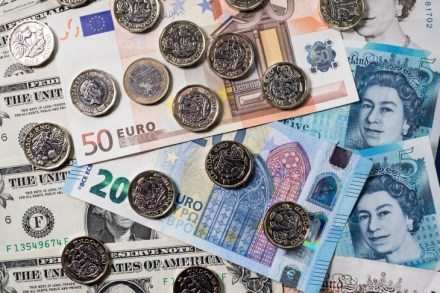
We were about to see parity with the dollar. It was fetching less than an euro at the airport. Spiralling costs were about to wipe out what little remained of our manufacturing industry, and the RXS’s – that’s the racist, xenophobic scum, in case you were wondering - were all about to lose their jobs. A collapse in the value of the pound over the summer and the autumn was one of the few genuinely worrying economic consequences of our vote to leave the EU – and the Remain camp used it endlessly to demonstrate that the economy was in freefall. It wasn’t quite a full-blown sterling crisis, of the sort that used to crash the British economy.

The Bank of England made a mistake. It should have admitted it

The currency has been devalued by more than 30 per cent. Interest rates have been pushed all the way up to 20 per cent. The IMF is standing by with an emergency package, and capital controls and dollar rationing have been maintained. It has been a heck of a morning for the pound – although, fortunately enough for most us, the Egyptian rather than British one. Over here, it has all been rather quieter. The Bank of England, as most people expected, has stuck with its decision over the summer to take rates all the way down to the 0.25 per cent. It now looks inevitable that it will hold them there – potentially for as long as the seven years at which they were left at 0.5 per cent. And yet that is surely a mistake.

The markets couldn’t care less whether Mark Carney stays or goes – and neither should we

A crash in the pound, with sterling trading down at $1.15, and heading to parity. A spike in gilts, and a flight by bond investors in a panic over the state of the British economy. As the headlines are dominated by reports that the Governor of the Bank of England might decide to pack his bags and return to his native Canada as early as next year, there has been lots of speculation about the havoc that might inflict on our already jittery post-Brexit economy. Right now, no one seems to know whether Mark Carney is likely to stay on as Governor beyond his initial five-year term or not. But ignore some of the more fevered speculation you read in the press. In truth, the markets don’t care very much. Why not?

Want a bank rescued? Don’t ask a German

Make a car? Sure. Win a Word Cup? Yup. Write a symphony? Without doubt. There are lots of things that you rather have a German doing than anyone else in the world. But there are also a few things you’d rather they didn’t. Right now, rescuing a bank is right at the top of the list. All this week, the financial markets have been gripped by the slow-motion car-crash of Deutsche Bank. An institution that was once the mightiest in Europe, and a by-word for financial stability, is now teetering on the edge of collapse. Its share price has halved this year, and today is hitting a fresh 30-year low. The cost of insuring against a default has soared, and now the hedge funds are refusing to deal with it. It is not quite in bank run territory yet - but it is getting perilously close.

Mark Carney has a shot at redemption tomorrow. Will he take it?

There are not many predictions that are safe to make in the financial markets. M&S’s results will always be disappointing is perhaps one. Sir Philip Green will never apologise for anything is another. And there is one more that can now be added to the list. The Bank of England won’t raise interest rates when it meets this week. But it should. Why? Because the ‘emergency’ post-Brexit cut is already looking like an over-reaction. In truth, the Bank’s Governor Mark Carney is already looking dangerously over-committed to Project Remain. The best thing the Bank could do now would be to admit that it had a made a mistake – and put rates back to where they were before 23 June.

Economists, not the economy, are the only ones taking a battering from Brexit

There are queues outside the money exchanges as we desperately try and swap our worthless pounds for euros. The Red Cross are flying in food parcels. The IMF is arranging an emergency aid package, whilst house prices are in freefall and interest rates are soaring. If you cast your mind back only a few weeks, that was meant to be an accurate description of the British economy by now if we were crazy enough to vote to leave the European Union. That, however, is not how it has worked out. In fact, the economy is fine. It is the economists who are taking a beating. This week, we have had the first hard data after the referendum. And it has all been surprisingly good.

The Bank of England has just taken a huge risk – on a Brexit boom

Plunging output. The FTSE in freefall. A financial collapse. Unemployment rising rapidly and trade falling off a cliff. At first glance, you might think that was an accurate description of the British economy, given the decisions that the Bank of England took this morning. After all, to cut interest rates to their lowest level in history, to re-launch quantitative easing, and to promise more action down the road, the economy must be in crisis, right? Except, er, it isn’t really. While there are good reasons to argue that the decision to leave the European Union may well hurt the economy in the medium-term, there is no immediate emergency. In fact, the Bank has just taken a huge risk – of over-stimulating the economy, and creating a Brexit boom.

Mark Carney should admit that the Bank of England fell for Project Fear

A stable government, led by a good-looking modernising liberal. A free trade agreement that gives it unrestricted access to the largest economic bloc in the world. Rising prices and a return to growth. There must be times when the Governor of the Bank of England Mark Carney wishes he was still in charge of the relatively simple Canadian economy, and had never been tempted to try and steer the damp and grey island on the other side of the North Atlantic through a moment of national angst. There may be worse jobs in the world – replacing Chris Evans on Top Gear, perhaps, or joke-writer for Theresa May – but it is hard to think of them right now.

Why Brexit is worse for Europe’s economy than it is for ours

Share prices in freefall. Pension funds obliterated. A sea of red ink across trading screens. Billions wiped off the value of leading companies. And brokers, or at least the automated trading algorithms that have replaced them, contemplating throwing themselves out of the window, or whatever exactly it is that an algorithm does when it has a really bad day at the office. That is surely an accurate description of the City of London this morning. Except, er, is isn’t really. In fact, as the financial markets wake up to an outcome they had planned for but never really expected, something far more interesting is happening.

If Brexit is the result, start buying the market

It is four o’clock on Friday morning. The early returns suggest Leave is edging ahead. You’ve just seen a tweet that Peter Mandelson has fled the country, and that Boris Johnson has been seen pencilling in the names of his cabinet. What is the first thing you do? Rush down to Sainsbury’s and stock up on olives before they get banned? Text that Polish builder for some final painting and decorating before he gets sent home? Perhaps. But actually what you should do is very simple. Get on the phone to your broker, or more realistically go online, and get ready to start buying the FTSE, the pound, and every other British asset you can lay your hands on.

The Bank of England should butt out of the Brexit debate

Unelected. Technocratic. Exercising a great deal of power over people's lives, without much in the way of accountability. Staffed by well-meaning, over-educated experts, big on theories and short on experience, and run by a smooth globe-trotting boss who is immaculately plugged into the Davos set. It is not hard to see why the Bank of England, especially under its Canadian Governor Mark Carney, is instinctively pro-EU. It looks across to Brussels and sees an institution very like itself. So it is no great surprise to see the Bank making subtle, and not so subtle, warnings, about the risks of the upcoming referendum. It was at it again today. Its decision to leave interest rates on hold was no great surprise – after seven years at 0.