Matthew Lynn

Matthew Lynn is a financial columnist and author of ‘Bust: Greece, The Euro and The Sovereign Debt Crisis’ and ‘The Long Depression: The Slump of 2008 to 2031’

The markets couldn’t care less whether Mark Carney stays or goes – and neither should we

From our UK edition

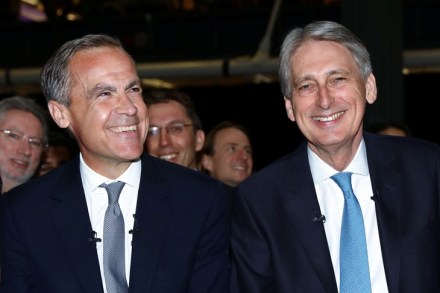
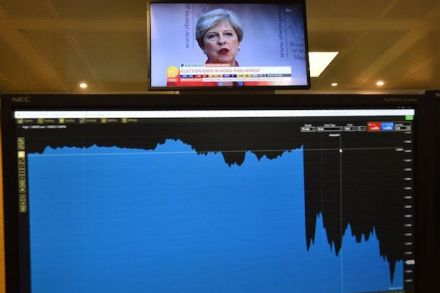
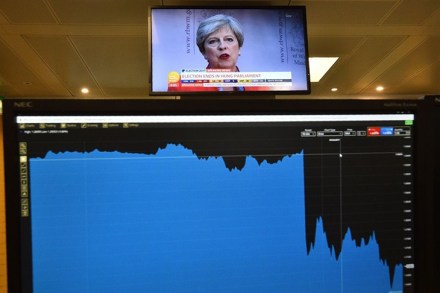
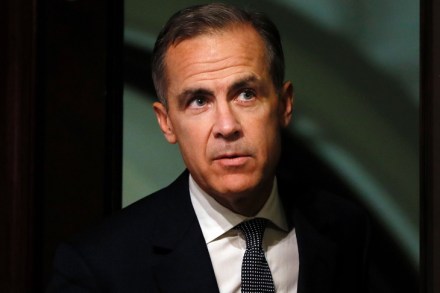
A crash in the pound, with sterling trading down at $1.15, and heading to parity. A spike in gilts, and a flight by bond investors in a panic over the state of the British economy. As the headlines are dominated by reports that the Governor of the Bank of England might decide to pack his bags and return to his native Canada as early as next year, there has been lots of speculation about the havoc that might inflict on our already jittery post-Brexit economy. Right now, no one seems to know whether Mark Carney is likely to stay on as Governor beyond his initial five-year term or not. But ignore some of the more fevered speculation you read in the press. In truth, the markets don’t care very much. Why not?

Want a bank rescued? Don’t ask a German

From our UK edition

Make a car? Sure. Win a Word Cup? Yup. Write a symphony? Without doubt. There are lots of things that you rather have a German doing than anyone else in the world. But there are also a few things you’d rather they didn’t. Right now, rescuing a bank is right at the top of the list. All this week, the financial markets have been gripped by the slow-motion car-crash of Deutsche Bank. An institution that was once the mightiest in Europe, and a by-word for financial stability, is now teetering on the edge of collapse. Its share price has halved this year, and today is hitting a fresh 30-year low. The cost of insuring against a default has soared, and now the hedge funds are refusing to deal with it. It is not quite in bank run territory yet - but it is getting perilously close.

Mark Carney has a shot at redemption tomorrow. Will he take it?

From our UK edition

There are not many predictions that are safe to make in the financial markets. M&S’s results will always be disappointing is perhaps one. Sir Philip Green will never apologise for anything is another. And there is one more that can now be added to the list. The Bank of England won’t raise interest rates when it meets this week. But it should. Why? Because the ‘emergency’ post-Brexit cut is already looking like an over-reaction. In truth, the Bank’s Governor Mark Carney is already looking dangerously over-committed to Project Remain. The best thing the Bank could do now would be to admit that it had a made a mistake – and put rates back to where they were before 23 June.

Economists, not the economy, are the only ones taking a battering from Brexit

From our UK edition

There are queues outside the money exchanges as we desperately try and swap our worthless pounds for euros. The Red Cross are flying in food parcels. The IMF is arranging an emergency aid package, whilst house prices are in freefall and interest rates are soaring. If you cast your mind back only a few weeks, that was meant to be an accurate description of the British economy by now if we were crazy enough to vote to leave the European Union. That, however, is not how it has worked out. In fact, the economy is fine. It is the economists who are taking a beating. This week, we have had the first hard data after the referendum. And it has all been surprisingly good.

The Bank of England has just taken a huge risk – on a Brexit boom

From our UK edition

Plunging output. The FTSE in freefall. A financial collapse. Unemployment rising rapidly and trade falling off a cliff. At first glance, you might think that was an accurate description of the British economy, given the decisions that the Bank of England took this morning. After all, to cut interest rates to their lowest level in history, to re-launch quantitative easing, and to promise more action down the road, the economy must be in crisis, right? Except, er, it isn’t really. While there are good reasons to argue that the decision to leave the European Union may well hurt the economy in the medium-term, there is no immediate emergency. In fact, the Bank has just taken a huge risk – of over-stimulating the economy, and creating a Brexit boom.

Mark Carney should admit that the Bank of England fell for Project Fear

From our UK edition

A stable government, led by a good-looking modernising liberal. A free trade agreement that gives it unrestricted access to the largest economic bloc in the world. Rising prices and a return to growth. There must be times when the Governor of the Bank of England Mark Carney wishes he was still in charge of the relatively simple Canadian economy, and had never been tempted to try and steer the damp and grey island on the other side of the North Atlantic through a moment of national angst. There may be worse jobs in the world – replacing Chris Evans on Top Gear, perhaps, or joke-writer for Theresa May – but it is hard to think of them right now.

Why Brexit is worse for Europe’s economy than it is for ours

From our UK edition

Share prices in freefall. Pension funds obliterated. A sea of red ink across trading screens. Billions wiped off the value of leading companies. And brokers, or at least the automated trading algorithms that have replaced them, contemplating throwing themselves out of the window, or whatever exactly it is that an algorithm does when it has a really bad day at the office. That is surely an accurate description of the City of London this morning. Except, er, is isn’t really. In fact, as the financial markets wake up to an outcome they had planned for but never really expected, something far more interesting is happening.

If Brexit is the result, start buying the market

From our UK edition

It is four o’clock on Friday morning. The early returns suggest Leave is edging ahead. You’ve just seen a tweet that Peter Mandelson has fled the country, and that Boris Johnson has been seen pencilling in the names of his cabinet. What is the first thing you do? Rush down to Sainsbury’s and stock up on olives before they get banned? Text that Polish builder for some final painting and decorating before he gets sent home? Perhaps. But actually what you should do is very simple. Get on the phone to your broker, or more realistically go online, and get ready to start buying the FTSE, the pound, and every other British asset you can lay your hands on.

The Bank of England should butt out of the Brexit debate

From our UK edition

Unelected. Technocratic. Exercising a great deal of power over people's lives, without much in the way of accountability. Staffed by well-meaning, over-educated experts, big on theories and short on experience, and run by a smooth globe-trotting boss who is immaculately plugged into the Davos set. It is not hard to see why the Bank of England, especially under its Canadian Governor Mark Carney, is instinctively pro-EU. It looks across to Brussels and sees an institution very like itself. So it is no great surprise to see the Bank making subtle, and not so subtle, warnings, about the risks of the upcoming referendum. It was at it again today. Its decision to leave interest rates on hold was no great surprise – after seven years at 0.

The debt monster

From our UK edition

Just after last year’s general election, George Osborne delivered a budget that he hailed as proof that his policies were working. ‘The British economy I report on today is fundamentally stronger than it was five years ago,’ he crowed, as he started to detail the record number of jobs created and a growth rate that had accelerated past our neighbours. ‘Our long-term economic plan is working. But the greatest mistake this country could make would be to think all our problems are solved.’ As it turns out, this final sentence summed things up the best. There was growth but a whole lot of debt as well. The national debt today stands at £1,580 billion, some 50 per cent more than the Chancellor inherited.

If Deutsche Bank collapses, it’s taking the euro with it

From our UK edition

The queues haven’t started forming outside branches in Frankfurt or Cologne yet. Even so, it is hard not to suspect that something is badly amiss at Deutsche Bank, Germany’s and indeed Europe’s mightiest financial institution, and the rock on which that economy is founded. The shares have been in freefall, and executives have been wheeled out to try and reassure everyone that all is well. For Deutsche to be in trouble is bad enough. But here’s the real problem. If Deutsche does go down, it is taking the euro down with it. Why? Because if Germany bails it out, the contrast with the punishment metered out to Greek banks will be too painful to contemplate. And yet, were it to be allowed to fail, it would be catastrophic for the German economy.

Investment: The great pension robbery

From our UK edition

Scrapping the cuts to tax credits. Ring-fencing health care, and spending a few billion on a high-speed rail link from London to Birmingham. Despite all the howls of outrage from the left about austerity, for a country that was meant to be broke, we have a government that still throws around a lot of cash. Where’s it all coming from? If you have been saving for a pension, the answer is: probably from you. Over the past few years, George Osborne has become almost as skilful as Gordon Brown was at raising taxes without anyone noticing too much. Since his early and brutal rise in VAT, a tax that hits everyone every time they shop, he has put his revenue-raising measures into the small print. The self-employed have been stung with new ways of taxing their personal service companies.

Forget China or oil prices. This crash was made in America

From our UK edition

If anyone is feeling pleased about the slide on the stock-market today, it is probably Andrew Roberts, the RBS analyst who hit the headlines this week with a note advising everyone to ‘sell everything’. Probably rather sooner than he expected, and before any of his clients even had time to panic properly, prices have started to collapse. Almost every day, there are hefty three digits falls, and pictures editors are running out of their stock photos of despairing traders looking glumly into their Bloomberg terminals. The numbers suggest that a bear market, usually defined as a 20 percent drop off the highs, is now very close. China’s Shenzhen index is already there. The FTSE is down from just shy of 7,000 in July to 5,780 now.

The Fed has raised interest rates – but the era of cheap money isn’t over yet

From our UK edition

The iPhone had not yet been launched. Sven-Goran Eriksson was still managing the England football team. A 17-year-old Taylor Swift had just had her first hit. Plenty has changed since June 2006, but one thing has remained remarkably constant - the cost of money. In the nine years since then, the Federal Reserve has cut interest rates, but until yesterday it had never raised them. With the exception of one misjudged rate rise from the European Central Bank, which was quickly reversed, neither has any other country. For almost an entire decade, money has been remarkably cheap by any historical standards. By that measure alone, yesterday's decision from the Fed to finally raise rates is a big deal.

Mark Carney must avoid becoming the Tony Blair of central banking

From our UK edition

Just about anyone, except it seems for the Bank of England’s forecasting department, could have seen this one coming. When the Bank’s Governor Mark Carney decided to bundle a stack of fresh data on the state of the economy into a single ‘Super Thursday’ package released every three months, someone could have checked the calendar and pointed out that the second one would fall on Bonfire Night. The jokes about expecting fireworks, followed by the tweets about damp squibs, were always inevitable. At the very least, they could have started a month later, and avoided that round of jokes. Forecasting, however, has been a weak spot of the Bank’s in recent years.

The real ‘Super Thursday’ will be when interest rates rise

From our UK edition

Turn-up. Eat lunch. Swap a few pleasantries with the other people in the room, leave interest rates on hold, and then collect a cheque on the way out. I am starting to wonder why I can’t have a job on the Bank of England’s Monetary Policy Committee. It certainly doesn’t look terribly difficult. This week, the Bank is making a change to its usual routine. Instead of just announcing the latest monthly decision on rates, it is also releasing a vast amount of fresh information on the economy, in a move that the media have already dubbed ‘Super Thursday’, presumably on the grounds that unlike plain old ordinary Thursdays, City journalists and economic pundits will have lots of new data and forecasts to play around with.

The sooner Greece leaves the euro, the better

From our UK edition

Ten years ago, the Greek minister Yainnos Papantoniou came to London to give a talk at the London School of Economic on the country’s first four years as a member of the euro. A skilled, pro European technocrat, Papantoniou had, more than anyone else, steered his country through dogged German resistance into the single currency. Papantoniou boasted that a history of weak growth and chaotic government had been swept aside, and that Greece was now the equal of Germany and France. What lay ahead, he argued was 'a new dynamic phase for the Greek economy, based on knowledge and modern structures'. A 'bolstering of national self-confidence' would be the natural result. It was an articulate exposition of the view of a whole generation of Mediterranean politicians, eurocrats and bankers.

How to Ed-proof your portfolio

From our UK edition

It was 2 May 1997. Not only was most of the country celebrating the election of a bright young Kennedy-esque Prime Minister called Tony Blair, so too, perhaps more surprisingly, were the champagne-swilling Thatcherites of the City of London. As the government took office, the FTSE 100 index climbed up to 4,455, and it was to carry on rising over the next few months, reaching 5,193 by the year’s end. Indeed, for much of its first term, Britain’s last Labour government was accompanied by a raging bull market, as the dotcom bubble reached its peak. Will history repeat itself? In May, we may well see another newly elected Labour prime minister, Ed Miliband. Unlike his predecessor Blair, Red Ed seems rather more committed to old-fashioned socialism.

Why education is no longer the best way to invest in your child’s future

From our UK edition

Teenagers have never exactly been short of things to complain about to their parents. You didn’t give them enough support, sent them to the wrong schools, stopped them going to the right parties, or didn’t get them the latest iPhone. But Generation Rent, perhaps stirred up by too much time spent reading Ed Miliband’s Twitter feed, are likely to be especially aggrieved. To add to the traditional litany of charges from the younger generation against the older can be added one that might even have a kernel of truth in it — you stole our future. There is a case to be made that the big divide in British society, as indeed in most developed economies, is not between classes, races, religions or regions, but between generations.

The bull market is five years old. Does that mean it’s nearly over?

From our UK edition

There were no fireworks, and not much champagne. Indeed, it wasn’t an anniversary that many people noticed. But on 9 March, the bull market in equities was five years old. It was on that day back in 2009 that the Dow Jones Industrial Average, the key global benchmark for stocks, edged down another 80 points to close at 6,547, its lowest level since 1997. Although no one knew at the time, that was the bottom, and it was to go no lower. From then onwards, the recovery was under way. In London, our own low point came three days earlier, on 6 March 2009, when the FTSE100 index touched 3,530. There is an old saying among traders that ‘nobody rings a bell at the bottom of the market’.