Matthew Lynn

Matthew Lynn is a financial columnist and author of ‘Bust: Greece, The Euro and The Sovereign Debt Crisis’ and ‘The Long Depression: The Slump of 2008 to 2031’

Businesses should try and shape Brexit – not fight it | 26 June 2018

Airbus will abandon the UK. The car factories will all be closed down. Trade will grind to a halt, we will run out of food and medicines, and Harry Kane will be sold to Real Madrid and made captain of Spain instead of England. Okay, I made that last one up, but all the others are among the dire warnings that big business have issued over Brexit in the last few weeks. Project Fear III, or IV, or possibly XXVII by now, keeps coming back. Right now, it seems to have as many sequels as Jurassic World, and with plot-lines that are about as original. That, however, is a mistake, and potentially a serious one. Sure, industry has plenty of legitimate concerns about our departure from the EU. But it should be trying to shape Brexit, not just re-run a failed referendum strategy.

Italy isn’t the next Greece. Here’s why

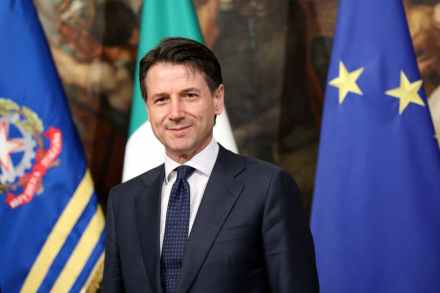
Everyone thinks they know the script of how Italy's saga will play out. As the populists take power in Rome, they will rail against Brussels, try to fight austerity, come up with some bold plans for reforming the euro, and hold a referendum or two. And then they will meekly cave in as Angela Merkel and the European Central Bank, the euro-zone’s equivalent of Gordon Brown’s ‘big clunking fist’ from a decade ago, bring them to heel. After all, that's what happened in Greece when Syriza took power. A lot of fighting talk was followed by a dismal surrender, and five years of budget cuts, tax rises, and unending recession. But there is a chance that Italy will be different. Why? Because it is a far bigger economy? Because it has a trade surplus?

Italy isn’t the next Greece. Here’s why | 6 June 2018

Everyone thinks they know the script of how Italy's saga will play out. As the populists take power in Rome, they will rail against Brussels, try to fight austerity, come up with some bold plans for reforming the euro, and hold a referendum or two. And then they will meekly cave in as Angela Merkel and the European Central Bank, the euro-zone’s equivalent of Gordon Brown’s ‘big clunking fist’ from a decade ago, bring them to heel. After all, that's what happened in Greece when Syriza took power. A lot of fighting talk was followed by a dismal surrender, and five years of budget cuts, tax rises, and unending recession. But there is a chance that Italy will be different. Why? Because it is a far bigger economy? Because it has a trade surplus?

Don’t blame the populists for Italy’s chaos

Bond yields are soaring. Stock markets are tanking. The banks are looking wobbly, and money is starting to drain out of Italy. To listen to the mainstream commentary on the Italian crisis part 782, you’d imagine that a wild and irresponsible ‘populist’ government had just been tamed by the financial markets. And that once some sensible suits backed by the IMF and the EU take back control in Rome order would be restored and everything will be back to normal. The trouble is, that is not quite the whole story. In fact, the markets have already worked out that Italy is leaving the euro, at least in its present form. The debate is about when and how, and whether its departure is orderly or chaotic. And right now the ‘populists’ are winning.

Who is making the case for leaving the customs union?

Whole industries will be devastated. There will be thirty mile queues of lorries stretching back from Dover. The price of food will rocket, our farmers will be wiped out, and the IRA will be letting off bombs all over the UK as the Troubles return to Northern Ireland. With every day that passes, the scare stories about leaving the customs union are getting more and more hysterical – and the pressure is growing to stay inside. In fact, most of it is nonsense. The fifth largest economy in the world is perfectly capable of managing its own trade arrangements. But leaving needs a big sell. Why? Because there is a powerful alliance of industrial lobbyists and ultra remainers behind staying inside, and that means the case for getting out may easily be lost.

Britain should rise above Trump’s trade war

The stock market is reeling. The White House has already witnessed the resignation of the President’s most senior economic adviser. The EU is preparing retaliation, and other countries are checking the rule books to see what sort of tariffs and quotas they might be allowed to impose. In the wake of Donald Trump’s decision to whack hefty tariffs on steel imports into the United States a full-blown transatlantic trade war is brewing – and if China and Japan wade in, that may quickly turn global. That will, of course, be terrible for the global economy. But it might also be the perfect moment for a soon-to-be-out-of-the-EU Britain to reassert its historic role as a champion of free trade. In truth, the US and the EU are both being as bone-headed as each other.

Don’t panic about the stock market plunge

The Dow drops by eleven hundred points, its largest one-day fall ever. Equities around the world crash in sympathy. The bond markets are rattled, picture editors start looking for their stock photos of traders gazing despairingly at their Bloomberg terminals, and anxious-looking analysts turn up on TV warning that a recession might be just around the corner. True, more than one thousand points off the Dow, and two hundred off the FTSE in the space of a few hours might look scary. To anyone trying to trade it minute by minute it can certainly be nerve-jangling. And yet, in truth there is far less to it than first appears. Over the next couple of years we should probably get used to these kind of violent swings in sentiment. Why?

The ‘experts’ must learn their lesson from Project Fear’s failure

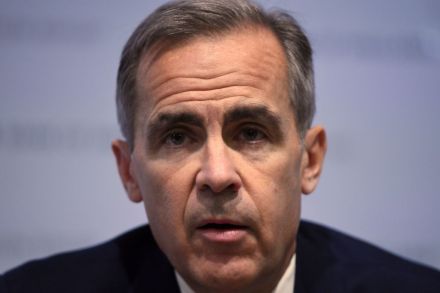
Unemployment would soar. Trade would collapse. Factories would close, and house prices would be in freefall. Rewind to the spring and summer of 2016, when Project Fear was at its peak, and we were meant to be shivering in the streets by now, flicking through battered copies of ‘The Road’ for tips on surviving in a post-apocalyptic wasteland as a result of leaving the EU. Instead, we learned today that the UK economy is doing pretty well. It expanded by 0.5 per cent in the latest quarter, well ahead of forecasts. Even the Governor of the Bank of England, Mark Carney, one of the dark overlords of Project Fear, now agrees that Britain is back in the mainstream of the global economy.

John McDonnell and Davos are perfect for one another

The headlines just about write themselves. A hard-left Labour shadow chancellor flies off to Davos to preach revolution and socialism to the world's most elite gathering of business leaders. Surely that is a sign that Jeremy’s Corbyn's Labour party is being taken seriously by the big wheels of global business. And a sign as well that the firebrands are readying themselves to reach an accommodation with the bankers and speculators of big capital once they are in power – or at the very least picking up a few business cards so they know who to call at Goldman Sachs when they need an emergency bail-out.

Rupert Murdoch is selling Sky at the top of the market

There are plenty of questions to be asked about the decision by Rupert Murdoch to sell 21st-Century Fox, including Sky in this country, to Disney.  On what, for example, will Momentum blame the loss of the 2022 election if not the malign influence of the Australian tycoon? Is the old rattlesnake finally bowing out of the game, or is he already plotting a comeback? And how will the dynastic power struggle within the Murdoch family play out? But the most interesting one is this. Has the master media deal-maker pulled off another coup, or will he come to regret selling what has long seemed the jewel in his corporate crown? On the surface, the decision to sell his 39 percent of Sky looks an odd one. Murdoch has been battling for years to get full control of the company.

The last thing the UK needs is higher Scottish taxes

A top rate of 50 percent? A wider range of tax bands? Lower allowances? Or some combination of all three? When it unveils its Budget on Thursday, the Scottish National Party is just about certain to use its power to increase income taxes. The only real debate is about who will take the hit. On the day, Nicola Sturgeon will no doubt wheel out the usual lines about the need to ‘invest’ in public services, reverse ‘Tory cuts’, and perhaps add in a sound-bite or two about the damage done by a ‘hard Brexit’. And yet, in fact higher taxes will only damage the Scottish economy, and by extension the whole of the UK. We will all end paying a price for the SNP’s recklessness.

The rise of the machines

There have been plenty of reasons to feel optimistic about the British economy over the past year. Employment levels have hit record levels, and are among some of the highest in the world. Leaving the EU doesn’t seem to have dented growth much, and there is still plenty of investment pouring into the country. The budget deficit is slowly coming under control, and wages are still rising even if they are failing to keep pace with prices. There is, however, one huge problem. Our record on productivity has been dismal. In the latest quarter, there has been a small upturn: the Office for National Statistics reported a 0.9 per cent improvement in output per worker in the latest quarter, the fastest rate of growth in six years.

Here’s what we should get from Brussels for our £40 billion

A high speed rail line from Manchester to Glasgow. Three of the shiny new Elizabeth lines crossing London. Thirty or forty hospitals, almost sixty Manchester City squads, and perhaps a dozen Bitcoins (although it might be only eleven by the time you are reading this). There is still a lot you can get for 40 to 50 billion euros. In the Brexit negotiations, the UK now seems to have increased its offer to the European Union to that range. If that is indeed the final settlement, we can expect to hear lots about all the other things we could have done with the money. Remainers will gloat over the cost, and furiously tweet pictures of that red bus, while Leavers will fume about how the cliff edge would have been better. And yet, there is a more important question.

Stamp duty was already a mess – but we just made it worse

We could have given them free Spotify subscriptions. Or Just Eat vouchers. Instead, the government’s pitch to Jezza-loving twenty-somethings was a cut in stamp duty for first-time buyers. The levy on buying a home will be abolished completely up to £300,000, and, for the trainee bankers and tech moguls buying in the better parts of London, the first three hundred grand when you are spending half a million will be let off the tax. On the surface, that might seem like a good wheeze. If young people are angry that they can’t get a first foot on the housing ladder, then it will now be a little easier for them. It comes with a cost, however. It takes a housing policy that was already a mess, and achieves the almost unimaginable feat of making it even worse. Take stamp duty.

Thank havens

Maybe we should blame John Grisham. In his breakthrough best-seller The Firm, the young lawyer Mitch, played by Tom Cruise in the movie, has to make regular trips to the Cayman Islands where the corrupt law firm he works for creates hundreds of shell companies for the assorted cast of money launderers, tax dodgers and gangsters who are its core client base. Ever since then, the murky ‘offshore centre’ has become a staple of the post-Cold War thriller: a place where, amid the palm trees and skyscrapers, sharply dressed financiers salt away billions, safely out of view of any government.

An investors’ guide to surviving Corbyn

Windfall taxes imposed overnight. A sweeping programme of nationalisation. A levy on every bank transaction. A campaign on ‘back taxes’ that amounted to little more than hustling money out of corporations. The first couple of years of a government run by Jeremy Corbyn might not be quite as extreme as the all-out assault on private enterprise launched by his hero Hugo Chavez in Venezuela, which included all of those measures. But it would still be most left-wing government seen in this country since 1945, and quite possibly ever. If it happens — and there are still almost five years before there has to be another election — what kind of steps can investors take to protect their wealth? The most obvious is to move as much money abroad as fast as possible.

If the City can’t replace 75,000 jobs, it has bigger problems than Brexit

The wine bars will be spookily empty. The lap-dancing clubs will be abandoned, and Savills will have to start working out how to sell mansions within an hour’s commute of Frankfurt and Paris instead of London. Just about every day brings another dire prediction about the impact of leaving the EU on the City’s mighty financial services industry. Only this week the Bank of England, which has turned itself into a semi-official  chorus of doom on the issue, joined the fun, with reports that it was predicting 75,000 job losses. No one denies that would be serious. The City is one of the most dynamic parts of the British economy, creating wealth that ripples out through London and the rest of the South-East, and contributing billions in tax revenues every year.

The cost of a Brexit ‘no deal’ is diminishing

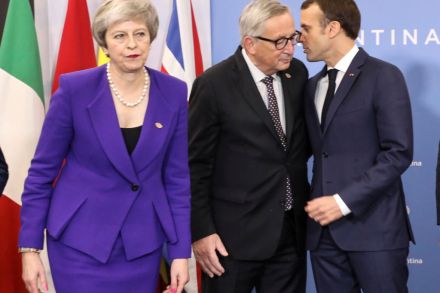
The exit bill keeps going higher and higher. No progress has been made on the Irish border, and not much on citizens' rights. The talks are deadlocked, and you need an extraordinary level of optimism to imagine that Theresa May talking directly to Emmanuel Macron or Angela Merkel is gong to make much difference to anything. The EU seems completely unwilling to be flexible on negotiating the terms of our departure from the club. The result? A cliff-edge hard Brexit is looking more likely all the time. That might be a catastrophe or it might not. We will have to see if and when it happens. One point should be obvious, however. While there may be costs to that, they are coming down all the time.

Capping energy prices will leave us all worse off

We have a couple of hundred years of economic history to tell us that some things are just a really, really bad idea. Printing loads of money, for example. State control of industries. Punitive taxes. Subsidies. But of all the really terrible polices a government can put in place, the very worst of all is price controls. The trouble is, that also seems to be the most popular idea in British politics right now. Last week, Labour announced what amounts to price controls on credit cards, with a cap on the interest rate that can be charged. It is already in favour of controls on rents. Today, Theresa May stepped in with her own contribution, unveiling a plan for controlling the price of energy. And it is still only Wednesday, so who knows where we will end up by the end of the week.

We need a free market in credit cards – just like everything else

There are some commercial decisions that are intrinsically difficult to defend. The plot of the last Captain America film, for example. Ryanair’s charges for bags that are slightly too big. The price of the new iPhone, and just about anything done by the lovable folks over at Foxtons. Credit cards changes come very close to that category. Almost but not quite. In fact, if the Labour party gets its way, and imposes controls on them, we may find that out to our cost. In what will probably be the first of a whole week of populist measures, the shadow chancellor John McDonnell today announced that, if in office, he would impose limits on what could be charged on cards. No one would have to pay back more than they originally borrowed.