Matthew Lynn

Matthew Lynn is a financial columnist and author of ‘Bust: Greece, The Euro and The Sovereign Debt Crisis’ and ‘The Long Depression: The Slump of 2008 to 2031’

The rise of the machines

From our UK edition

There have been plenty of reasons to feel optimistic about the British economy over the past year. Employment levels have hit record levels, and are among some of the highest in the world. Leaving the EU doesn’t seem to have dented growth much, and there is still plenty of investment pouring into the country. The budget deficit is slowly coming under control, and wages are still rising even if they are failing to keep pace with prices. There is, however, one huge problem. Our record on productivity has been dismal. In the latest quarter, there has been a small upturn: the Office for National Statistics reported a 0.9 per cent improvement in output per worker in the latest quarter, the fastest rate of growth in six years.

Here’s what we should get from Brussels for our £40 billion

From our UK edition

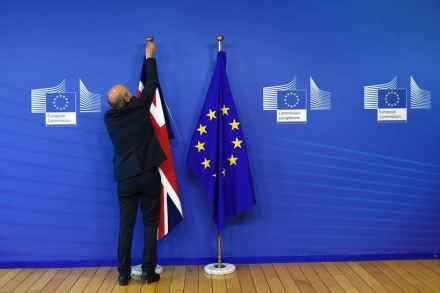
A high speed rail line from Manchester to Glasgow. Three of the shiny new Elizabeth lines crossing London. Thirty or forty hospitals, almost sixty Manchester City squads, and perhaps a dozen Bitcoins (although it might be only eleven by the time you are reading this). There is still a lot you can get for 40 to 50 billion euros. In the Brexit negotiations, the UK now seems to have increased its offer to the European Union to that range. If that is indeed the final settlement, we can expect to hear lots about all the other things we could have done with the money. Remainers will gloat over the cost, and furiously tweet pictures of that red bus, while Leavers will fume about how the cliff edge would have been better. And yet, there is a more important question.

Stamp duty was already a mess – but we just made it worse

From our UK edition

We could have given them free Spotify subscriptions. Or Just Eat vouchers. Instead, the government’s pitch to Jezza-loving twenty-somethings was a cut in stamp duty for first-time buyers. The levy on buying a home will be abolished completely up to £300,000, and, for the trainee bankers and tech moguls buying in the better parts of London, the first three hundred grand when you are spending half a million will be let off the tax. On the surface, that might seem like a good wheeze. If young people are angry that they can’t get a first foot on the housing ladder, then it will now be a little easier for them. It comes with a cost, however. It takes a housing policy that was already a mess, and achieves the almost unimaginable feat of making it even worse. Take stamp duty.

Thank havens

From our UK edition

Maybe we should blame John Grisham. In his breakthrough best-seller The Firm, the young lawyer Mitch, played by Tom Cruise in the movie, has to make regular trips to the Cayman Islands where the corrupt law firm he works for creates hundreds of shell companies for the assorted cast of money launderers, tax dodgers and gangsters who are its core client base. Ever since then, the murky ‘offshore centre’ has become a staple of the post-Cold War thriller: a place where, amid the palm trees and skyscrapers, sharply dressed financiers salt away billions, safely out of view of any government.

An investors’ guide to surviving Corbyn

From our UK edition

Windfall taxes imposed overnight. A sweeping programme of nationalisation. A levy on every bank transaction. A campaign on ‘back taxes’ that amounted to little more than hustling money out of corporations. The first couple of years of a government run by Jeremy Corbyn might not be quite as extreme as the all-out assault on private enterprise launched by his hero Hugo Chavez in Venezuela, which included all of those measures. But it would still be most left-wing government seen in this country since 1945, and quite possibly ever. If it happens — and there are still almost five years before there has to be another election — what kind of steps can investors take to protect their wealth? The most obvious is to move as much money abroad as fast as possible.

If the City can’t replace 75,000 jobs, it has bigger problems than Brexit

From our UK edition

The wine bars will be spookily empty. The lap-dancing clubs will be abandoned, and Savills will have to start working out how to sell mansions within an hour’s commute of Frankfurt and Paris instead of London. Just about every day brings another dire prediction about the impact of leaving the EU on the City’s mighty financial services industry. Only this week the Bank of England, which has turned itself into a semi-official  chorus of doom on the issue, joined the fun, with reports that it was predicting 75,000 job losses. No one denies that would be serious. The City is one of the most dynamic parts of the British economy, creating wealth that ripples out through London and the rest of the South-East, and contributing billions in tax revenues every year.

The cost of a Brexit ‘no deal’ is diminishing

From our UK edition

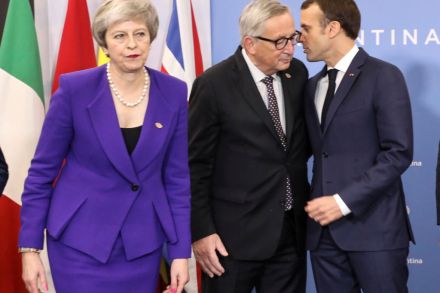
The exit bill keeps going higher and higher. No progress has been made on the Irish border, and not much on citizens' rights. The talks are deadlocked, and you need an extraordinary level of optimism to imagine that Theresa May talking directly to Emmanuel Macron or Angela Merkel is gong to make much difference to anything. The EU seems completely unwilling to be flexible on negotiating the terms of our departure from the club. The result? A cliff-edge hard Brexit is looking more likely all the time. That might be a catastrophe or it might not. We will have to see if and when it happens. One point should be obvious, however. While there may be costs to that, they are coming down all the time.

Capping energy prices will leave us all worse off

From our UK edition

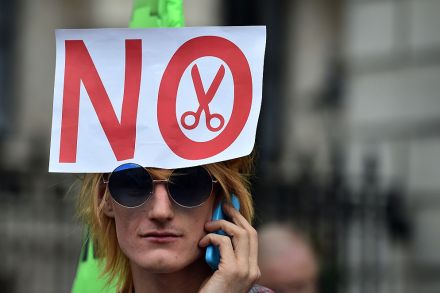
We have a couple of hundred years of economic history to tell us that some things are just a really, really bad idea. Printing loads of money, for example. State control of industries. Punitive taxes. Subsidies. But of all the really terrible polices a government can put in place, the very worst of all is price controls. The trouble is, that also seems to be the most popular idea in British politics right now. Last week, Labour announced what amounts to price controls on credit cards, with a cap on the interest rate that can be charged. It is already in favour of controls on rents. Today, Theresa May stepped in with her own contribution, unveiling a plan for controlling the price of energy. And it is still only Wednesday, so who knows where we will end up by the end of the week.

We need a free market in credit cards – just like everything else

From our UK edition

There are some commercial decisions that are intrinsically difficult to defend. The plot of the last Captain America film, for example. Ryanair’s charges for bags that are slightly too big. The price of the new iPhone, and just about anything done by the lovable folks over at Foxtons. Credit cards changes come very close to that category. Almost but not quite. In fact, if the Labour party gets its way, and imposes controls on them, we may find that out to our cost. In what will probably be the first of a whole week of populist measures, the shadow chancellor John McDonnell today announced that, if in office, he would impose limits on what could be charged on cards. No one would have to pay back more than they originally borrowed.

Forget hard or soft. What we need is a quick Brexit

From our UK edition

Should the exit bill be €20bn or €40bn? Should the trade deal be the 'Swiss-plus' or 'Canada-lite'? Should our negotiating strategy be the full cliff-edge, or should we opt for the reverse gear? If we had a couple of micro-chip factories for every different version of Brexit on offer, we'd probably be worrying about it a lot less. But in fact there is something far more important than whether we end up with a hard or soft Brexit - and that is a quick Brexit. Ask anyone in business - and the debate about how to leave the EU is mostly about preserving the economy - and they will tell you that it is often just as important to get things done fast as to get them completely right. That is why the software industry releases Version 1.0, Version 2.

The Bank of England can’t remain in its ‘Brexit’ parallel universe forever

From our UK edition

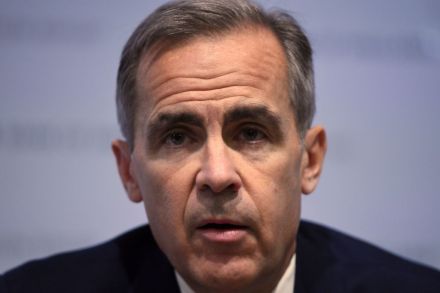
House prices are in freefall. Unemployment is rising relentlessly. The pound is plunging on the markets, and companies are re-locating to Paris and Frankfurt in droves. In the parallel universe Mark Carney increasingly seems to live in, that is a pretty accurate description of the British economy. In this universe, however, the picture is very different. The economy is doing just fine – and that is making it increasingly hard to understand why interest rates are being held at ‘emergency’ levels to cope with the ‘catastrophe’ of leaving the European Union. At a meeting of the Monetary Policy Committee yesterday, the Bank left rates on hold at 0.25 percent, while hinting that might finally go up next month.

Macron’s biggest enemy is himself – not the unions

From our UK edition

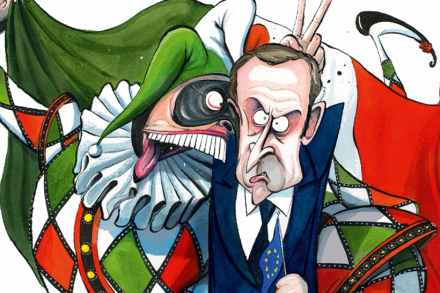
The labour market would be revolutionised. France would start growing rapidly again, leading the way in Europe. Tech entrepreneurs would flock to Paris, along with the bankers fleeing the City, while companies from around the world would be relocating to newly invigorated industrial hubs in Lyon and Toulouse. That anyway was the script when the centrist reformer Emmanuel Macron was elected to the French Presidency. Today we saw what the Macron revolution would actually amount to as his government finally unveiled his major set of labour market reforms. Predictably enough the major trade unions have already said they will oppose it, and the riot police will no doubt be standing by with their water cannons and batons as he tries to get the package through Parliament.

Britain should pay a Brexit bill – but only on one condition

From our UK edition

Fifty billion? Seventy-five? In its wilder moments, the FT might even splash on a hundred billion pounds as the minimum cost of our exit from the European Union. As the negotiations over our departure reach perhaps the thorniest issue of all, the final bill will have to be settled. But what should it be? If the hardliners on both side would calm down for a moment, then the answer should be very simple. We should agree to cover the cost of the disruption our departure creates, but only in return for a fair deal on trade. It is probably a mystery to most people why we have to pay anything to leave the EU at all.

Britain – not Brussels – is doing all the innovative thinking on Brexit

From our UK edition

We will be hopelessly out-witted by wily Brussels negotiators. We are unprepared for the scale of the task. We are about to be humiliated as we discover just how weak our hand is against a unified European Union that is determined to punish us for our foolishness in leaving the world’s largest trading bloc. The hardcore Remainer commentary on our negotiations over Brexit is so familiar it just about writes itself. But in the last few days, there has been an interesting twist to that script. The UK, far from being the confused, divided and weak partner is the side coming up with the interesting innovative ideas. And it is the EU that looks shackled to a rigid, out-dated structure.

Emmanuel Macron has already given up on reforming France

From our UK edition

Labour regulations were going to be swept aside. The euro would be reformed, tech entrepreneurs would flock to Paris, and Brexit-fleeing City bankers, flush with tax-free bonuses, would be quaffing champagne in the bars of the Latin Quarter. When Emmanuel Macron was elected President of France, there was a lot written about how he would finally reform the French economy, and restore the euro-zone to healthy growth at the same time. True, plenty of people expected some bruising battles with the unions, some tough negotiations with the bloated public sector, and some fights with Angela Merkel. Whether Macron would ultimately win those was always an unknown quantity. There was one thing they didn’t expect, however.

The IMF still hasn’t understood the economics of Brexit

From our UK edition

Output is under pressure. Prices are starting to rise, living standards are getting squeezed, and every day brings fresh stories of one bank or another leasing office space in Frankfurt or Dublin. As the International Monetary Fund downgrades its growth forecast for the UK, whole edging up its predictions for our continental neighbours, Remainers can hardly believe their luck. Finally, all those predictions of disaster are coming true. Indeed, some are starting to describe Britain as the ‘sick man of Europe’ – a particularly potent phrase, since it was precisely to escape that label that we joined the EU in the first place more than four decades ago. The trouble is, there is a problem with taking the IMF too seriously. It is a terrible forecaster.

Is Vince Cable really an economic guru?

From our UK edition

Who has the most over-inflated reputation in British politics? Theresa May’s air of calculating caution is long gone, no one has believed in Boris Johnson’s connection with ordinary voters for a while, and if anyone still thinks the dwindling tribe of hardcore Blairites blathering on about the radical centre know anything about what is going on they are keeping themselves well-hidden. But for some strange reason, Sir Vince Cable’s reputation for being able to read the economy with lethal accuracy remains intact. To much of the media, he remains the ‘man who saw the crash coming’. As the so-called Sage of Twickenham becomes leader of the Liberal Democrats later today, we will no doubt hear a great deal more about it.

Meet the new leaders of Project Soft Brexit: Mark Carney and Philip Hammond

From our UK edition

As double acts go, it is probably not up there with Eric and Ernie, John and Paul, or even Liam and Noel. Even so, Mark and Phil, the Governor of the Bank of England Mark Carney and the Chancellor of the Exchequer Philip Hammond, certainly looked today as if they were working in tandem to try and steer the country towards a gentler version of Brexit than some of the harder men of that movement would prefer. Anyone listening to their speeches in the City this morning, postponed from last week in the wake of the Grenfell Tower tragedy, will have seen immediately what they were up to. Carney was at pains to point out that while the economy had been resilient in the immediate aftermath of the referendum vote last summer, there would still be tough times ahead.

The chances of a catastrophic Brexit have just dramatically increased

From our UK edition

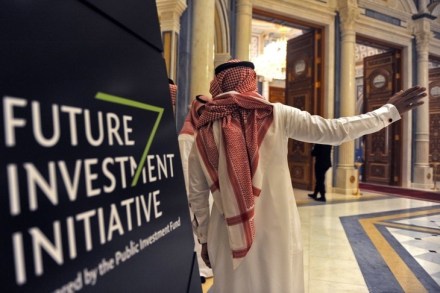
Sterling plunges on the currency markets. Middle Eastern oil money flees London. A Prime Minister resigns in mysterious circumstances, and a government clings on to a vanishing majority. Sound familiar? In fact, it is a description of the run up to the sterling crisis of 1976, which forced the Labour Government to crawl to the IMF for an emergency bail-out, rather than 2017. But the parallels are spooky. As a catastrophic election result for the Conservative party is digested, sterling is already sinking like a stone. No one has any real idea who will be PM in a few months, whether there will be another election, or who might win it if another vote is held. We are not about to quite repeat the traumatic experience of 1976.

Britain is heading for a hard-left Brexit and a crash

From our UK edition

Sterling plunges on the currency markets. Middle Eastern oil money flees London. A prime minister resigns in mysterious circumstances, and a government clings on to a vanishing majority. Sound familiar? In fact, it is a description of the run-up to the sterling crisis of 1976, which forced the then Labour government to crawl to the IMF for an emergency bailout. But the parallels with today are spooky. As the catastrophic election result for the Conservative party is digested, sterling is already sinking like a stone. No one has any real idea who will be PM in a few months’ time, whether there will be another election, or who might win if a second vote is held.