Matthew Lynn

Matthew Lynn is a financial columnist and author of ‘Bust: Greece, The Euro and The Sovereign Debt Crisis’ and ‘The Long Depression: The Slump of 2008 to 2031’

What MPs decide about Brexit is becoming irrelevant

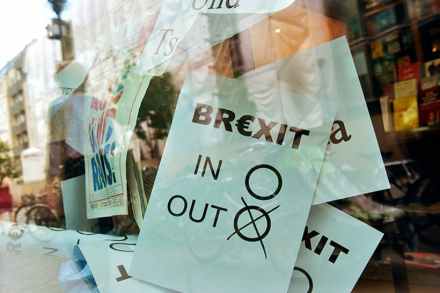
Maybe we will go for a Norway-Double Plus. Or A Canada-Minus. Or Common Market 2.0, or a WTO-Light, an EEA-Doubled, or an Enhanced EFTA or even a Singapore Sling or a White Russian. Okay, scratch those last two. I seem to have mixed up a list of options for leaving the European Union with a cocktail menu. But that pair aside – and who knows, maybe late on a Thursday night MPs will vote them through instead – they are all ways that we might eventually leave. Amid all the arguments over our departure, however, one point is easily overlooked. For the economy, after we sailed through the original deadline for getting out, it doesn’t make a lot of difference anymore. Leaving the EU was always going to do some damage to business, even if the impact was exaggerated.

Why Greek, Italian and Cypriot banks can go to the wall, but German ones can’t

It would only encourage irresponsible lending. Deficits would run out of control. The rules of the single currency would be undermined, and voters would lose faith in the euro. Over the last few years, the Germans, the European Central Bank, and the EU itself, have been adamant that banks shouldn’t be bailed out inside the eurozone. Along the way, Greek, Cypriot, Italian and Irish banks have all been allowed to go to the wall or squeezed to extinction. But hold on. There seems to be an exception to that austere financial regime. Big German banks. With the once mighty Deutsche Bank in serious trouble, it turns out there is nothing wrong with the government orchestrating what amounts to a rescue after all.

Philip Hammond’s Spring Statement was a missed opportunity

As Philip Hammond rose to the despatch box to deliver his Spring Statement, the Chancellor must have felt like someone who wanted to talk about the funny noise the radiator was making half-way through extra-time of England’s World Cup semi-final last summer. Everyone’s attention was understandably elsewhere. If he was feeling mischievous he could have probably abolished inheritance tax, or slapped VAT on children’s clothes, safe in the knowledge that amid all the Brexit chaos it would have been safely forgotten by about 2pm. And yet, even by his own lugubrious standards, Hammond surely missed an opportunity.

Emmanuel Macron’s plans for More Europe will only lead to a poorer Europe

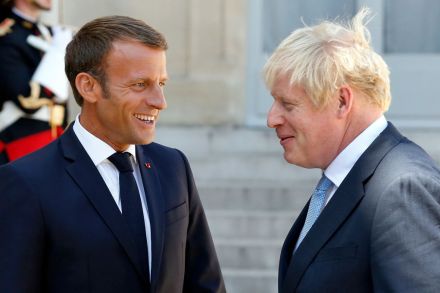
It is nothing if not bold. Battered by the gilets jaune movement, challenged by populists, and with a flat-lining economy that may soon be in a full-blown recession, France’s President Macron has proposed a huge extension of the EU’s powers for the 2020s. His plans include common border controls, an agency for defending democracy, and a raft of new powers to allow Brussels to beef up its control of the economy. It is, to use the traditional phrase, ‘More Europe’. The trouble is, ‘More Europe’ is also increasingly a ‘Poor Europe’. What the EU really needs right now is some economic wins – but Macron’s plans are only going to make the economy even worse.

A Brexit delay would be bad news for Britain’s economy

It would stop us crashing out. It would give us enough time to negotiate a free-trade deal. It would allow business time to prepare, and for the government to put in place all the extra infrastructure we might need once we are outside the European Union. As the deadline draws closer and closer, the pressure is mounting for a delay to our departure from the EU. At first that was just likely to be a few week or months. But now Brussels is talking about two years. But hold on. That is crazy. Sure, plenty of big businesses will be supporting that, and lots of people will be arguing it is the only way to avert a potential economic catastrophe. They are understandably nervous about leaving without a deal. But in fact, it would be the worst possible outcome for the economy. Why?

Mark Carney is finally right about Brexit

Cripes. At this rate the CBI will be putting out reports on Brexit's potential benefits, George Osborne will be reminding us he could always see its upside, and even the FT will be running leaders saying Brexit doesn’t quite mean the end of the world. There have been plenty of twists and turns in our tortured departure from the European Union but few quite so unexpected as the apparent conversion of the Governor of the Bank of England Mark Carney to the cause. In a speech yesterday, Carney didn't opt for any of the apocalyptic stuff – no food on the shelves at Tesco, pensioners dying in hospitals because of a shortage of medicines, slight delays at the Tuscany airports – but instead he took a more measured, reasonable approach.

Mark Carney is finally right about Brexit | 13 February 2019

Cripes. At this rate the CBI will be putting out reports on Brexit's potential benefits, George Osborne will be reminding us he could always see its upside, and even the FT will be running leaders saying Brexit doesn’t quite mean the end of the world. There have been plenty of twists and turns in our tortured departure from the European Union but few quite so unexpected as the apparent conversion of the Governor of the Bank of England Mark Carney to the cause. In a speech yesterday, Carney didn't opt for any of the apocalyptic stuff – no food on the shelves at Tesco, pensioners dying in hospitals because of a shortage of medicines, slight delays at the Tuscany airports – but instead he took a more measured, reasonable approach.

Stuart Rose is being vindicated for his Brexit wages warning

It was one of the more memorable moments of the referendum campaign. In the midst of a fevered debate between Remainers and Leavers – and with the Treasury and its allies rolling out ever more lurid predictions by the day – Stuart Rose, the former Marks & Spencer chairman who was in charge of the Remain campaign, made the point that leaving the EU might lead to higher wages. And that would, of course, be a very bad thing, at least from the perspective of a multi-millionaire businessman who had made his career as an employer of mainly relatively low-paid retail workers. The Remain campaign wasn’t the best run organisation in the world but even it could sense that observation was, to put it mildly, slightly out-of-touch with the ordinary working man.

The euro is the most dysfunctional currency ever created

Even by his usual standards of self-satire, Jean-Claude Juncker was on top form to open the new year. As he uncorked his final bottle of wine for the year, the president of the European Commission found time to blast out a tweet celebrating the twentieth anniversary of the launch of the euro. It has, according to Juncker, become a ‘symbol of unity, sovereignty and stability’, which has delivered ‘prosperity and protection’ to the people of Europe. Juncker was right about one thing of course. The single currency is indeed 20 this week. It was launched on January 1st, 1999, at least for financial transactions, with the actually notes and coins arriving later. And he was right as well that it has some significant achievements to its name.

The euro is the most dysfunctional currency ever created | 2 January 2019

Even by his usual standards of self-satire, Jean-Claude Juncker was on top form to open the new year. As he uncorked his final bottle of wine for the year, the president of the European Commission found time to blast out a tweet celebrating the twentieth anniversary of the launch of the euro. It has, according to Juncker, become a ‘symbol of unity, sovereignty and stability’, which has delivered ‘prosperity and protection’ to the people of Europe. Juncker was right about one thing of course. The single currency is indeed 20 this week. It was launched on January 1st, 1999, at least for financial transactions, with the actually notes and coins arriving later. And he was right as well that it has some significant achievements to its name.

Five Brexit myths that will be exposed next year

There will be chaos at the ports. Only the occasional root vegetable will be sold in the supermarkets. The factories and farms will run out of workers, and the planes will all be grounded on the runway. We have yet to get an official warning about how the black death will ravage the land, or how cannibalism will make a comeback. But it may just be a matter of time. As we head into the New Year, and as our departure from the European Union, quite possibly without any form of deal, draws closer, the warnings will become ever more darkly apocalyptic. As 2019 starts, we still don’t have much idea what will happen with Brexit. We may grudgingly accept Theresa’s May’s deal.

Why business and the City should speak out against a second referendum

Parliament is deadlocked. The cabinet is split down the middle and Brussels won’t compromise on the deal it has already offered to the Prime Minister. As the clock ticks steadily towards March 29th, there seems little way out of the impasse surrounding our tortured exit from the European Union. No one can agree on how to leave, or how to stay either. Against that backdrop, it is probably no great surprise that a second referendum is gaining momentum. It is at least a way out of the mess, and possibly a more decisive one than any of the alternatives. Theresa May has spoken out against that today, even if many of her Cabinet ministers are staying strangely silent on the issue. As the debate intensifies over Christmas, business and the City should support her in that stance.

The myth of the Brexit cliff edge

The ports will be clogged up with lorries. The shelves at Tesco will be empty. Doctors will be rationing antibiotics, and the army will be called out to deliver food. As we approach the deadline for our departure from the European Union, as the Prime Minister returns empty handed yet again from yet another catastrophic round of negotiations in Brussels, and as the cliff-edge gets closer and closer, the conventional wisdom is that the pressure on Britain to agree to something – anything! – becomes more and more intense. And yet, as so often in the through-the-looking glass world of Brexit, that conventional wisdom is a bit off target. And not just by a little as it happens, but by 180 degrees.

Why King trumps Carney in the battle of the governors

If they were former Manchester United players, Booker prize nominees, or members of Oasis, the acrimony and arguments might be fairly run of the mill. Among current and former Governors of the Bank of England it is, to put it mildly, a little unusual. And yet Mark Carney now finds himself under sustained attack from his immediate predecessor Mervyn King over how it should handle our departure from the European Union. And in that battle of governors there can surely only be one winner – and it isn’t the incumbent. In a piece for Bloomberg, King, who served with distinction at the Bank from 2003 to 2013, takes apart Theresa’s May’s exit deal in ferocious detail.

The problem with a ‘no deal’ Brexit

There have probably been worse branding campaigns in history. Cadbury’s apparent attempt to drop the word ‘Easter’ from its egg hunts was a clunker of cosmic proportions. The launch of New Coke has found its way into the textbooks as a masterclass in how to trash one of the greatest brands in the world, and Nivea's 'White Is Purity’ campaign for its skin creams last year had to be dropped very quickly after the inevitable backlash. The attempt to sell a ‘No Deal’ Brexit is not quite up there with those disasters. But it is getting close. In truth, there is nothing terribly wrong with leaving the European Union without an agreement, and it might well be better than the alternative we are being bullied into.

Has Mark Carney just ended the campaign for a ‘People’s Vote’?

The headlines will inevitably write themselves. The Bank of England backs Theresa May. The Prime Minister's beleaguered and precarious deal is the best of all the options available and the economy may well get through the next few months largely unscathed. Following the testimony this morning from the Bank’s governor Mark Carney, most people will pick up on the support he has given to the Prime Minister and his reassurance that the economy will survive our departure. And yet there were two more significant points that emerged from his testimony. The Bank is finally willing to concede that leaving without a deal wouldn’t be so bad after all. And just at the moment when not leaving at all has become a real possibility, the Bank has given up on it.

Has Mark Carney just ended the campaign for a ‘People’s Vote’? | 20 November 2018

The headlines will inevitably write themselves. The Bank of England backs Theresa May. The Prime Minister's beleaguered and precarious deal is the best of all the options available and the economy may well get through the next few months largely unscathed. Following the testimony this morning from the Bank’s governor Mark Carney, most people will pick up on the support he has given to the Prime Minister and his reassurance that the economy will survive our departure. And yet there were two more significant points that emerged from his testimony. The Bank is finally willing to concede that leaving without a deal wouldn’t be so bad after all. And just at the moment when not leaving at all has become a real possibility, the Bank has given up on it.

All change: is the bitcoin revolution coming?

An elaborate scam for ripping off gullible investors. A black-market currency for gun-runners, drug dealers, pimps and terrorists. A bubble that makes a 17th-century Dutch tulip look like a solid investment, and a drain on global energy. There are so many different ways the digital currency bitcoin is going to destroy the world it’s sometimes hard to keep track of them all. Everyone from Warren Buffett to Mark Carney has told us bitcoin is a serious threat to financial stability and any sane person should stay away. True, there are plenty of reasons to be suspicious of bitcoin. It’s volatile, complicated and largely unregulated. But given the appetite that clearly exists for it (market capitalisation at the time of writing was £85.

Could the UK out-grow the EU after Brexit?

Collapsing retailers. A looming far-left government threatening nationalisation. And perhaps most significantly of all, our potentially chaotic rupture with our largest, closest and most significant trade partner. It doesn’t seem to matter what you throw at it, the British economy continues to be surprisingly resilient. Figures out today showed it expanded at 0.6 per cent in the third quarter, its fastest rate for a couple of years, and a rate which should keep annual growth at a more than respectable 2 per cent plus. That will come with all the usual caveats of course. It was helped by all the money we spent in the pub watching our boys do so well in the World Cup this summer, the pound was weak yet again, and much of it was financed by hammering our credit cards as usual.

Why the IFS is wrong about a ‘no deal’ Brexit

The growth forecasts might be too optimistic. The economy may yet turn down, the pressure on public services will only continue to rise, and, most of all, leaving the European Union may yet turn into a catastrophe. The Institute for Fiscal Studies did not waste much time in branding yesterday’s Budget ‘a bit of a gamble’, with plenty of risks attached to it. In saying so, the IFS no doubt reflects the mainstream view in the economics profession and probably among the professional scribblers of the City as well. And yet the truth is that Philip Hammond didn’t take enough of a gamble.