Matthew Lynn

Matthew Lynn is a financial columnist and author of ‘Bust: Greece, The Euro and The Sovereign Debt Crisis’ and ‘The Long Depression: The Slump of 2008 to 2031’

Apple is right to steer clear of the electric car market

Apple's much-hyped electric car appears to have been killed off before it ever hit the road. For years, the tech firm's plan to branch out into developing an electric, semi-autonomous car have been the subject of much excitement. Codenamed Project Titan, fans speculated that Apple would turn its magic to designing a car that would revolutionise driving. The template of a square box with four wheels underneath that has dominated auto design for more than a hundred years would become a thing of the past. Over the last decade, as rumours emerged about the project – which was never officially announced – Apple nerds, who admittedly have a tendency to be somewhat obsessive, have been busy speculating on what an 'iCar' might look like.

Javier Milei’s Argentine revolution seems to be working

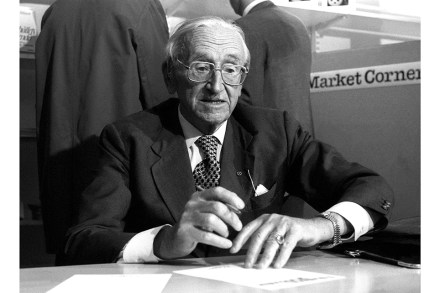
The currency would collapse. Output would go into freefall. Unemployment would soar, and the IMF would be back in charge quicker than you could say ‘chainsaw’. When Argentina voted into power its libertarian new president Javier Milei there were predictions that his radical free market reforms would quickly plunge the country into chaos. But hold on. In fact, it is not quite going according to the script – instead there are signs that Milei’s harsh medicine might be working.  The Hayek-quoting Milei represents a decisive break from a century of big-state Argentinian politics that turned what used to be one of the world’s richest countries into a synonym for chaos and mismanagement.

The valuable lesson learnt from Japan’s stock market recovery

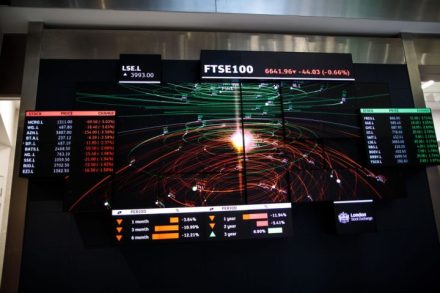
A lot has happened over the past 34 years: the Cold War ended, several wars have taken place in the Middle East, a banking collapse occurred, and a global pandemic left millions stuck inside their homes. But one thing remained constant throughout: the bear market – a price drop of 20 per cent or more from the most recent high – in Japanese equities ground on and on relentlessly. After hitting an all time high of 39,915 points on 29 December 1989, the Nikkei 225 which covers the country’s major companies slumped and slumped again. Today, it finally recovered all those losses, setting a fresh all time high. There is a lesson in that for investors everywhere. All bear markets end eventually, even Japan’s.

London has France to thank for its Brexit win

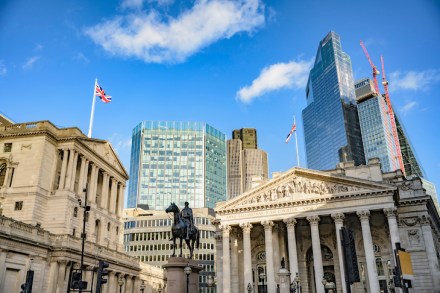
The City of London would be hollowed out. Bankers would have to retrain as burger chefs. And Paris and Frankfurt would emerge as the twin centres of the European financial markets, leaving London as little more than a backwater. Of all the predictions made by some Remainers during Brexit, there was one that kept re-emerging: that financial trading would inevitably move to the other side of the Channel.  It's clear that this doom mongering was overblown. A deal has finally been struck between EU chiefs and the bloc’s member states that will keep the City of London in business for several years to come.

Does the EU’s tech ‘enforcer’ know what he’s talking about?

Thierry Breton is, on the face of it, well qualified to regulate Europe's tech industry. After a brief spell as French finance minister, from 2009 to 2019 he ran the computing giant Atos, one of the champions of France's IT industry. Yet Atos is now in deep trouble. Shares have plunged more than 90 per cent in the past five years; an issue of new shares to raise fresh capital has been cancelled. Whether the company will survive without a bailout is far from clear. It is, of course, a while since Breton left Atos for Brussels, where he works as the European Union’s internal market commissioner. A lot may well have changed since Breton's departure. Yet it is hard to shake the feeling that Atos's woes go further back than the last few months.

Jeremy Hunt should ignore the IMF’s tax cut warning

Government borrowing is lower than had been forecast. The economy needs some form of a boost. And perhaps most of all there is an election within a few months. There are plenty of reasons why Chancellor Jeremy Hunt might want to cut taxes slightly in his spring Budget, and perhaps even once more by the autumn. But hold on. The International Monetary Fund (IMF) has just said it would be ‘fiscally irresponsible’. Well, perhaps. And yet, the IMF’s record on forecasting is very poor, and it is also very committed to a high-tax, big-state economic model. On that basis, Hunt should just ignore it, and cut taxes anyway.

Christine Lagarde is failing again

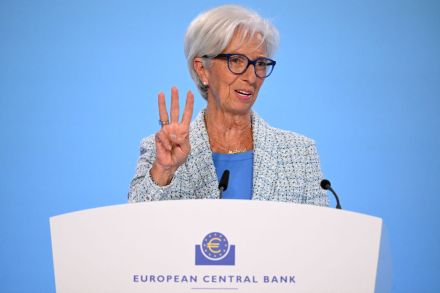
Christine Lagarde, the president of the European Central Bank, has one of the most glittering CVs in European politics. The ex finance minister of France, and former managing director of the International Monetary Fund, earns £365,000 a year for running the show at the ECB. But is she any good? An internal poll of staff at the Bank, leaked to the press, suggests not. It found that more than half of employees rated her leadership of the organisation as either ‘poor’ or ‘very poor’. Her own people reckoned she put self-promotion ahead of the institution (‘Quelle surprise’ as they would say in her native country), pushed an irrelevant political agenda, and had little knowledge of the markets or the economy. 'Lagarde is generally reported as being an autocratic leader.

What’s wrong with trillionaires?

Why is Oxfam so concerned about the coming possibility of the world’s first trillionaire? The charity has this week released a report with an apocalyptic warning that one is likely within the next decade. Yet surely people only get that rich by making something that people want. That should be celebrated instead of condemned.  In a report published for the start of Davos, the annual event where very rich people gather at an expensive resort in Switzerland to worry about being rich, Oxfam said the world’s first trillionaire could come soon. Apparently, that showed we are entering a ‘decade of division’. ‘We have the top five billionaires, they have doubled their wealth’, said Oxfam’s executive director Amitabh Behar.

The EU is paying a high price for its Brexit pettiness

It has formidable negotiating skills, at least according to its cheerleaders. It has huge economic clout. And it can impose its will on companies and rival governments. Given that we have heard so much over the last few years about the immense influence of the European Union you might have thought that a small matter like renting out an office block in London would be simple. But hold on. It turns out the EU will be stuck with a bill for hundreds of millions of euros for the buildings it abandoned in the UK – and its own pettiness is entirely to blame.

Bitcoin’s bounce back has proved its critics wrong again

The charlatans had been exposed. Its flimsiness had been confirmed. And the bubble had finally burst. Rewind to just over a year ago, and with the collapse of the crypto exchange FTX and the arrest of its billionaire founder Sam Bankman-Fried it seemed as if the legions of skeptics of the digital currency Bitcoin had been proved completely right. But hold on. Over the last few months, its price has soared again. In reality, Bitcoin has made fools of its critics once again.  In the wake of the FTX scandal, Bitcoin, along with its digital imitators, seem headed for history’s dustbin. After all, the collapse seemed to confirm all the accusations levelled against it. It was over-hyped, fraudulent, and unreliable.

Does falling inflation show that interest rates are too high?

Well that was a surprise. At just 3.9 per cent, down from 4.7 per cent, the latest inflation figure published today came as a shock for many. The figures are far lower than the consensus forecasts, and even low enough to allow the Prime Minister Rishi Sunak to meet his forecast to halve the rate by the end of the year. But should we really be surprised that inflation has fallen so rapidly? Monetarists – who noticed that the money supply has been contracting since the start of the year – won't be taken aback by the inflation figures. They said all along that the flow of money is the key to inflation – and they've been proven right.

Will Javier Milei’s ‘shock therapy’ work?

The Argentinian peso has been devalued by 50 per cent overnight. Controls on exports have been scrapped, and the country's ministry of culture is to be closed down. The health, labour, social development and education departments are also facing the chop. Argentina’s president Javier Milei – who vowed to deliver economic 'shock treatment' in his first speech on Sunday after formally taking office – has started a radical overhaul of the economy and begun what is by far the most interesting experiment in economics in the world right now.  True, Milei may not have gone as far as some people might have expected. The plan to replace the peso completely with the American dollar has been shelved for now.

There’s a reason the market is rejecting electric cars

They are cheap to run. They rarely break down. And perhaps most of all they are far better for the environment. For the last decade we have been endlessly lectured about how electric cars are so completely superior to the petrol variety that they would quickly dominate the market. But hold on. Now that some of the subsidies and mandates are being removed sales are collapsing. Left to themselves, it turns out that most drivers don’t don't want them. According to figures from the Society of Motor Manufacturers and Traders released yesterday, sales of EVs slumped by 17 per cent in November, the largest ever monthly fall. After taking a larger and larger share of the market for the last few years, sales now appears to have gone into reverse.

Is climate change really to blame for rising food costs?

Everything in the shops is getting more expensive and restaurant bills have become prohibitive. We are all aware that food price inflation is a major factor in the overall cost-of-living crisis. It might seem plausible, as claimed today, that climate change is a major factor driving this. After all, weird weather, wildfires and droughts make it far harder to grow crops, right? Well, perhaps. The trouble is there is just one slight flaw: global food prices are falling in many cases this year, not rising. According to a widely-publicised report by the Energy and Climate Intelligence Unit, food bills have risen by £605 per year for the average British household at least in part because of climate change.

Is Javier Milei already defying his critics?

Critics of Argentina's president Javier Milei have already made up their minds: he is a lunatic and his plans will collapse on first contact with the real world. Argentina's money will run out and the economy will grind to a halt. To some commentators, he is a ‘hard-right’ ideologue who will crash the economy within weeks. They say he's like Liz Truss and Kwasi Kwarteng on roller-skates. If you listen to those attacking Milei, you'd be forgiven for thinking the man in charge in Buenos Aires will precipitate yet another economic calamity in a country which has been stumbling from one disaster to another for almost a hundred years. But hold on. It turns out that the markets don’t quite see it like that.

Don’t be deceived by Jeremy Hunt’s tax ‘giveaways’

When Jeremy Hunt takes to his feet in the Commons this afternoon to deliver his Autumn Statement, he'll be trying to woo voters with some tax 'giveaways': VAT thresholds might be raised to help small businesses and the basic rate of National Insurance could be reduced for the rest of us. But hold on. Before the Chancellor gives anything back, both he and the Prime Minister Rishi Sunak need to do something far more important: they should apologise for all the tax rises the Tories have imposed. We don’t know the final figure yet, but it turns out that the Chancellor has around £13 billion to £15 billion of ‘headroom’, as the fiscal jargon has it, to cut taxes.

Biden and Xi’s meeting is a boost to the global economy

At least there will be some pandas. At his summit with President Biden this week, China’s President Xi pledged to send more cuddly bears to the US, the traditional Chinese way of cementing good relations with other countries. More importantly, there was a significant easing of tensions between the two largest economies in the world. Military communications will resume, reducing the chances of a catastrophic miscalculation between the two nations, controls on narcotics will be tightened up, and there will be a resumption of high-level diplomatic contacts. It remains to be seen if that sticks. But if it does, one point is surely clear. That could yield a huge ‘peace dividend’ for the global economy.

In defence of ‘rip-off’ airline charges

The Conservative party is 25 points behind in the polls. Its backbenchers are scrambling around to find new jobs, and the opposition is already making its plans for government. Rishi Sunak’s grip on the premiership is growing more tenuous with every passing day. But, heck, never mind. It turns out the PM has a cunning plan to restore his electoral fortunes. In the King’s speech tomorrow the government is expected to unveil plans to ban ‘hidden’ charges on air travel. Any of us who have plowed miserably through the expensive minefield of a Ryanair booking will finally have a reason to vote Conservative. It's hard to believe that anyone booking that WizzAir flight to Prague genuinely thinks they will pay less than a tenner But hold on.

Will Elon Musk end up humiliating Rishi Sunak?

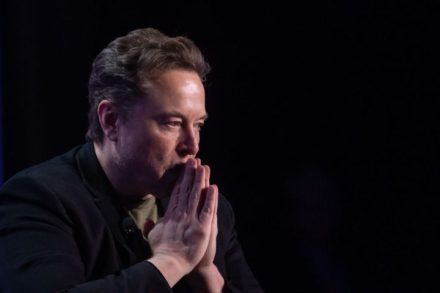
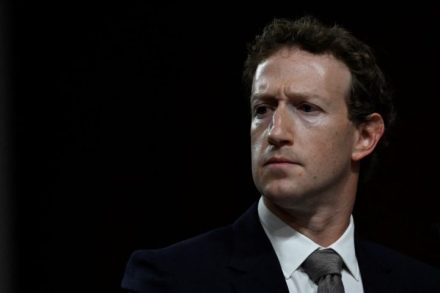
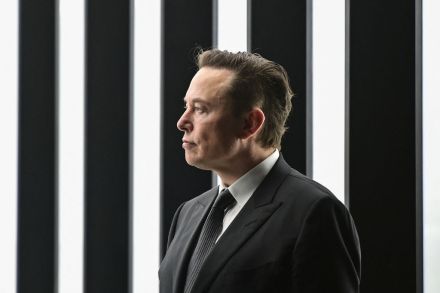
Bill Gates was probably otherwise engaged. Mark Zuckerberg was busy in the metaverse. And Jeff Bezos was tied up on his next rocket trip. When the Prime Minister Rishi Sunak was looking for a major technology tycoon to host a conversation with at his Artificial Intelligence summit later this week those were probably the names at the top of the wish list. When all of them declined, however, the Prime Minister settled for the Tesla founder Elon Musk instead. But hold on. While Musk is without question a major tycoon, he is also a huge wild card. And Sunak may well end up regretting his choice.  Whether he lights up a spliff with the man who is banning smoking cigarettes remains to be seen. But it is the kind of stunt Musk would find amusing Musk is certainly a catch.

What Rachel Reeves’s book blunder reveals

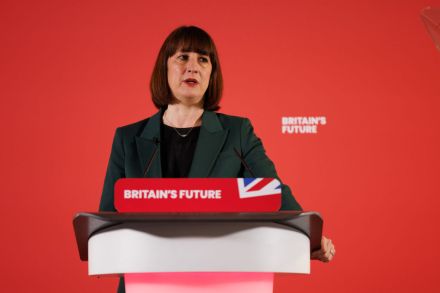
Shadow chancellor’s Rachel Reeves’s new book, The Women Who Made Modern Economics, was meant to put the spotlight on unsung female economists. Instead, the focus has fallen back on Reeves herself – and not for the reason she hoped. Reeves has denied plagiarism after it emerged that the book is littered with passages from other sources, including Wikipedia, apparently lifted without proper acknowledgment. The Financial Times found more than 20 examples of bits in the book with glaring similarities to text from elsewhere. Reeves wasn’t even as savvy as the average GCSE student This is clearly very embarrassing for Reeves, whose office has said 'These were inadvertent mistakes and will be rectified in future reprints'.