Matthew Lynn

Matthew Lynn is a financial columnist and author of ‘Bust: Greece, The Euro and The Sovereign Debt Crisis’ and ‘The Long Depression: The Slump of 2008 to 2031’

France can’t afford a Le Pen government

It is possible that President Macon had some clever plan when he called a general election in the wake of catastrophic European election results last night. After all, he has a reputation for always being several moves ahead on the political chessboard. And yet one point is surely clear. France can’t afford a Le Pen government – and its election may well trigger a crisis in the French debt markets.  Le Pen, after all, is a high welfare, big state, economic nationalist It is, perhaps, not quite such a foregone result as Britain’s election a few days earlier. And yet after the second round of voting on 7 July, it looks almost certain that Marine Le Pen’s National Rally will emerge as the largest party in the French parliament, and will be able to form a government.

The logic behind Labour’s foie gras ban

It was never very impressed by the opportunity to strike trade deals across the fast-growing Pacific. It didn’t much like the idea of deregulating the tech industry. Nor did it think much of diverging on financial standards to re-boot the City. The Labour party may have accepted our departure from the European Union, but it never found any ‘Brexit freedoms’ it actually liked. Until today that is. The party has just worked out we can be kinder to geese – and, slightly surprisingly, in doing so, it may have just closed the door on the UK ever rejoining the EU.  As it prepares for government, the Labour leader Sir Keir Starmer has been getting rid of policy commitments as fast as he possibly can.

A Musk-Trump White House collaboration will only end badly

He has created a major automobile company. He has built space rockets, taken over X, made himself hundreds of billions, and even found time to father lots of children. Elon Musk has plenty of achievements. And yet he may soon have one more. A cabinet post in the next Trump administration. But hold on: Musk may look an attractive candidate, but it will surely ends badly. According to a report in the Wall Street Journal, Musk and Trump have been discussing an advisory role for the billionaire if he wins the White House in the election in November. Musk apparently might help out on economic policy, as well as border security. Heck, who knows. Perhaps Musk could be treasury secretary, or maybe even vice president. Whatever it is, he would be a high profile member of the government.

Daniel Kretinsky may come to regret buying Royal Mail

Foreigners are stripping the UK of its assets. Vulture capitalists are swooping down on our historic companies. We need a strategy to defend jobs and services. We will hear lots of arguments over the next few days about why the Czech billionaire Daniel Kretinsky should not be allowed to complete his agreed takeover of Royal Mail. And yet, the more interesting question is this: why on earth would he want it? In reality, Royal Mail is a dog of a business, and one that is likely to be very difficult to turn around. Kretinsky may well come to regret his latest acquisition. Royal Mail has been a poorly performing business for years, and it is not about to get any better After months of negotiations, Kretinsky has today finally won control of Royal Mail.

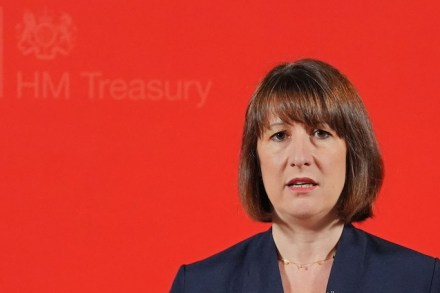
Why is Rachel Reeves so proud of working at the Bank of England? 

We don’t know much about what taxes she will impose. Nor do we have many clues as to how she will boost growth, or find the money to improve public services. Still, not to worry. It turns out that we can, at least according to her feed on X, trust the shadow chancellor Rachel Reeves to ‘run the economy’ for a very simple reason. She used to work at the Bank of England, and apparently they know about that kind of stuff over there. There is just one problem. In reality the Bank is not as brilliant as Reeves seems to think it is – and it is questionable, to put it mildly, if working for it really qualifies you for anything. For anyone wondering if the Labour government is likely to improve the UK’s dismal economic outlook, Reeves had some reassuring words this weekend.

Will Nvidia stock keep going up?

It more than doubled its sales. It unveiled a new line of microchips. It promised to keep rolling out new products for the next few years. In the end, Nvidia, the chip manufacturer, delivered the kind of blockbuster results that traders and investors had been waiting for. Yesterday’s ‘Nvidia Day’ (as the company’s quarterly results days are now known on Wall Street) turned out to be better than even the most bullish investor could have hoped for. There is just one snag. The company is now powering the bull market. If anything goes wrong with its turbo-charged expansion, it will bring equities down with it. It’s great for the moment There was no question that it was an impressive set of figures.

Western economies are failing – but capitalism isn’t the problem

Real wages have barely increased for more than a decade. Banks have had to be bailed out, and many still exist on a form of state life support. Growth has stalled, taxes are at 70-year highs, yet governments are still bankrupt. Unless you happen to be part of a tiny plutocracy made up mostly of tech entrepreneurs and financiers, there has rarely been a point, at least since the nadir of the mid-1970s, when the economic system seemed beset by quite so many challenges as it is today. The left has smartly stepped into the intellectual space that has been created with a series of well-timed polemics, which, while they vary in precise analysis and on solutions, have at least one thing in common. They argue that the system is fundamentally broken, and it will take radical action to fix it.

The FTSE 100 hits a new high – but don’t celebrate yet

Another day, another all time high. As the week closed, the FTSE 100 index hit 8,433 — the highest level it has ever reached — and this is turning into a regular occurrence. The FTSE has now hit 11 all-time-highs over the last month, and it is close to equalling the record set way back in 1984 of 12 all-time-highs within a single four-week period. Add in a mega-bid and better than expected growth figures and it may look as if the UK is booming again. Well, perhaps. In reality, however, all that is happening is that the FTSE 100 is finally recovering from two decades of miserable under-performance — and it would have to go a lot higher to break any real records.  The FTSE 100 would have to go a lot higher to break any real records.

Passport e-gate outages are an embarrassment to Britain

Queues that stretch for hours. Technology that doesn't work. And a system so poorly designed that this isn't the first time it's broken down. There appears to be a perfectly innocent explanation for the failure of the passport e-gate system across the UK’s airports last night – a 'system network issue' – despite the wilder conspiracy theories that immediately started circling on the internet. But one point is surely clear: the e-gates have become a national embarrassment – and if we can't rely on them to work, we should get rid of them. Some passengers spent longer waiting to go through passport control than they did on their flights The scenes at airports including Heathrow, Gatwick, Edinburgh, Birmingham, Bristol, Newcastle and Manchester were disgraceful.

Is Javier Milei’s medicine working?

Javier Milei was taking too many risks. Argentina’s president didn’t have enough political support. And his radical version of free market economics didn’t offer any solutions anyway, especially in a world where the state is more crucial than ever. When Milei won the presidency last year there were plenty of predictions that he would fare as well as Britain’s Liz Truss. And yet, there are signs the medicine is starting to work – and that will be globally significant.   Over the past couple of weeks, the data coming out of Argentina has been far better than anyone expected. This month, inflation is forecast to dip below 10 per cent – admittedly a month-on-month figure – compared with a high of close on 300 per cent earlier this year.

The truth about Ireland’s £600 million Brexit ‘bonanza’

Ireland is reaping the benefits of a Brexit bonus to the tune of €700 million (£600 million). It is not hard to understand why hardcore Remainers are gleefully reporting the news that the government in Dublin is collecting huge extra revenues, much of which comes from imposing tariffs on British goods. What is being reported as a ‘Brexit bonanza’ for the Irish isn't quite what it seems 'The level of customs duties has effectively doubled in recent years compared to the previous decade, reflecting the transformation of Great Britain into a third country in 2021,' says the Irish Revenue Commissioners. British companies suffer, and a foreign government makes lots of extra money; no wonder some of Brexit's critics are saying: I told you so. But hold on.

Meta’s AI investment plan has backfired on Zuckerberg

It will write your WhatsApp messages for you. It will post a cute picture of your cat on Instagram, even if you don’t actually have a cat. And it will put some enhanced memories up for you on Facebook, while cheerfully making connections with people you don’t know and who may well not actually exist... When Mark Zuckerberg started explaining his plans for Meta – the company formerly known as Facebook – to start investing billions of dollars in Artificial Intelligence (AI) yesterday, investors should have been cheering all the lucrative possibilities. Instead, the share price has promptly sunk like a stone. The stock market has started to become suspicious of the AI hype – and rightly so.

Elon Musk doesn’t know how to turn Tesla around

The share price is in freefall. Sales are sliding at an accelerating rate as customers lose interest. The Chinese are moving in, and the brand is tarnished. When Elon Musk unveils the quarterly results for Tesla later today, he will need to convince his shareholders he has a plan to turn the company around. The only trouble is, right now there is not much sign Musk has a clue what to do. Musk is a brilliant entrepreneur. There is no question of that. But he has also spread himself too thinly Tesla’s results this week are expected to be its worst in years. Sales have already fallen by 8 per cent in the first three months of this year, ending a decade of rapid expansion. Profit margins are getting squeezed.

Elon Musk (Photo: Getty)

If Apple loses against China so will the West

It has been a long time since the West dominated shipbuilding, or steel making. We are already aware that we are losing ground in consumer goods, as well as in finance and transport. Add it all up, and we no longer expect the US, Europe or its allies to control the global market in most major industries. Still, even as other industries lost ground there was one thing most economists and industrial experts would have felt sure we could rely on: Apple. Whatever else happened, nothing would knock its world-beating iPhone – without question the world’s most profitable product – off its well-secured perch. But hold on. Apple’s market share is now falling at an accelerating pace, and its Chinese rivals are rising fast.

The Bank of England can’t blame IT for its dodgy forecasts

It hires the cleverest young graduates every year. It brings in talent from around the world. And it has the budget to acquire all the resources it needs. With all this at its disposal, you would think the Bank of England could at least come up with a better excuse for its dismal record on forecasting how the economy works than blaming it all on a creaking IT system. Its response to the review published today by the former Federal Reserve chairman Ben Bernanke is not going to wash – and sooner or later the Bank will need an honest reckoning with its failings over the last decade.

It’s hard to be proud of the FTSE 100

It has finally happened. In trading on Tuesday afternoon, the UK’s FTSE 100 index finally closed in on an all-time high. It hit 8,015 points, itching above the previous record closing level of 8,014 set in February 2023 – even if it was still a whisker below the intra-day trading record of 8,043, also from February last year. With stock markets rising around the world, at some point this week or perhaps next, the FTSE 100 will be setting fresh records daily. We may even be treated to one of those self-congratulatory tweets the Prime Minister, Rishi Sunak, specialises in. The trouble is, there is nothing to celebrate. In reality, the FTSE has been a dismal disappointment. Nothing will change that soon.  With inflation, record highs are inevitable.

The Swiss are cutting interest rates. Why can’t we?

Mortgage rates will finally start to come down again. Consumers will have a little more money in their pockets. And companies will find it cheaper to invest. Today’s cut in interest rates was a much needed boost for the economy. Oh, but hold on. That was over in Switzerland, where the central bank this morning cut rates by 0.25 per cent. By contrast, the Bank of England has today kept them on hold. This raises the question of whether the Swiss or British central banks have a better record of managing monetary policy. If most people in the markets had to put money on it they would probably place a franc or two on Switzerland.  The Bank of England has blundered all over again – and the price for that will be a high one This may well prove to be just the beginning.

Rachel Reeves will regret promising growth

Growth will be turbo-charged, animal spirits will be unleashed, and foreign investment will flood back into Britain. Shadow chancellor Rachel Reeves is promising a Thatcher-style revival of the British economy if Labour wins power. But there's a problem with the pitch that she will deliver in her keynote Mais lecture on the economy today: a Labour government isn't going to deliver this promised growth. Reeves is setting herself up for failure.  Labour's proposals are painfully thin With at most only a few months left before she takes charge of the Treasury, as she inevitably will, Reeves is making it clear that she expects the UK to return to the 2.5 per cent annual rate of expansion that were normal in the 1980s and 1990s.

Cutting National Insurance won’t save the Tories

It will put more money in people’s pockets. It will improve the incentives to work. And it will put down a marker that the party does still believe taxes can occasionally be cut. The Chancellor Jeremy Hunt is not the world’s finest speech-maker, but he will probably attempt a few rhetorical flourishes when he cuts 2 per cent off the rate of National Insurance in his Budget later today. The trouble is, it is going to prove a damp squib, and not least because it has been widely trailed in advance. In reality, a modest reduction in National Insurance is not going to save the Conservative party from defeat at the looming election. It is too late for that now.

Nissan is setting an alarming trend with their electric cars

At a certain point, your smartphone may no longer accept the latest software update from Apple or Google. Your laptop could get so cranky after four or five years that it is easier to replace it with a new one than spend hours staring at the blue screen of death. Even your toaster or your iron is not going to run forever. We are all used to the idea of built-in-obsolescence. Even so, the news that it can now extend to our cars, with Nissan switching off software for older models, is alarming – and will make selling more battery-powered vehicles even harder. There won’t be any vintage market in old electric cars because the software has been turned off The Nissan Leaf was one of the pioneers of electric vehicles (EV) in the UK, selling thousands to early adopters.