Martin Vander Weyer

Martin Vander Weyer

Martin Vander Weyer is business editor of The Spectator. He writes the weekly Any Other Business column.

Any other business: How François Hollande let France miss the global recovery train

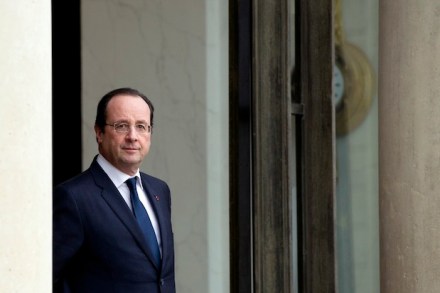
I’ve always respected stationmasters, but that sentiment is not universally shared. A distinguished friend of mine across the Channel described François Hollande the other day as ‘un chef de gare, sans aucune dignité’ — and it’s not difficult to picture the little president, peaked cap awry, trousers unbuttoned, haplessly waving his whistle as the last train à grande vitesse departs for the Eurotunnel laden with talented compatriots who see no future in France. As modern socialist leaders go, Hollande is beginning to make Gordon Brown look statesmanlike. Nicknamed ‘Flanby’ after a cheap custard pudding, he has left decision-making to his ragbag of ministers and done nothing to steer France towards economic recovery.
Any other business: Oh dear… perhaps Standard Chartered isn’t as dull as it looks

The cautionary tale of the Co-operative Bank, its black hole and its naughty chairman has recently taught us that if a financial institution has the reputation of being dull, earnest and set in its ways, it probably isn’t. The collapse last year of Switzerland’s oldest private bank, Wegelin & Co — whose boss once claimed that being small and provincial made it ‘easy to avoid the deadly emotions of greed and fear’ — was another example. Attention now turns to Standard Chartered, an overseas commercial bank that has long had the reputation of sticking cautiously to the mode of business in which it has historic roots, notably in Asia, and has seen off repeated takeover approaches from others jealous of its franchise.

Forget the MINTs, the next economic success story will be in the BALLS

Jim O’Neill, the Mancunian former chief economist of Goldman Sachs in London, commands attention whenever he speaks and has a claim to fame as the coiner in 2001 of the acronym ‘Bric’ for the four rapidly developing countries — Brazil, Russia, India, China — to which economic power looked set to shift during the early part of the new century. Undeterred by the hindsight view that he should have gone for ‘Bic’, like the throwaway razor, because Russia has lagged so dismally behind the others on almost every measure of progress, O’Neill has now come up with ‘Mint’, for Mexico, Indonesia, Nigeria and Turkey, as the next cohort of economic giants.

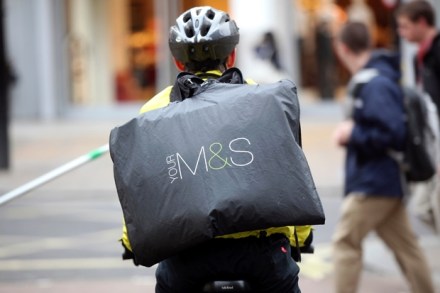
Martin Vander Weyer: Why I’d rather run M&S than Tesco

This first working week of January is apparently the time when we’re most likely to think about a change of career; and last Friday was the 30th anniversary of the launch of the FTSE100 index of leading companies listed on the London Stock Exchange. The combination of those two diary items made me wonder what choice I would make if the job genie swooshed out of the pantomime lamp and told me I could re-invent myself as chief executive of a FTSE100 company.

What the NHS really needs

I blamed the pheasant casserole, but I did it an injustice. Its only contribution to the drama behind my disappearance in mid-December was a residue of lead shot in the small intestine that briefly confused the radiologist. The real villain revealed by the scan was my appendix, which had taken on the raging, bull-necked, bug-eyed appearance of Ed Balls faced with a set of improving growth figures. And so it was that I spent a week in the Friarage at Northallerton, a small ‘district general hospital’ that has survived every NHS restructuring to date and is cherished by the citizenry of rural North Yorkshire.

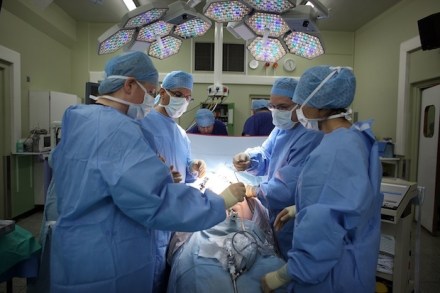
Martin Vander Weyer: In my hospital bed, I saw the future of the NHS

I blamed the pheasant casserole, but I did it an injustice. Its only contribution to the drama behind my disappearance in mid-December was a residue of lead shot in the small intestine that briefly confused the radiologist. The real villain revealed by the scan was my appendix, which had taken on the raging, bull-necked, bug-eyed appearance of Ed Balls faced with a set of improving growth figures. And so it was that I spent a week in the Friarage at Northallerton, a small ‘district general hospital’ that has survived every NHS restructuring to date and is cherished by the citizenry of rural North Yorkshire.

The pleasures of the Dordogne

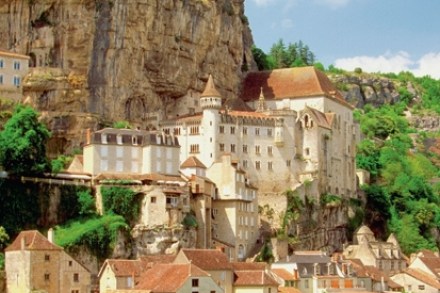
Call me a trencherman or worse, but I tend to think of the Dordogne as a giant restaurant-cum-farm shop, set in a wooded riverside picnic park. And I have a feeling that’s how its native residents think of it too, so central is the well-filled table to their traditional way of life. ‘Dordogne’ of course refers both to the department of south-west France and to the river, famous for the medieval châteaux along its cliffs, that rises in the Massif Central and flows into the Gironde near Bordeaux. It also, I suppose, refers to a certain English idea of the essence of Frenchness: mellow stone, soft rain, warm sunshine, deep forests, ripe crops, busy markets, and bad drivers on bendy roads.

Martin Vander Weyer: How many times must we save the City?

Top of my Christmas reading pile is Saving the City by Richard Roberts, a new account of the largely forgotten crisis which afflicted global markets at the outbreak of the first world war, forcing the London Stock Exchange to close on Friday 31 July 1914 and stay dark for six months. It’s a reminder of how often in modern times the City has had to be ‘saved’ — including May 1866 when Overend & Gurney collapsed, November 1890 when ‘Nemesis overtook Croesus’ in the first Baring crisis, and of course the bailouts of October 2008. It’s also a reminder of another book on my shelf, subtitled The Night the City Was Saved.

Lord Bamford on why JCB is staying independent

‘If I can’t see a factory from up here,’ I mutter to myself, throwing the car round an uphill bend of the B5032 south of Ashbourne, ‘I must be in the wrong county.’ But no, I’m not lost; there below me is a long pale slab of a building that announces itself as JCB World Headquarters — adding, on a giant polythene wrap, ‘Celebrating 1,000,000 Machines May 2013’. Equidistant between the Rolls-Royce aero-engine works at Derby and the potteries of Stoke-on-Trent, what I’m looking at is the beating heart of what’s left of industrial England. I’m here for lunch with the man whose fiefdom it is, the recently ennobled Lord Bamford.

You’ll probably find this book about the ruthlessness of Amazon at a sharp discount on Amazon

Do you love Amazon? I have to admit that I do, and that I buy books from it far more often than I buy them anywhere else — or bought them in the pre-internet era — and sometimes music, and occasionally kitchen items, and even bedding. I particularly like the ‘1-Click’ payment system, and the choice of price offers down to as little as a penny plus the postage. I’m not offended by emails telling me what else I might like to buy, and the software’s so smart that they’re quite often right. And yet as an author, and a shareholder in a publishing venture, I can see what a monster Amazon has become since it fulfilled its first order (for a copy of Fluid Concepts and Creative Analogies by Douglas Hofstadter) in Seattle on 3 April 1995.

Who’s really to blame for the Co-op Bank crash?

The naughty Reverend Flowers will be a comic footnote in the history of the financial crisis — but no more than that. In terms of making ministry relevant to modern congregations, you’ve got to take your hat off to a man of the cloth who knows his ‘Charlie’ from his ‘ket’ (for the uninitiated that’s a horse tranquilliser) and likes to unwind after a tough select committee hearing with a ‘two-day, drug-fuelled gay orgy’. But it must be obvious that neither the FSA nor his own colleagues thought him anything other than a figurehead when he emerged through the Co-operative hierarchy to become a director of the Co-op Bank in 2009, and its chairman a year later.

Martin Vander Weyer: The Reverend is just a funny sideshow — here’s who to blame for the Co-op mess

The naughty Reverend Flowers will be a comic footnote in the history of the financial crisis — but no more than that. In terms of making ministry relevant to modern congregations, you’ve got to take your hat off to a man of the cloth who knows his ‘Charlie’ from his ‘ket’ (for the uninitiated that’s a horse tranquilliser) and likes to unwind after a tough select committee hearing with a ‘two-day, drug-fuelled gay orgy’. But it must be obvious that neither the FSA nor his own colleagues thought him anything other than a figurehead when he emerged through the Co-operative hierarchy to become a director of the Co-op Bank in 2009, and its chairman a year later.

Luck of the Irish? Ireland’s recovery is down to common sense and graft

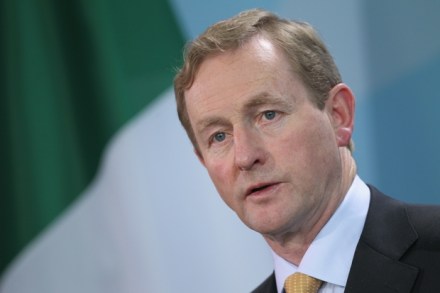
My man in Dublin calls with joy in his voice to tell me ‘the Troika’ — the combined powers of the EU, the European Central Bank and the IMF — have signed off Ireland as fit to leave their bailout programme and return to economic self-determination. This is a remarkable turnaround in just three years since I visited the Irish capital in the midst of rescue talks — to find a nation in shock, staring at an €85 billion emergency loan facility that equated to €20,000 per citizen, a collapsing banking system and a landscape scarred by delusional, never-to-be-finished property developments.

Ireland’s back, and luck had nothing to do with it

My man in Dublin calls with joy in his voice to tell me ‘the Troika’ — the combined powers of the EU, the European Central Bank and the IMF — have signed off Ireland as fit to leave their bailout programme and return to economic self-determination. This is a remarkable turnaround in just three years since I visited the Irish capital in the midst of rescue talks — to find a nation in shock, staring at an €85 billion emergency loan facility that equated to €20,000 per citizen, a collapsing banking system and a landscape scarred by delusional, never-to-be-finished property developments.

Now the economy is recovering, is it a good idea to buy Poundland shares?

‘Satan seizes control of saintly bank’ would be a fair summary of much of the coverage of the deal that has rescued the crippled Co-operative Bank from oblivion, or ‘resolution’ as it is technically called. In order to avoid that fate, the parent Co-op Group has had to inject £462 million into the bank while accepting a reduction in its own equity stake to 30 per cent. Dominant among the holders of the other 70 per cent will be a group of hedge funds from New York and Los Angeles who may or may not represent the prince of darkness but are certainly looking for what Co-op Group chief Euan Sutherland calls ‘recovery value’.

Martin Vander Weyer: Arise, Sir Jim, the hero of the Grangemouth affair

You know my theory that Unite leader ‘Red Len’ McCluskey is a Conservative secret agent? Well, having watched events at Grangemouth last week, I’m convinced his Scottish comrades Pat Rafferty, Unite’s Scottish secretary, and Stevie Deans, chair of Falkirk Labour as well as Unite’s Grangemouth convenor, are part of the same subversive cell. Having called an overtime ban over alleged ‘victimisation’ of Deans, they escalated the dispute until Grangemouth’s owner — the Swiss-based conglomerate Ineos — threatened to close the plant.

Kuenssberg, Pym, Yueh, Davis, Kennedy, Islam or Perry — who will be the BBC’s next business editor?

My Any Other Business item this week on who’s in the frame to succeed Robert Peston as BBC business editor seems to have caused a bit of a stir. The strong rumour is that the appointment must go to a female candidate, and there’s clearly support for the delightful Laura Kuenssberg, who came to fame reporting the 2010 general election for the BBC but has been a lot less visible since she moved to ITV News as business editor in 2011. Does Pesto think she’s given him a run for his money these past couple of years? I suspect he’d say not, and if I were Laura’s career adviser I’d say play to your strength and get back to covering politics as soon as you can.

Martin Vander Weyer: The BBC should replace Robert Peston with Grayson Perry

Prediction, as Mervyn King once observed, is ‘a stab in the dark’. Who can say with confidence where the wholesale price of electricity will be in ten years’ time, let alone 45 years hence at the end of the contract struck by Energy Secretary Ed Davey with EDF of France for the building of the £16 billion Hinkley Point nuclear station? We can be pretty sure the price will be a lot higher than today’s and it’s not mad to think it might have doubled by 2023, which is the starting assumption of the EDF deal.

Notes on … Skiing in Switzerland

There’s a myth in the Spectator office, which I’ve never discouraged, that I’m Yorkshire’s answer to Franz Klammer — a veteran ski ace who likes nothing better than to have himself helicoptered to remote peaks in search of deep, virgin powder. But myth it is, I’m afraid: your business columnist is fat, 58 and was never fast on skis or any other form of self-propulsion, even in his youth. So you might think I’m the wrong man to be telling you about my favourite Swiss winter-sports station, which is the picture-book village of Wengen in the Bernese Oberland. This, after all, is the place where ski-racing was invented by British sportsmen in the 1920s, and is still home to the muscular Downhill Only Club.

Martin Vander Weyer: Cut it out, America. This is not Hollywood

Some say it’s natural optimism that makes the Americans so different from the British, and some say it’s a lack of cynicism. Either way, our cousins over there have long had difficulty distinguishing fact from fiction, and are forever finding ways to make their public life look like the action movie that always ends well for the hero, or the TV series in which some of the good guys turn out to be bad but the really good guy lives to fight another season. The ultimate expression of this national naivety — for that’s surely what it is — occurred on 1 May 2003 when President George W.