Martin Vander Weyer

Martin Vander Weyer

Martin Vander Weyer is The Spectator’s business editor

Fight Thomas Piketty or face a mansion tax

The postman at the door is stooped by his burden like an allegorical statue of Labour Oppressed by Capital. His wearisome, low-waged task is to deliver a copy of Thomas Piketty’s Capital in the Twenty-First Century — or perhaps multiple copies all round the town, since this breezeblock of a thesis on the iniquities of accumulated wealth stands second in this week’s bestseller lists, pipped only by the life story of someone called Guy Martin.

Forget about saving British big pharma – it’s little pharma we should be helping

Readers in all sorts of places — at the club bar, over a birthday lunch, even along the church pew — had been telling me I was wrong not to subscribe to the ‘save AstraZeneca’ campaign, and too complacent about the future of British science when I wrote: ‘the game is Pfizer’s for the taking, as soon as the price is right’. Now Pfizer has retreated, it looks like the battle has been won by the bandwagon I missed, whose crew included Ed Miliband, the Unite union, and former AZ chief Sir Tom McKillop — better remembered as the chairman of RBS who presided over its catastrophic merger with ABN-Amro, so at least speaking from rueful experience. But the reality is that the game was not taken because the price was wrong.

Diet secrets of the billionaires

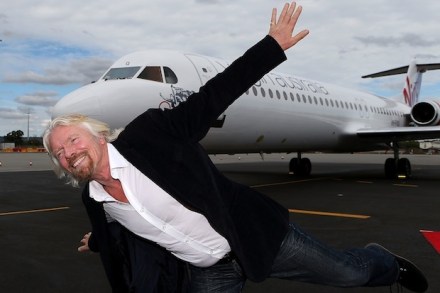
The Billionaires’ Diet Book would not be a bestseller — or so I judge from limited experience of lunching with the denizens of this week’s Sunday Times Super-Rich List. They’re just not happy eaters. Lord Bamford (£3.1 billion) described the elegant little salad served in his office as ‘rabbit food’. In 48 hours of partying across India with Sir Richard Branson (£3.6 billion), I never once saw him tackle a sumptuous buffet. As for the list’s winners, Sri and Gopi Hinduja (£11.

Are we killing investment banking? And if we are, should we care?

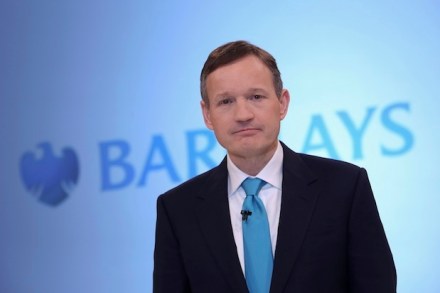
Do we really mean to kill investment banking, or are we trampling it by accident in a fit of righteous zeal? By ‘we’ I mean politicians, regulators and public opinion, and by ‘kill’ I mean rendering it unattractive or unviable for any shareholder-owned financial business except on the most limited scale — and as uncertain a career choice as, say, Liberal Democrat politics or freelance journalism. The announcement last week of a radical scaling back of Barclays’ trading and deal-making arm has stoked a debate that had been smouldering for some time; for background reading, I recommend recent articles by Philip Augar in the FT and Frances Coppola in Forbes.

Ed’s one-way ticket

Miliband has also been busy ‘looking at options’ for renationalising Britain’s railways at the end of current franchise contracts. This is yet another of what I have called Labour’s ‘targeted tweets’ designed to please trade unions and pick off loose voters — in this case disgruntled south–eastern commuters. What it’s not is a credible, costed policy. Even Ed Balls is said to be distancing himself from such a retrograde idea, while Martin Griffiths, chief executive of the Stagecoach transport group, rightly called it ‘a one-way ticket to higher taxes’ and others in the industry point out that there could be no quicker way to kill existing plans for investment in better trains.

Pfizer’s already beaten Ed Miliband. Now it just needs to offer the right price

Pfizer will almost certainly have to offer more than its second bid of £50 a share for rival drug giant AstraZeneca, but the American predator seems to be winning the game of spin so far. For a start, Pfizer chief Ian Read turns out to be a Scottish-born graduate of Imperial College London who has spent his entire career with the company. AstraZeneca, by contrast, is run by a Frenchman, Pascal Soriot, under a Swedish chairman, Leif Johansson, both parachuted in two years ago — reminders that AstraZeneca is already a multinational with its research facilities divided between Cheshire and Sweden and less than 15 per cent of its workforce based in the UK, and that it has recently recovered from a period of underperformance that provoked the departure of its previous top team.

Pfizer’s already beaten Ed Miliband. Now it just needs to offer the right price

Pfizer will almost certainly have to offer more than its second bid of £50 a share for rival drug giant AstraZeneca, but the American predator seems to be winning the game of spin so far. For a start, Pfizer chief Ian Read turns out to be a Scottish-born graduate of Imperial College London who has spent his entire career with the company. AstraZeneca, by contrast, is run by a Frenchman, Pascal Soriot, under a Swedish chairman, Leif Johansson, both parachuted in two years ago – reminders that Astra Zeneca is already a multinational with its research facilities divided between Cheshire and Sweden and less than 15 per cent of its workforce based in the UK, and that it has recently recovered from a period of underperformance that provoked the departure of its previous top team.

Pfizer will be hard to stop

The pattern of the global pharmaceutical industry has long been towards cross-border mergers that combine research strength, market access and the capital needed to sustain new drugs through multinational approval processes.The UK has done well in this game, with excellent laboratory work and two giants still headquartered here, GlaxoSmithKline and AstraZeneca. The latter is part-Swedish but has 6,700 British staff and a heritage that descends from the pharmaceuticals business of ICI, greatest of 20th-century British industrial names.

Why the bankers’ bonus debate is not going away

A bouquet to Alison Kennedy, ‘governance and stewardship director’ at the Edinburgh-based pensions provider Standard Life, for leading the rebellion of Barclays shareholders against the bank’s decision to pay increased bonuses of £2.4 billion, far outstripping dividends to shareholders and despite a fall in profits. At last week’s AGM, 34 per cent of shareholders refused to endorse the board’s remuneration report after Kennedy declared herself ‘unconvinced’ that the bonus pot was ‘in the best interests of shareholders’ and warned of ‘negative repercussions on the bank’s reputation’.

George Osborne is entitled to look smug

The popular pastime for financial commentators this season is sticking pins in George Osborne. To those on the left who hate everything about him, to those on the right who think he should have used the fiscal crisis as an opportunity to slash state spending far more than he did, to those in the middle who prefer their politicians to be vacillating blunderers blown by fate, and thereby easier targets, this Chancellor is pretty bloody irritating. The UK is expected to be the G7’s fastest-growing economy this year, and Osborne’s doubters at the IMF have had to admit, in a mealy-mouthed way, that they were wrong to try to point him away from the path of austerity — which other critics now say wasn’t much austerity at all, which is why it did less damage than expected.

Last rites for the Co-op Bank? As group announces record losses

‘Care, respect, clarity and reassurance’ are what the Co-operative funeral service says it offers the bereaved, and the parent Co-op Group may soon find itself in need of just such support to help it come to terms with the resolution of the Co-op Bank. ‘Resolution’ is modern banking jargon for an orderly burial, involving powers vested in the Bank of England to transfer all or part of a troubled bank’s business to a private-sector purchaser, or (if the Treasury is so inclined) into temporary public ownership, or to force an accelerated insolvency procedure that ensures depositors are either paid out by the Financial Services Compensation Scheme or have transferred to healthier banks.


Should the Co-op be preparing for its own funeral?

'Care, respect, clarity and reassurance’ are what the Co-operative funeral service says it offers the bereaved, and the parent Co-op Group may soon find itself in need of just such support to help it come to terms with the resolution of the Co-op Bank. ‘Resolution’ is modern banking jargon for an orderly burial, involving powers vested in the Bank of England to transfer all or part of a troubled bank’s business to a private-sector purchaser, or (if the Treasury is so inclined) into temporary public ownership, or to force an accelerated insolvency procedure that ensures depositors are either paid out by the Financial Services Compensation Scheme or have transferred to healthier banks.

Blame it on the bankers’ boogie

Vince Cable and Michael Fallon, ministers responsible for the Royal Mail sell-off, have been summoned for another select committee grilling after Easter. Meanwhile, Labour’s irritatingly smug business spokesman Chuka Umunna continues to score points by claiming that last October’s flotation was ‘botched’, costing taxpayers a notional £750 million as the shares leapt from the issue price of 330 pence to 455 pence on the first day, and much more since as they rocketed on upwards. The truth is that the ministerial duo were right to be super-cautious about pricing a privatisation that had been thwarted for so long by union subversion, for which public enthusiasm was uncertain, and in which taxpayers would continue to hold a 30 per cent stake.

Don’t blame ministers for the Royal Mail sell-off. Beat up the bankers!

Vince Cable and Michael Fallon, ministers responsible for the Royal Mail sell-off, have been summoned for another select committee grilling after Easter. Meanwhile, Labour’s irritatingly smug business spokesman Chuka Umunna continues to score points by claiming that last October’s flotation was ‘botched’, costing taxpayers a notional £750 million as the shares leapt from the issue price of 330 pence to 455 pence on the first day, and much more since as they rocketed on upwards. The truth is that the ministerial duo were right to be super-cautious about pricing a privatisation that had been thwarted for so long by union subversion, for which public enthusiasm was uncertain, and in which taxpayers would continue to hold a 30 per cent stake.

Is full employment just another of George Osborne’s political stunts?

‘Full employment’ usually means the lowest achievable rate of unemployment — somewhere south of 5 per cent compared with 7.2 per cent today, or to put it in numbers, fewer than 1.5 million compared with 2.3 million last month. You might think it ought to be a target of every Chancellor of the Exchequer. Only Norman Lamont ever said otherwise in public, telling the House of Commons in 1991 that ‘rising unemployment and the recession have been the price that we have had to pay to get inflation down. That price is well worth paying.’ Now George Osborne has embraced the full employment target, taking a little more wind out of Labour’s sails as he did so, and has said he wants us to have the highest employment rate in the G7.

How the Budget failed to erode the North-South divide

The Budget contained eye-catching measures to stimulate business investment, which has been lagging badly behind the current recovery, and to encourage exporters, whose performance has trailed off after a promising mid-recession uptick when the pound weakened. But there was little to address the scandalous unfairness of business rates about which I regularly hold forth. These punitive charges — ‘£26 billion for George Osborne that… he might otherwise have to take direct from you and me,’ I wrote last year — on which businesses have no vote and for which they get so few services in return, are still based on pre-recessionary 2008 valuations of commercial property.

Why I’ll join the silver stampede to cash in a pension

At the beginning of the last decade, a young man who claimed to be my ‘premier banker’ paid me a visit. He was accompanied by his boss, evidently there to assess the junior’s performance. Once upon a time — at least in popular imagination — bank managers were kindly, cautious, long-term advisers, but by the turn of the new century they had become shameless product-pushers with targets to fill, and it was obvious from the body language of both visitors that this poor chap had to sell me something by the end of the call or his job was on the line. So I took his ‘advice’, signed for a stakeholder pension — and never saw either of them again.

It’s unlikely Malaysia Airlines will ever reveal the true story behind MH370

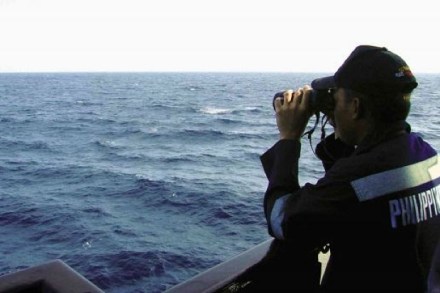
Malaysian Airlines, whose flight MH370 has strangely disappeared, is a national flag-carrier in the broadest sense — a symbol, along with the Petronas Towers in Kuala Lumpur and the Proton car, of its home nation’s aspirations as an Asian Tiger. Hived off in the early 1970s from the former Malaysia-Singapore Airlines, it became, in 1984, one of the first state-owned Asian enterprises to be privatised — and the young banker from London who sweated for ten months to write its prospectus for flotation was none other than your humble columnist. The airline had every appearance of a modern international business, including a Harvard-educated chief executive.

HS2’s boss is right – it’s push on or be rubbed out

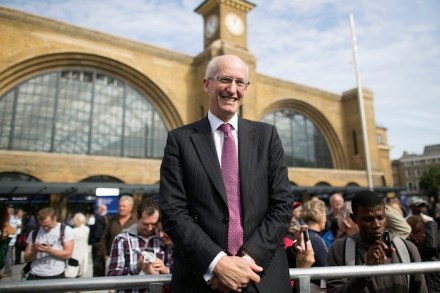
I’m sure HS2 chairman Sir David Higgins is right to argue that if we’re serious about building a new north-south rail network, we should get on with it. The greater the number of general elections between conception and completion of any infrastructure scheme, the less likely it is to happen. Lord Mandelson revealed last year that Labour only gave this one the go-ahead in 2009 as a political gimmick; Ed Balls’s comments on it last week signalled that an incoming Labour cabinet might drop the project as casually as it was green-lighted in the first place if it doesn’t suit the short-term  politics of 2015. So the best option for Higgins is to push the boulder uphill a little faster, while finding ways to shave the costs.

Any other business: Turn down those token directorships, girls, and tell them you want to be chairman

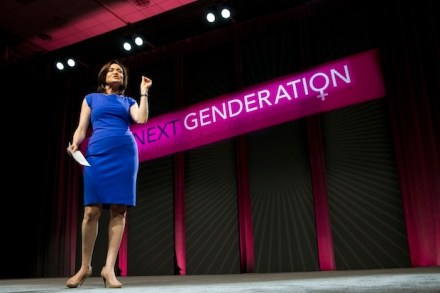
Last Saturday was International Women’s Day, but we celebrated early in Helmsley when my Yorkshire home town was featured in national news last month as a beacon of recession-beating female entrepreneurship: 60 per cent of our new ventures have female owners. This is shaping up to be a good year for women in business generally, what with Vince Cable voicing support for all-women shortlists for directorships of FTSE 100 companies with a view to achieving 25 per cent representation by 2015, up from 20 per cent today. The Business Secretary has been busy behind the scenes, too. ‘We had a letter from Vince telling us we should appoint a female non-exec...’ one chief executive told me last week ‘...