Martin Vander Weyer

Martin Vander Weyer

Martin Vander Weyer is The Spectator’s business editor

I told you so: the UK electricity gap looms wider than ever

Amid all the turmoil in global energy markets, we should not lose sight of the UK power programme that we’re praying will keep our lights on a decade hence: it is, as you know, a hobbyhorse of mine. So how’s it going down at Hinkley Point in Somerset? My man with big binoculars in the Bridgwater Bay nature reserve tells me he’s seeing plenty of lorry movements on the nuclear site, but signals from EDF of France — which has a two-thirds interest in this £18 billion project, alongside Chinese investors — are very worrying. Having already spent £2 billion, the French state utility has deferred until at least the middle of this month a final commitment that was expected last week.

Mr Bear is back: sit tight because he may be with us for a while

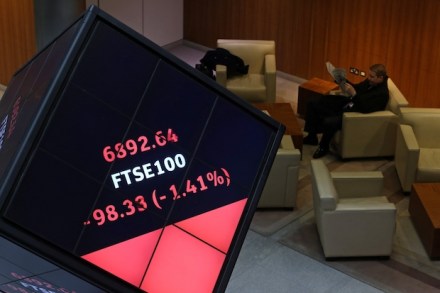
Like Leonardo DiCaprio in The Revenant, we’ve just been savaged by a bear but we’ll probably survive. Leading UK-listed stocks have fallen 20 per cent from last April’s peak after a six-year climb, and the FTSE100 chart has taken on a saw-toothed downward trajectory that suggests, to those who rely on such indicators, that there are further falls to come. The end of quantitative easing and the US Federal Reserve’s first interest-rate rise in almost a decade set the direction of travel. The sinking oil price, combined with worries about a global debt build-up, darkened the mood. Repeated bouts of mayhem on the Shanghai bourse, though little or nothing to do with western investors, have provided a news peg.

Come back Pesto, all is forgiven: and tell us who’s to blame this time

‘Who’s to blame for financial crisis’ is a poem I wrote in 2012, rhyming ‘speculators, spivs and traders’ with ‘rich, -uncaring hedge-fund raiders’, while taking passing swipes at Gordon Brown and ‘Mervyn King, who really didn’t do a thing’. But it’s too early in 2016 to update my ditty, because the new crisis — if that’s what it is — hasn’t really hit us yet, except in share prices that clearly have further to fall. And the question of who’s to blame, never mind how to make them rhyme, is going to be a lot more difficult this time round. ‘It’s China’s fault,’ was the gist of bulletins about the loss of 750 jobs at Tata’s Port Talbot steelworks this week.

RBS’s note from a crashing plane: wild headline-grabbing or wise advice?

Should anyone take investment advice from Royal Bank of Scotland, the institution which so misread markets before the crash that it required the biggest taxpayer bailout in banking history? Possibly not, but a bulletin from RBS’s research team this week certainly caused a stir by declaring that ‘in a crowded hall, exit doors are small, risks are high’, ‘sell mostly everything… except high-quality bonds’; and finally, ‘for the world: the game is up’. Strong stuff, indeed — and written in such staccato City language that it reads like the last scribbled testament of a passenger in a crashing plane.

Another banking review is pointless: just carry on naming, shaming and jailing

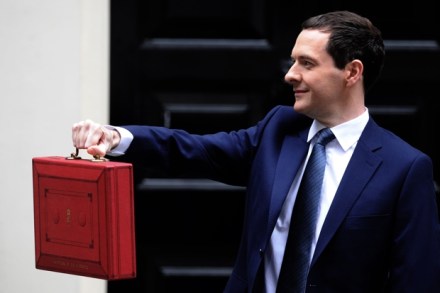
Was the Financial Conduct Authority leaned on by the Chancellor to scrap its ‘review of banking culture’? Or did it decide pragmatically that its resources would be better devoted to pursuing individual cases of cheating and criminality? I suspect the answer is a bit of both. Acting FCA chief Tracey McDermott — a no-nonsense northerner and former litigation lawyer — is reputed to be just as tough as her predecessor Martin Wheatley, who was ousted by Osborne last year, apparently for being too much the turbulent priest. Tracey became a regulator because she was interested in seeing ‘if human behaviour could be improved’ — in particular, the behaviour of people who are not dishonest by nature but are swept along by the tide.

The human element: highs, lows and loose ends of 2015

Last year was a bumper year for mergers and acquisitions. Recovering prospects and relatively low price-earnings ratios made the takeover arena alluring: the global volume of deals looks certain to have passed the $4.3 trillion record of 2007. Among the new giants are Shell-BG, Heinz-Kraft, Pfizer-Allergan and monster brewer AB InBev-SAB Miller; bonuses reaped by London M&A bankers will fund basement diggings bigger than Crossrail. So you might expect me to name my deal of the year: but no.

A heartwarming story of Christmas blackmail

I thought you might enjoy a little parable for Christmas, so here goes… The boardroom clock said twelve minutes to one. A waft of gravy in the air indicated that Christmas lunch awaited in an adjacent room. One agenda item to go: Colin the company secretary made a throat-cutting gesture to Kevin from health and safety, who had exceeded his allotted time for a presentation on disposal of toxic waste from Indonesian supplier factories. Coming after Maureen the HR director’s Powerpoint on ‘issues around diversity’, this had entirely lost the attention of the board, most of whom, Colin observed, were fiddling with their phones under the table. Except for the chairman, George, and the chief executive — a Dutchman whose name no one could pronounce.

Why Gatwick could still win the Great British Runway final

The Department for Transport announced yesterday that the final verdict on airport expansion will be put off until summer 2016. Back in October, The Spectator's Martin Vander Weyer predicted in his 'Any Other Business' column that the decision would be delayed until after the mayoral election in May: The Great British Runway final between Heathrow and Gatwick is beginning to look like a game of two halves. The visit of China’s President Xi Jinping is a bonus for the West London team, who can claim that Chinese investors with bulging wallets are more likely to be impressed by landing at an urban mega-airport than an expanded flying club in Sussex.

Ye who now will bless the poor Shall yourselves find blessing

  I thought you might enjoy a little parable for Christmas, so here goes… The boardroom clock said twelve minutes to one. A waft of gravy in the air indicated that Christmas lunch awaited in an adjacent room. One agenda item to go: Colin the company secretary made a throat-cutting gesture to Kevin from health and safety, who had exceeded his allotted time for a presentation on disposal of toxic waste from Indonesian supplier factories. Coming after Maureen the HR director’s Powerpoint on ‘issues around diversity’, this had entirely lost the attention of the board, most of whom, Colin observed, were fiddling with their phones under the table. Except for the chairman, George, and the chief executive — a Dutchman whose name no one could pronounce.

After the Black Friday flop, shops can get back to what they do best

The high street flopperoo that was ‘Black Friday’ may have something to do with terrorism fears, or even the downturn of the Chinese economy: in last year’s ugly scenes of bargain-hunters wrestling over televisions, Chinese tiger--shoppers seemed to win most of the spoils. But this year you could have held a picnic in the entrance of an Oxford Street store without fear of being trampled; trade had migrated massively online, where total UK sales are estimated to have passed £1 billion in a day for the first time and to have peaked (how sad is this?) between midnight and one in the morning. Amazon alone processed 7.4 million purchases in 24 hours.

We must play the blame game over HBOS. How else will bankers learn?

‘Everyone remembers the names of Applegarth of Northern Rock and Goodwin of RBS, but history may judge the HBOS men to have been the worst of the lot,’ I wrote four years ago. Judgment has arrived at last in a Bank of England report on the 2008 HBOS collapse — plus a second report, by Andrew Green QC, on the adequacy of investigations by the now-defunct Financial Services Authority. The Bank does not go as far as I did with ‘worst of the lot’.

The view from my Belfast bus: tribalism as the enemy of prosperity

At Stormont on Saturday, we observed a minute’s silence for the dead of Paris. Our conference group of Brits and Americans had convened two days earlier to discuss conflict resolution, the idea that nationalism and tribalism are the enemies of peace and prosperity, and how all this might relate to the migration crisis; so the moment could not have been more poignant.

If the world economy crashes again, blame the central bankers

Like the Christmas pudding sampled by Hercule Poirot at Kings Lacey — but six weeks early — our Spectator Money supplement contains a little treasure in every portion, and perhaps even a priceless gem. I particularly commend the essays by Warwick Lightfoot and Subitha Subramaniam on interest rates, and why central banks have become so hesitant to raise them. In recent days we’ve had an indication from Mark Carney of the Bank of England that UK rates will stay at their current low well into next year, maybe until 2017; in the US, strong job numbers have pumped expectations that the first rate rise for nine years will be delivered by Fed chairman Janet Yellen in December.

I may have to revise my view that crypto-currencies are Satan’s work

I confess to being an out-and-out Luddite when it comes to bitcoin and other so-called crypto-currencies. To the extent that I think about them at all, I think that they are an ephemeral by-product of those creepy ‘virtual worlds’ in which obsessed gamers eventually go mad; that only such lost souls could seriously believe unregulated online money might eventually supplant the state-backed real thing; and that fashionable belief in them can only lead to fraud and loss. In short, I concluded some time ago, they are probably the work of Satan.

TalkTalk shows us the internet is only three clicks from anarchy

I’m not a customer of TalkTalk, the phone company which revealed last week that a hacker had potentially compromised the personal data of four million users. But I feel I’m on the front line of the cyberwar nevertheless. In August, someone unknown to me tried to spend £1,200 at House of Fraser on my credit card account. The bank, to its credit, sniffed a fraud, rejected the transaction, cancelled the card and invited me to speak to a nice young man in India who talked me through the corrective procedure, including deleting a false email address inserted by the fraudster and setting up a new password to add extra security for future contacts.

Mark Carney should avoid the EU referendum and stick to plain monetary economics

Governor Mark Carney is no orator, and whoever puts the fancy metaphors into his speech drafts really ought to desist. In his Mansion House address in June, it was about the legacy of the Great Fire and subsequent rebuilding — just like the great financial crisis, obviously. In last night¹s Cairncross Lecture at Oxford, it was the construction of the Sheldonian Theatre and the strengths of Wren's design supporting the art on the ceiling — just like the architecture of the European single market, except that 'they may in time need to be buttressed to realise the full creative potential of the peoples of the UK and Europe'. On both occasions, Carney looked briefly baffled by his own material.

Heathrow’s third runway could still be halted – here’s how

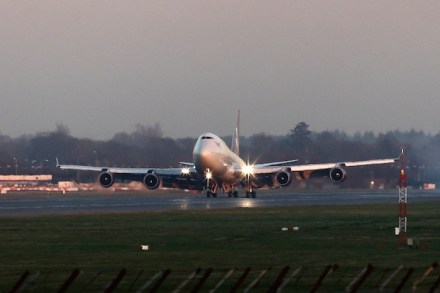
The Great British Runway final between Heathrow and Gatwick is beginning to look like a game of two halves. The visit of China’s President Xi Jinping is a bonus for the west London team, who can claim that Chinese investors with bulging wallets are more likely to be impressed by landing at an urban mega-airport than an expanded flying club in Sussex. But the Volkswagen emissions scandal has been a gift for Gatwick, because as chief executive Stewart Wingate said: ‘Heathrow’s poor air quality already breaches legal limits and it’s difficult to see how expansion could legally go ahead with the millions of extra car journeys an expanded Heathrow would generate.

The spectre haunting George Osborne

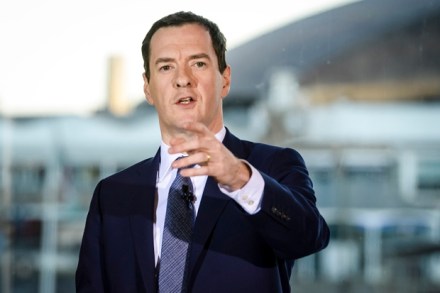
Rather more attention was paid last week to the strange position of George Osborne’s feet than to the dark shape lurking behind him. My own theory about his stance on the conference platform is that he was imagining himself as a operatic tenor, belting out an aria in praise the magic elixir he has administered to the formerly consumptive heroine, the UK economy, and pitching to be her next prince. But operas, like political careers, tend to end badly: so why the rumbling bass notes from the orchestra pit, and what is that sinister thing in the shadows? I’m not talking about Corbyn and McDonnell fighting in a sack with their own colleagues: they’re a comic subplot.

Finally, a business rates reform! If only I knew what it meant

This column has repeatedly cried that something must be done about business rates. Yes, it’s fair to ask businesses, as well as individual citizens, to contribute to local public-sector provision — even though businesses can’t vote. But it was far from fair during the recession to go on collecting £26 billion a year from hard-pressed firms based on an arbitrary multiplier applied to out-of-date rental valuations, in many cases long after those values had slumped to the point at which the rates were a higher cost than the rents.

Denis Healey was one of the most entertaining lunch guests I’ve ever had

Denis Healey and my father Deryk Vander Weyer — a big cheese at Barclays and spokesman for the high-street banks during Healey’s chancellorship — had a lot in common. Both were clever, cultured, iconoclastic products of good Yorkshire grammar schools; both wartime majors and post-war socialists (my father finally turned right when he began to appreciate the merits of Margaret Thatcher); both formidable in argument. ‘Now then, young Deryk,’ the then chancellor used to say, only half joking, ‘You’re the man to run the state bank for us after you’re all nationalised.’ Thirty years later, the mellower Healey of old age came north to Helmsley to give a talk about his photography.