Martin Vander Weyer

Martin Vander Weyer

Martin Vander Weyer is business editor of The Spectator. He writes the weekly Any Other Business column.

My nominee for politician of the year: the honourable member for Athens B

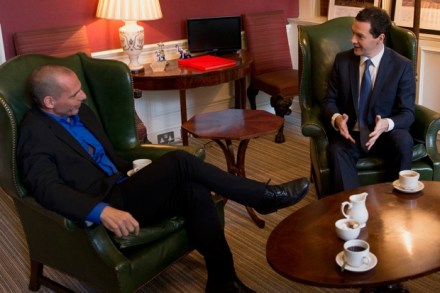
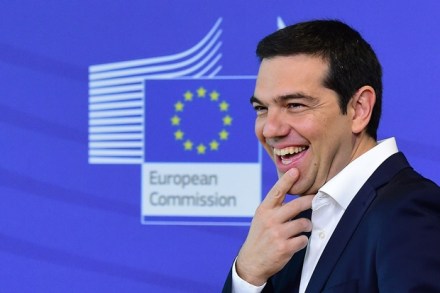
After the heat of battle: the accolades, the recriminations, the telling of history by the victors. It’s six months early for our Parliamentarian of the Year shortlist, but my nominee for this year’s top award is… the honourable member (or one of them) for the constituency of Athens B, Yanis Varoufakis. Last week, the grandstanding Greek finance minister was declared to have been ‘sidelined’ from his nation’s on-the-brink debt negotiations, following a more than usually stormy meeting with fellow European finance ministers in Riga. ‘They are unanimous in their hate for me; and I welcome their hatred,’ he tweeted, quoting Franklin Roosevelt.

Only the Tories can meet the aspirations of Ikea’s hard-working families

If Ikea were a constituency, it would be a three-way marginal. That was my thought one morning last week as I walked a mile and a half round the Batley branch of the great Swedish retailer behind two keen shoppers (one wearing a pedometer) whom I had driven there as a birthday treat. Here are middle-aged parents buying nursery stuff for pregnant daughters, engaged couples fitting out first flats, Polish families bickering over bargain kitchenware, Muslim housewives chattering behind niqab facemasks, and even what I thought might be a transsexual under a blond beehive. There’s a Scandinavian sense of equality: no fast track through the labyrinth, no exclusive luxury floor. The customers all seem to belong to that floating-voter category now labelled ‘hard-working families’.

Cheap shots and uncosted bribes are drowning out vision, wisdom and optimism

The interesting thing about Labour’s pledge to abolish non-dom tax status — a squib designed to trap Tories into expressing sympathy for the rich, in the knowledge on the part of Ed Miliband and Ed Balls that it might cause loss of tax revenues and inward investment — is that it has been welcomed by influential voices in the City. The Eds must be astonished to find Sir Roger Carr, chairman of BAE Systems and former deputy chairman of the Bank of England, bang on message: he told the FT that non-dom rules are ‘a relic of the past that unfairly favours the few at the expense of the many’.

Did the £20 million Norwegian’s pay row make BG cheaper for Shell?

Helge Lund was widely expected to go into domestic politics when he ended his successful tenure as head of Statoil, the Norwegian state oil and gas company. Instead, he was hired to run BG Group, the troubled former exploration arm of British Gas, but on a promise of such ludicrously rich terms — up to ten times his Statoil salary — that shareholders, the media and Vince Cable howled in protest. An embarrassed BG board had to scale back the offer, though it remained pretty fat and as I wrote at the time, ‘no mention of Lund, however good he turns out to be, will ever omit a jibe at his pay’.

Switch over to the Greek debt drama: the final episode must be coming shortly

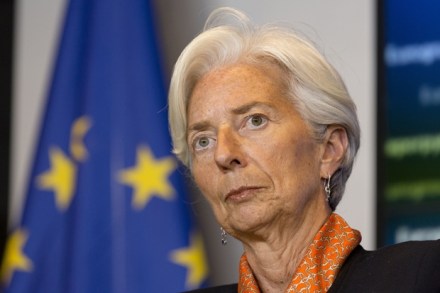
Bored with the election? Switch over to the Greek debt drama. In this week’s cliffhanger, silver-tongued finance minister Yanis Varoufakis visited IMF chief Christine Lagarde on Sunday, promised to meet his country’s obligations ‘ad infinitum’, and was expected to meet a €450 million repayment to the IMF on Thursday. But more troublesome members of the ruling Syriza party denounced the IMF and Brussels for treating Greece as ‘a colony’, threatening a snap election ‘if creditors insist on an inflexible line’, and warning that public-sector salaries and social security payments must rank ahead of debt as cash runs out. Which it will before August.

My night with Nicola Sturgeon

When I watch Nicola Sturgeon exercising her newfound charm and confidence, I experience a pang of intimate regret. Some 15 years ago — when she was a new MSP and the SNP’s shadow education minister — we both appeared on a late-night Scottish television show in Aberdeen, in which guests were invited to defend controversial propositions in front of a live audience of students. My task was to argue that poorer countries should not have their debts forgiven (then the theme of the Millennium ‘Jubilee’ movement, now a key argument about Greece) as a result of misplaced rich-world guilt; needless to say I took a pasting. The future first minister made a worthy but jokeless case for teaching Gaelic in primary schools, and provoked a lot less shouting.

Airport wars: why I’m betting on Gatwick

Easter is a good time to talk about airports — or perhaps a bad time, if you bought your Spectator in the shopping labyrinth that impedes your path to the departure gate after a maddening wait in the security queue, where only a quarter of the scanners are working. I’m with you, and not just in spirit: in fact, that’s me being led away by men with machine guns, after an altercation over the contents of my wash-bag. It’s a curious fact that no one has ever succeeded in imbuing airport terminals with the romance, dignity and passenger satisfaction quotient of 19th-century railway stations. At best they are soulless, at worst a stress-filled vision of hell.

So the FTSE100 has finally broken its record – it’s still not doing nearly as well as executive pay

The FTSE100 index has at last breached 7,000, surpassing its peak of 30 December 1999 and provoking moderate celebration among investors who have enjoyed such poor returns all these years. A thousand pounds invested in FTSE100 stocks on Millennium Eve, with dividends reinvested, was worth £1,670 by last month, an annual return of 3.4 per cent compared to inflation over the period of around 2.9 per cent. The same sum invested in a London house would have been worth £3,200, nearly twice the return on shares if we ignore running costs and the leverage effect of mortgage borrowing; invested on the rollercoaster of gold bullion, it would have been worth £4,500.

What real reform of business rates would look like

Of all the measures talked up ahead of the Budget, the reannouncement of a ‘radical’ review of the business rates was the least concrete in content but the most important in potential impact on the domestic economy, and especially on business investment. This column has banged on for years about the iniquity of a system that imposes the highest local taxes on businesses of any EU country, based on pre-crash rental assessments and bearing no relation to the value of diminishing local authority services. It’s a system that, on top of other economic woes, has brought devastation to town centres — and gets away with all this because it has no democratic accountability, since businesses have no votes.

Here’s what a real reform of business rates would look like

Of all the measures talked up ahead of the Budget, the reannouncement of a ‘radical’ review of the business rates was the least concrete in content but the most important in potential impact on the domestic economy, and especially on business investment. This column has banged on for years about the iniquity of a system that imposes the highest local taxes on businesses of any EU country, based on pre-crash rental assessments and bearing no relation to the value of diminishing local authority services. It’s a system that, on top of other economic woes, has brought devastation to town centres — and gets away with all this because it has no democratic accountability, since businesses have no votes.

Won’t someone please unleash the challenger banks?

In my Yorkshire town of Helmsley the NatWest branch, originally an outpost of Beckett & Co of Leeds, has closed down — collateral damage of its crippled parent RBS’s continuing struggle for viability. Our branch of the Australian-owned Yorkshire Bank, descendant of the West Riding Penny Savings institution, became an antique shop some time ago. HSBC, formerly Midland, is now a hairdressing salon. When they arrived a century ago, all three were ‘challenger banks’ of their day. But now they have gone, no challengers have ridden in to replace them — unless we count Handelsbanken, the progressively old-fashioned Swedish retail bank that has a thriving franchise down the road at Scarborough.

Watch out: Standard Chartered is even trickier to manage than credit default swaps

One day you’re an elder statesman, chairing top committees and pontificating on Question Time, and the next you’re out in the cold, reading terrible headlines about yourself in the newspapers you’re trying to sleep under on a park bench. Well, perhaps not as bad as that — but as it is for former foreign secretaries, so it is for overseas bankers. Standard Chartered chief executive Peter Sands, I wrote in 2012, was ‘one of the few British bankers whose reputation has actually risen in recent years’; his bank was a ‘dull old dog’, but it was also steadily profitable and sensibly managed. Then came sanctions-busting scandal, unwise expansion, slipping profits and disgruntled shareholders.

How Labour’s 50p tax trick has ended up helping George Osborne

Last week’s public borrowing and tax-receipt figures, headlined ‘Chancellor hails biggest monthly surplus in seven years’, received considerably less attention than the employment and wage-growth numbers a week earlier, underlining my belief that voters care a lot less (or indeed not at all) about the intangible ‘fiscal deficit’ and its implications than they do about their own prospects and spending power. And rightly so. Failure to shrink the deficit at the rate he first promised is nevertheless the one major issue on which George Osborne is seriously open to criticism as Chancellor. But what matters in political terms at this stage is that borrowing this year is 7.

Bet on a swift Grexit | 19 February 2015

‘Will Greece exit the eurozone in 2015?’ Paddy Power was pricing ‘yes’ at 3-to-1 on Tuesday, with 5-to-2 on another Greek general election within the year and 6-to-4 on the more cautious ‘Greece to adopt an official currency other than the euro by the end of 2017.’ I’m no betting man — as I reminded myself after backing a parade of point-to-point losers on Sunday — and I defer to our in-house speculator Freddy Gray, who will offer a wider guide to political bets worth having in the forthcoming Spectator Money (7 March).

Bet on a swift Grexit

'Will Greece exit the eurozone in 2015?’ Paddy Power was pricing ‘yes’ at 3-to-1 on Tuesday, with 5-to-2 on another Greek general election within the year and 6-to-4 on the more cautious ‘Greece to adopt an official currency other than the euro by the end of 2017.’ I’m no betting man — as I reminded myself after backing a parade of point-to-point losers on Sunday — and I defer to our in-house speculator Freddy Gray, who will offer a wider guide to political bets worth having in the forthcoming Spectator Money (7 March).

Maybe HSBC was too big for even Stephen Green to manage

Stephen Green — the former trade minister Lord Green of Hurstpier-point, who became this week’s political punchbag— was always a rather Olympian, out-of-the-ordinary figure at HSBC. This was a bank that traditionally drew its top men from a corps of tough, non-intellectual, front-line overseas bankers typified by the chairmen before Green, Sir John Bond and Sir Willie Purves. As the dominant bank in Hong Kong and a market leader throughout Asia and the Middle East, it was habituated to dealing with customers who took big risks, hoarded cash when they had it, and did not necessarily regard paying tax as a civic duty.

Lord Green must answer for HSBC’s sins – but maybe it was always too big to manage

Stephen Green — the former trade minister Lord Green of Hurstpier-point, who became this week’s political punchbag— was always a rather Olympian, out-of-the-ordinary figure at HSBC. This was a bank that traditionally drew its top men from a corps of tough, non-intellectual, front-line overseas bankers typified by the chairmen before Green, Sir John Bond and Sir Willie Purves. As the dominant bank in Hong Kong and a market leader throughout Asia and the Middle East, it was habituated to dealing with customers who took big risks, hoarded cash when they had it, and did not necessarily regard paying tax as a civic duty.

Why cheap oil could mean a Labour victory

BP’s profits are down, and the oil giant is slashing up to $6 billion out of its investment plan for the year. At Shell, the cut could amount to $15 billion over the next three years. At troubled BG, still waiting for new chief executive Helge Lund to arrive, capital spending will be a third lower than last year. I wrote recently of ‘consequences we really don’t need’ as the oil price continues to plunge: cheering though it is for consumers (and good for short-term growth) to find pump prices at a five-year low, the full impact will not be felt until a decade hence, when projects cancelled now might have come on stream to ease supply in whatever cat’s-cradle of conflict afflicts the world by then.

The low sculduggery of high Victorian finance

The whole idea of capitalism, according to Enlightenment philosophers, was that it created a positive spiral of moral behaviour. ‘Concern for our own happiness recommends us to the virtue of prudence,’ wrote Adam Smith. ‘The profits of commerce,’ according to David Hume, carry us towards a state in which ‘the tempers of men, as well as their behaviour, refine apace.’ In the first chapter of Forging Capitalism, Ian Klaus encapsulates this theory as an 18th-century artist might have titled an allegorical painting of intertwined figures: ‘Commerce encouraging Virtue, and Virtue harnessing Commerce.’ But that’s not really the way it was, Klaus goes on to argue — and certainly not the way it is today, he implies.

What’s good about austerity (whatever the Greeks think)

The only question I remember from my Oxford moral philosophy paper was ‘What is integrity and is it a virtue?’ In the margins of all the politicking that follows the victory of Syriza in the Greek election, I hope someone asks: ‘What is austerity, is it a virtue, and why has it worked in the UK and Ireland but failed in Greece?’ My own definition of austerity in the context of financial crisis, when I debated it with former Greek finance minister George Papaconstantinou, was ‘a synonym for frugal, uncorrupt government supported by willing taxpayers of the sort that has been largely absent in southern Europe’, at which George got very emotional and accused me of stereotyping.