Martin Vander Weyer

Martin Vander Weyer

Martin Vander Weyer is The Spectator’s business editor

The Tories are doing the unthinkable to save Port Talbot steel

Ministers from 34 countries met in Brussels this week in the vain hope of a quick fix for the steel crisis that everyone blames on dumping by China — which responded, through a state news agency, by calling its critics ‘lame and lazy’. Our own Sajid Javid, desperate to avert the fallout from a closure of Tata’s Port Talbot steelworks before the referendum, claimed to have observed ‘a very positive step forward’ in Chinese attitudes, but perhaps someone had locked him in his hotel room.

If you’re riding the FTSE rebound you might still want to sell in May

When the FTSE100 fell close to 5,500 in February, we all said ‘Mr Bear is back’. On Tuesday the index hit a high for this year of 6,400, and we all wondered whether Mr Bear had done what I said he wouldn’t, and shuffled back to hibernation. But the truth is that shares have lately moved in parallel with the oil price, which has perked up partly for technical reasons including temporary curtailment of supply from Kuwait; and a major element of the FTSE recovery is in commodity stocks that had been wildly oversold. So we shouldn’t read any great swing of confidence into a market still 600 points down on a year ago.

Brexit forecasting is futile – and both sides should just admit it

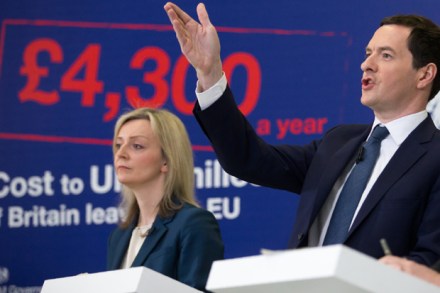
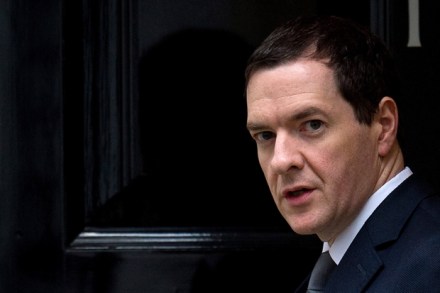
The most striking thing about the Treasury’s forecast of the impact of Brexit is the relative modesty of its claim that by 2030, assuming a UK-EU trade deal akin to the one negotiated by Canada, ‘our GDP would be 6.2 per cent lower’ while ‘families would be £4,300 worse off’. Since those quotes come from the foreword signed by George Osborne, many voters will distrust the whole document — in which case they might prefer the even more modest ‘worst case’ of a 2.2 per cent GDP hit by 2030 predicted by non-partisan think-tank Open Europe alongside what it calls ‘a far more realistic’ range of possible outcomes ‘between a 0.8 per cent permanent loss to GDP… and a 0.6 per cent permanent gain’.

Let’s refocus the Panama story on the bad stuff that really matters

There were moments last week when I was ready to give up journalism and retrain in a less unsavoury profession — chiropody, perhaps. It might have been Jon Snow’s bushwhacking of arts minister Ed Vaizey on the subject of the prime minister’s tax affairs, or Snow’s colleague Cathy Newman shrieking questions about offshore companies at Boris Johnson as she chased him in the street. Or one of dozens of reports and articles oozing malice, self--righteousness, hypocrisy and wilful ignorance of the distinction between tax planning as practised by anyone with a sense of obligation to provide for their family and the dirty business of hiding ill-gotten gains.

Forget David Cameron – I want to know about Wayne Rooney’s tax return

While we’re on the subject of taxes, what about footballers? That’s a question often put up by bankers accused of being overpaid, but the comparison works as well with politicians. Cameron’s tenure at the top has coincided with that of Wayne Rooney, a role model for millions who is said to earn more in a week than the Prime Minister earns in a year: Cameron’s tax rate turns out to be 38 per cent, but what’s Wayne’s? More broadly, the annual wage bill for the Premier League is £1.9 billion. Two thirds of the players, including most of the highest paid, are foreign. A survey for 2013–14 found players earning an average of £2.

Credit where it’s due to Tata, our greatest inward investor

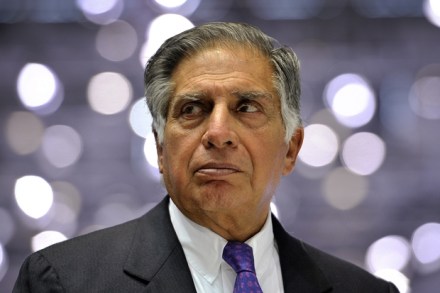
If asked to pick the UK’s inward investor of the century so far I would, without hesitation, name Ratan Tata, the anglophile former patriarch of the eponymous Indian conglomerate that bought Tetley the tea-maker for £271 million in 2000, Corus the Anglo-Dutch steel-maker for £6.2 billion in 2007, and Jaguar Land Rover — from Ford — for £1.3 billion in 2008.

We’re probably all on Mossack Fonseca’s books

Let me make this perfectly clear: I have never asked Mossack Fonseca of Panama to set up a company for me in the British Virgin Islands or anywhere else. At least I don’t think I have: I mean, who reads the small print of all that boring paperwork from wealth managers and accountants these days? Among 11 million leaked Mossack Fonseca documents, we will probably all find our own names somewhere, plus those of Elvis and Lord Lucan. Even so — and leaving aside, for today, the morality of offshore tax structures — we can admire the breadth of the Panamanian law firm’s client list, stretching as it reportedly does from ‘senior Tory peers’ and a cousin of Bashar al-Assad to the brother-in-law of the Chinese president and the friends of Vladimir Putin.

In defence of George Osborne’s ‘left-wing’ Living Wage

It was unfashionable of me to write in praise of George Osborne on Budget day. I did so, you may recall, because ‘at least we have a finance minister who’s always on the front foot’: I wanted to make a contrast between our Chancellor’s relentless activism in pursuit of his political goals, and the supine performance of eurozone leaders — who continue failing to offer any strokes at all while hoping for Mario Draghi to knock up a few runs with monetary trick-shots from the other end. Within 48 hours, however, our Chancellor seemed to be very much on the back foot, one hand clutching his protective box, as bouncers rained down from the unlikely combination of IDS and John McDonnell.

Osborne’s on the back foot but his Living Wage deserves praise

It was unfashionable of me to write in praise of George Osborne on Budget day. I did so, you may recall, because ‘at least we have a finance minister who’s always on the front foot’: I wanted to make a contrast between our Chancellor’s relentless activism in pursuit of his political goals, and the supine performance of eurozone leaders — who continue failing to offer any strokes at all while hoping for Mario Draghi to knock up a few runs with monetary trick-shots from the other end. Within 48 hours, however, our Chancellor seemed to be very much on the back foot, one hand clutching his protective box, as bouncers rained down from the unlikely combination of IDS and John McDonnell.

My straw polls say the ‘leave’ campaign is failing to make a clear economic case

In every gathering, someone — often me — calls for a show of hands on Brexit. And I have to report that, in the varied circles in which I move, ‘leave’ may have the best tunes but isn’t winning the argument. At a Mayfair fundraiser for a Jewish charity, the crowd of mostly thirty-to-fortysomething men in suits (and many in yarmulkes) was 90 per cent for ‘remain’; a former Tory minister was spotted waving both arms in a desperate bid to boost the ‘leave’ minority. In a more mixed crowd of business people at a Budget briefing in Newcastle, the balance was much the same.

Why Osborne’s Budget bolsters the case for leaving Europe

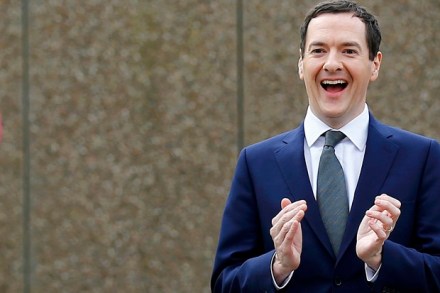
Give thanks for George Osborne — and I don’t say that because I happen to be writing this column on a slow train from Leeds to Manchester, a line that this Chancellor has just promised, for the umpteenth time, to upgrade. I say it because whatever flaws and gimmicks may have leapt out of Wednesday’s budget, however the actualities have drifted away from the forecasts, at least we have a finance minister who is on the front foot. Boost growth; balance the books; keep the state lean; devolve to the regions; nurture self-reliance and entrepreneurship; stay in Europe; succeed Cameron; win the next election. That’s the agenda. You may not buy all of it.

Pay packets, profits and promotions

I usually take a stern view of corporate pay packets that are out of line with profits and shareholder value, but I’m prepared to make an exception for Bob Dudley. The American-born chief executive of BP collected $19.6 million last year, up 20 per cent on his 2014 remuneration, while the embattled oil giant clocked up a record loss of $6.5 billion and shed thousands of jobs. But even in the rugged world of oil and gas, few men have survived tougher career challenges than Dudley, who in his previous role as head of the Russian joint venture TNK-BP was so threatened by hostile locals that he had to operate from an undisclosed location outside Russia.

The Budget: what to expect from the Chancellor

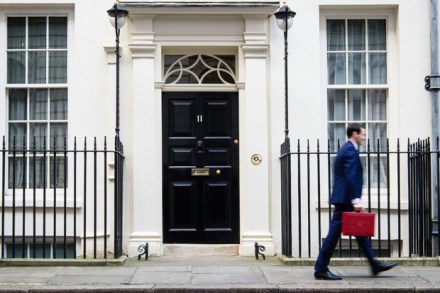
What’s in next week’s budget? Not much, apparently. ‘Cabinet sources’ have been quoted saying that ‘George has been told not to rock the boat’ ahead of the Brexit referendum, and that’s why he backed away from a grab on pension relief for higher earners; likewise he may yield to pressure from his backbenchers not to treat cheap petrol as an opportunity to raise extra fuel duty from motorists. He’ll probably have to talk his way out of a downgrading of growth forecasts by the Office for Budget Responsibility (‘global headwinds’, naturally) and a modest overshoot against his own borrowing targets — but those are the most entertaining parts of Osborne’s speeches.

This great commodity rally doesn’t mean that spring has arrived

All in all, this is an odd moment for an outburst of high spirits: not from me — I’m as phlegmatic as ever — but from commodity investors. The price of a barrel of oil has rallied from $27 to $40 after talks between Saudi Arabia and Russia about restricting supply; one pundit called that ‘meaningless theatre’ but others expect a climb back to $50. In a similar mood, copper prices have risen by almost a fifth — reflecting producer cutbacks combined with a belief that the Chinese downturn in demand might not be so severe as was first feared.

Sell the London Stock Exchange? OK, but not to the Germans

The London Stock Exchange is no longer the red-hot crucible it once was, given the multifarious ways by which shares, bonds and derivatives now change hands. But the prospect of the LSE passing into the control of Deutsche Börse — in what was announced as a ‘merger of equals’, but with the Germans holding the larger stake and the top job — is a mighty provocation to Brexit campaigners. The Express claims it would reduce the London market ‘to an insignificant regional afterthought’. Brexit or not, there’s logic to a pan-European trading platform with shared technologies and harmonised listing rules: but who can doubt that the German agenda must be to hoover as much business as possible from London to Frankfurt?

Better that the Americans take over the London Stock Exchange

The London Stock Exchange is no longer the red-hot crucible it once was, given the multifarious ways by which shares, bonds and derivatives now change hands. But the prospect of the LSE passing into the control of Deutsche Börse — in what was announced as a ‘merger of equals’, but with the Germans holding the larger stake and the top job — is a mighty provocation to Brexit campaigners. The Express claims it would reduce the London market ‘to an insignificant regional afterthought’. Brexit or not, there’s logic to a pan-European trading platform with shared technologies and harmonised listing rules: but who can doubt that the German agenda must be to hoover as much business as possible from London to Frankfurt?

The City says it’s for staying in but I wonder what the big beasts think

‘The City is in no doubt that staying in Europe is the only way ahead,’ declared Mark Boleat for the City of London Corporation. Likewise Chris Cummings of the lobby group TheCityUK praised David Cameron for delivering ‘a really special deal’. The official Square Mile is squarely for ‘remain’, confident that the Prime Minister has secured safeguards to let the UK keep control of a thriving financial sector in a multi--currency EU. But with all due respect, I wonder what the real players think. The economists Gerard Lyons and Ruth Lea are two other respected City voices, and they warn that those safeguards won’t be worth much as Paris, Frankfurt and Brussels pursue their long-term aim of grabbing financial activity from us.

Apocalypse now? Markets seem set on a self-fulfilling prophecy

All this talk of a new financial apocalypse, so soon after the last one, is starting to annoy me. Partly because investors as a crowd are so irrational; -partly because so much that governments and central banks have done to contribute to the current market mayhem seems to work against the sensible efforts of ordinary folk to build a bottom-up recovery. Markets first. We’ve had hissy fits about China, even though connections between the Chinese and UK economies are so marginal. We’ve had near-hysteria about the prospect of (and in the US, the start of) rising interest rates.

How is it where you live? A tale of two nations and a message for George

Upbeat or downbeat? I asked last month whether the mood where you live is energised by enterprise or demoralised by public-sector retreat — or both. Replies poured in while the news mostly got worse. Governor Carney warned that ‘the UK cannot help but be affected by an unforgiving global environment and sustained financial market turbulence’ as shares took another dive. BP and Shell announced profit falls and job cuts. The Brexit debate took off, but the migrant benefits row overwhelmed any sensible discussion of economic pros and cons, on which voters must so far be utterly confused. Then again, it wasn’t all bad: like-for-like retail sales surged by 2.

The banks have serious problems, but a European-wide crisis? Let’s be serious

A new European banking crisis. Seriously? Starting at Deutsche Bank? That’s the way markets were pointing on Tuesday as Deutsche’s shares plunged, inter-bank liquidity shrivelled, would-be investors in bank bonds hid in the toilets and speculative short-sellers did the work of the devil. And we all know there’s no smoke without fire, right? Let’s pause for thought here. The clue to whether Deutsche is ‘rock-solid’ (as its British chief executive John Cryan asserts) or tottering is in its name. Can anyone seriously imagine the German state and corporate establishment allowing the bank that bears their country’s name to go down? Of course they won’t.