Martin Vander Weyer

Martin Vander Weyer

Martin Vander Weyer is The Spectator’s business editor

Flaming phones

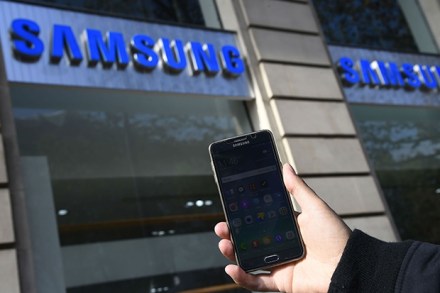
Is that a Samsung Galaxy Note 7 in your pocket, or are your pants on fire? The Korean manufacturer has halted sales of its latest smartphone and advised anyone already an owner to switch off immediately, lest the thing's battery explodes -- as one did on a Southwest Airlines flight in the US, forcing the plane to be evacuated. Meanwhile flights to Seoul are packed with crisis-management PR people -- all carrying Apple iPhone 7s, sales of which are soaring at Samsung's expense, or awaiting delivery of the rival Google Pixel device, due this month. Also set to gain is Huawei, the mysteriously rising giant of Chinese electronics.

Brexit spooks the markets, but the housing crisis will swing more votes

‘I rang and said can I have a council house, I’ve nowhere to go, an’ the bloke said no you can’t, we need them all for t’Romanians,’ was a remark offered by a fellow patient, known to me as Fat Lad, when I was hospitalised three years ago. ‘I’m telling you, I’m the biggest Ukip supporter there is…’ he went on, illuminating how — unnoticed by the comfortable classes — a shortage of social and affordable housing was helping to fuel the national mood that eventually led to the Leave vote. Belatedly, Communities Secretary Sajid Javid has had a Damascene moment: ‘Tackling the housing shortage is not about political expediency,’ he declares. ‘It is a moral duty.

Iceland the shop should be suing Iceland the country, not the other way around

Iceland wants to sue Iceland for misuse of its name. The former is a north Atlantic island whose fishermen-turned-financiers set standards of irresponsibility in the mid-2000s that made Wall Street’s Bear Stearns and Lehman Bros look like small-town building societies, attracting £20 billion of British depositors’ money into their mismanaged banks as they launched their own national economy into a mad caricature of boom and bust. The latter is a British supermarket chain, founded by Malcolm Walker in Oswestry in 1969 and offering a value-for-money -frozen-food range that is well appreciated by budget-conscious family shoppers. I’d say if anyone has a claim for reputational damage, it’s Iceland the retailer that should be suing Iceland the country.

What’s Twitter really worth?

Can Twitter be worth more than Deutsche? On Tuesday, as rumours swirled of possible bidders for the microblogging site, the market was valuing it at $20 billion, compared to $18 billion for the troubled German bank. That might be a reasonable assessment of their relative prospects, or it might be confirmation that social media valuations are always bonkers. You’ll gather from my tone that I’m no Twitter devotee, and am unconvinced by its attractions as a business: it has never made a profit in a decade of existence, has plateaued at around 300 million users (Facebook has 1.7 billion), done little to develop its original offering beyond attracting a global army of trolls, and is threatened by hot competitors such as Snapchat.

If Deutsche Bank goes down without a bailout, I really will eat my hat

'Can anyone seriously imagine the German state and corporate establishment allowing the bank that bears their country’s name to go down?’ I asked in February, adding rather bravely, ‘Of course they won’t.’ And that, I fear, makes my next question, ‘Am I about to eat my hat?’ Shares in Deutsche Bank have plunged to their lowest level since 1992 as the US Department of Justice seeks to impose a $14 billion fine relating to Deutsche’s issuance of mortgage-backed securities before the 2008 crisis, and rumours say Chancellor Angela Merkel has ruled out a state bailout. Deutsche boss John Cryan says the bank hasn’t asked for her help to fight its US battle and is in compliance with all its capital ratios, both of which may be true.

It’s time for Theresa May to answer the airport question

Hinkley Point — for all its flaws and the whiffs of suspicion around its Chinese investors — has finally received Downing Street’s blessing. Meanwhile, ministers hold the party line that High Speed 2 will go ahead according to plan, backed by news that the project has already bought £2 billion worth of land; and investors hunt for shares in the construction sector that might benefit from the multi-billion-pound infrastructure spree widely expected in Chancellor Philip Hammond’s autumn statement. But still no decision on a new airport runway for London — the one piece of digger work, short of tunnelling under the Atlantic, that would signal Britain’s raging post-Brexit appetite for global business.

A free vote on the Heathrow runway? Don’t be so wet, Prime Minister

Hinkley Point — for all its flaws and the whiffs of suspicion around its Chinese investors — has finally received Downing Street’s blessing. Meanwhile, ministers hold the party line that High Speed 2 will go ahead according to plan, backed by news that the project has already bought £2 billion worth of land; and investors hunt for shares in the construction sector that might benefit from the multi-billion-pound infrastructure spree widely expected in Chancellor Philip Hammond’s autumn statement. But still no decision on a new airport runway for London — the one piece of digger work, short of tunnelling under the Atlantic, that would signal Britain’s raging post-Brexit appetite for global business.

It’s looking bad for HS2. Why not build HS3 instead?

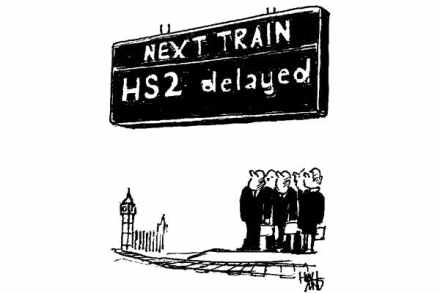
What’s happening with HS2? The high-speed rail project has now lost its chief executive, Simon Kirby, headhunted by Rolls-Royce at an unspecified multiple of his £750,000 HS2 salary. Rumour-mongers say the true final cost of the project is now closer to £80 billion than the official figure of £55 billion, and that chairman Sir David Higgins may not renew his contract next year. Today's Sunday Times reveals some £35 million a month has been spent already, buying up houses in places where the line won't open for 17 years. and sending squads of people to monitor bats.

The new world of work is a jungle but don’t call workers ‘animals’

The TUC general secretaryFrances O’Grady doesn’t get a lot of airtime. Compared with predecessors a generation ago, such as Vic Feather and Len Murray, she is all but invisible. But in her Congress speech at Brighton on Monday, she struck a note that must have resonated with many of the public who have no idea who she is when she spoke of ‘greedy businesses that treat workers like animals’. She was referring to zero-hours contracts, below-minimum-wage rates such as those effectively paid at Sports Direct’s Shirebrook warehouse, and rock-bottom fees per delivery offered to self-employed Hermes parcel-van drivers and Deliveroo fast-food couriers. And of course anyone not fundamentally opposed to free markets will take issue with her choice of words.

Mrs May the ‘Student Killer’ should count the cost of her visa crackdown

In the post-Brexit landscape whose shape was barely glimpsed in G20 discussions at Hangzhou, one thing is clear: soon we’ll have to stop waffling about trade deals and start pushing British products the world wants to buy. One such is education, at our universities, independent schools and English-language colleges — an export sector calculated in 2011 by the now defunct Department for Business, Innovation and Skills to be worth £17.5 billion. Not only does this sector attract foreign exchange, plug funding gaps for cash-strapped universities and support thousands of jobs, it also lays the ground for future relationships with students who return home to embark on business careers.

Lessons in lolly

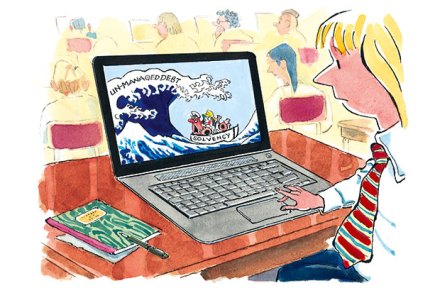
Do you ever tell your pupils that debt is a bad thing?’ I challenged the headmaster of a thriving Midlands prep school. His answer was more nuanced than I was expecting — but since independent school heads are also educational entrepreneurs these days, perhaps I shouldn’t have been surprised. ‘I’d be anxious about too much moralising in this area. Actually a lot of our pupils’ parents are business owners, for whom debt can be a good thing when it allows their businesses to grow. But we do try to teach the older ones that debt always has to be managed, and to ensure that our 13-year-olds leave here with some financial savvy.

Stalled EU-US talks offer a reality check for our own post-Brexit trade hopes

Should we care two hoots whether negotiation of the Transatlantic Trade and Investment Partnership (TTIP, pronounced ‘Tee-tip’ by cognoscenti) has ‘de facto failed’? That’s what German economy minister Sigmar Gabriel said this weekend, pointing out that since talks between Brussels and Washington began three years ago, no agreement had been reached under any of the 27 headings tabled. European Commission spokesmen rushed to claim the deal was still alive, but no one would bet on it reaching a conclusion in this decade — nor on that conclusion, whatever its shape, being greeted with joy by Europe’s citizens. ‘So what?’ I hear you ask.

Banking’s bonus madness is even worse than I thought

Among lively responses to my recent item on executive pay and the possibility of using state-owned RBS as an experiment in reducing it, this one from a senior City whistle–blower: ‘Are you aware that the situation is even more absurd than you say? Since the EU bonus cap [introduced in 2014, limiting bonuses to 100 per cent of salary or 200 per cent with shareholder approval] we all had our basic salaries raised to ridiculous levels to ensure no one loses out — which of course has the perverse effect that people work less hard and frankly care less about the performance of the bank.’ Executives just four years into their careers command base salaries of up to £150,000, and ‘managing directors’ (of whom every firm has dozens) up to £600,000.

Oil prices will drift down again as Opec fails to get its act together

How many Olympic medals did Opec win? The answer (though I’ll bet no one else has bothered to work this out) is 15, or an average of 1.07 medals per member of the world’s leading oil-producer cartel. That result — boosted, I should add, by the five-medal triumph of the Iranian wrestling team — compares with the now notorious aggregate figure of 325 for the EU, including Team GB’s 67. I highlight the contrast only to make the point that, as power blocs go, resource-rich Opec is piss-poor at managing its affairs to advantage: the indolent leadership of the Saudis (Rio medals: zero) and their permanent stand-off with Iran means timely and co--ordinated decisions rarely happen.

Why lining shareholders’ pockets is more productive than plugging black holes

The revelation by actuarial consultants Lane Clark & Peacock that 56 of the supposedly blue chip companies in the FTSE 100 index are running deficits totalling £46 billion in their defined benefit pension schemes puts the BHS story into a new perspective. It tells us that the £571 million ‘black hole’ in the chain’s pension fund was by no means out of the ordinary — it is a small fraction of the deficits declared by the likes of BT, Tesco, BAE Systems and BP, even if it might have been mitigated by wiser decisions on the part of the scheme’s trustees and greater generosity on the part of former BHS owner Sir Philip Green.

Why not use RBS as an experiment in narrowing the top-to-bottom pay gap?

Theresa May sent a strong message to the corporate world when she criticised the ‘irrational, unhealthy and growing gap’ between the pay of top executives and average workers. Yet what should be a vigorous debate on this topic — about the balance between fairness and the right incentives for optimum performance — never quite takes off. More evidence came to hand this week from the ‘independent non-party’ High Pay Centre: it reports that average pay for a FTSE 100 chief executive last year was £5.5 million, up by 10 per cent on 2014 and a third since 2010, and that the ratio between chiefs’ average total pay and that of their workers stood at 129:1. Why should anyone earn so much, in absolute or relative terms, just for sitting at a desk?

Want to cut top pay, Mrs May? Start with the bank you own

Theresa May sent a strong message to the corporate world when she criticised the ‘irrational, unhealthy and growing gap’ between the pay of top executives and average workers. Yet what should be a vigorous debate on this topic — about the balance between fairness and the right incentives for optimum performance — never quite takes off. More evidence came to hand this week from the ‘independent non-party’ High Pay Centre: it reports that average pay for a FTSE 100 chief executive last year was £5.5 million, up by 10 per cent on 2014 and a third since 2010, and that the ratio between chiefs’ average total pay and that of their workers stood at 129:1. Why should anyone earn so much, in absolute or relative terms, just for sitting at a desk?

Lagoons: the new technology better than Hinkley Point

Let’s turn our attention to ‘tidal lagoons’: you may have heard that phrase in discussion of alternatives to Hinkley Point and wondered what it means. It refers to a £1 billion project, awaiting ministerial approval, to build a walled lagoon in Swansea Bay that would generate (through largely British-built turbines) electricity on the ebb and flood of every tide, 14 hours a day for a project lifetime of 120 years. It could be brought into operation within five years — but to make that happen it requires subsidy at levels comparable to offshore wind or new nuclear generation; it also requires millions of tonnes of concrete and aggregates from quarries in Cornwall and elsewhere, and will radically alter the local environment for sea life and wading birds.

Top tips for UK-China trade: grab the cheque and sup with a long spoon

There are reasons why Theresa May might harbour doubts about the Hinkley Point nuclear project — chiefly its unproven French technology and the high probability of time and cost overruns — but the fear expressed by her aide Nick Timothy that ‘the Chinese could use their role to build weaknesses into computer systems which will allow them to shut down Britain’s energy production at will’ sounds — even to a Sino-cynic like me — far-fetched. As I wrote here during President Xi Jinping’s visit last year, ‘The least sinister thing about the Chinese is their money. A ten-digit cheque… even from China National Nuclear Corporation… does not carry a ‘backdoor’ listening device.

Theresa May’s new ministry of posh

Apart from Boris, where have all the posh boys (and girls) gone in Theresa May’s government? The answer, curiously, is the new department for Business, Energy and Industrial Strategy. Secretary of state Greg Clark is impeccably classless, being the product of a Roman Catholic secondary school in Middlesbrough where his father and grandfather were milkmen. But his ministerial team consists of three Old Etonians — Nick Hurd, Jo Johnson and Jesse Norman — plus Margot James (Millfield) and convent girl Baroness Neville-Rolfe. Reassuringly, however, all five have business experience — and more so than Clark himself, who has quietly climbed the greasy pole as an all-purpose policy wonk.