Martin Vander Weyer

Martin Vander Weyer

Martin Vander Weyer is business editor of The Spectator. He writes the weekly Any Other Business column.

2019 finalists lunch – Scotland & Northern Ireland

Another fine lunch and a particularly fine Edinburgh venue for our encounter with finalists for the Scotland & Northern Ireland region of The Spectator’s Economic Disruptor Awards 2019. We’re in the Register Club, inside the Edinburgh Grand Hotel on St Andrew’s Square – a building which happens to have been the headquarters of Royal Bank of Scotland before its chief executive Fred Goodwin commissioned an extravagant new campus on the city outskirts. Fred’s name will forever be associated with RBS’s 2008 collapse, and guess what: we’re lunching in a handsome room that actually used to be his office.

polluter

Is it worse to be an environmental polluter or a moral one?

From our US edition

So farewell Bernie Ebbers, former chief executive of WorldCom, the long-distance phone operator that became America’s biggest-ever bankruptcy case in 2002. Ebbers has died aged 78, having been released on health grounds in December from a 25-year jail sentence for his part in an accounting fraud that concealed the perilous state of WorldCom’s finances, misleading investors after a series of high-risk acquisitions by the bejeweled ‘telecom cowboy’ Ebbers during the dotcom boom. By repute, US justice aims to make examples of high-profile corporate miscreants, starting with the humiliating ‘perp walk’ into court and concluding with harsh sentences and scant hope of parole.

The most sinister thing about Huawei may be how clean it is

I first wrote about the risks and rumours around Huawei — and made bad jokes about its name — in September 2012. That was seven years after BT started ordering cheap equipment from the Chinese telecoms giant without, apparently, delving into stories about its military-connected origins. But 2012 was the year when Huawei was reported to be working with GCHQ via a ‘Cyber-Security Evaluation Centre’ in Banbury to prove its kit was not open to hackers and did not contain ‘backdoor’ listening devices. Since then, no direct evidence of espionage has been reported, only potential vulnerabilities; but the Trump regime has become strident in denouncing Huawei as a conduit for Chinese spying and data theft, and demanding that allies toe the US line.

HS2’s completion is as likely as King Harry’s coronation

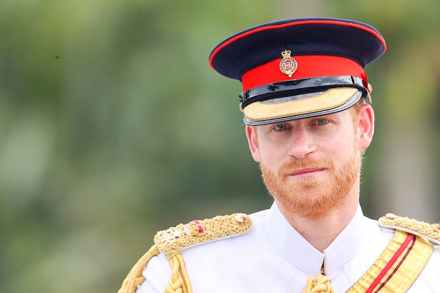
Seven years ago, when HS2 was still officially costed at £33 billion, I wrote that I was looking forward to using my pensioner’s rail pass on it ‘early in the reign of hugely popular, three-times-married King Harry, in whose favour his elder brother will abdicate after his 50th birthday’. Now HS2’s upper cost estimate has reached £106 billionand the northern spur of the track may not reach Leeds until 2040, when my pass and I will surely have expired. There’s still a possibility all this will happen — high-speed rail and Harry’s coronation, that is — but both look less likely by the day. And after a decade of defending HS2 against all-comers, I fear I must review my position.

Never mind the royals – the real national crisis is at John Lewis

Asked to name British institutions they’d rather not see shaken to the foundations, many consumers would list the John Lewis Partnership and its Waitrose supermarket subsidiary just behind the House of Windsor. Indeed some might rank the employee-owned retail group ahead, on the grounds that Her Majesty’s family doesn’t sell Egyptian cotton sheets and organic celery juice. A fall into losses, a management bloodbath and a threat to John Lewis’s distinctive business model really is, in its way, a national crisis. As you flick from one online retailer to the next, pondering how to spend the saving you just made on a load of Lidl groceries, you may ask why John Lewis still matters.

All forecasts are off if Iran shuts the Strait of Hormuz

From our US edition

Just when you thought it was safe to go back in the water…late last year, a range of forecasts suggested that the likelihood of recession in the US, with knock-on effects for the rest of the developed world, had significantly diminished. Last summer, many economists were putting the chance of a substantial downturn at 50 percent but by November, Goldman Sachs had marked it down to 24 percent and Morgan Stanley to ‘around 20 percent’. Underlying this shift were strong corporate earnings and consumer spending, plus rising hopes of a settlement of US-China trade tensions. Last month saw a sell-off of safety-first government bonds reflecting the mood, and the FT’s end-of-year forecasts included a confident ‘No’ to ‘Will the US go into recession?

hormuz

All forecasts are off if Iran shuts the Strait of Hormuz

Just when you thought it was safe to go back in the water… Late last year, a range of forecasts suggested that the likelihood of recession in the US, with knock-on effects for the rest of the developed world, had significantly diminished. Last summer, many economists were putting the chance of a substantial downturn at 50 per cent but by November, Goldman Sachs had marked it down to 24 per cent and Morgan Stanley to ‘around 20 per cent’. Underlying this shift were strong corporate earnings and consumer spending, plus rising hopes of a settlement of US-China trade tensions. Last month saw a sell-off of safety-first government bonds reflecting the mood, and the FT’s end-of-year forecasts included a confident ‘No’ to ‘Will the US go into recession?

I was born to be a pantomime Dame (oh yes I was!)

‘Flamenco, lambada/ But hip hop is harder/ We moonwalk the foxtrot/ Then polka the salsa…’ I’m sure you know those lines from the Spice Girls’ anthem ‘Spice Up Your Life’, which happens to be the biggest song-and-dance number in this year’s Jack and the Beanstalk pantomime at Helmsley Arts Centre in North Yorkshire. It’s also a spotlight moment for the Dame, who’s required to wiggle extravagantly downstage then pirouette for the next line — ‘Shake it, shake it, shake it’ — and do just that. I’m told it’s called twerking. And yes, the Dame is me, your veteran weekly business columnist. How did I get here? You may well ask.

Neil Woodford could do the washing-up at my fantasy Christmas lunch

It’s the season for kindness and conviviality. In that spirit — and recognising that business, like personal life, rarely follows an easy or predictable path — here’s a list of corporate heroes and anti-heroes who deserve your sympathy and a place at my fantasy Christmas table. First, those who are moving on. Bob Dudley put BP back on its feet after the Gulf of Mexico disaster; if many shareholders thought he was paid too much for doing so, he can make amends by bringing the wine. Ross McEwan didn’t solve all the problems of RBS, but dragged the crippled bank a long way back towards normality. Mario Draghi gave new clout to the European Central Bank.

Take note, Peloton: sweaty blokes make safer marketing

You’ll have had enough of politics and punditry, so let me introduce a non-political City debate (even if rather a technical one) around the M&G Property Portfolio. Founded in 1931, M&G is a trusted brand in collective investment products for middle-class savers but appears to have done what we might nowadays call ‘a bit of a Woodford’: namely, it has temporarily closed its £2.5 billion property fund for investor redemptions, having reaped rich fees in recent years despite what the FT calls ‘substandard performance’. The fund in question owns a wide spread of UK commercial properties, 40 per cent of them in the struggling retail sector.

The RMT strike is a demonstration of what to expect in a Corbyn-McDonnell regime

It’s unusual for a Governor of the Bank of England to announce his next job before Downing Street has named his successor. In Mark Carney’s case, the new role turns out to be an unpaid, part-time one as the UN’s special envoy for climate action and finance, so no protocol has been breached — though the announcement will serve as a reminder to Chancellor Sajid Javid or whoever succeeds him to let the long--suffering Canadian escape his Threadneedle Street prison as swiftly as dignity allows after election day. What’s significant is the confirmation this news offers that ‘climate risk’ has moved into the mainstream of financial and corporate life.

There’s no need to mourn the loss of Uber’s London licence

Early experiences of Uber in London did not encourage me to become a regular user. My first driver thought I wanted to go to Birmingham when the ride had been booked from Clapham to Mayfair. The next was a furious driver who would have seen off Lewis Hamilton at Hyde Park Corner. Call me old-fashioned, but I still prefer the pottering black cab with its opinionated Essex-dweller at the wheel and the possibility of paying in cash. So my own modus operandi is unaffected by Transport for London’s decision not to renew Uber’s licence in the capital and I’m not in the least upset about it. OK, life today is all about apps, cashless convenience and the individual’s right to make choices and take risks.

There’s no need to mourn the loss of Uber’s London license

From our US edition

Early experiences of Uber in London did not encourage me to become a regular user. My first driver thought I wanted to go to Birmingham when the ride had been booked from Clapham to Mayfair. The next was a furious driver who would have seen off Lewis Hamilton at Hyde Park Corner. Call me old-fashioned, but I still prefer the pottering black cab with its opinionated Essex-dweller at the wheel and the possibility of paying in cash. So my own modus operandi is unaffected by Transport for London’s decision not to renew Uber’s license in the capital and I’m not in the least upset about it. OK, life today is all about apps, cashless convenience and the individual’s right to make choices and take risks.

uber

Even Elon Musk thinks Brexit Britain is a risky prospect

Having been awarded the title of business editor of this paper by Boris Johnson in his former incarnation, I know more than most people about the extent of his interest in how businesses succeed or fail, what motivates those who run them and what they want from government. The answer is that his attention span for such subject matter is vanishingly small and that the opportunity to address the CBI conference in the midst of an election campaign would have been no more stimulating for him than a request to pop in and say something funny at the retirement party of a Downing Street doorman whose name he’d never learned.

Disruptor

For the grand finale of the second year of our Economic Disruptor Awards, sponsored by Julius Baer, we returned to the same atmospheric science-fiction venue: London’s Postal Museum at Mountpleasant, with its still-working Mail Rail miniature underground train that, until 2003, shuttled sacks of letters between the capital’s major sorting offices.   Imagine it as a scale model of HS2 and tell us what you think of that whole blighted project, said Spectator chairman Andrew Neil in his prize-giving speech.

Why China is planting its flag on what’s left of British Steel

It cannot be other than good news that a rescuer has been found for the bankrupt remains of British Steel, and in particular for its ‘long products’ plant at Scunthorpe — even if the buyer, at a token £50 million but with a promise of £1.2 billion of investment, is a little-known Chinese group, Jingye, owned by a former communist party official, Li Ganpo. Jingye has stepped in after potential offers from the Anglo--Indian tycoon Sanjeev Gupta and a Turkish steelmaker, Ataer, failed to firm up. Some 4,000 British Steel jobs, and many more in its supply chains, will be saved if this deal goes through. But still we might wonder at Jingye’s motivation.

Drill down and it’s obvious: the fracking debate was lost long ago

Five years ago this week, George Osborne as chancellor announced a scheme to place tax revenues from shale gas fracking in Lancashire and Cheshire into a ‘sovereign wealth fund for the north of England’. Soon after that, a leaked memo revealed him urging fellow ministers to intervene with planning authorities to fast-track fracking proposals and in particular to help Cuadrilla, the company whose drilling near Blackpool caused a seismic tremor in August big enough to give the current government reason to impose a moratorium on fracking ‘until and unless’ it’s judged completely safe. Jeremy Corbyn probably isn’t wrong when he calls this ban ‘an electoral stunt’.

Sajid Javid has become the doormat Chancellor

Mario Draghi, who retired as president of the European Central Bank this week, was arguably the first holder of that office to win international respect for himself and his institution. The ECB’s founding chief, the downbeat Dutchman Wim Duisenberg, was undermined on all sides but especially by the French — who eventually succeeded in replacing him with their own Jean-Claude Trichet, whom no one remembers for much beyond meddling and posturing and the acquittal from scandal at home that freed him to take up the ECB job in the first place.

Is living at sea the best way to escape this Brexit nightmare?

The first time I was ever commissioned by the Daily Mail, the voice on the phone said: ‘You used to be a banker, you must know all about fraud. Everyone else is saying the SFO is rubbish, so we want a piece that says “We support the fraud fighters”.’ Not my field, I said, and possibly not my opinion. ‘Are you a journalist or aren’t you?’ barked the voice. ‘A thousand words by teatime.’ I wrote the piece and the BBC rang twice the next day to interview me as a City fraud expert.

Why I welcome the collapse of Facebook’s currency

When Facebook announced details earlier this year of a global digital currency called Libra — backed by a roll call of other corporate giants — I declared myself a sceptic on the grounds that behind its libertarian sales pitch, the concept was really ‘a power-grab for cash balances and personal data out of the conventional banking system’. Furthermore, ‘since when did any project originated by Mark Zuckerberg and his pals have the good of the world as its prime objective?