Martin Vander Weyer

Martin Vander Weyer

Martin Vander Weyer is The Spectator’s business editor

Tinkering with VAT won’t make us trust the government

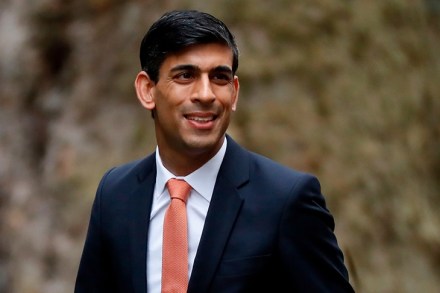
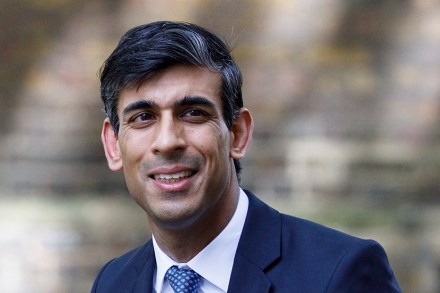
Should Chancellor Rishi Sunak cut VAT as an emergency stimulus to the consumer economy? When Labour’s Alistair Darling made a 2.5 per cent £12 billion cut after the 2008 crash, I called it ‘an unconvincing and expensive gambit’, on the basis that shoppers would barely notice and that ‘far more significant will be the general level of confidence as it is affected by business failures and job losses… and the general grimness of global economic news’. The same applies today only more so, given that inflation is dormant, households’ pent-up spending power has in many cases been boosted by lockdown and the top VAT-cut winner would likely be Amazon. By all means relax Sunday trading laws and restrictions on outdoor food and drink service.

Is there anywhere visitors will be welcome this summer?

Do stock markets foretell the future while politicians fudge and economists mumble? No: share prices collectively have a life of their own — driven by herd mentality, weight of money and the available range of investment choices — which indicates little more than the simple fact that what goes up must one day come down and vice versa. Both the FTSE100 and America’s S&P500 indices lost a third of their value between late February when the pandemic began to look serious and a month later when the rate of virus transmission was at its height. So far, so logical. But since then, both have sustained rallies that defy all public and corporate pessimism. Now, just as shops and factories are reopening, both markets look ‘overbought’ and wobbly again.

How entrepreneurs have turned to face this crisis

The Spectator’s Economic Innovator of the Year Awards 2020, sponsored by Julius Baer, closes for entries on Wednesday 1 July. Don’t miss the deadline: we’re eager to hear from entrepreneur-led businesses in every sector and region of the UK whose products are changing their markets, have potential for global success — and have made positive social impacts during the coronavirus crisis. We’re also fascinated to know how entrepreneurs have adapted their business models to help fight Covid-19. Here’s one inspirational story — of Touchlight, the pioneering bioscience venture that was the overall runner-up in our 2018 Awards. ‘We had a fundamental choice,’ says Touchlight founder Jonny Ohlson.

Who would want to come to Britain for a holiday now?

All logic suggests that the 14-day quarantine for arrivals from abroad really is, as Michael O’Leary of Ryanair put it, ‘a political stunt’. The best explanation is that it was conceived in Downing Street — with minimal consultation, unless someone rang Armando Iannucci, writer of The Thick of It — as a sop to focus-group xenophobia and parental anxiety, as well as a show of grip after the Dominic Cummings debacle. Its absurdity is highlighted by news that the West Indies cricket squad is now quarantined, while 122 high-goal polo players were reported to have beaten the deadline by slipping in last Saturday on a charter flight from Buenos Aires via the Covid cauldron that is São Paulo in Brazil.

Our theatres are dark – and in danger

Car showrooms are open again: some dealerships, with a hint of forgivable hyperbole, report a surge of pent-up demand. And after building only 197 new cars this April, compared with 71,000 in April 2019, car factories are returning to production — even if under new safety rules that will slash productivity for the duration and accelerate the shift to job-eliminating robotics for the longer term. But still the Daily Telegraph offers an uplifting glimpse of Land Rover’s Solihull plant emerging from hibernation: ‘At 5 a.m., as the first shift came in, every production manager was out in the car park to greet returning staff.

Bailing out businesses looks inevitable – but it’s not all bad

Should the government be prepared to take equity stakes in major companies that will struggle to survive the current crisis? That’s a question already on the table in relation to Jaguar Land Rover and Tata Steel, and likely to arise for British Airways, aero engine maker Rolls-Royce and others. We’re told Chancellor Rishi Sunak is working on a plan, called Project Birch, to bail out ‘viable companies which have exhausted all options’ and whose collapse would ‘disproportionately harm the economy’. That means large-scale loan support first, with conversion to equity as a last resort — and to some pundits it smacks of the 1970s interventionism that left swathes of under-performing British industry addicted to state subsidy.

Rico Back’s departure is a first-class opportunity for Royal Mail

The Royal Mail worker who rang my bell to deliver an Amazon package on Friday was wearing a glittery ball gown because she and her colleagues were fundraising for local hospitals: ‘Two thousand quid so far,’ she said cheerily as she accepted my donation and thanks. But if I had asked her what she thought of the performance of her ultimate boss Rico Back — chief executive of Royal Mail until his sudden departure after less than two years in the job — I suspect she might not even have recognised his name, so remote has this German-born, Swiss-resident big shot been from the front line of his organisation’s role in keeping us all in touch with each other during the lockdown.

Uncertainty is also an opportunity

The Spectator’s Economic Innovator of the Year Awards 2020, sponsored by Julius Baer, are open for entries. Innovation will be vital in the fight against the Covid-19 pandemic and in the recovery phase that follows. We’re looking for entrepreneurs in every sector and region of the UK whose products are changing markets and have the potential for global success. We’re especially keen to identify ventures that are making valuable social impacts during the current crisis. We’re also fascinated to know how entrepreneur-led businesses are coping with the lockdown. Here are two such stories — of The Floow and ReBound, respectively the North East and Midlands regional winners of our 2019 Awards. Entrepreneurs are optimists by nature.

It’s mavericks like Elon Musk who’ll get us through this crisis

This month’s most significant corporate deal attracted less attention than it might have done in normal times, crowded out by grim news elsewhere. It is the proposed £31 billion merger of O2 and Virgin Media to create a telecoms giant with 46 million customers. Following BT’s 2016 acquisition of the mobile operator EE, further ‘convergence’ in the sector had been expected, but the mid-lockdown timing was spun as a vote of confidence in the UK, described as ‘one of the most attractive markets on Earth’ by José María Alvarez--Pallete, chief executive of Telefónica of Spain, which owns O2. Investment of £10 billion in the new group’s mobile, broadband and television platforms is promised over the next five years.

Now is not the time to throw money at airlines

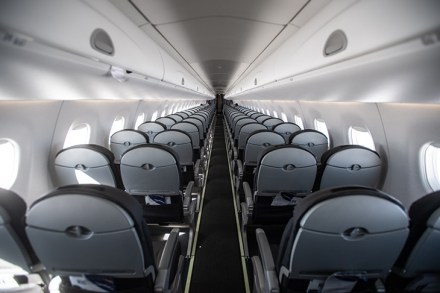
British Airways warns of 12,000 redundancies. Ryanair announces 3,000 job losses as ‘a minimum to survive the next 12 months’; Virgin Atlantic adds 3,000 more. The aero engine makers Rolls-Royce and GE talk of more than 20,000 job losses between them. Of all the sectors hard hit by pandemic, aviation is one whose prospects look blighted as far as the horizon. What should governments do about it? Global trade will return to pre-crisis levels, but business travel may never do so: why would companies bear the risk and expense when video-conferencing is so cheap and efficient? Even if vaccines against Covid-19 are available by next year, international travel will be constrained by fear of the next virus.

Rishi Sunak must stick to his guns

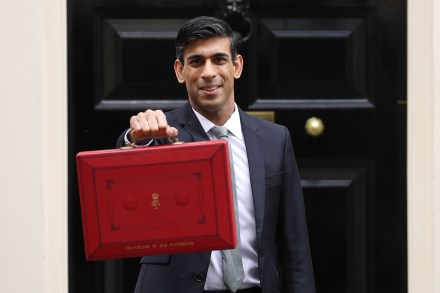
Was the Chancellor wrong to guarantee only 80 per cent, rather than 100, of ‘coronavirus business interruption loans’ to keep small- to medium-sized companies afloat? Rishi Sunak’s announcement this week of fully guaranteed micro-loans for the smallest companies seeking to borrow up to £50,000 was reported as a partial climbdown in the face of pressure from the CBI and many of his own MPs to do away with the on-risk slice of the larger scheme, which provides loans of up to £5 million through 40 accredited banks — but which many would-be borrowers have claimed is a bureaucratic nightmare. Readers certainly confirm that picture.

Will GSK show us what ‘purpose before profit’ really means?

Keep your eye on GlaxoSmithKline. The UK-based multinational drug-maker represents the future, both as a mass-producer of the vaccines that we pray will finally defeat Covid-19 and as a beacon of the way shareholder capitalism will re-position itself in the post-pandemic era. GSK last week announced a collaboration with its French rival Sanofi to create a Covid-19 vaccine that it aims to manufacture at the rate of ‘hundreds of millions of doses annually’ by the end of next year. That’s 20 months before we might begin to feel safe again but still ‘a significantly faster timeline than for normal vaccine development’.

A lesson in survival from pre-21st century Marks & Spencer

When I wrote last week about business-to-business pain-sharing for survival, I was naturally thinking first about UK companies. I say ‘naturally’ because in every aspect of this crisis, ­national interest has, as it were, trumped trans­national co-operation. That’s particularly the case where medical supplies are concerned — as in the US President’s attempt to stop the Minnesota-based manufacturer 3M exporting respirator masks to Canada. But wider questions about global supply chains have been brought into focus by one vivid case: the wipe-out of fashion orders from factories in Bangladesh, Cambodia and Vietnam, whose operatives — low-paid but lifted by their jobs out of greater poverty — are the flagbearers of globalisation en masse.

How the banks can avoid another kicking

Ah yes, the banks. They weren’t in the front line when the crisis began, but it wasn’t going to be long before they came in for a kicking. Sure enough, they’ve just had one for throwing bureaucratic hurdles and demands for personal guarantees in the way of the government’s business interruption loan scheme and for resisting a Bank of England directive to cancel £7.5 billion of dividends to shareholders, cash that would be better used to bolster reserves against a coming tide of bad debts. They backed down on both issues but, disliked and distrusted as they have been since 2008, they’ll always be a target for snipers — and bank bosses need to remember two things.

Innovators are vital to this fight

The Spectator’s Economic Innovator of the Year Awards 2020, sponsored by Julius Baer, are open for entries. Innovation in many spheres will be vital in the fight against the Covid-19 pandemic and the recovery phase that follows. So we’re looking for entrepreneurs in every sector and region of the UK whose products are changing their markets in terms of price, choice or technology, and have potential for global success. We’re also looking for ventures that are making valuable social impacts during the current crisis. Here’s one such story.

At least some of the Chancellor’s promises are actually working

The phrase ‘sharing economy’ was coined a decade or so ago to describe collaborative new business models made possible by the internet, from Airbnb and Uber to crowdfunding, peer-to-peer lending and skill bartering sites. It was about ways of monetising assets, circulating capital and earning casual livings that boosted economic activity after the ‘great recession’ and it will be a hive of creativity in the next recovery — even though its partner is the ‘gig economy’ whose insecurity has left so many people in hardship now.

Spare a thought for the poor estate agents

The suspension of the residential property market is disheartening for those who were hoping to buy a first flat or new-build house this spring. But spare a thought also for estate agents, who are usually well back in the queue for public sympathy but are nevertheless a familiar part of our high-street fabric, their windows and websites feeding the national aspiration to home ownership that also fills so many hours of Kirstie-and-Phil television. With government urging completions to be deferred, mortgage lenders tightening their terms, viewings and removals impossible and shares in the bellwether London agency Foxtons down by half, the whole sector is now in what Niraj Shah of Bloomberg Economics calls ‘an induced coma’.

Entrepreneurs can help solve this crisis

In times of crisis, we need innovators more than ever. In the Covid-19 pandemic, we’re experiencing the most disruptive force the modern world has ever seen. So much so that ‘Disruptor’ no longer feels the right word to use in our search for the UK’s brightest entrepreneurs — which we’ve renamed The Spectator’s Economic Innovator of the Year Awards. With our sponsor Julius Baer, we’re looking for ventures across the UK that are changing their markets in terms of price, choice, access or technology, have potential for global success, and are making valuable social impacts — especially in the current circumstances.

Have you been invited to a Zoom cocktail party yet?

The CBI’s guidelines on ‘best practice for business’ during the pandemic tell the 1,500 larger companies that make up the lobby group’s core membership to prioritise employee welfare while also asking ‘how can we help’ government and society to manage the crisis. So far so good. But the notes don’t say ‘Consider a temporary cut in senior executive salaries’. And that is what I think they should all be doing, sooner rather than later, both as a gesture of immediate solidarity and as a move to avert a longer-term backlash against wealth, privilege and the pillars of capitalism. The trend has already begun in the all-but-grounded airline sector.

Airlines are no special case when we all need a bailout

The world needs airlines — and, barring Armageddon, will still have some when this crisis is over. It will also still have aircraft, pilots and airports. The aviation industry, accustomed to volatility as it is, should be well capable of restructuring and regrowing in response to renewed demand, even if bankruptcies are left behind. I know that sounds glib, but airlines on both sides of the Atlantic have been loud in calling for state aid as traffic has collapsed — and in the cruel process of deciding how governments can equitably relieve the virus’s financial impact on every business and family, all such claims demand scrutiny.