Martin Vander Weyer

Martin Vander Weyer

Martin Vander Weyer is The Spectator’s business editor

If investors are fleeing to gold this is not the time to be smug

It came as no great surprise that the UK economy contracted by 0.2 per cent in the second quarter, following a first quarter in which growth had been artificially boosted to 0.5 per cent by stockpiling ahead of the original 29 March Brexit deadline. It’s fair to claim, as our editorial did two weeks ago, that the UK has performed better than expected for the past three years — particularly in terms of job numbers, which rose again in April to June despite the growth setback. True also that we’re in no worse shape than our European neighbours, and that our flexible, if painful, exchange rate will help us cope with a downturn.

2019 finalists lunch – Midlands

This blog comes to you from the library of Hampton Manor, a Victorian mansion deep in the woods somewhere south of Birmingham. And if that sounds like the setting for a game of Cluedo, it isn’t: I’m here to meet three of the Midlands regional finalists for this year’s Economic Disruptor Awards. Our host is Mark Embley, regional manager for the Awards sponsor Julius Baer; with us as guest judges are Juliet Barratt, co-founder of the Grenade brand of ‘healthy snacks’, now a multimillion pound business, and Clive Bawden, a corporate financier who coaches entrepreneurs, has interests in sports administration, and is part-time COO of last year’s regional winner Warwick Music.

Should we be sad or happy that the pound has buckled?

A wave to the FT team whose weekend feature on how the pound has been hit by fears of no deal began with this arresting sentence: ‘Sterling has finally buckled.’ I almost spilled my café crème as I read that in a sunlit French square and contemplated JP Morgan’s ‘conservative’ forecast of a $1.15 no-deal exchange rate, with a possible further 10 per cent fall beyond that, to compare with $1.50 before the referendum and ‘purchasing power parity’ (per UBS) of $1.57. As for the euro, more in a moment — but we’re already only a whisker from pound-euro parity. Should we be upset by this decline of a national symbol whose name, sterling, also means ‘excellent or valuable’?

2019 finalists lunch – London and The South

We’re in the elegant City dining room of our sponsor, Julius Baer, hosted by Chief Executive Officer David Durlacher and joined by guest judges for London & the South: venture capitalist Kjartan Rist and serial-entrepreneur-turned-anti-plastic-campaigner Sian Sutherland. Nine regional finalists are with us to talk about their businesses, making for a tight discussion timetable, but this was one of our best sessions yet, introducing an amazing range of innovative business ideas. First, we heard from Ian Strang, founder of Beyond, the UK’s first price comparison website for funerals, which also offers other services, such as will-making and funeral finance, all designed to improve the consumer experience of everything around death.

Three more London & the South regional finalists

Talking to entrepreneurs is so much more fun than the endless arguments about Brexit and Boris — the lot of jobbing journalists these days. This blog covers the three London & the South regional finalists for the 2019 Economic Disruptor of the Year Awards who were unable to join us this week for lunch at the offices of our sponsor, Julius Baer. I talked to them individually instead — and all three gave very persuasive pitches, particularly in terms of the social impact of their businesses. First, former aerospace engineer Mat Oram told me about AdviseInc, which helps Health Service procurement managers achieve better value for public money by gathering and analysing price data on up to two million products regularly purchased by the UK’s 230 NHS trusts.

Is ‘turbocharging’ the new code for Keynesian crisis spending?

‘Turbocharging’: sounds exciting, doesn’t it? Two weeks ago, I noted that our incoming PM had deployed this power-word — with its subliminal reminder of his pedal-to-the-metal reputation as the former motoring correspondent of GQ — to describe what ‘free ports’ would do to regional economies. Since then, it has clearly been scrawled on Dominic Cummings’s Downing Street whiteboard: Foreign Secretary Dominic Raab and Chief Secretary to the Treasury Rishi Sunak were also bandying it around this week.

Meeting the North East Regional finalists 2019

Our first regional finalists lunch took place in Leeds, at the subterranean Gaucho restaurant, whose black-and-silver decor contributed to a TV-studio ambience that made our North East finalists a bit nervous at first. But the mood relaxed thanks to the geniality of our guest judges — distinguished Yorkshire businessman Gordon Black and (representing the ‘true North East’) Caroline Theobald who chairs the advisory board of Newcastle Business School at Northumbria University. Caroline was quick to observe that all four of this year’s finalists happened to be from Yorkshire, having been picked ahead of several very interesting (but in some cases, too early-stage) entries from her own part of the country.

Bosses beware: one ill-chosen word can cripple your career

The list of business leaders who have damaged their careers with a single word famously begins with Gerald Ratner, who wiped half a billion off the value of his jewellery chain in 1991 by describing one of its offerings as ‘crap’. Then there was Bank of England deputy governor Ben Broadbent, whose chance of succeeding Mark Carney plunged after he picked ‘meno-pausal’ to describe an economy past its productive peak. Now Standard Chartered chief executive Bill Winters has blighted his remaining time in post by telling shareholders they were ‘immature’ to have voted against his massive pay package.

Are Boris’s pro-business promises the defibrillator we’ve been waiting for?

Back when Boris Johnson was editor of this magazine and MP for Henley, I was with him at a Tory party conference in Bournemouth. He was about to speak at a meeting on transport policy. An intern rushed up with some random downloaded pages, having evidently been told to Google ‘transport policy’. Boris grasped the papers, ran his hands through his hair, revved the rhetorical engine, launched into an old gag about how many times his bicycle had been stolen — and brought the house down. His improvisations swooped, soared, hit and missed for a hilarious quarter-hour before the big finish: ‘Jogging along your lovely seafront here in… ah, err, Bournemouth this morning, I came across a padlocked kiosk that bore a sign saying “This kiosk is alarmed”.

Deutsche Bank is right to return to its domestic roots

Among the numbers attached to the restructuring of Deutsche Bank announced by Chief Executive Christian Sewing this week, the 18,000 job cull is most startling. But others tell the story just as vividly. First, the fact that the venerable institution, a pillar of Germany’s post-war economic resurgence, had raised €30 billion of new equity in the past decade in pursuit of a dream of becoming ‘Europe’s Goldman Sachs’ — but that sum is double its current shrivelled market capitalisation. Second, its most recent investment banking boss Garth Ritchie is leaving with an €11 million payoff, having collected ‘about €36 million’ over three years in which it became obvious his division was fit only for the axe.

Economic Disruptor of the Year Awards 2019 – the regional finalists

We’re pleased to announce the regional finalists for The Spectator's Economic Disruptor of the Year Awards 2019, sponsored by Julius Baer. We were delighted to receive some 50 per cent more entries this year — including many more from the regions outside London and the South. Business sectors represented range from fintech to funerals, and from ‘big data’ to dating. The full set of entries illuminates how entrepreneurs are addressing today’s pressing social and environmental issues, whether that be food waste and sustainable packaging, or the decline of town centres and the shortage of affordable housing, or the need for greater efficiencies in the NHS.

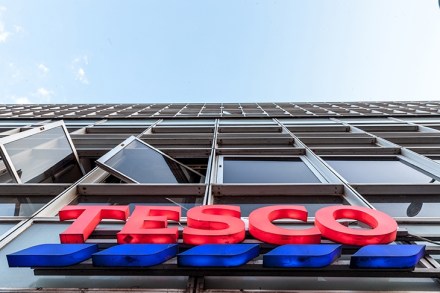
Why the wheel of fortune is turning in Tesco’s favour again

How surprising to read one former Tesco chief, 82-year-old Lord MacLaurin, badmouthing another, Sir Terry Leahy. The surprise is because both were titans of their trade and Leahy has always been seen as Ian MacLaurin’s protégé: it was MacLaurin who took Tesco to the top of the UK supermarket league in the mid-1990s, then Leahy who quadrupled its sales, profits and share price between 1997 and 2011 to make it the monster we know. But Leahy also took Tesco into a disastrous US grocery venture and — according to MacLaurin, talking to the Sunday Times — started ‘the rot’ that brought the company low by 2014, leaving the blame to be taken by his own successor, Philip Clarke.

An American in Cardiff

The Spectator’s Economic Disruptor of the Year Awards 2019, sponsored by Julius Baer, celebrates innovative businesses throughout the UK that are disrupting their markets and have the potential for rapid growth, nationally and internationally. In the last of our current series of inspirational personal stories behind last year’s finalists, Martin Vander Weyer talks to Chris Ganje, chief executive and co-founder of Cardiff-based Amplyfi, which claims to transform business research through ‘unbiased machine-driven analysis’ of a vast range of internet sources. I wouldn’t classify myself as a techie,’ says Chris Ganje, in his soft Midwestern accent.

We should never have expected the SFO to bring banks to justice

Friends of former Barclays chief executive John Varley — I don’t mean ‘people who speak to the media on his behalf’, but rather people like me who have known him all our working lives and hold him in high regard — were relieved to hear he has been cleared of fraud charges relating to the bank’s 2008 capital raising from Qatar. Charges against Barclays itself were dropped last year but Varley’s co--defendants Roger Jenkins, Tom Kalaris and Richard Boath now face a retrial — so I’ll say no more for now about the Serious Fraud Office’s handling of this dossier. But it’s fair to ask, in general, how well our criminal justice system has dealt with the ramifications of the financial crisis.

Is Green’s deal with his creditors the beginning of another scandal?

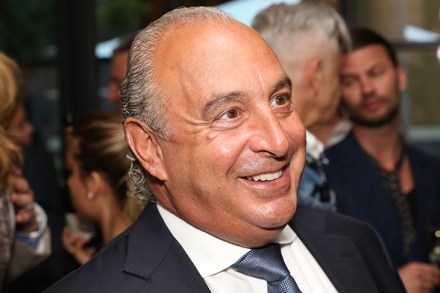
There’s a palpable urge elsewhere in the media to see Sir Philip Green come to grief, whether as a result of allegations, denied by him, that he ‘spanked and groped a Pilates trainer’ in Tucson, Arizona, or through the collapse of his Arcadia retail empire, which includes Topshop and Burton, even if that were to involve thousands of job losses and hundreds of empty shops. So there were mixed reactions to the news that Arcadia has succeeded, after months of hardball negotiation, in signing a Company Voluntary Arrangement (CVA) with a required majority of its creditors, including its major commercial landlords, that will cut its cost base by securing rent cuts on 200 stores and enabling it to close 23 others.

Moral of the Woodford saga: if you want to back start-ups, do it yourself

Hounds are baying for the blood of former star investment manager Neil Woodford, whose shrinking funds have closed for withdrawals. His promoters such as the broker Hargreaves Lansdown have also been taking media flak, as has the Financial Conduct Authority, whose critics say it should have spotted the problem early and intervened. There are suggestions that Woodford and his associates have made ‘a huge pile of money’ (to quote Merryn Somerset Webb in the FT) out of an over-puffed venture in which small investors are now stuck — and that all those responsible should queue up for a public lashing from the Treasury select committee. So it goes: as a parable of financial hubris, this looks like an open-and-shut case.

In favour of nationalisation? Take a look at Network Rail

We don’t hear enough about Network Rail these days. By that I mean that the entity recently described by the Sunday Times as ‘synonymous with incompetence and delays’ doesn’t receive anything like the abuse it deserves for failing to provide the infrastructure essential for a 21st-century railway. I refer you to the Crossrail project, in which the inability of new trains to connect with old Network Rail signalling systems is one reason for the delayed opening that has become a major national embarrassment. I invite you to observe LNER’s expensive new fleet of Azuma bullet trains that were due to launch in December but delayed by incompatibility with Network Rail signals.

Should we fear Facebook’s cryptocurrency?

From our US edition

The cryptocurrency winter has turned to spring: having slumped from $20,000 in late 2017 to $3,200 a year later, bitcoin has lately risen like a rocket to $8,800. Though it doesn’t change my negative opinion, I admit that if I had bought a fistful of these wacky gaming chips last October when I gave the crypto concept a kicking at our Spectator conference on the subject, I’d be up almost 40 percent. Evidently, hints from the US Federal Reserve and the European Central Bank that further bouts of ultra-low interest rates and quantitative easing may be in the offing have spurred what the FT calls ‘a rally in riskier assets’. Crypto is the new gold for those who distrust central banks and seek stores of wealth that governments can’t reach.

cryptocurrency

How afraid should we be of Facebook’s cryptocurrency?

The cryptocurrency winter has turned to spring: having slumped from $20,000 in late 2017 to $3,200 a year later, bitcoin has lately risen like a rocket to $8,800. Though it doesn’t change my negative opinion, I admit that if I had bought a fistful of these wacky gaming chips last October when I gave the crypto concept a kicking at our Spectator conference on the subject, I’d be up almost 40 per cent. Evidently, hints from the US Federal Reserve and the European Central Bank that further bouts of ultra-low interest rates and quantitative easing may be in the offing have spurred what the FT calls ‘a rally in riskier assets’. Crypto is the new gold for those who distrust central banks and seek stores of wealth that governments can’t reach.

A very different kind of law firm

The closing date for The Spectator’s Economic Disruptor of the Year Awards 2019, sponsored by Julius Baer, is Friday 7 June. We’re eager to hear from innovators in every part of the UK who are disrupting their marketplace in terms of price, choice and accessibility and have the potential to scale up, nationally and internationally. Meanwhile, in the latest in our series of inspirational personal stories behind 2018’s Disruptor finalists, Martin Vander Weyer talks to Gary Gallen, founder of Rradar, a Hull-based law firm that offers digital solutions to reduce legal risks for smaller companies. Gary Gallen’s entrepreneurial journey began in grittier circumstances than most.