Martin Vander Weyer

Martin Vander Weyer

Martin Vander Weyer is The Spectator’s business editor

Will the energy price spike bring down Boris?

What does the new year have in store for consumers — and families trying to make ends meet? A stumbling recovery at best, with a continuing tide of inflation that I predict will swiftly pass the Bank of England’s current forecast of ‘around 6 per cent by spring 2022’ and take much longer to turn than the Bank’s Cnut-like posturing seeks to suggest. And driving that surge will be the energy price spike, which could be the factor — far more potent than endemic sleaze and proven incompetence — that topples the Johnson regime. Fact: wholesale natural gas prices have quadrupled in the past year.

Inflation, rates and dividends: A financial review of 2021

36 min listen

The world economy is bouncing back from the impacts of Covid 19. It has been bumpy year of recovery which has included labour shortages and consistent inflationary pressures. But it hasn't been all doom and gloom. Kate Andrews, the Spectator's economic's editor reviews this financial year. She is joined by Martin Vander Weyer, the Spectator's business editor and Paul Abberley, chief executive of Charles Stanley group. This podcast is kindly sponsored by Charles Stanley. The recording took place just before the Bank of England announced the rise of interest rates to 0.25%.

Gastro-nomics: a foodie’s guide to a changing world

Twice recently I’ve been asked my opinion of ‘Doughnut Economics’. The first time, I was tempted to cover my ignorance with a Johnsonian impromptu riff on supply-chain issues in the deep-fried batter sector. But sensing seriousness I steered off and googled the phrase later, so I was ready the second time to discuss Kate Raworth’s 2018 book of that title, about why we should abandon pursuit of GDP growth in favour of a gentler model in which we take better care of nature and each other — illustrated by her ‘doughnut of social and planetary boundaries’.

Don’t strand Cambo until our energy future is secure

If the phrase ‘stranded asset’ hasn’t yet entered your vocabulary, here’s a useful example of what it means. The 178 million barrels of oil in the Cambo field west of Shetland may stay there for ever because of government shilly-shallying over whether and when to end exploitation of the UK’s remaining hydrocarbon resources — while we import equivalent volumes of oil or gas from the Middle East, Norway and Vladimir Putin’s Russia, just to keep our lights on.

For industry, the pandemic isn’t over yet

‘So you think it’s all over? Ho ho ho!’ That’s the message from Satan’s dark laboratory (twinned with Wuhan’s) where the Omicron variant turns out to have been bubbling in its test tube while we dared to resume our normal lives during the autumn. But whether that ugly little globule ruins Christmas or proves to be largely a scare story, the pandemic’s disruption of business ain’t over yet either: supply chain hold-ups, labour shortages, cost spikes and debt pressures continue apace. Here, for example, is news that the UK car industry produced fewer than 65,000 cars in October, down 41 per cent on the same month last year and its lowest October output since 1956.

Why you should be wary of buy now pay later

Are you logged on to Klarna, Clearpay, Laybuy or Zilch for your Black Friday shopping binge — or are you an old-timer like me who still uses traditional credit cards and even sometimes tries to pay for purchases in cash? If those four brand names meant nothing to you, you are yet to join the millions of UK shoppers who have discovered ‘buy now pay later’ (BNPL) apps that offer, with a couple of simple checkout clicks, payment for fashion and beauty purchases, and even groceries, in a series of interest-free instalments. ‘Shopping just levelled up’ is Klarna’s witty slogan for its three-instalment offer; at Laybuy, it’s six; at Zilch, 25 per cent up-front and the rest later.

Shell’s Dutch departure is a boost for the city of London

The scrapping of most of the eastern leg of HS2, originally planned from Birmingham to Leeds, is a news item that’s been waiting like a crowded train stuck at a vandalised signal while ministers squabbled over which cheaper substitutes might appease competing pockets of ‘red wall’ voters. Likewise the ‘Northern Power-house’ high-speed line from Manchester to Leeds, which is set to be replaced by a few more trains running a bit quicker on the existing scenic route. None of this merits the title ‘Integrated Rail Plan’ which it will carry when formally announced by Transport Secretary Grant Shapps, rather than leaked in snippets. But ‘Cynical Rail Compromise’ wouldn’t have quite the same ring.

Andrew Bailey has been a bitter disappointment

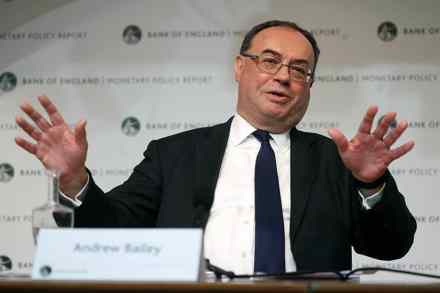
Earlier this year I drew a comparison between the Bank of England governor Andrew Bailey and the Metropolitan police commissioner Dame Cressida Dick. When appointed, both were hailed as head-and-shoulders the best qualified internal candidate for the job. Yet both have subsequently attracted volleys of flak for everything that has gone wrong on their watch. That’s a peril of the media age for any high-profile public servant. But Dame Cressida, hugely respected by fellow officers, seems to rise above it. Bailey, by contrast, is beginning to look beleaguered, a recent fiasco over interest rates having followed the rattling of several skeletons in his record as a former regulator. Many in the City now wonder whether he was ever the right man for the top job.

Entrepreneurs’ 2021 agenda: save the planet, help the NHS

When our panel of judges convened in The Spectator’s convivial Westminster dining room under the chairmanship of Andrew Neil to decide the Economic Innovator of the Year Awards for 2021, one thing several of us commented upon was the remarkable scatter-pattern of finalists across the map. From Tintagel to Belfast, from Shepton Mallet to Skipton, Redcar and Scarborough, our 27 regional finalists — drawn from a record total of more than 150 entries — seemed to give new meaning to the concept of working from home. More importantly, and contrary to the conventional view that innovation thrives best in tight Silicon Valley-style clusters, the geography of this year’s competition confirms that entrepreneurship is alive and well in every byway of the UK.

Bankers, not Greta, will save the planet

I have observed before how useful really big numbers can be in response to crises: when US treasury secretary Hank Paulson unveiled his $700 billion Wall Street bailout package in 2008, an aide famously let slip that the number had been pulled out of the air because it sounded reassuringly huge. Now we’re told that more than 450 banks and investment firms representing $130 trillion of assets (that’s 40 per cent of global savings, give or take a few soaring bitcoins) have joined the Glasgow Financial Alliance for Net Zero led by Mark Carney and Michael Bloomberg, who tell us that ramping up clean energy fast enough to avoid the worst impacts of climate change will require new investment, mostly from the private sector, ‘likely in the ballpark of $100 trillion’.

Don’t let China’s climate sins cloak its crushing of Hong Kong

China’s failure to bring anything new to COP26 surprised no one. The world’s worst carbon emitter offered no advance on President Xi Jinping’s earlier promise to reduce coal use after 2025 and bring overall emissions to a peak in 2030 — thereby negating for at least a decade much of the rest of the world’s efforts to clean up the planet. But spotlighting China as a climate sinner should not be allowed to cloak its other villainhood, as an abuser of human rights: so let’s not forget Hong Kong. The fate of the once-British enclave and its future as an international business centre have been much on my mind lately.

Why paying more dividends could save the planet

Climate emergency demands action, not rhetoric. So, on the eve of COP26, which UK news item promises to deliver the most positive impact for the future of the planet? Not, I suggest, Sadiq Khan’s extension of the Ultra Low Emissions Zone to the North and South Circulars, imposing stinging costs on owners of older diesels who can’t afford newer ones; nor Rishi Sunak’s £7 billion pledge for sustainable transport in cities outside London — only £1.5 billion of which turns out to be new money. No, the headline that matters more is the one that says dividend payments by UK companies are returning to normal.

Prince Harry is surfing an investment wave

Does the economist David Blanchflower — who I described as the Bank of England’s ‘resident wacko’ during his 2006-09 tenure on the Monetary Policy Committee and who later served as an adviser to Jeremy Corbyn — have a former pupil on the editorial team of the Today programme? I can’t think why else he should have been afforded a soft six-minute interview with Mishal Husain (addressing him by his nickname ‘Danny’) in Monday’s prime slot between Thought for the Day and the eight o’clock news. British-born, US-based Blanchflower is best remembered for declaring in 2009 that if the then shadow chancellor Osborne’s proposed spending cuts were ever enacted, ‘five million unemployed or more is not inconceivable’.

Why we should all start hoarding cash and loo rolls

If there’s anyone in Britain who knows how to keep grocery shelves stacked, it’s former Tesco chief executive Sir Dave Lewis, who has been named as Downing Street’s ‘supply chain tsar’. Application of Tesco’s mastery of logistics and fierce discipline on suppliers should keep delivery trucks moving, so long as they have drivers. But even Lewis won’t be able to avert the pre-Christmas surge of panic-buying which I’m told Cabinet Office planners fear — especially if it’s combined with a major outage in the banking system. Last week’s Facebook crash was a warning that blank screens are only a couple of burned-out circuits or a cyberhacker’s half-hour away.

Why stamp duty doesn’t add up

‘Blame it all on business’ was the Tory strategists’ answer to petrol queues and the risk of a no-turkey Christmas that threatened to distract the party-conference faithful from adulation of the Prime Minister. As spin, it might have been shocking if it wasn’t so familiar. But as an explanation of the supply crisis, the idea that business has been deaf to years of warnings that it could no longer rely on immigrant labour is hogwash, rivalled only by the proposition that spiralling wages will lead us to a fairer society — rather than contributing to a bout of uncontrolled inflation in which higher pay actually buys fewer goods because all prices are rising.

Why scrapping business rates is a bright idea

A worthwhile policy proposal amid the Labour conference dogfight? Now there’s a surprise. But shadow chancellor Rachel Reeves’s scheme to freeze and eventually scrap business rates, in the meantime boosting high-street survival by raising the threshold for small business rate relief and incentivising re-use of empty premises, was the brightest moment of the Brighton event. No matter that Reeves is likely to hold her post only as long as Sir Keir Starmer holds his and that anything promised today will resemble a Dead Sea scroll by the time Labour ever returns to power.

Is government preparing to shake the magic money tree again?

Will my bath water still be hot by Christmas? That’s not a question I’d normally feel a need to share with you, but shortly after this morning’s ablutions I read that Bulb Energy — the UK’s sixth-biggest energy supplier with 1.7 million customers, including me — ‘is seeking a bailout to stay afloat amid surging wholesale gas prices’. The spike in the global gas-price graph is extraordinary, up 250 per cent since the start of 2021 and steeper in August. It has many causes beyond our shores, including depletion of stocks last winter, restricted supplies from Russia, hurricane-hit US refineries and increased Asian demand post-Covid.

The government should be helping, not hindering, start-ups

I’m hugely enjoying meeting the finalists for The Spectator’s Economic Innovator of the Year Awards. This year’s bumper entry was strong on paths to decarbonisation — as you’d expect for the new era of climate action — and on ventures rocket-boosted by the pandemic, whether designed to take pressure off the NHS or in the ‘edutech’ field of online learning. By contrast, ‘fintech’ and consumer apps were less prominent than in earlier years, reflecting changed priorities. And come to think of it, common to all the entrants I’ve talked to so far is that not one has said: ‘We couldn’t have done it without the help we’ve had from government.

el salvador

El Salvador’s crackpot currency switch

From our US edition

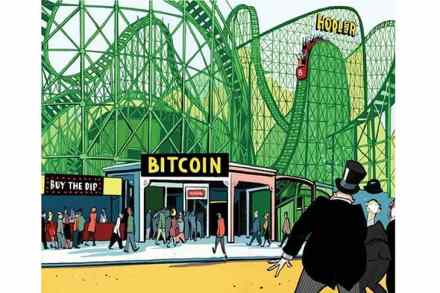
If you’re reading this in El Salvador, you’re probably taking a break from street protests against President Nayib Bukele’s adoption of bitcoin as legal tender, enacted last week. This small, heavily indebted Central American republic abandoned its own currency, the colón, 20 years ago in favor of using the US dollar — and has enjoyed relative financial stability ever since. The populist right-wing president’s insistence on shifting to the unregulated, ultra-volatile virtual currency favored by gamblers and money-launderers will supposedly bring savings of $400 million a year in commissions on the remittances from expatriate workers on which his economy depends.

What tea with the WI taught me about responsible investment

Late-breaking exam results: many of the City’s top fund managers have failed a vital test of ‘stewardship’ — defined for this purpose as ‘the responsible allocation, management and oversight of capital to create long-term value for clients and beneficiaries leading to sustainable benefits for the economy, the environment and society’. That mouthful comes from the Financial Reporting Council’s UK Stewardship Code; asset management firms seeking to become ‘signatories’ to the code were asked to submit essays describing their own investment principles, highlighting their approach to hot-button ‘ESG’ (environmental, social and governance) issues.