Lloyd Evans

Lloyd Evans

Lloyd Evans is The Spectator's sketch-writer and theatre critic

PMQs Sketch: A bemused Corbyn struggles against Cameron’s mockery

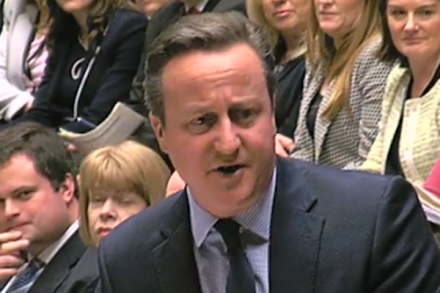
Corbyn had an open goal at PMQs. Cameron is weaker than he’s ever been. His favoured successor is toast. His party are restive and mutinous. Three months from now the retirement committee may gather around the PM with tense smiles and whetted blades. All Corbo had to do was kick straight. But asking the Labour leader to bang the ball into an undefended net is like asking a fish to sing ‘Heroes’. Up he got, looking a little bemused, like an elderly patient called unexpectedly to his hearing-aid appointment, and he set about his flat-battery attack. It hardly helped that he’d been greeted by a tinkling silence from his own side. Labour members had spent the morning absorbing the bad news about their boss.

Nuclear waste

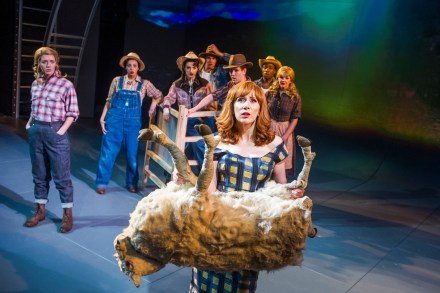
Miss Atomic Bomb celebrates the sub-culture that grew up around nuclear tests in 1950s America. The citizens of Nevada would throw parties and stage barbecues to coincide with the latest nuclear detonation in the desert. This musical has a lot going for it. The melodies are strong, and well sung. The high-kicking chorus lines are easy on the eye and the show has a zippy, innocent spirit. But the storyline gets sidetracked in a mass of contradictory directions. The main theme follows a homesick farm girl who becomes involved with a runaway soldier whose brother runs a Vegas nightclub where a beauty contest is being held that the farm girl hopes to win.

Time out of mind | 17 March 2016

The Maids is a fascinating document. Written in 1947, Jean Genet’s drama portrays a pair of serving girls who enact sexually loaded fantasies while dressed in the clothes of their employer, Madame, whose murder they are secretly plotting. This macabre sketch still resonates because it analyses and presages the key social transition of the 20th century, namely the overthrow of privilege by the underclass. And it boasts extra layers of erotic chic because the sexually inquisitive maids are sisters and because Genet suggested that the girls might be played by men in drag. This delicate, subtle work is as firmly rooted in its historical era as another classic political allegory, Animal Farm, to which it bears some similarities. Jamie Lloyd has based his update on two bold decisions.

Budget Sketch: George Osborne finally dropped the conservative pretence

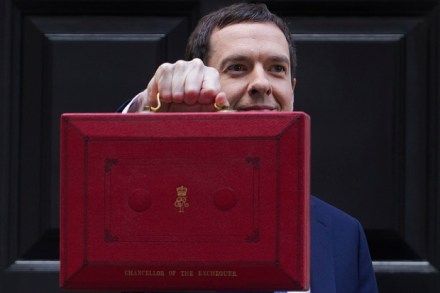
[audioplayer src="http://rss.acast.com/spectatorpolitics/georgeosbornesbudget-2016/media.mp3" title="Fraser Nelson, Isabel Hardman and James Forsyth discuss the Budget"] Listen [/audioplayer]If George Osborne was ever a conservative he dropped the pretence today. The chancellor sounded risibly pompous as he declared his plan to impose a slimming regime on Britain’s heaving population of wobble-bottoms. A levy on fizzy pop will arrive in 2018. Even before he’d explained the rationale behind his Weightwatcher’s initiative he’d sabotaged it by exempting ‘milk-based drinks’. But a tax on pop already carries innumerable loop-holes in the form of doughnuts, choccie bicccies, Jammy Dodgers and cream puffs.

Pride and prejudice | 10 March 2016

Jonathan Lynn, co-author of Yes Minister, has excavated the history of France during the two world wars and discovered dramatic gold. He presents us with pen portraits of eminent Frenchmen we think we know. Marshal Pétain (Tom Conti) is a humane pragmatist who refuses to risk speculative assaults on the Western Front. He evolved his strategy from a single motto: never attack until victory is certain. That worked fine at Verdun but in 1940 the same doctrine entailed capitulation to the all-conquering Germans. Pétain’s young protégé during the Great War is a surprise and a delight. We imagine Charles de Gaulle as a monumental slab of garlic-scented arrogance with the body of a furniture-shifter and the face of a parrot-fish.

PMQs Sketch: Corbyn has chalked up a century but is yet to score

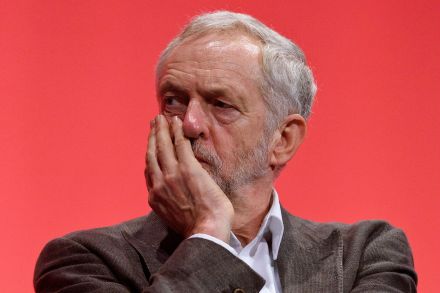
All MPs are familiar with Jeremy Corbyn. The nylon tie and the charity shop jacket give him an air of respectability, of erudition even, but the unloved haircut and the whiny accent mark him out as a toxic hazard. He’s the kind of champion grumbler who shows up at every constituency surgery with sheaves of paperwork stuffed into plastic bags. And today Jezza came stooping and shuffling into PMQs with a heap of with grievances to dump on David Cameron. The Labour leader’s activism may have a political flavour but its origins are personal. He gets his kicks by enduring defeat. Misery is his life’s mission. He opened by accusing the PM of rendering children destitute while giving kickbacks to big corporations.

Tragedy trumped by porn

Big fuss about Cleansed at the Dorfman. Talk of nauseous punters rushing for the gangways may have perversely delighted the show’s creators but I’m firmly with the exiteers. This is barely a play and more a thin, vicious pantomime with an Isis-video aesthetic. The minuscule plot follows Grace (Michelle Terry) as she visits a prison hospital to receive news of a tortured relative. She’s immediately roped in as a victim and we’re treated to a sequence of gougings, knifings, electrocutions, rectal penetrations and tongue extractions which are bizarrely interspersed with scenes of lustful romance. Alex Eales’s design stands out.

PMQs Sketch: Corbyn’s sitting back and waiting for the Tory funerals

Jezza is one of the oldest Out campaigners in the Commons. He’s not quite the ‘Father of the Outs’ – Bill Cash claims that honour – but the Labour leader is next in line. Yet the referendum has led him to a shrewd, albeit unprincipled, decision. If your enemies are tearing each other apart, pull up a chair and enjoy the show. Hence his silence on Europe. A slow but strengthening civil war has begun within the Tory party and the vote itself will sound the death-knell for many a high-profile Conservative. So Corbo’s pleasant task is to sit back and wait for the funerals.

Kit-car Chekhov

Director Robert Icke has this to say of Chekhov’s greatest masterpiece: ‘Let the electricity of now flow into the old thing and make it function.’ He uproots ‘the old thing’ from its natural setting and drops it down in no-man’s land. It all feels modern. Aircraft buzz in the heavy summer air. A thunderstorm sets off a car alarm. English names have displaced their Russian originals. Telegin has turned into Cartwright. The childless but priapic Uncle Vanya has been renamed after a latex prophylactic, Uncle Johnny. Perhaps appropriately. These alterations create huge uncertainties of class, location and era. Who are these Bohemian dropouts swilling vodka in a nameless English shire without even a broadband connection to beguile their titanic boredom?

PMQs sketch: Shouldn’t ‘preventable deaths’ really be called ‘homicides due to negligence’?

David Cameron was grilled today on plans for a ‘7-day NHS’. This is his attempt to iron out a slight kink in the NHS schedules. The trouble is that although our heroic doctors and nurses keep regular hours our deadly diseases are hopelessly unpredictable and like to smite us down whenever they feel a bit grim and reaperish. Perhaps we should write to them about it. In practice this means that NHS efficiency varies widely over the ‘7-day cycle’ or ‘week’ as it’s known. Get ill on a Tuesday and you’ll probably be at a party on Friday. Get ill on a Saturday and you’ll probably be at a funeral on Wednesday. Your own.

Kerching, Mr Bing

Here’s how to set yourself up for a fall. You stage the world première of your debut play in the West End and you cast yourself in the lead role. Matthew Perry (Chandler Bing from Friends) has invited a critical monstering by brazenly challenging all-comers like this and the result is a terrible let-down. For the reviewers, that is, who have mindlessly attacked this breezy, stylish new dating comedy. It’s not perfect but it succeeds on many levels. It’s pacy, original and easy on the eye. It’s funny throughout (apart from a bizarre scene in a maternity unit, which suggests, rather bafflingly, that no member of the creative team has a clue what happens to a woman during labour).

Master of psychology

The Master Builder, if done properly, can be one of those theatrical experiences that make you wonder if the Greeks were a teeny bit overrated. Matthew Warchus’s version is four-fifths there. Ralph Fiennes is well equipped to play Halvard Solness, the cold, brilliant autocrat with a troubled past who falls into the arms of a gorgeous young suitor. But he’s the wrong age for the part. So is his opposite number, Sarah Snook, who seems too mature to suggest Hilde’s skittish frivolity. Fiennes, like all film stars, attends carefully to his looks and although he’s over 50 he could easily play ‘late thirties’. But the aged Halvard needs to be like a grizzled alderman ogling a virgin in the choirstall. The affair should seem repellent and sinful.

PMQs sketch: Cameron’s new tactic to steal Corbyn’s mascot

Housing is Jeremy Corbyn’s second favourite subject (after drainage lids). Back in the 1970s the grateful proletariat hailed his long years of service as Commissar For Council Accommodation in the People’s Republic of Haringey. At his retirement, chanting school-girls tied garlands of lilies around his brows and presented him with a commemorative Rent Book in a frame. Marching bands played. Fireworks fizzed and thundered. Private landlords were burned in effigy. What Corbyn learned from his housing career was to grind his enemies into submission with tedious blasts of numbers. But Cameron likes a good statistic himself and when Corbyn accused the government of building one new council house for every eight sold the PM quoted Labour’s record.

Being and nothingness

Florian Zeller has been reading Pinter. And Pinter started out in repertory thrillers where suspense was created by delaying revelations until the last minute. He tried an experiment. Suppose you delay the revelations indefinitely. The results were interesting. Pinter’s characters were vague, stark silhouettes lacking background and substance. Audiences found them inscrutably suggestive. Zeller follows suit. He presents us with a bourgeois marriage. The father works. The mother sits at home being stylishly empty-headed. Their grown-up son lives with his girlfriend. No other details are offered. It’s evening. Mother, disported on an all-white sofa, greets her husband and languidly interrogates him about his day’s activities and casts aspersions on his fidelity.

PMQs sketch: Kamikaze Creasy

The referendum is slowly (very slowly) breaking up Cameron’s cabinet. It’s put him in a weird mood. Yesterday he was striding about in shirt-sleeves like a bogus realtor selling flats on the moon. At PMQs today he was calmer and prepared for some rough weather. It failed to materialise. Jez We Can (Do a U-turn on Europe) didn’t want to discuss the In-Out decision in case viewers spotted that his love of Brussels is a mere summer crush dating from his election as Labour boss. Previously he was a committed Europe-nobbler. With his mentor, Tony Benn, he used to trudge along to every anti-EU meeting available. Alas, no one noticed. And no one cared.

Fine vintage

A beautiful crumbling theatre in Notting Hill is under threat. The Coronet, which bills itself as the Print Room, faces the menace of renovation. The lovely rambling building has the tumbledown air of an abandoned Romanian palace. The raised stage sits opposite the dress circle of a former cinema and the auditorium, steeply raked, is bounded by a parapet decorated with plaster reliefs of scarred mermaids and broken-winged angels. A modern design team is bound to strip out all this ramshackle charm. The ragged, gloomy corridors, scented with damp brick dust, will be rationalised into glistening avenues of spotlit perfection.

PMQs sketch: Cameron’s ‘b— word’ sets off a Twitter-quake of offence

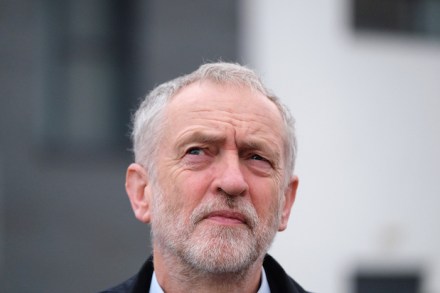
Jeremy Corbyn hasn’t changed his clothes since Christmas. He arrived at PMQs today in his dependable outfit of non-slip shoes, biscuit-coloured suit and minimum-wage tie. His white, flattened scalp and his mood of perplexed fatigue make him look like a dutiful pensioner inspecting a care-home for his beloved mum and wondering if he might check in as well, while he’s there. Today, however, mighty deeds summoned him to parliament. International monsters awaited his challenge. There were slavering dragons to tame. And famous victories to be won and celebrated. But he wasn’t up to it. As always. When Corbyn fails, it has to be said, he does so placidly and almost noiselessly, with a dogged acceptance that not-good-enough is his personal best.

Pride and prejudice

Paul Minx ventures boldly into Tennessee Williams country with The Long Road South. It’s 1965 and the Price family are idling about at home in Indiana. In mid-August the air is heavy with frustrated sexuality. Carol Ann Price (Imogen Stubbs) is a kindly, buxom waster slithering decorously into alcoholic dereliction. Her daughter, Ivy, is a perky little menace who cavorts about the lawn in a skimpy bikini trying to elicit male attention. Jake, the patriarch, is a charmless redneck with anger problems and a secret backlog of unpaid debt. Waiting on these white-trash parasites are two black servants, Andre and Grace, who are smart, industrious, even-tempered and limitlessly patient. Andre is a gifted theologian who pines after his severely disabled daughter.

PMQs sketch: Labour’s yellow submarine

A new face at PMQs becomes samey after a few months. Corbo reached that point some time ago and Cameron can now contain him without breaking a sweat. He’s not threatened by the Labour leader for the simple reason that Corbyn lacks any forensic guile. To prepare, mount or press home an attack is beyond his powers so he just reads out his set questions in a low verbal moan, like next door’s Hoover. Today they tussled over the scrapping of bursaries for trainee nurses. Cameron said this reform makes it easier to fill the wards with bustling sisters and swishing matrons. No, said Corbyn. It’s harder. Amazingly, some light was shed on this difference. It depends where they come from. Corbyn wants vacancies filled from any old place.

Gallows humour

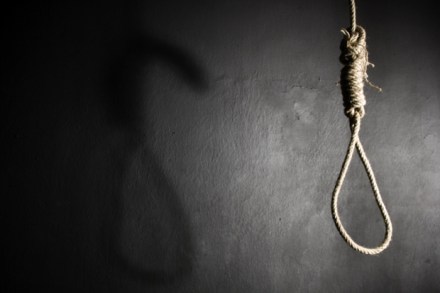
It begins with a sketch. We’re in a prison in 1963 where Harry Wade, the UK’s second most famous hangman, is overseeing the execution of a killer who protests his innocence. The well-built convict effortlessly shrugs aside two burly but incompetent prison officers. ‘I’m being hanged by nincompoops,’ he laments. One of them helpfully points out that if he’d followed his instructions he’d ‘be dead by now’. Do these arch quips make you quiver with mirth? If so you’ll enjoy Hangmen, a slapstick comedy thriller by Martin McDonagh. The scene shifts to Oldham in 1965. Capital punishment has been abolished and the retired Wade has taken over a pub in his hometown where he enjoys the status of a minor celebrity.