Lloyd Evans

Lloyd Evans

Lloyd Evans is The Spectator's sketch-writer and theatre critic

PMQs sketch: Yet more people are executed by the work and pensions secretary

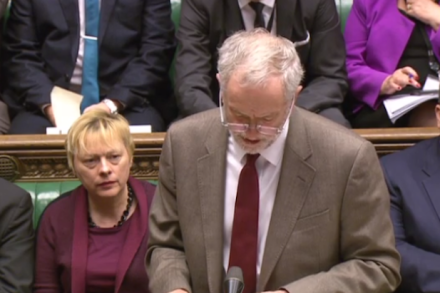
Time’s up for Hattie. Her performance at PMQs had a whiff of embalming fluid about it. This was probably her last performance as Labour’s stand-in boss and she declared it ‘an honour and a privilege to lead this great party'. Mentally everyone corrected that to ‘this once-great party'. Labour is on the verge of sundering into two factions: the Labour party in opposition (i.e. Jeremy Corbyn) and the Labour party in exile (i.e. the rest of them). Magnanimous Cameron hailed Hattie’s three decades on the front bench. He praised her support for women’s rights and said she’d served her constituents ‘with distinction’. Which is half-true.

Press night

Sam Mendes once said there is no such thing as the history of British theatre, only the history of British press nights. That observation takes us closer to understanding the taboo that constrains journalists from reviewing the opening performance of a West End play. A dozen or so previews take place before the critics are invited in for a star-studded gala, or ‘press night’, which is fixed by the producer to make the show appear in its most seductive light. Newspapers are usually wary of censorship in any form, so their assent to this convention must be considered a great anomaly. The vanity of the lead actor is a significant element. A first night is usually full of hazards and mishaps as the cast acquaint themselves with the props, costumes, door-handles and so on.

Art by committee

Australia, 1788. A transport ship arrives in Port Jackson (later Sydney harbour) carrying hundreds of convicts and a detachment of English officers under orders to guard the prisoners and to implant the roots of a well-ordered colony. These facts form the basis of Our Country’s Good, which was created in 1988 by Timberlake Wertenbaker in collaboration with Max Stafford-Clark’s Joint Stock company. Stafford-Clark’s method is to prepare a script using committees of actors under the supervision of a writer and the invariable result is a show that prizes the concerns of players over those of play-goers. The director Nadia Fall has revived this script with lavish efficiency. We begin with the ship disgorging its contents on to the Australian shore.

Edinburgh on Thames

Showstopper! The Improvised Musical offers a brand new song-and-dance spectacular at every performance. It opens with a brilliantly chaotic piece of comedy. A theatre producer on stage telephones Cameron Mackintosh and pitches him a new musical. Mackintosh answers and the producer invites ideas from the audience. ‘What’s the setting?’ Someone yelled ‘Late-night sauna’ at the performance I saw. The producer, without missing a beat, told Mackintosh that the show would be called, Sweat, Sweat, Sweat. If that was improvised it was world-class. The show develops along the lines suggested by the crowd and a number of hit musicals are parodied. The audience, I suspect, enjoyed this more than me.

Northern lights | 20 August 2015

In the clammy shadows of Cowgate I was leafleted by a chubby beauty wearing all-leather fetish gear. ‘Hi! Want to spend an hour with a prostitute for nothing?’ Yes, please. Her show The Coin-Operated Girl (Liquid Room Annexe, until 30 August), part of the free fringe, deals with the seven years she spent servicing sex-starved men in swish London hotels. One of the commonest fantasies was ‘GFE’, which has nothing to do with threesomes or gimp-masks. ‘The Girlfriend Experience’ means sex, kissing, cuddling, chatting, bickering and everything involved in a normal relationship.

Edinburgh round-up

Propaganda is said to work best when based upon a grain of truth. Ukip! The Musical assumes that most electors are suspicious of the movement and its leaders. And in Edinburgh that may well be the case. The show portrays Nigel Farage as a bewildered twerp with no charisma and little talent for oratory. His first speech at an Essex shopping centre begins, ‘I am not a pretty nationalist, sorry, a petty nationalist.’ He then falls under the influence of a manipulative racist named Godfrey Bloom. I should point out that ‘Bloom’ in this piece refers to the character in the show, not to the retired politician. Bloom is first seen in a Westminster club, Gay Banana, dressed in a grass-skirt and singing the praises of Bongo-Bongo Land.

Chekhov by numbers

Chekhov so dominates 19th-century Russian drama that Turgenev doesn’t get much of a look-in. His best known play, A Month in the Country, was written before Chekhov was born but Patrick Marber’s adaptation, with its new nickname, feels like Chekhov scripted by a Chekhov app. Turgenev’s characters, his atmosphere and his scenarios feel entirely familiar but they lack the tragicomic gestures that give Chekhov his unique appeal. There are no fluffed murders or dodged duelling challenges. No one tries and fails to blow his brains out. We’re on a rural estate where a group of crumbling, damaged sophisticates pootle around falling in love with each other. Every affair is doomed.

Look at my Fringe

Like everyone performing at the Edinburgh Fringe I’m about to make a lot of mistakes. I’m about to lose a lot of money too. But after ten years covering the festival as a reviewer I’m at least able to predict which errors I can’t avoid blundering into. First, the campaign to attract a crowd will be pointless. This stands to reason. Five or six thousand hopefuls swarm up to Edinburgh each year and they all use the same marketing strategy. Attention-seeking stunts on the Royal Mile. Tiresome afternoons forcing leaflets on unimpressed Americans. Fly-posting after dark, on tiptoe, by torchlight. Desperate texts to friends of friends promising five-for-one discounts.

Family matters

God, what a title. The Gathered Leaves. It sounds like a tremulous weepie about grief and endurance with a closing scene featuring three anvil-faced spinsters staring through the rectory window at an autumn bonfire. It’s not quite like that. The play opens with some clumsy exposition revealing the political chronology. It’s Easter, 1997, and Labour’s shiny-fanged messiah is about to evict the Brixton mule from Downing Street. We meet the Pennington family, a high Tory clan nestling in a frondy corner of the Thames Valley, who are eager to heal an ancient rift. Their estranged daughter and her mixed-race sprog have been skulking in France for the past 17 years. They’re coming back. But when they return to the bosom of the family they get the bazooka.

Has-Bean

Richard Bean, the country’s most bankable playwright, knocks out a new script every four months. Thanks to the success of One Man, Two Guvnors, he’s not short of houses ready to stage his work. And the hunt for treasure in his back-catalogue continues. The Mentalists, from 2002, stars Stephen Merchant (co-writer of The Office) and Steffan Rhodri as two needy chums pursuing a whimsical dream in a cheap hotel room. Chum One is a hairdresser who makes porn films on the side. Chum Two is a salesman who dreams of founding a rebel colony overseas. Chum One films Chum Two delivering a sermon that will kick-start the revolution. That, ladies and gentlemen, is about it.

Night at the circus

Easy playwright to get on with, Ben Jonson. His world is simple, his tastes endearing. He likes golden-hearted swindlers and unscrupulous servants who outwit their bungling masters. Volpone, the ‘sly fox’ played by Henry Goodman, is a rich Venice merchant without a family who persuades three wealthy rivals that they stand a chance of inheriting his estate. He feigns mortal illness and accepts their tributes, or bribes, from his sickbed while secretly lampooning their folly. This is hardly the most sophisticated hoax but it’s fun to watch the slick, spruce millionaires queuing up to be despoiled of their loot. Trevor Nunn’s up-to-date version skilfully harmonises the Jacobean and the modern.

PMQs Sketch: Cameron’s lurches to the left

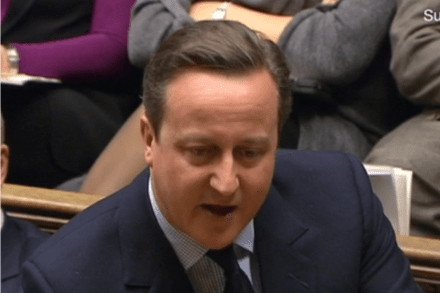
‘Put that on your leaflets,’ snarled Cameron at PMQs. Inwardly he was gloating. Labour voted against Tory welfare reforms last night so the PM was able to boast that Labour is fighting the new living wage. Some say Cameron is lurching to the left with his Five Year Plans and his state-controlled pay rises. The same applies to law and order. He’s getting a pinkish tinge. Philip Davies asked him to review the regulations governing early release for serious offenders. Cameron said he’d give it a go. It’s not good enough, he seemed to imply, having murderers murdering people shortly after gaining their freedom by promising to become pillars of the community. But he didn’t seem too bothered by it. Then he made some astonishing disclosures about open prisons.

Home and away | 9 July 2015

Refugee crisis in the Mediterranean! Fear not. Anders Lustgarten and his trusty rescue ship are here to save mankind. Lampedusa consists of two monologues, one Italian, one English, which tackle the problem at home and abroad. We meet Stephano, a cartoon fisherman with a Zorba beard and a chunky woollen sweater who lives on Italy’s southernmost salient about 70 miles off the African coast. He follows an improbable path from xenophobia to enlightened altruism. At first he mistrusts the runaways whose corpses choke his native shore. He asks survivors why they don’t ‘speak the language’. ‘We do,’ they reply, in English. ‘This is Europe’s language.

What does George Osborne have against the fecund?

Budget leaks were once the cause of scandals, inquiries and resignations. But the contents of George Osborne’s red box were spilled across the papers last Sunday. By yesterday the entire package was old news. Yet Osborne remains addicted to the last-minute surprise. What would it be? Gym membership for Angus Robertson? Free counselling for ousted LibDems? Britain to join the drachma? The living wage – Osborne’s grand revelation – is his attempt to redraw British politics. It aligns the Tories with the working-class against Labour. The opposition wanted a minimum wage of £8 by 2020. Osborne ups that to £9. There are sweeteners for the squeezed middle too. The threshold for the higher tax-band will rise.

Bid low, break even

A new Seagull lands in Regent’s Park. Director Matthew Dunster has lured Chekhov’s classic into a leafy corner of north London to see if it needs an upgrade. The new script, by yuppie-baiting playwright Torben Betts, is casual, slangy and sometimes gauche. Favourite moments have been struck out including the great opening line, ‘Why do you always wear black?’ And Betts decides to make Chekhov’s characters swear. ‘Bollocks’, ‘piss off’. I don’t know Russian but I’m sure Chekhov didn’t need coarse language to portray coarse souls. The outside staging has been jazzed up too. A clunking great mirror hangs over the playing area like a bit of broken satellite.

PMQs Sketch: Airports and angry Nats

Chooom! Davies has arrived. Sir Howard’s report made a text-book landing on the PM’s desk yesterday afternoon and began taxiing towards Cameron’s in-tray. But the PM hasn’t read it yet. Or so he claimed at PMQs. He therefore avoided any commitment to building a third runway at Heathrow. And his excuse? Wilful ignorance. Seriously? He hasn’t read it? Given the time and cash the damn thing has gobbled up he might have glanced at the executive summary. Sir Howard has worked his way through twenty million smackers reaching a foregone conclusion. His defenders point out that this money was very well spent because Sir Howard pays scrupulous personal attention to every detail of an important commission.

Common sense suggests Britain’s economy doesn’t depend on the EU

They say you have to be nearly 60 to have voted in the 1975 referendum. I voted in that referendum. I was 12. My mum had forgotten her glasses. We were a Labour household and as we left the polling station she said, ‘You did vote “in”, like Harold Wilson suggested?’ ‘No,’ I replied, ‘I’m with Tony Benn. I want “Out”’. Benn wasn’t right about much but he asked three good questions about the Common Market. Who appointed these people? What are the limits to their power? How do we get rid of them? Satisfactory answers are still unforthcoming. And his clear-headed approach may persuade others of the need to quit. Common sense suggests that our economy doesn’t depend on the EU.

Savile exposed

Ho hum. Bit icky. Not bad. Hardly dazzling. The lukewarm response to An Audience With Jimmy Savile has astonished me. This is the best docudrama I’ve seen on stage. From the early 1970s, Britain swooned before Savile. Marketing pollsters found him the country’s best-loved celeb (bar the Queen Mum). He enforced his influence by winning over several establishments at once, the royals, the Beeb, the NHS, the media, the charity sector, Westminster. Evidence of his criminality existed but it never affected his reputation. He’s the nearest we’ve come to Hitler. The show takes the format of a TV biography which is intercut with scenes from Savile’s early life and testimony from his victims. Alistair McGowan’s ownership of Savile’s persona is astounding.

At this rate Labour won’t even be a debating society in five years time

The phoney war continues. While Labour searches for its next Michael Foot, the party’s stand-in boss, Harriet Harman, seems keen to lose the 2020 election as soon as possible. Some argue Ed Miliband has already performed that task. Either way, defeat is the only thing Labour does efficiently nowadays. Ms Harman attacked the PM’s plan to abolish a policy that many hail as Gordon Brown’s Worst Ever Idea: tax credits. These mean that thousands of Whitehall scribblers deposit cash with workers who then return the money, via thousands more scribblers, to the government which never owned it in the first place. Labour loves the N Korean ambience of this system because it turns every citizen into a state vassal.

Own goal

For nine years Patrick Marber has grappled with writer’s block (which by some miracle doesn’t affect his screenplay work), but the pipes are now ungummed and wallop! his new bolus of creativity splatters across the Dorfman stage. It’s a wordy three-hander set in the swamp of non-league football. Marber brilliantly captures the grubbiness and despairing optimism of ageing sportsmen who inhabit a golden age that never was. We meet Kidd, a hopeless but garrulous manager, as he tussles with Yates, a lugubrious old kit-man, for a controlling stake in a dazzling young talent, Jordan. The emotional terrain is lifted directly from Pinter and Mamet: male losers fighting over scraps of nothing.