Lloyd Evans

Lloyd Evans

Lloyd Evans is The Spectator's sketch-writer and theatre critic

Sketch: Chairman Mao gets flung across the Commons

From our UK edition

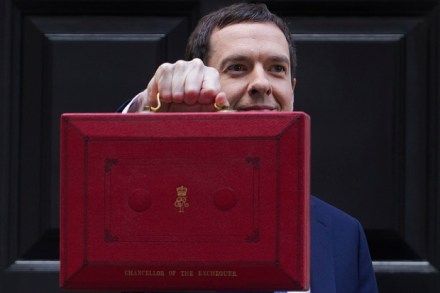
That was a funny way to say sorry. Osborne kicked off his autumn statement with a Niagara of self-congratulation. He does the same thing at the budget. He said his wisdom, foresight and courage had rescued the nation from bankruptcy and set us on a golden path towards wealth, security and happiness. His glorious achievements reach every part of the UK, he went on: the tumescent north is swelling more vigorously than the shrivelled south. Birmingham creates jobs three times faster than the Home Counties. And the perkiest employment rate is to be found in the west country. He then reversed this claim and vowed to combat the ‘geographical differences that have bedevilled our economy for decades.’ A strange way to talk about your greatest success.

Winter wonderland | 19 November 2015

From our UK edition

Kenneth Branagh opens his West End tenancy with Shakespeare’s inexplicably popular The Winter’s Tale. We start in Sicily where Leontes and his queen Hermione are entertaining Polixenes, the king of Bohemia. The design is heavily Germanic. Crimson drapes shroud the grey marble columns. A massive fir tree, twinkling with candlelight, is rooted in an ornamental toboggan. Everyone swishes about in thick, elegant Victorian costumes. The sets, by Christopher Oram, aren’t just lovely to look at, their detailed perfection is almost heartbreaking. And Neil Austin’s lighting would have won gasps of admiration from David Lean. The only fault is that it all seems overcontrived. An orchestral score intensifies the emotional colouring but it makes the play feel like a film.

David Cameron is starting to look like Jeremy Corbyn’s best friend at PMQs

From our UK edition

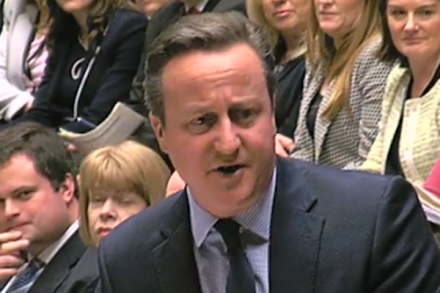
Jezza started PMQs with a bit of a wobble. As he got to his feet the applause from his Labour ‘friends’ sounded like the hoarse whooshings of a punctured beach ball. Corbyn nervously offered his sympathy to the Paris terror victims and expressed concern that the slaughter of 129 innocents might increase Islamophobia in Britain. The attacks, he said, ‘have nothing in common with the 2 million Muslims who live here.’ David Cameron agreed, partially. He drew a distinction between ‘the religion of peace’ (which is Islam, in case you were getting confused) and the ‘bile spouted’ by terrorist killers. But, he said, ‘it’s not good enough to say there’s no connection. They [terrorists] make the connection.

How did this plotless goon-show wind up at the Royal Court?

From our UK edition

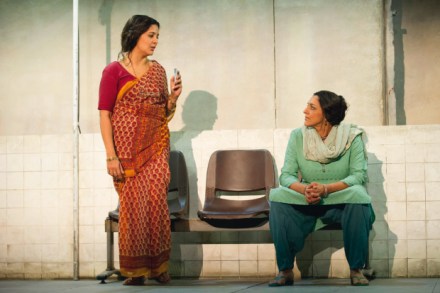
One of the challenges of art is to know the difference between innovation and error. I wonder sometimes if the Royal Court realises such a confusion can arise. Its new production, RoosevElvis, has been hailed as a thesaurus of fascinating novelties but to me it looks like a classic case of ineptitude posing as originality. It opens with two costumed women perched on bar stools speaking into microphones. One is dressed as Teddy Roosevelt in a cowboy hat and a handlebar moustache with a three-foot wingspan. The other is an Elvis impersonatrix wearing a lazy smirk and a black wig that sags forlornly over her ears, which seem to have turned pink with embarrassment. Introductions over, they reveal their true identities.

Glyndebourne caters to the lower-middle classes not past-it toffs

From our UK edition

What is Glyndebourne? A middle-aged Bullingdon. That’s a common view: a luxury bun fight for past-it toffs who glug champagne, wolf down salmon rolls and pass out decorously on the lawn. But the reality is that it caters to those of my class (lower-middle) who want to boost their pedigree with an eye-catching essay in sophistication. The Sussex opera house was founded in 1934 by John Christie, a passionate and eccentric millionaire who believed the public should suffer for his art. He hated the idea of suburban businessmen ‘catching a show’ for two hours in the West End before falling asleep on the train home. He wanted his audiences to devote an entire day to his productions.

PMQs sketch: Cameron thinks cutting tax credits is fun

From our UK edition

‘It’s getting longer and longer,’ grumped David Cameron at PMQs. A microphone picked up the aside as the session over-ran by 10 minutes. Why the delay? First, the Speaker. He’s keen to give as many backbenchers as possible a chance to pass unrecognised on national TV. Secondly, he adores the limelight himself. At the slightest pretext he’s up on his feet demanding silence on behalf of an entity called ‘the public’. That’s his name for the handful of grumblers and job-seekers who write in each week to complain that politicians aren’t speaking in chapel whispers.

Character assassination

From our UK edition

Here are three truths about play-writing. A script without an interval will be structurally flawed. A vague, whimsical title means a vague, whimsical drama. And a play about Alzheimer’s will self-destruct for the obvious reason that drama is an examination of character while Alzheimer’s is an effacement of character, so the paint evaporates before it reaches the canvas. A fourth truth is that subsidised theatres know nothing of the first three. So that explains Plaques and Tangles at the Royal Court, which runs for 110 uninterrupted minutes, without the variations of mood generated by an interval, and which examines a case of early-onset dementia. Megan is a married librarian with two kids.

Shakespeare at his freest and most exuberant: The Wars of the Roses reviewed

From our UK edition

The RSC’s The Wars of the Roses solves a peculiar literary problem. Shakespeare’s earliest history plays are entitled Henry VI parts (I), (II) and (III), which is thought to put people off. If you see one why not see all? If you miss the opener will the sequels confuse you? The solution is to condense the material and to reconfigure it as a single theatrical event. The result is a revelation. Here we have Shakespeare at his freest and most exuberant cramming the stage with every blockbusting trick he can contrive. Sex, battles, conspiracies, sword fights, gorings, cuckoldings, lynchings, beheadings. And there’s a constant stream of jibes aimed at the faithless French. The action opens with the death of Henry V.

Tom Watson gets a tickling from the Home Affairs Committee

From our UK edition

Tom Watson, the man who hated Brittan, appeared before the Home Affairs committee this afternoon. In earlier evidence it became clear that the Met was divided on the rape allegations against the late Lord Brittan. Detective Chief Inspector Settle said that to subject him to an interview under caution would have constituted ‘a baseless witch-hunt’. Dep Assist Commissioner Steve Rodhouse disagreed and said it was unusual not to question a rape suspect. Tom Watson played a role as the victim’s cheerleader. He wrote a letter urging the DPP to ensure that Brittain was quizzed. DCI Settle called Watson’s actions ‘undermining’ and ‘a low blow.’ He said Watson had caused panic in the police. Steve Rodhouse disagreed. He’d seen no panic.

The characters are barely stereotypes: The Father at the Wyndham’s reviewed

From our UK edition

The Father, set in a swish Paris apartment, has a beautifully spare and elegant set. The stage is framed by a slender rectangle of dazzling white dots which impart an air of incalculable and almost intimidating opulence to the show. I felt I was lucky to be there. Here’s the plot. Kenneth Cranham plays a doddery old sausage whose daughter and her husband want to dump him in a nursing home. Will they succeed? That’s the plot. Writer Florian Zeller uses pranks and false starts to create suspense and to illustrate Dad’s scrambled mentality. Different actors play the daughter, the son-in-law and the day-nurse. At first this is gratifyingly weird but repetition makes it seem meagre and banal. Other effects stress the same point.

PMQs sketch: The clash of the victims

From our UK edition

Corbyn’s PMQ’s strategy is now clear. Hopeful emailers send their lifestyle details to Labour HQ and a computer sifts the figures to find the voter likeliest to cause the prime minister’s cheeks to blush purple with shame. Today’s lucky winner was Kelly, (no surname given), a single mum on £7.20 per hour who works for 40 hours a week while caring for a disabled sprog. Did the prime minister know how much the tax credit deductions will cost her? Cameron hadn’t a clue so he talked about the rising minimum wage and falling council rents. Corbyn gave the answer: Kelly loses £1,800 a year. The question assumes that we all live in a dysfunctional boot-camp run by Whitehall.

It may have a meagre script and no plot but Farinelli and the King is still a major work of art

From our UK edition

Philippe V was a Bourbon prince who secured the throne of Spain using his family connections. Claire van Kampen is a writer who relied on the same method to secure a West End opening for her play about Philippe. It stars Mark van Kampen (aka Mark Rylance) as the charmingly dotty Frenchman. Philippe was a manic depressive who regarded his Spanish subjects as a puzzling inconvenience. He had no interest in governing them and preferred to laze around the countryside, looking at stars, listening to music and indulging his eccentricities. We first meet him in bed trying to hook a fish supper from a goldfish bowl. Courtiers secretly plot to oust him while the queen scours Europe for a singer capable of cheering him up.

Sketch: David Cameron’s ‘greatest’ speech ever

From our UK edition

This was Cameron’s ‘greatest’ speech ever if you count his uses of the g-word. Great Britain, great schools, great traditions, a great Conservative party, the greatest team a prime minister could have. Greater days. Greater Britain. Stepping stones to greatness. He mentioned the election with a gooey tinge of Gift Card Dave. ‘As dawn rose, a new light, a bluer light fell across these isles'. And he dispelled any lame-duck thoughts. On the contrary, he acted like an anxious boozer loading himself with trebles just before closing time. He’s going to fix everything. Poverty, discrimination, inequality, addiction, crime and the rental crisis. Large chunks of this speech would have been cheered by the Fabian society.

Foote fault

From our UK edition

Samuel Foote (1720–77) was a star of the 18th-century stage who avoided the censors by extemporising his performances. Today we’d call him a stand-up comedian specialising in improv. He served tea to play-goers and claimed that the show was a free accompaniment to the beverages. Dogged by homosexual scandals, he was hounded out of England at least once despite the patronage of George III. A riding accident left him with a compound leg fracture (bone piercing flesh), which required amputation to prevent gangrene. The limb was hacked off in 20 minutes. Foote hobbled back to fame and fortune playing Sir Luke Limp in The Lame Lover. At his burial the preserved limb was reunited with its owner.

Sketch: Corbyn’s speech proved he is as cunning as Blair

From our UK edition

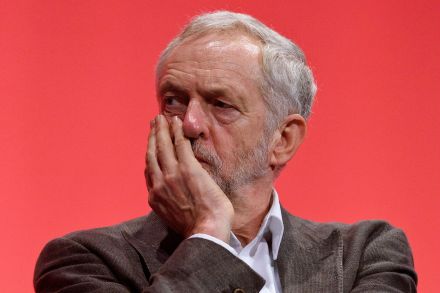
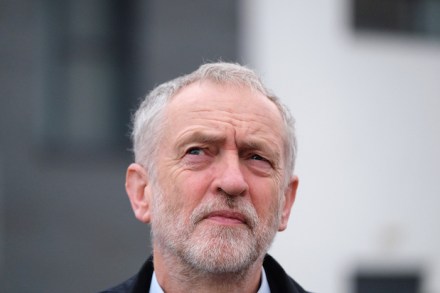
He looked bored. He looked dishevelled. His half-knotted crimson tie sagged disconsolately beneath his bearded throat. The drab jacket seemed as beige as ever. Corbyn spoke to the Labour conference looking like an embarrassed scout-master thanking his colleagues for a surprise party he didn’t want. ‘Any chance we could start the speech?’ he asked as the crowed clapped and cheered him. He began in ever-so-humble mode by saying how grateful he was ‘to be invited’ to address the conference. And he warmly thanked the three rival candidates he had trounced in the leadership election. He sounded as if they’d trounced him. The hesitant, informal style is so effective it looks almost calculated. Maybe it is.

The big chill

From our UK edition

Michael Grandage’s latest show is about an old snap. Geneticists regard the X-ray of the hydrated ‘B’ form of DNA as one of the loveliest images ever captured. To laymen it looks like some woodlice drowning in yesterday’s porridge. The pic was taken in 1951 by the British biochemist Dr Rosalind Franklin but she failed to realise its significance. When James Watson passed through her lab he took one glimpse and instantly twigged that it revealed the helical structure of DNA. With his pal Francis Crick he built the famous double-helix model which bagged them the Nobel Prize. Dr Franklin (played by Nicole Kidman) won nothing. We know all this in advance, of course, so the play lacks any suspense.

Double tragedy | 17 September 2015

From our UK edition

To examine an ancient text requires an understanding of the ancient imagination. The Oresteia is set in a primitive world where people believed that every animal, tree, stone, river, mountain, star, cloud and clap of thunder was inspired by a spirit controlled by the gods. Heaven signalled its wishes through dreams, oracles or chance events which were interpreted by prophets. What we understand by ‘faith’, i.e. a volitional fealty to a particular religious code, didn’t exist. There was no free will either. Mortals chose between one divine instruction or another. The genius of Aeschylus was to commit his characters to a cycle of moral conflicts where every act of obedience was also an act of betrayal.

PMQs sketch: Jeremy Corbyn’s master plan

From our UK edition

Jezza! What a genius. The master plan is clear at last. You spend four days plumbing new depths of political incompetence with bungled cabinet appointments, surly refusals to talk to reporters, tedious waffly platform-speeches and grumpy scowls during a service at St Pauls. And then, when your reputation can dwindle no lower, you spring forth and dazzle everyone with a political revolution. Cameron was grinning sheepishly before the Labour leader rose to the despatch box. He smirked sideways at his new opponent, through half-closed eyes, like a shy girl about to enter a forced marriage. Corbs looked relaxed and far sprucer than before. He might have been a civics teacher arriving for Day One at the new comp. Shiny grey tunic, off-white striped shirt, green splotchy tie.

Sketch: Welcome to Snorin’ Corbyn

From our UK edition

Great gag from the TUC. They played ‘Hey Big Spender’ as Jeremy Corbyn arrived to address their conference in Brighton. This was Stormin’ Corbyn’s first chance to reach beyond the Labour party and to address the nation. But he mentioned Britain only in the loosest terms. ‘The whole vision of those who founded the unions and founded our political parties was about doing things differently: that brilliant generation, those brilliant people who brought us the right to vote and brought women the right to vote.’ He meant the late Victorian campaigners who initiated trade unionism and gave birth to the Labour party. But he created the impression that he sees the UK only through the lens of left-wing activism.

Nice work

From our UK edition

[audioplayer src="http://rss.acast.com/viewfrom22/merkelstragicmistake/media.mp3" title="Kate Maltby and Igor Toronyi-Lalic discuss Benedict Cumberbatch's Hamlet" startat=1642] Listen [/audioplayer]You can’t play the part of Hamlet, only parts of Hamlet. And the bits Benedict Cumberbatch offers us are of the highest calibre. He delivers the soliloquies with a meticulous and absorbing clarity like a lawyer in the robing room mastering a brief before his summing-up. And though he’s a decade too old to play the prince (the grave scene sets his age at about 28), he cavorts about the stage like a ballet dancer delighting in his own athleticism. But he’s also much too nice. The darkest shades of melancholy and the raw emotional ugliness are missing.