Lloyd Evans

Lloyd Evans

Lloyd Evans is The Spectator's sketch-writer and theatre critic

When theatres reopen they’ll resemble prison camps

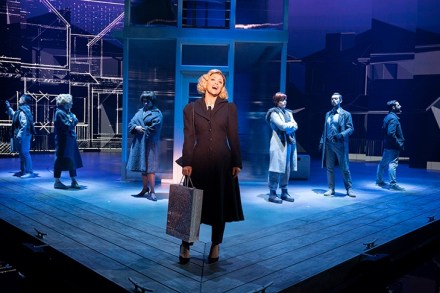
‘Give us a date, mate!’ That was the sound of Andrew Lloyd Webber begging Boris Johnson to announce when the West End can return to normal. He made his plea at the London Palladium on 23 July, where he was testing a new set of Covid-compliant measures during a one-hour solo show by Beverley Knight. It was the first indoor live performance in the capital since lockdown began. The impresario’s advance preparations had been exhaustively thorough. He arranged for the entire venue to be hosed down with an anti-viral fluid that kills the bug for up to four weeks. Every door handle had been fitted with a special cover that exterminates bacteria with silver ions. The audience were given staggered arrival times and they used a one-way system as they moved around the theatre.

RSC’s Merchant of Venice is full of puzzling ornaments and accents

The BBC announces Merchant of Venice as if it were a Hollywood blockbuster. ‘In the melting pot of Venice, trade is God.’ The RSC, which staged the show in 2015, calls it ‘a thrilling, contemporary interpretation’. Each element in Polly Findlay’s production looks fine. Jacob Fortune-Lloyd and Patsy Ferran (Bassanio and Portia) are as cute as a pair of Love Island hotties. But the costumes are hard to decipher and they seem attached to no particular era. Most of the characters wear chic, well-tailored outfits except for Antonio (Jamie Ballard) who sports a T-shirt and seems close to tears most of the time. He and Bassanio are presented as openly gay even though this weakens the character of Portia.

PMQs: Boris and Keir scrap over Corbyn’s legacy

There was an urgent question about jobs at PMQs today. One job in particular. The questioner, Maria Miller, was concerned that she hadn’t yet been hired to head a government department. She made her bid for promotion by strewing petals and scented bouquets at Boris’s feet. She reminded us that on Friday, 24 July, the nation will celebrate the first anniversary of his outstanding leadership. She hailed his genius as a recruiter of cops and nurses. She extolled his mission to tackle ‘the regional inequalities we still have in this country’. And she described his feelgood phrase, ‘levelling up’, as a ‘vision’ which, she hoped, would guide him ‘through every year of his premiership.’ This was close to religious ecstasy.

Italy owes Wales reparations for the wrongs of the Roman Empire

There’s talk of reparations in the air. Lobbyists from around the world are demanding sin-payments from former colonial powers. Let me add my voice to the clamour on behalf of this island’s indigenous Celtic people. My family are from Llanelli in Carmarthenshire and I believe that my compatriots have an excellent case to make against the Roman empire. This is not an extinct claim – the money is still in play. Britain was invaded by Julius Caesar in 55 BC and his visit was followed up a century later by the Emperor Claudius and his mob. The Roman occupation, which involved the military subjection of the Celtic peoples, lasted for about four centuries.

James Graham’s small new drama is exquisite: BBC Four’s Unprecedented reviewed

Let’s face it. Theatre via the internet is barely theatre. It takes a huge amount of creativity and inventiveness to make anything remotely like a theatrical drama in the digital sphere. The BBC’s Culture in Quarantine team have invited some talented writers and actors to try and crack it. Unprecedented begins with ‘Viral’, by James Graham, in which three 18-year-old lads enjoy a Zoom chat from their bedrooms. The craftsmanship in this small script is exquisite. The characters are united by a common purpose — creating a globally popular video clip — while each has to grapple with a personal crisis. One has a dying granny, one is coming to terms with his bisexuality, the third has a crush on his mate’s sister.

Starmer’s weaknesses are on show at PMQs

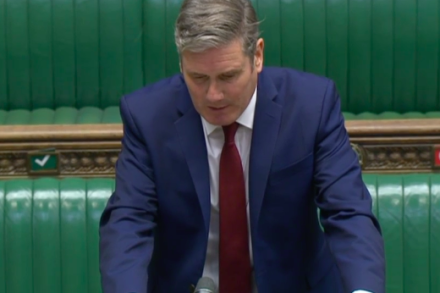
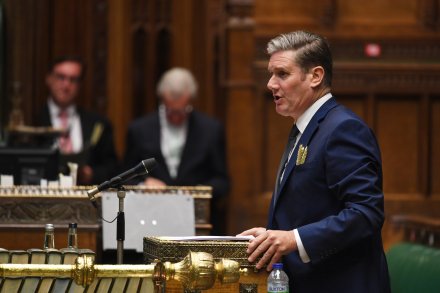
Keir-mania. Is it possible? Can we imagine it? Stadiums full of besotted voters chanting his name in frenzies of adoration. ‘Star-Muh! Star-Muh!’ No. Never going to happen. Sir Keir tinkled his way through his six questions at PMQs hoping to trip up the PM. Instead he put his own weaknesses in the spotlight. Far from being the ice-cool super-inquisitor, Sir Keir turns out to be thin-skinned and tantrum-prone. Boris enjoys tormenting him. When challenged, Boris likes to accuse the Labour leader of unpatriotic hypocrisy. Today, Sir Keir took the bait. When he criticised the government’s job retention scheme, Boris described his approach as disingenuous. ‘He has to work out whether he’s going to support or oppose the government’s programme.

Racial sensitivity training turned me into a confused racist

The Black Lives Matter movement has put racial sensitivity at the top of the agenda. A new atmosphere of moral rectitude has taken hold, and anyone who makes a tactless or unwelcome statement about race is likely to be fired. That’s what happened to Jack Hepple after a ‘White Lives Matter’ stunt over Man City’s football ground last month. He lost his job. His girlfriend, Megan Rambadt, a reflexologist, was also let go after her employer had earlier suggested it was willing to keep her on if she undertook racial sensitivity training. Meanwhile Keir Starmer has suggested that Labour party workers will be made to follow his example and complete an unconscious bias training course. I signed up for a similar educational programme to discover what they might be in for.

Not even a genius could make Much Ado About Nothing funny

The RSC’s 2014 version of Much Ado is breathtaking to look at. Sets, lighting and costumes are exquisitely done, even if the location is not established with absolute clarity. The date is Christmas 1918 and we’re in a stately home that has been converted into a billet, or a hospital, for returning soldiers. The prickly Beatrice (Michelle Terry) seems to be an unemployed aristocrat working as a volunteer nurse. She fusses around the ward making discreet enquiries about an old flame, Benedick, whose memory she can’t shake off. Enter Benedick played by Edward Bennett and the fun starts. These two absolutely get inside the skins of their characters. Terry’s portrait of spiky seductiveness is riveting to watch and Bennett has an amazing range of effects at his disposal.

Rishi Sunak is no threat to Boris

Rishi Sunak made his summer statement this afternoon. The chancellor is never less than immaculately turned out. Skinny blue suit, coiffed hair, silver-grey tie gathered in a discreet knot, a white shirt that glowed like a snow-capped peak at noon. And he oozed board-room competence. One half expected the lights in the Commons to fall and a screen to be unrolled for a Powerpoint presentation. He draws his rhetoric from many sources. In today’s speech we got a hint of Thatcher: ‘I believe in the nobility of work. I believe in the inspiring power of opportunity.’ We heard a reminder of Blair:  ‘I am not dogmatic. I believe in what works.’ There was a faint echo of Churchill:  ‘Hardship lies ahead but no one will be left without hope.

Chaotic, if good-natured, muddle: Hytner’s Midsummer Night’s Dream reviewed

Nicholas Hytner’s A Midsummer Night’s Dream opens in a world of puritanical austerity. The cast wear sombre black costumes and Oliver Chris, with menacing swagger, brings a note of palpable sadism to the role of Theseus. Then things relax as the ‘mechanicals’ in modern boiler suits prepare to rehearse the play. Hammed Animashaun (Bottom) dominates this little scene with his impish charm and unpredictability. He’s a high-calibre talent of whom more will be heard. After this solid opening, disaster strikes. The forest sequences, already devilishly overcomplicated, are presented on double beds which move restlessly all over the shop and make the story almost impossible to follow. And Hytner has flipped the chief roles.

Sir Keir’s problem? He lacks the Saatchi & Saatchi touch

Today the prime minister tried out his ‘spoonful of sugar’ routine. Boris has decided that no political problem exists that can’t be solved with a dose of bonhomie, a chorus of ‘build, build, build’, and a £600 billion bung to rocket-boost the economy. This ramshackle strategy was all he brought to PMQs. Against him Sir Keir Starmer was keen to display his world-class mastery of detail. The king of the quibblers was on top form. At least by his own standards. His goal was to blame the PM for the heatwave that recently brought thousands of super-spreaders to Bournemouth beach. Having sleuthed his way through Boris’s recent utterances he found a phrase, ‘show some guts’, issued to authorities in seaside towns.

Paapa Essiedu is a dazzling, all-encompassing prince: RSC’s Hamlet reviewed

The Beeb has released Simon Godwin’s Hamlet staged by the RSC in 2016. The director makes one major change and leaves it at that. Elsinore is transposed to a present-day African republic where members of the ruling clan are jockeying for power after the dictator’s death. This chimes with our understanding of geopolitics and lends simplicity and coherence to everything else. African flavours dominate the costumes, the furnishings and the music. The casting makes sense too. Most of the company are black and the characters are played by actors of the right sex. It’s rare to see Shakespeare’s gender choices followed faithfully. The superstitious element is strongly emphasised.

PMQs: Blustering Boris stymies Starmer

Barristers say there are two types of performers in court. The rhinos use brash, crude, overpowering blows. The snakes are subtle, unpredictable and deadly. Today at PMQs, the two beasts met. Boris came out of the jungle at full charge. ‘I think the honourable gentleman has been stunned by the success of the test and trace operation,’ he bellowed. He was responding to Sir Keir Starmer’s criticism of the government’s testing regime. ‘Contrary to his prognostications of gloom,’ Boris went on, ‘it has got up and running much faster than expected.’ Sir Keir, all serpentine cunning, asked him about the failure of the app to trace every relevant contact. Boris thrashed and snorted. Starmer's certainly a class act.

The Madness of George III is much easier to like than King Lear

The longest interval in theatre history continues. Last week the National Theatre livestreamed a 2018 version of The Madness of George III produced by Nottingham Playhouse with Mark Gatiss in the title role. The script, written by Alan Bennett as a response to King Lear, is much easier to like than the original. An engaging family comedy, with a sad bit in the middle, it benefits from a wonderfully happy ending. The good king is cured, the bad doctors are vanquished, order is restored. A real crowd-pleaser. Bennett’s research gives it the feeling of a documentary drama as he examines the difficulties faced by monarchs who wielded real political power. Family feuds spilled over into public affairs, and if the king happened to run an empire the consequences could be global.

Keir Starmer has no idea how to use normal language

A testy, ill-tempered PMQs. Sir Keir Starmer began by welcoming the anti-viral breakthrough achieved by British scientists. He got an instant slap-down. ‘I’m glad he’s finally paying tribute to the efforts of this country in tackling the coronavirus,’ said Boris, finding Sir Keir guilty of anti-British sentiment. The PM was road-testing a new jingoistic approach today. He believes his handling of the pandemic is the greatest achievement since the invention of the steam engine. And the furlough is the jewel in this glorious crown. ‘Eleven million jobs protected by a scheme unlike anything anywhere else in world!’ he enthused. Perhaps Sir Keir would be asked to ‘take a knee’ for the job retention programme.

What are the new rules on race and performance?

What are the new rules on race and performance? In the world of TV, everyone is busy apologising, self-censoring and denouncing their previous work. Ant and Dec have deleted routines in which they imitated Japanese girls and people of colour. The comedian Leigh Francis has expressed contrition for satirising Craig David in Bo' Selecta! (which was nominated for a Best Comedy Bafta in 2004). Matt Lucas and David Walliams have withdrawn sketches featuring dark-skinned characters. A new order is being created. A new hierarchy of privileges and prohibitions based on ethnicity is taking root. We are strengthening the vice we sought to eliminate. The new rule appears to forbid actors from playing characters whose racial origins they don’t share. Or does it?

As a lyricist, Ian Dury had few equals in the 20th century

The National Theatre’s programme of livestreamed shows continues with the Donmar’s 2014 production of Coriolanus starring Tom Hiddleston. The play is not a favourite. The story concerns a victorious Roman general who accepts the role of consul but when his political career falters he takes revenge by befriending his defeated enemy, Aufidius, and marching on his own city. There’s too much bitterness and aggression here, and no romantic sentiment at all. The only significant male/female relationship is between the great conqueror and his preening, pushy mother, Volumnia, who boasts about her son’s triumphs as if they were scouting badges or gold stars won for laying out the nature table. Coriolanus is an unsatisfactory tragic hero.

Sir Keir Starmer’s split personality at PMQs

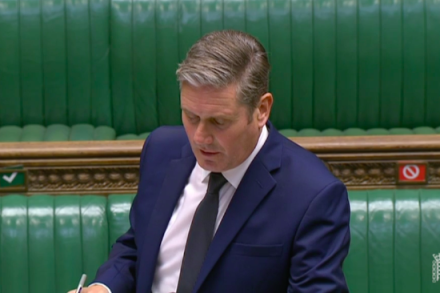
It’s official. The Labour party now has two leaders. Both are knights. But it’s hard to say which is the real Sir Keir Starmer. Not even Sir Keir Starmer seems to know. Good Sir Keir is the kindly, decent comrade who wants to aid his fellow man at a time of crisis. Wicked Sir Keir is the dastardly villain who plots to unhorse his foe with a poisoned lance or a hidden dagger. At PMQs he began as Good Sir Keir. He thanked Boris for extending the furlough and for voicing his opposition to racial prejudice. Then he got all dastardly. He read out a fistful of statistics proving that Britain has suffered the world’s worst corona-shambles. Our excess death toll, at 63,000, is shockingly high. Then this: ‘Last week he said he was proud of his record.

Corbyn takes the revolution online

Three faces peered out of the screen. At noon, last Saturday, Facebook hosted a digital debate between a trio of grandees from the Stop the War Coalition. Former Labour leader, Jeremy Corbyn, appeared in a plain white room that matched his open-necked shirt. The novelist Arundhati Roy spoke from Delhi. And the veteran activist, Tariq Ali, began the session by telling viewers that thousands were watching all around the globe. The great campaigners spent 70 minutes trying to create world peace from their kitchen tables. Tariq Ali is no longer the dashing figure of the 1960s who won fame protesting against the Vietnam war. A snowy mane now crowns his head. And he wears a copiously sprouting white moustache which makes him resemble a retired gunfighter in a Dodge City saloon.

So good and so raw that avoiding it might be the wisest course: Sea Wall reviewed

Sea Wall, by Simon Stephens, is a half-hour monologue about grief performed by Andrew Scott. The YouTube clip has been viewed more than 250,000 times. The habitual quirks and irritants of Stephens’s writing are all here: the inept jokes, the laddish swearing, the fascination with 1970s pop, the preference for males over females and the improbable back stories of the characters. The narrator is an Irish cameraman who earns money photographing ‘cushions and digital alarm clocks’ for shopping catalogues. He tells us a bit about his wife and daughter (‘she was a Caesarean’), but he’s far more interested in his father-in-law, Arthur, a scuba-diving maths teacher who retired from the British army with the rank of lieutenant-colonel.