Lara Brown

Lara Brown

Lara Brown is The Spectator's Commissioning Editor 

The project to ruin the National Gallery has begun

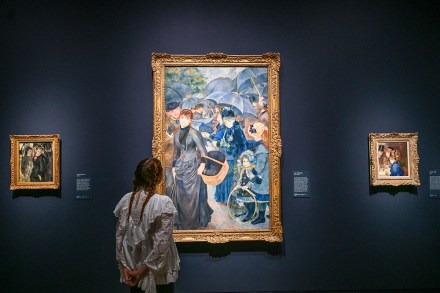
It started with the benches. When the National Gallery announced plans to auction off its red leather sofas last year – to be replaced with the sort of minimalist oak seating you might find at Euston station – it was obvious that this 200-year-old institution would be the next to fall in the long march towards ‘modernisation’. The official explanation was fire safety and pest control: curators claimed the Chesterfield-style furniture could not be cleaned safely. Wadsworth Atheneum in Connecticut has had the last laugh: it snapped the furniture up for around £1,200 a piece and installed it in the museum. No art-eating woodworms or devastating fires so far. Of course the real rot at the National Gallery set in earlier.
Russell Brand’s fall: ‘the Left faces a reckoning’ … and so does the BBC

50 min listen

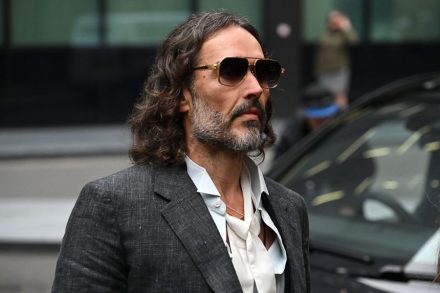
Michael Gove and Lara Brown discuss the downfall of Russell Brand, and ask why the BBC and figures on the Left were so willing to embrace him. What does his rise and fall tell us about the institutions that gave him a platform, and their pursuit of younger audiences? Plus, is Labour right to argue that schools have become exam factories? And finally, how Labour's proposed conversion therapy legislation could threaten free speech and leave parents at risk of criminal prosecution for questioning their child's gender identity. Produced by Oscar Edmondson and Henry Lloyd.

How mandarins sabotaged a rare prison success story

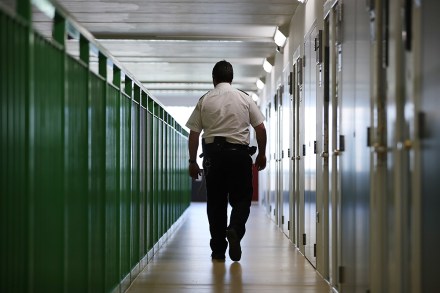
Britain’s prisons are in crisis. So, naturally, Whitehall has managed to snuff out one of the few organisations that might know how to fix them. Unlocked Graduates was founded in 2016 by Natasha Porter, a former teacher. Its goal was to solve one of the prison service’s most fundamental problems: the quality of its workforce. Prison officers have long been treated as glorified security guards. Applicants need not possess a single GCSE. Almost all candidates will never attend a face-to-face job interview and the governor does not meet those being recruited. Unsurprisingly, this system has not yielded good results. Unlocked changed this.

Is the John Lewis Christmas advert racist?

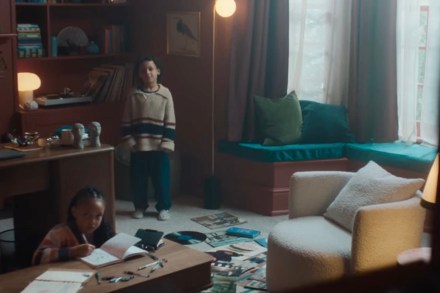
A white grandmother, Gloria, opens the door to her daughter's family. From the outset, it is clear that Freddie and Maggie, her mixed-race grandchildren, are two of the worst brought-up children ever to grace a Christmas advert. But here is the unfortunate irony. For years, some of John Lewis's most beloved Christmas adverts have featured white children demonstrating extraordinary kindness. Now the retailer has chosen to feature a mixed-race family, and the children are incapable of expressing affection for their grandmother without being bribed.

Do I consent to let you read this piece?

Few horror films are more chilling. A child stands, shaking, rooted to the spot. An elderly Irish couple advance on her in slow motion, puckering their lips. Before we reach the terrifying climax, the screen cuts out with the message: ‘Not everyone wants a hug. Even from the people who love them.’ This is Dublin Rape Crisis Centre’s new campaign, ‘we-consent’, funded by Ireland’s Department of Justice. Its goal was to inform grandparents that giving their grandchildren a spontaneous hug without properly obtained verbal consent could be harmful, traumatic or maybe even reminiscent of sexual assault. The advert was met by mockery and outrage online.

Lucy Powell’s ‘oracy’ plans are meaningless

Whenever a government minister cites the advent of artificial intelligence as the justification for a policy, you can be certain that there has been an absence of actual intelligence in the reasoning behind it. Nowhere is that clearer than in the Education Secretary’s embrace of ‘oracy’ as the new priority for our schools. ‘With AI on the rise,’ Lucy Powell asserted, ‘we need to go harder on the skills that make us human, like oracy.’ Ms Powell refrained from explaining what it is about large language models that requires a different approach to language teaching in our schools.

Who won conference season? | with Scarlett Maguire

26 min listen

For this live edition of Coffee House Shots, James Heale and Lara Brown are joined by pollster and strategist Scarlett Maguire at the Battle of Ideas Festival to unpack the party conference season and look ahead to the Budget. Who emerged from conference season in the strongest position, and why are the Conservatives and Labour finding their feet while Reform and the Greens falter? With the Budget looming, could suspected tax rises on the banks help Labour avoid a repeat of the political fallout from Rachel Reeves’s budget last year? Can Reform broaden its appeal beyond immigration and make the economy part of its pitch? Plus: with Labour MPs seemingly united behind Andy Burnham, is this really the party’s last chance saloon? Produced by Abigail Brierley.

Are we failing the next generation? – with Camilla Cavendish & Gloria de Piero

52 min listen

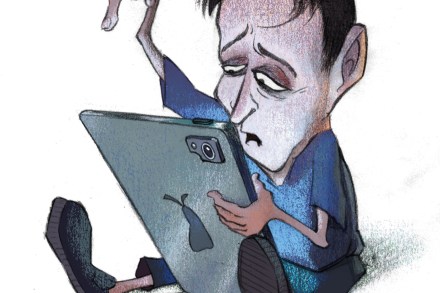
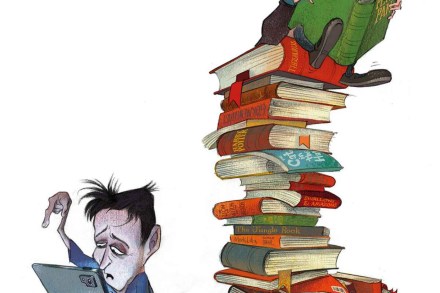
For this week’s Edition, William Moore is joined by the Spectator’s commissioning editor Lara Brown, Financial Times columnist and peer Camilla Cavendish and broadcaster and former Labour MP Gloria De Piero. This week: are screens creating a new education divide? Lara examines the growing backlash against technology in schools. What began as an attempt to create a generation of ‘digital natives’ has left children as young as four doing reading and maths on gamified apps – despite little evidence that they improve learning. State schools are spending hundreds of millions of pounds on 'EdTech', while some of Britain’s leading private schools are moving back towards books, handwriting and screen-free classrooms.

Are we failing the next generation? – with Camilla Cavendish & Gloria de Piero

The growing rebellion against screens in schools

In the late 17th century, Europe’s greatest intellectuals were consumed by the quarrel of the ancients and the modern, satirised by Jonathan Swift in The Battle of the Books. In the 18th century, Jean-Jacques Rousseau asked whether education should nurture children’s natural capacities or mould them to society’s expectations. The great educational dispute of the 21st century is rather less august: should children be reading books or collecting coins for cartoon robots? In the past decade, a new divide has opened in Britain’s classrooms. Not between rich and poor, clever and dull, or private and state schools, but between children still taught by teachers using whiteboards, pens and paper and those being instructed by an avatar on a screen. https://www.youtube.com/watch?

LIVE: Why aren’t Britain’s young people working?

39 min listen

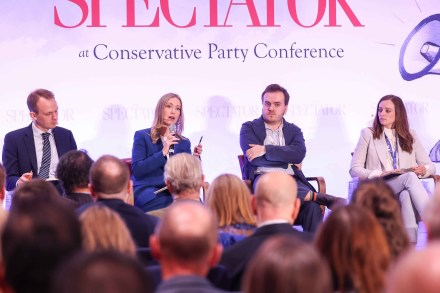
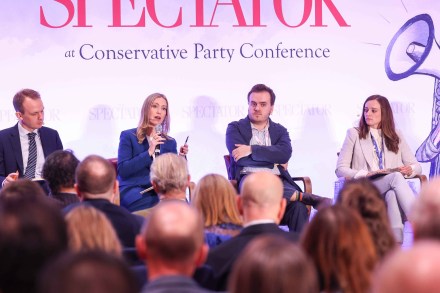
For this special edition of Coffee House Shots, economics editor Michael Simmons hosts a panel from Conservative Party conference on Britain’s growing NEETs crisis: the hundreds of thousands of young people not in education, employment or training. He is joined by shadow education secretary Laura Trott, the CBI’s Megan Bulford, Spectator commissioning editor Lara Brown and the CPS's Daniel Herring. Why are so many young people struggling to enter the labour market, and is the problem education, welfare, the cost of hiring or something deeper?

LIVE: Why aren't Britain's young people working?

LIVE: Why aren’t Britain’s young people working?

39 min listen

For this special edition of Reality Check, economics editor Michael Simmons hosts a panel from Conservative Party conference on Britain’s growing NEETs crisis: the hundreds of thousands of young people not in education, employment or training. He is joined by shadow education secretary Laura Trott, the CBI’s Megan Bulford, Spectator commissioning editor Lara Brown and the CPS's Daniel Herring. Why are so many young people struggling to enter the labour market, and is the problem education, welfare, the cost of hiring or something deeper?

Kemi’s conference speech: has she found ‘the right way’?

15 min listen

Kemi Badenoch has just delivered her conference speech, bringing Conservative Party Conference 2026 to a close. She very nearly almost announced the inheritance tax policy many had expected – instead beefing up the Tory offer to homeowners with a pledge to abolish inheritance tax on the family home. Beyond that, it was relatively light on new announcements: Kemi could hardly be accused of ‘policymaxxing’. What was clear from the Leader of the Opposition’s rhetoric, however, was that there is now plenty of clear blue water between the main parties – setting British politics up for an intriguing run-in. Has Kemi finally found ‘the right way’? Oscar Edmondson speaks to Tim Shipman, James Heale and Lara Brown. Produced by Oscar Edmondson.

A bonfire of regulations & Kemi’s iron dome

13 min listen

James Heale is joined by Tim Shipman, Michael Simmons and Lara Brown from the second day of Conservative Party conference in Birmingham. They discuss shadow chancellor Andrew Griffith’s pitch for a low-tax, low-regulation economy, Kemi Badenoch’s new ‘Britannia Shield’ defence proposal and whether the Tories are starting to recover some confidence. As Kemi seeks to assemble a more credible frontbench team, to what extent is this conference the beginning of a genuine Tory revival? Produced by Patrick Gibbons.

The Imperial War Museum has lost its way

It is a tale as old as time. A museum is slightly disappointed in its visitor numbers. Curators get together and conclude that the problem is a lack of young people. A large reorganisation takes place, usually driven by the hand of a consultancy firm, to seduce the elusive Gen Z visitor into their hallowed halls. The result is a far less interesting museum, no new young visitors, and those that loved and patronised the museum feel left behind and gradually stop going as well. This is the long march through the institutions for the twenty-first century.  Previously, we have seen Kew Gardens, the Mary Rose and the National Maritime Museum all transformed by it.

Viewing the Bayeux Tapestry is a miserable experience

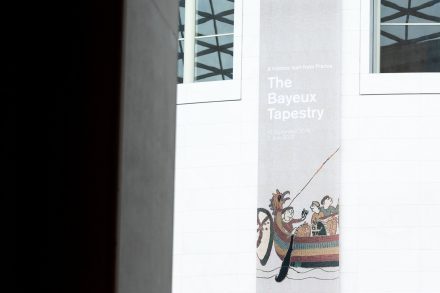
There is no denying the wonders of the Bayeux tapestry. Seeing the Norman Propaganda in the flesh, rather than on a smartboard in a history lesson, is an arresting experience. You notice, perhaps for the first time, the fables and strange beasts of the lower margins giving way to a brutal carpet of dead bodies – decapitated bodies, severed limbs and blood – as the Normans win at Hastings.  Unfortunately, the British Museum appears to be doing everything in its power to prevent the public from actually looking at it. Most art critics and journalists will have first visited the embroidery at a press evening or media breakfast. Consequently, most reviewers have successfully traversed the ‘Bayeux Tapestry Experience’ without incident.

Should Burnham call a snap general election?

41 min listen

For this week’s Edition, William Moore is joined by the Spectator’s deputy editor and editor of Spectator World Freddy Gray, commissioning editor Lara Brown, and deputy political editor James Heale. This week: will Andy Burnham call an early general election? Tim Shipman’s cover story asks whether the Prime Minister might go to the polls before 2029, as Labour faces a worsening fiscal situation and an increasingly difficult choice over tax and spending. With the government’s budget looming, does Burnham need a fresh mandate – or is an election simply too risky? And with Reform and the Conservatives competing for voters on the right, could an early contest catch his opponents off guard? Also: the coming AI backlash.

Have women ever had it so good? | with Julie Bindel & Miriam Cates

21 min listen

In this episode, we return to a live Spectator event asking: have women ever had it so good? The Spectator’s commissioning editor Lara Brown is joined by Zoe Strimpel, author of Good Slut; Spiked columnist Ella Whelan; feminist writer Julie Bindel; and broadcaster and former Conservative MP Miriam Cates, as they debate women’s freedom, feminism, sexual liberation and the changing relationship between men and women. We pick up the conversation as the panel turns to prostitution and pornography, and asks whether porn and feminism are fundamentally in conflict – or whether the two can coexist. To find out more about upcoming Spectator events, visit events.spectator.co.uk. Produced by Abigail Brierley.

Have women ever had it so good? | with Julie Bindel & Miriam Cates

‘It’s a cesspool!’ — What’s going wrong in Britain’s universities?

52 min listen

William Moore is joined by The Spectator’s associate editor Toby Young, commissioning editor Lara Brown and newsletter editor and restaurant critic Angus Colwell. This week: What has gone wrong with British universities? Lara unpacks the wider academic crisis in the wake of the Jason Arday scandal, from ‘surviving the apocalypse’ courses at Warwick to maths departments promising to ‘decolonise’ the subject. Has the sector lost its nerve? Also: Balding. Toby explains why he’s trying to talk his three sons out of hair transplants, while Angus and Lara weigh in on whether men vastly overestimate the importance of their hair on the dating market. Plus: is Indian the best cuisine?

‘It’s a cesspool!’ – Jason Arday & the death of Britain’s universities

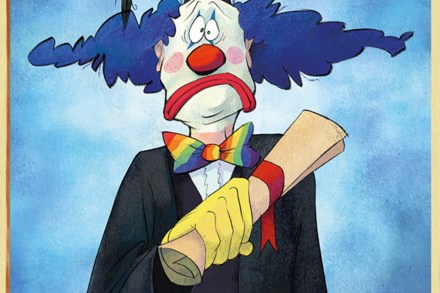
Class clowns: the triumph of inanity over academia

Daniel Defoe observed that plague victims ‘never perceiv’d that they were infected’ until they discovered the ‘tokens’ on their skin. By that point, ‘nothing could follow but certain Death’. Something similar might be said of Britain’s universities. In recent days, the Jason Arday affair has captured the world’s attention because of its absurdity. But the humiliation of Cambridge is not an early sign of infection. It is just a particularly visible bubo. At one level, Arday’s fall reveals how, even in our most elite universities, DEI (diversity, equity and inclusion) dogma has warped intellectual standards to the point of madness.