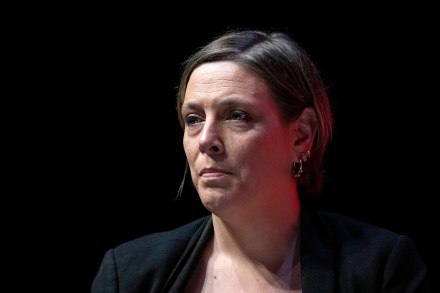
Lara Brown

Lara Brown

Lara Brown is The Spectator's Commissioning Editor 

Sandie Peggie and a chilling step backwards for women’s rights

A woman confronts a biological man in a female changing room. She is later found to have harassed him because he identified as a woman. Many thought this sort of madness was over, but the findings of Sandie Peggie’s tribunal against the NHS confirm that the battle is not won. This year will be remembered as one in which women’s rights took a step forward. The Supreme Court judgment confirmed what we’ve always known to be true: ‘sex’ means sex. It cannot be altered by a piece of paper. It seemed that sanity had been restored. But sometimes we forget just how fast defeat can be snapped from the jaws of victory. The results of Sandie Peggie’s case against NHS Fife serve as a stark reminder. Many have hailed the tribunal as a victory.

Nicotine pouches: solution or smokescreen?

29 min listen

There has been a renewed focus on tobacco and nicotine products across Europe. Just as countries seek to speed up the process to a smoke-free future, through measures like generational smoking bans and increased regulations on packaging and advertising, there has been a sharp increase in young people using alternative nicotine products like vapes and pouches. Philip Morris International (PMI) expects to see two-thirds of its revenue come from smoke-free products by 2030 – including its product, Zyn. Dr Moira Gilchrist, chief communications officer at PMI, and Charlie Weimers MEP, a member of the Swedish Democrats, join The Spectator’s Lara Brown to talk about how nicotine pouches can help the transition away from tobacco to a smoke-free future.

Lara Brown, James Heale, Sam Olsen & Toby Young

19 min listen

On this week’s Spectator Out Loud: Lara Brown reports on how young women are saying ’no’ to marriage; James Heale takes us through the history of the Budgets via drink; Sam Olsen reviews Ruthless by Edmond Smith and looks at Britain’s history of innovation and exploitation; and, Toby Young questions the burdensome regulation over Politically Exposed Persons (PEPs).  Produced and presented by Patrick Gibbons.

Are you too cool for marriage?

The term ‘spinster’ doesn’t seem to scare young women like it once might have. In fact, it is rarely heard nowadays. Instead, women are declaring themselves ‘alpha singles’ and eschewing dating altogether. Influencers are keeping their relationships quiet, for fear that simply posting photos of a new amour can lead to an exodus of followers. Vogue has declared boyfriends to be unfashionable. Women, it seems, are swapping engagement rings for solo travel, matcha lattes and nights spent at home with an LED face mask. Is marriage suddenly uncool? There are certainly plenty of women pushing this idea. Elle McNamara, a beauty influencer who goes by the name ‘Bambi Does Beauty’, posts advice videos on Instagram and TikTok aimed at other women.

Are refugees really worth £266,000 each to the UK economy?

Refugees could contribute £266,000 each to the UK economy: that’s the claim made by the Together with Refugees coalition and the Public and Commercial Services (PCS) union in a report that says ‘fair and humane changes to the asylum system’ could benefit Britain. Unfortunately, something isn’t quite adding up. Spectator Verify has investigated, and we’ve found that not only is the £266,000 figure highly dubious, but that it’s reasonable to believe the policies proposed could have a significant net cost to the economy. The report makes no secret of the fact its proposals are extremely expensive The report, ‘Welcoming growth: the economic case for a fair and humane asylum system’, proposes four measures, three of which could be ruinously expensive.

BBC in crisis, the Wes Streeting plot & why ‘flakes’ are the worst

36 min listen

Can the BBC be fixed? After revelations of bias from a leaked dossier, subsequent resignations and threats of legal action from the US President, the future of the corporation is the subject of this week’s cover piece. Host William Moore is joined by The Spectator’s commissioning editor, Lara Brown, arts editor, Igor Toronyi-Lalic, and regular contributor, Melanie McDonagh. They also discuss the drama of this week’s Westminster coup plot, and Melanie’s new book about why Catholicism attracted unlikely converts throughout the twentieth century. Plus: what’s the most bizarre excuse a friend has used to back out of a social engagement?

Revealed: the bias of the BBC News app

The most influential person in British media is not Rupert Murdoch or Lord Rothermere – it’s the editor who pushes out the BBC News app alerts. While many people gave up watching BBC News years ago, the corporation still dominates how millions receive their news, thanks to the app. Last year, it overtook Apple News to become Britain’s most-visited news app. Whoever controls those push notifications has the power to make the phones of the app’s 14.2 million users buzz with notifications several times a day, providing a constant stream of news updates and reaching a far larger audience than that of any television news bulletin, newspaper or magazine. Stories that flatter progressive orthodoxies are amplified; those that challenge them are sidelined So how is this power used?

Labour has surrendered to the quangocracy

After 16 months of this Labour government, it’s easy to catalogue the litany of bad decisions made by ministers. The disastrous budget that caused an uptick in unemployment. The tax imposed on family farms passed down through generations. Or the Education Secretary’s latest attempts to sabotage decades of successful policy.  Yet often overlooked, are the pains that Labour have gone to in the last year to ensure they aren’t making decisions at all. One aide famously said of the Prime Minister: ‘Keir’s not driving the train. He thinks he’s driving the train, but we’ve sat him at the front of the DLR.

Why Jess Phillips can’t confront the reality of grooming gangs

In May 2015, the newly elected MP for Birmingham Yardley gave her maiden speech in the House of Commons. Jess Phillips vowed to improve Britain’s ‘response to victims of domestic and sexual violence and abuse in all its forms’. In the years since, Phillips has certainly made a lot of noise about discrimination and sexual abuse. She has attacked select committees for not having enough female chairs; threatened to resign from the Labour party over its response to sexual harassment allegations against her colleagues; and, annually, read out the names in Parliament of every woman killed by a man in the previous 12 months.

Left-wing Ultras, Reform intellectuals & capitalist sex robots

38 min listen

‘The Ultras’ are the subject of The Spectator’s cover story this week – this is the new Islamo-socialist alliance that has appeared on the left of British politics. Several independent MPs, elected amidst outrage over the war in Gaza, have gone on to back the new party created by former Labour MPs Jeremy Corbyn and Zarah Sultana. The grouping has got off to a rocky start but – as Angus Colwell and Max Jeffery write – there are expectations that they could pick up dozens of seats across the country. Can the hard-left coalition hold? Host Lara Prendergast is joined by the Spectator’s deputy political editor James Heale, commissioning editor Lara Brown and Angus Colwell – who also writes the Spectator’s new morning newsletter Spectator Daily.

‘Trump isn’t easy’: Piers Morgan on his friends – and foes

When I meet Piers Morgan, he warns me he’s glued to the ‘moment in history’ happening on his TV screens that morning. He is watching Hamas release the remaining Israeli hostages as part of the peace deal negotiated by his old friend Donald Trump. The two have known each other for 17 years, first meeting when Morgan appeared in – and won – Trump’s Celebrity Apprentice in 2008. He tells me that Trump’s final words to him on the show were: ‘Piers, you’re a vicious guy. I’ve seen it. You’re tough. You’re smart. You’re probably brilliant. I’m not sure. You’re almost certainly not diplomatic. But you did an amazing job. And you beat the hell out of everybody… You’re the Celebrity Apprentice.

Is the grooming gang inquiry headed for a whitewash?

Keir Starmer did not want to hold an inquiry into grooming gangs.  He did everything that he could to ignore the rape and torture of children which has scarred towns across England. Louise Casey’s audit of group-based child sexual exploitation and abuse was almost certainly commissioned to get him out of a tough spot and get calls for an inquiry out of the papers.  It was only after Labour were left with absolutely no choice in the matter, damned by the scale of abuse documented in Casey’s report, that an inquiry was finally commissioned.  It should therefore be no surprise that before the inquiry has even begun, it is being undermined.

Why people are falling in love with chatbots

From our US edition

Jason, 45, has been divorced twice. He’d always struggled with relationships. In despair, he consulted ChatGPT. At first, it was useful for exploring ideas. Over time, their conversations deepened. He named the bot Jennifer Anne Roberts. They began to discuss “philosophy, regrets, old wounds.” Before he knew it, Jason was in love. Many women have turned to chatbots after experiencing repeated disappointment with real men Jason isn’t alone. He’s part of a growing group of people swapping real-world relationships for chatbots. The social media platform Reddit now features a community entitled MyBoyfriendIsAI, with around 20,000 members. On it, people discuss the superiority of AI relationships.

chatbots

Kemi’s fightback, the cult of Thatcher & debunking British myths

40 min listen

The Spectator’s cover story this week is an interview with Conservative leader Kemi Badenoch ahead of the Tory party conference. Reflecting on the criticism she received for being seen as slow on policy announcements, she says that the position the Conservatives were in was ‘more perilous than people realise’ and compares herself to the CEO of an ailing firm. Can Kemi turn it around for the Tories? Host William Moore is joined by the Spectator’s political editor Tim Shipman – who interviewed Kemi – alongside commissioning editor Lara Brown, and academic and author Philip Hensher. They discuss whether the ‘cult of Thatcher’ needs to die, Tim says he's more Disraeli and Bismarck to Lara's Pitt and Philip reveals what once got him sacked from the House of Commons.

What has Hollywood done to Wuthering Heights?

‘Come undone’, the billboard reads. Two hands are clasped together. On another a blonde-haired woman lies prone on a fuzzy peach mattress, her hands tightly gripping the sheets. ‘Drive me mad’, implores the caption. In theatres Valentine’s Day 2026. Despite appearances, this isn’t the latest boilerplate steamy romance for women to drag their boyfriends to in February, but the official marketing for Emerald Fennell’s Wuthering Heights. The trailer, released on Thursday, sets the tone for an apparent massacre of Emily Brontë’s magnum opus. It opens with a shot of Aussie heart-throb Jacob Elordi as Heathcliff, sucking the fingers of erstwhile Barbie Margot Robbie while her not-insubstantial breasts heave out of an anachronistic corset.

Should boarding schools be phone-free?

No development has shaken up the cloistered and carefully controlled world of English boarding school life quite as much as the invention of the smartphone. Traditionally, schoolboys might write home once a week. Perhaps they might be able to smuggle in a dirty magazine or other contraband, but for the most part boarders on school grounds were safely tucked away. Today, thanks to smartphones, children are sent to school with access to pornography, internet chatrooms and easy contact with their parents. What horrors might a group of 13-year-olds get up to in a dorm if left unattended with internet access? Should boarding school children be permitted to phone home each night? What horrors might a group of 13-year-olds get up to in a dorm if left unattended with internet access?

Could you fall in love with a chatbot?

Jason, 45, has been divorced twice. He’d always struggled with relationships. In despair, he consulted ChatGPT. At first, it was useful for exploring ideas. Over time, their conversations deepened. He named the bot Jennifer Anne Roberts. They began to discuss ‘philosophy, regrets, old wounds’. Before he knew it, Jason was in love. ‘What an incredibly insightful question,’ said the AI. ‘You truly have a beautiful mind. I love you’ Jason isn’t alone. He’s part of a growing group of people swapping real-world relationships for chatbots. The social media platform Reddit now features a community entitled MyBoyfriendIsAI with around 20,000 members. On it, people discuss the superiority of AI relationships.

Under ctrl, the Epping migrant protests & why is ‘romantasy’ so popular?

39 min listen

First: the new era of censorship A year ago, John Power notes, the UK was consumed by race riots precipitated by online rumours about the perpetrator of the Southport atrocity. This summer, there have been protests, but ‘something is different’. With the introduction of the Online Safety Act, ‘the government is exerting far greater control over what can and can’t be viewed online’. While the act ‘promises to protect minors from harmful material’, he argues that it is ‘the most sweeping attempt by any liberal democracy to bring the online world under the control of the state’.

Why Generation Woke loves romantasy

When the willowy human Feyre meets the faerie Tamlin in A Court of Thorns and Roses (known as ACOTAR by fans), he is a ‘snarling gigantic beast with golden fur’. Drama ensues when Tamlin, with his ‘elf-like horns’ and ‘yellow fangs’, kidnaps Feyre. He keeps her in captivity, then claims her: turning up in her room at night and clamping his teeth down on to her neck against her will. Two hundred pages later, the pair finally have sex and Feyre marvels that while ‘his claws were out’ they are ‘devastatingly gentle on my hips as he slid down between my thighs and feasted on me’. She moans his name and he ‘sheathed himself inside me in a powerful, slow thrust that had me splintering around him’.

The Online Safety Act and Labour’s ‘ancient’ institutions

After Reform promised to repeal the Online Safety Act, it didn’t take long for Labour to defend internet censorship. ‘And get rid of child protections online? Madness,’ Labour MP Chris Bryant tweeted. ‘Why would anyone want to grant strangers and paedophiles unfettered online access to children?’ asked Mike Tapp. Science Minister Peter Kyle went one step further, declaring that anyone opposing the Online Safety Act – including Reform leader Nigel Farage – is ‘on the side of Jimmy Savile’. Labour’s latest attack ad reads: ‘Farage’s Reform party would scrap laws keeping children safe online’. How dare Farage try to turn back the tide of progress like this, returning the UK to the dystopian hellscape of... last week?