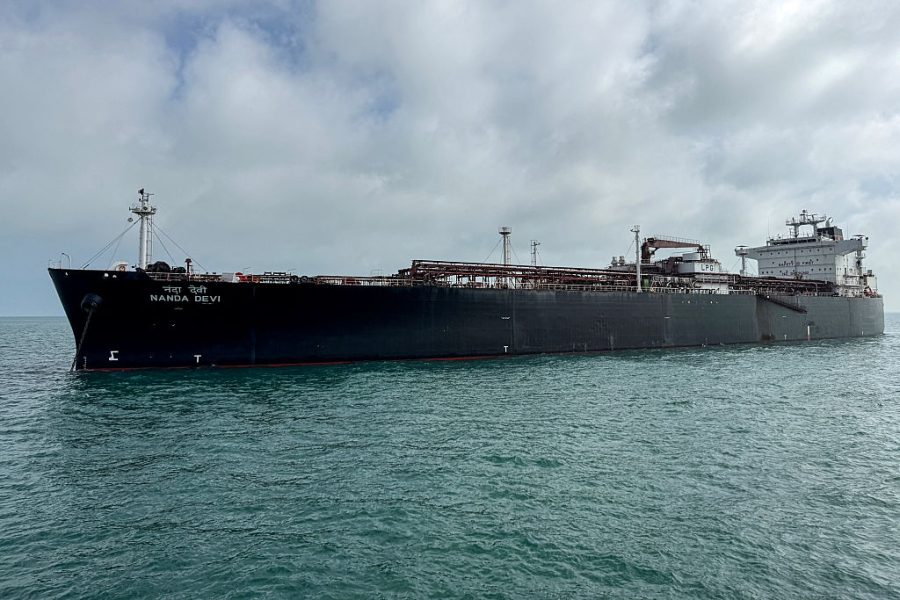
Unless something shifts profoundly in the current direction of the US war on Iran, the Iranian regime appears set to survive this round of conflict. Survival alone does not represent victory for Tehran. If, however, the fighting ends with the Iranians still in control of the Strait of Hormuz, the strategic balance in the Middle East will have shifted, with likely profound consequences for the future direction of the region.
The US and Israel are continuing to demonstrate their absolute superiority over Iran in the conventional military arena. Israel’s air force is working its way down a long list of regime and military targets. But planners in Israel no longer expect that their air action will plausibly lead to or assist a popular revolt in Iran to bring down the regime. No such revolt looks likely to appear. Rather, the Iranian system is currently demonstrating its durability in a number of key areas.
Regarding the nuclear file, the regime maintains access to around 450 kg of uranium enriched to 60 per cent. This means that should it choose to do so, it could move rapidly (within a few months) to produce sufficient uranium enriched to weapons-grade for the production of about ten nuclear devices, according to an IAEA yardstick.
To the region, it will be clear that the will of the US was thwarted by Iranian action
Regarding Iran’s ballistic missile programme, undoubtedly its launch capacities have been severely battered in the course of the last month. Still, Iran (and its Lebanese, Yemeni and Iraqi allies) are launching drones and missiles at Israel, US targets and US Gulf allies. No less importantly, the capacity to produce missiles and drones and the relationships (with Russia and China) which underlie Tehran’s capacities in this arena are intact. It can therefore be expected that at the conclusion of the present round of fighting, the regime will quickly set about seeking to repair and replenish its damaged but not destroyed missile and drone programmes.
On the matter of Iran’s network of client and proxy organizations across the region, this element of power projection has not been seriously damaged in the last month. Elements of this network account for the three additional fronts in the war, alongside the direct confrontation between the US, Israel and Iran. The three additional fronts are south Lebanon, where Israeli forces are operating in response to Hizballah’s decision to enter the war on 4 March; Yemen, where the Houthis have begun ballistic missile attacks on Israel; and Iraq, where Iran’s client militias are engaged in ongoing attacks on US and allied facilities.

Realistically, these three key elements can only be comprehensively defeated by the destruction of the Iranian regime itself. The nuclear program will always be subject to revival for as long as the regime possesses the will to revive it and Iran has the native scientific knowledge necessary for this. The same goes for the missile and drone programmes. The various proxies can plausibly be challenged by local actors, but the removal of the Tehran regime would at a stroke reduce them to their natural dimensions as local players. It is Iranian backing and capacities alone which turn, for example, Lebanese Hezbollah or the Houthis into a danger for their neighbours, rather than merely a negative presence in their own countries.
But given the likely survival of the regime after this round, the remaining question will be whether the Iranian regime emerges from the current fighting weakened and diminished, or strategically strengthened, despite the undoubted serious physical damage it has suffered. This depends on whether Iran’s current de facto seizure of control of the Strait of Hormuz can be reversed or whether the fighting ends with Tehran still in effective control of the waterway.
If Iranian control of Hormuz can be broken, then the US administration and the government of Israel will be able to make a plausible case that a dangerous foe has been significantly weakened at manageable cost. It will not be the end of the long contest with Iran and will not be available to be presented as such (particularly given the hollow claims of that type made after the ’12 Day War’ last June). But Iran will have been shown to have no real defences against the superior conventional power of its enemies. If its Hormuz gambit is reversed, it will similarly be clear that its undoubted abilities in the asymmetric warfare field cannot be translated into real strategic gain, except against less powerful local enemies.
If, however, the war ends with Iran still in de facto control of Hormuz, then the implications are profound. Iran will have demonstrated that its long investment in irregular capacities has conferred on it means of response to more powerful enemies which can be leveraged into real power. By imposing potential economic consequences on the United States and its allies, alongside the potential physical costs of action to regain control of Hormuz, Tehran will have forced its enemies to blink first. This fact will be apparent to all regional forces. The likely outcome will be efforts by both regional and global players to reconcile with Tehran.
Already, a number of countries dependent on use of the strait for their energy needs have reached separate accommodations with the Iranians to ensure the safe transit of their ships. This is a sign of what is to come if Iranian control is not broken. The list of countries predictably includes Russia, China and Pakistan. But Greece, the Philippines, Thailand and India have also reached pragmatic accommodation with the current de facto custodians of the strait. More countries are likely to follow if the current situation holds.
To the region, it will be clear that the will of the US was thwarted by Iranian action. The fact that the conventional Iranian navy is largely at the bottom of the sea won’t offset this. Everyone in the region knows that Iran never predicated its power on conventional sea power. Rather, the asymmetrical methods of the Revolutionary Guards Corps will be understood to have carried the day.
The build-up of US military power in the Middle East is not yet completed. When the second Marine Expeditionary Unit arrives later this month, the choice facing the US and its allies will be clear: action to open Hormuz or accepting a significant Iranian strategic achievement in the current round of fighting.





Comments