Jonathan Sacerdoti

Jonathan Sacerdoti

Jonathan Sacerdoti is a broadcaster and writer covering politics, culture and religion

The Jerusalem massacre and the illusion of peace

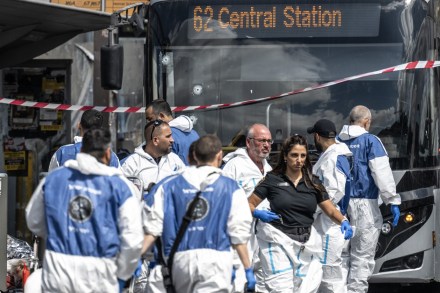
You can tell a great deal about countries and people by how they react to a horrific act of terror. And this morning’s massacre at the Ramot junction in Jerusalem came at a moment heavy with symbolism: just as the world was waking up to reports of Donald Trump floating a new plan for the release of Israeli hostages held in Gaza, the illusion of a negotiated, civilised discussion with the Palestinian movement was shattered. The gunfire in Jerusalem was a brutal reminder that such fantasies collapse the moment they are tested against reality. To speak of ‘bringing back peace’ in this context is not only ahistorical, it is delusional The official reaction of Hamas was to describe the killings as a ‘heroic operation’.

Rabbi Sacks’s legacy shines brighter than ever

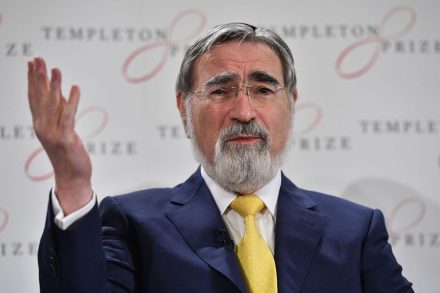
When King Charles paid tribute to Rabbi Lord Jonathan Sacks following his death in 2020, he called him 'a light unto our nation'. It was a phrase that captured something profound and widely felt. Rabbi Sacks, who had served as Chief Rabbi of the United Hebrew Congregations of the Commonwealth from 1991 to 2013, was a towering figure in British public life and a moral voice of global reach. His speeches echoed in parliament and pulpits alike, his words sought out by broadcasters and schoolchildren, his counsel prized by religious and secular leaders across the world. This autumn sees the publication of a remarkable new edition of the Chumash, the Five Books of Moses, the foundational texts of the Hebrew Bible, accompanied by Rabbi Sacks' translation and commentary.

Hamas will struggle to recover from the elimination of Abu Ubaida

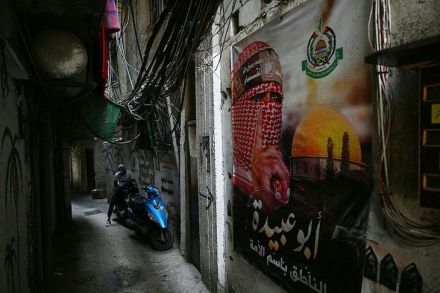
Despite its extraordinary discipline and repeated battlefield successes over the past two years, Israel has been judged in many quarters to have failed in one vital domain: the war of information. While Israel has neutralised enemy commanders, destroyed arsenals, and advanced through hostile territory, it has consistently been outflanked in the propaganda theatre, leading armchair generals to declare that no amount of military action can kill “an idea”. The elimination of Abu Ubaida shows that Israel constantly adapts Hamas and its allies have skilfully harnessed imagery, narrative, and the symbols of victimhood to mobilise global opinion, especially in the West. Yet in recent weeks, there has been a discernible shift.

Ed Davey’s pathetic Gaza boycott

Ed Davey has built an entire political career on pratfalls, water slides and staged wipe-outs, like a children’s entertainer who accidentally wandered into Westminster. Paddleboarding into the lake, hurling himself down a slip ’n’ slide, spinning on teacups at Thorpe Park, he’s like one of those tragically comic idiot acts on Britain’s Got Talent, selected specifically to be mocked by the entire nation, because at least it gets people talking. Davey long ago realised that nobody would ever remember him for policies, ideas, or even basic charisma. So instead he appears to have branded himself as the nation’s soggiest clown and seems content with that level of respect and notoriety.

The BBC’s Israel problem needs investigating

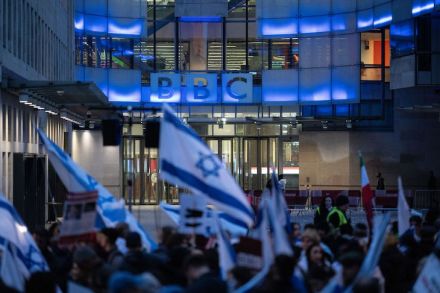
When the BBC was forced to admit that a woman it featured as a starving victim of the Gaza war was in fact also receiving treatment for cancer, it was not a minor correction. It was a collapse of credibility. The image of her wasted body, presented as evidence of Israeli starvation tactics, ricocheted across global media. It was powerful and emotive. And it is part of a broader and deeply troubling pattern. Time and again, when it comes to Israel or Jews, the BBC abandons the basic obligations of journalism: verify before broadcasting, contextualise before condemning, and correct with real transparency when errors occur. The list of failures is not merely anecdotal but institutional.

Israel will have to dig deep for its Gaza City offensive

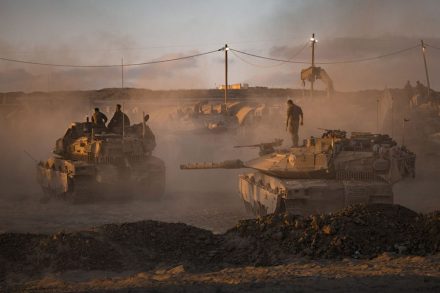
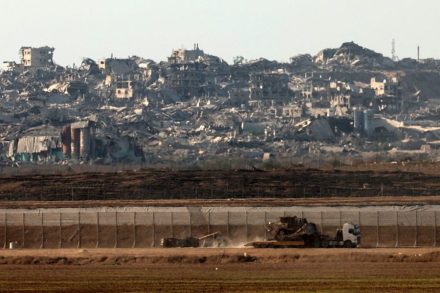
Since the renewal of ground operations in March this year under the Southern Command, the Israeli Defence Forces (IDF) have entered a defining phase of their campaign in the Gaza Strip. Under the framework of Operation 'Gideon’s Chariots', Israeli troops have achieved what military officials describe as operational control over approximately 75 per cent of the territory. This advance has laid the foundation for the IDF’s current positioning on the outskirts of Gaza City and the launch of the next phase of the war: a concentrated assault on the remaining Hamas strongholds in the urban core. There is an undercurrent of exhaustion across the Israeli public The gains under Operation 'Gideon’s Chariots' are considerable.

Israel risks rewarding Hamas’s kidnapping

What weapon is stronger than F-16s, drones, targeted strikes, disciplined and war-hardened ground troops, and even nuclear weapons? Hostages. Despite its formidable armed forces and weapons capabilities, in the long and bitter struggle between Israel and its enemies, no tool of war has proven more effective in bending the will of the Jewish state than the abduction of its own citizens. Missiles can be intercepted, tanks can be destroyed, but a single captive Israeli can paralyse decision-making at the highest levels of government, as we are seeing today. From the earliest wars, prisoner exchanges followed the conventions of armed conflict. After 1948 and again in 1967, soldiers were exchanged for soldiers in relatively balanced numbers. But over time, the symmetry vanished.

Hamas’s hostage deal is a catch-22 for Netanyahu

The fragile negotiations between Israel and Hamas have once again entered a decisive phase, marked by the unveiling of a new ceasefire-hostage release proposal brokered by Egypt and Qatar. This proposal, which Hamas has reportedly accepted, includes notable shifts in its previous demands. Yet the core dilemma confronting the Israeli leadership remains unchanged: whether to accept a partial agreement that could save lives in the short term but risks undermining its broader strategic aims. According to multiple sources, Hamas has moderated two of its key positions that previously stalled talks. It is now seeking the release of 140 prisoners serving life sentences instead of 200, and has agreed to a slightly wider Israeli buffer zone along Gaza's border.

Hamas is using Israel’s protests as a weapon of war

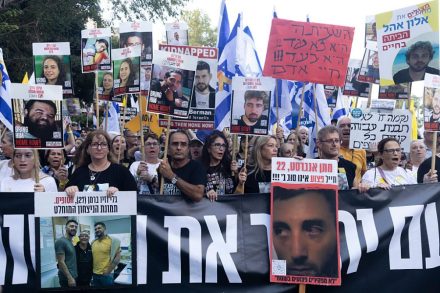
Israel is caught in a tragic paradox: the finest qualities that define its national character – its compassion, solidarity, and moral responsibility – are exploited by adversaries who recognise in these virtues not strength, but vulnerability. As over half a million Israelis joined a nationwide strike yesterday, demanding a ceasefire and the return of hostages from Gaza, it was impossible not to be moved by the depth of feeling, the urgency of the appeals, and the sheer moral weight of the demand. Yet what moves one side to tears hardens the heart of the other, moving them to ruthless calculation. The protests are genuine, justified, and born of unbearable grief, but to Hamas they are confirmation that its strategy is working.

The demonisation of Israeli ‘settlers’

In the UK today, hold the wrong view and you’re cast as beyond the pale. Brexiteers are bigots. If you oppose mass immigration, you’re a far right racist. Among parts of the political class and commentariat, these labels are considered the consensus. The political and media establishment have crafted a narrative in which dissent from liberal orthodoxy is indistinguishable from moral degeneracy. And it’s not just in Britain. Remember when Hillary Clinton branded swathes of Americans a basket of deplorables?  Many who find themselves on the receiving end of this treatment, often working-class, politically moderate folk, are stunned to discover that their legitimate fears have been transmuted into hate by those unwilling to hear them.

Will the occupation of Gaza allow Israel to crush Hamas?

In a decision of historic weight, the Israeli government has formally approved a plan to expand its military operation and establish full control over the Gaza Strip. This has come despite the opposition of Chief of Staff Eyal Zamir, who raised pointed warnings during a meeting that began at 6:00 pm Israeli time last night and stretched late into the night. Tensions between Zamir and Prime Minister Benjamin Netanyahu surfaced throughout the protracted session, with several ministers directly challenging the chief of staff over his stance. Eventually, the Political-Security Cabinet voted by an ‘overwhelming' majority to endorse Netanyahu’s proposal to defeat Hamas through a combination of military occupation, strategic disarmament, and post-conflict governance.

Israel’s plan to occupy Gaza is a last resort

Reports last night from Israeli Channel 12 quoting a senior official in Prime Minister Benjamin Netanyahu's office have confirmed what has long been rumoured, feared, and for some, awaited: the decision has been made to occupy the Gaza Strip. This is not yet formal policy, pending cabinet approval, but the trajectory is now unmistakable. The prelude has ended. The war is entering a new, graver phase. Western commentary will, as usual, rush to treat this as a moral failure of Israeli restraint, or as the inevitable result of hawkish ideology. Yet that interpretation is not only false, it is profoundly dishonest and the opposite of the truth. The occupation of Gaza is not a first resort. It is, tragically, the last.

Starmer’s Palestine position is perverse

Keir Starmer’s declaration that Britain will recognise a Palestinian state unless Israel takes ‘substantive steps’ to end the war in Gaza is, on its face, a symbolic diplomatic gesture. Yet symbols, particularly in international affairs, carry weight. And this one is a blow to Israel, both politically and strategically. The question is not whether this decision is consequential, but how and for whom. If recognition is contingent on Israel achieving a ceasefire, then Hamas has every reason to prolong the conflict Framed as a humanitarian imperative, the British ultimatum appears, on closer inspection, to rest on an unsettling inversion of logic.

Why Israel is forced to sabotage itself

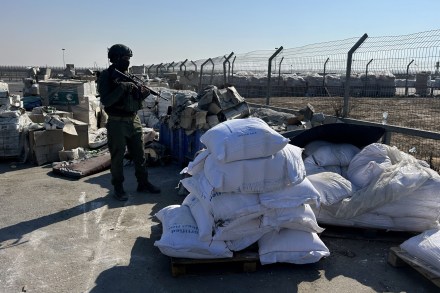
Israel’s recently announced tactical pause in several sectors of Gaza, aimed at facilitating the distribution of humanitarian aid, is not merely a gesture of compassion under fire. It is a tactical adjustment born of necessity and certainly not a shift in moral posture. To understand this move properly is to grasp the complex interplay of military constraint, media manipulation, psychological warfare, and political coercion. This is the bitter paradox: to maintain moral and strategic legitimacy in the eyes of its allies, Israel must act against its own operational interests The decision to implement a daily ten-hour pause in military activity in areas such as Al-Mawasi, Deir al-Balah, and Gaza City reflects more than an internal policy shift.

The leaked email that blows apart the BBC’s impartiality claims over Gaza

A leaked internal email from a BBC executive editor reveals that the Corporation has issued prescriptive instructions to staff on how to cover the humanitarian situation in Gaza. The memo, titled 'Covering the food crisis in Gaza', amounts to a top-down editorial diktat that discards impartiality, elevates one side of a deeply contested narrative, and imposes a specific anti-Israel legal-political framing as settled fact. The existence of this email is a telling sign of how the Corporation works to ensure its journalists stick to its own ideological angles.

Will one final push by Israel destroy Hamas?

For more than 650 days of war in Gaza, one swathe of territory remained mostly untouched by Israeli ground manoeuvres: the dense, urban core of the central camps – Nuseirat, Deir al-Balah, Maghazi, and Bureij. That pattern has now decisively changed. On Sunday morning, the Israel Defence Forces (IDF) issued evacuation orders for southern Deir al-Balah. Within 24 hours, the area was under sustained air and artillery assault, with Gazan sources reporting the advance of Israeli tanks near the Abu Holi junction, adjacent to Salah al-Din Road. Though precise details of the strikes remain unclear, what is beyond doubt is that Israel is now expanding its war effort into one of the last remaining Hamas redoubts in the Strip.

What’s happening in southern Syria – and why Israel is involved

Over the last 24 hours, southern Syria has seen a sharp escalation in violence involving Syrian government forces, local Druze militias, and Israeli airpower. The developments centre on the city of As-Suwayda and the surrounding region, home to much of Syria’s Druze population, and have drawn renewed attention to the complex relationship between the Druze community, the Syrian regime, and Israel. Prospects for normalising relations between Israel and Syria have significantly worsened The Syrian army has begun heavily shelling areas in and around As-Suwayda. Israeli aircraft launched strikes against regime positions in Suwayda and Daraa, and reportedly targeted a military convoy belonging to Abu Amsha, a Turkish-backed militia commander.

The BBC Gaza documentary report is a cover-up

The BBC’s long-awaited editorial review of its documentary Gaza: How to Survive a Warzone was published today. It reads not like a rigorous investigation into serious journalistic failures, but like a desperate institutional whitewash. The report bends over backwards to defend the indefensible, trying to sanitise a catastrophic editorial misjudgment as little more than ‘a significant oversight by the Production Company.’ At the heart of the scandal lies the BBC’s failure to disclose that the documentary’s narrator, a Palestinian boy named Abdullah Al-Yazouri, is the son of Ayman Al-Yazouri, a senior official in the Hamas-run government in Gaza. This, the report acknowledges, was ‘wrong’ and constituted a breach of guideline 3.3.

Jewish doctors are sick of the BMA

Around sixty Jewish doctors, including senior consultants and general practitioners, have left or are planning to leave the British Medical Association. Their decision is not a fleeting protest, but a serious response to what they consider to be a deeper institutional malaise that has gone untreated for too long. Many Jewish doctors feel their concerns have been ignored The BMA, whose purpose is to protect its members’ welfare, is now regarded by many Jewish doctors as compromised. They feel that it is no longer impartial, no longer safe. For a professional body that prides itself on care, inclusion and advocacy, this represents a systemic failure of grave consequence.

Is Britain an ally or an enemy of Israel?

Even as the British parliament’s Intelligence and Security Committee (ISC) published its stark warning yesterday that the Islamic Republic of Iran’s Quds Force orchestrates spy rings on British soil, the UK continues its public ostracisation of Israel, the very country on the frontline of seeing down that exact threat. Britain must choose. Not between Israelis and Palestinians, but between honesty and hypocrisy Earlier this week, an Afghan-Danish spy working for Iran was arrested for photographing Jewish and Israeli targets in Berlin. The intelligence trail ran through Israel, Denmark, Switzerland, Turkey and the UK.