Jonathan Sacerdoti

Jonathan Sacerdoti

Jonathan Sacerdoti is a broadcaster and writer covering politics, culture and religion

The relief, joy and grief of Israel’s hostage homecoming

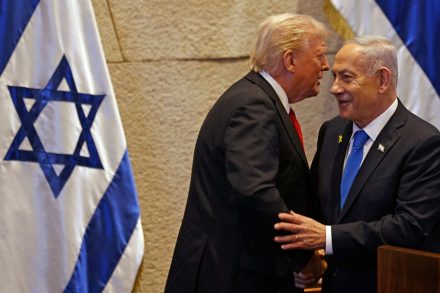
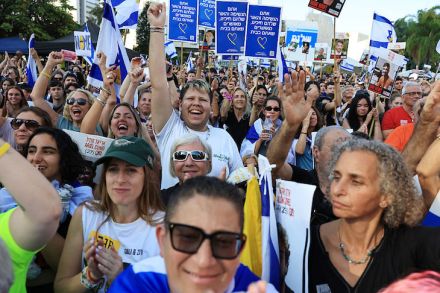
This morning in Israel began like no other: layered, dissonant, momentous. A collision of spectacle and salvation, of grief and hope, of noise and meaning. It was a morning composed of many parts: part show, part hope, part illusion, part bluster, part redemption, part commercial deal, part peace plan, part threat, part diplomacy, part war. For a few hours, all those contradictions briefly aligned to form a kind of harmony. They may yet fall apart again but, for now, they have converged in one extraordinary sequence of events. Palestinians not aligned with the regime’s grip are being hunted down, tortured, and silenced On one side of the news screen, Donald J.

The real Gaza deal unfolds in the next 72 hours

The machine is beginning to turn. The ceasefire agreed between Israel and Hamas, brokered with the direct involvement of President Trump, his envoy Steve Witkoff, and adviser Jared Kushner, has now formally taken effect. Hostages are not yet returned, but the mechanism for their release is in place. According to the agreement, Hamas must release all 20 living hostages within 72 hours. The countdown has begun. Hamas must release all 20 living hostages within 72 hours. The countdown has begun Israel is redeploying troops along new lines in accordance with the terms. American forces, around 200 personnel, are arriving in Israel to support a joint control centre intended to coordinate humanitarian logistics and the entry of international actors into Gaza.

Can Trump’s Gaza peace deal last?

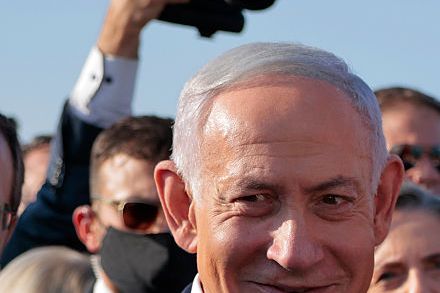
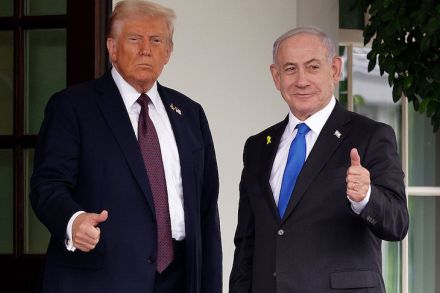
There is no office more burdened by impossible choices than that of the Israeli prime minister. When Benjamin Netanyahu steps into the cabinet room today to present the Gaza ceasefire deal, he does so not as a tactician manoeuvring for political points, but as a statesman carrying the unbearable weight of a people’s pain, fear, and moral resolve. By contrast, the commentator's role is easier. We have the luxury of analysis, the freedom to err, and none of the irredeemable consequences. He does not. The Palestinian movement has not earned peace. It must show that it wants more than survival, more than revenge, more than martyrdom. That it wants a future In this moment, the prime minister is not alone. Standing beside him in purpose and political courage is President Donald J.

The Manchester synagogue attack didn’t come from nowhere

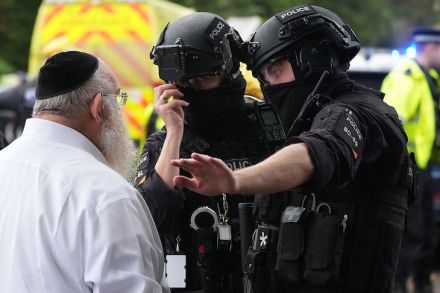
It is still early in the investigation, and key details remain unconfirmed. But what is already known about this morning’s attack in Manchester is horrifying. At least two people are dead, as well as the attacker. Three others are in a 'serious condition'. The attack occurred outside Heaton Park Hebrew Congregation Synagogue, shortly after 9.30 a.m., as members of the Jewish community gathered for prayers on Yom Kippur, the holiest day in the Jewish calendar. Let no one pretend this came from nowhere. Let no one feign surprise According to Greater Manchester Police, the attacker used a vehicle to ram into pedestrians before stabbing at least one individual. Armed officers responded within minutes.

Palestinians must regret rejecting Trump’s ‘Deal of the Century’

In December 2024, Bill Clinton spoke with a candour that history affords. Reflecting on Camp David in 2000, he lamented that 'you walk away from these once in a lifetime peace opportunities, and you can’t complain twenty-five years later when the doors weren’t all still open, and all the possibilities weren’t still there. You can’t do it.' His warning was not simply about past missteps but about the nature of political time. Opportunities do not remain static. They decay, they harden, they shrink. To reject an offer once is to ensure that the next will be less generous, more conditional, and more difficult to secure. It was rejected outright.

Trump’s Gaza peace plan changes everything

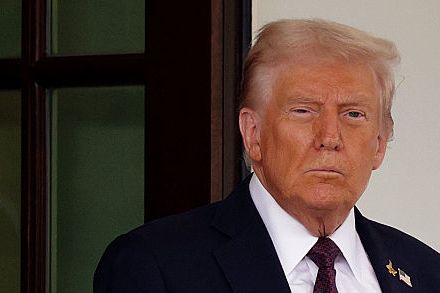
In a moment of extraordinary geopolitical gravity, US President Donald Trump has unveiled a comprehensive plan to end the Gaza conflict – a proposal whose ambition, structure, and support represent a seismic shift in Middle Eastern diplomacy. But beneath its layered diplomacy lies a singular, inescapable truth: Trump is making it clear that Hamas must be eliminated, and the Palestinian movement reinvented – not merely reformed, but reversed. What he is offering is not a negotiation between equals, but an ultimatum wrapped in a pathway: disarm, de-radicalise and rebuild, or be dismantled by force.

What will Keir Starmer’s Palestine declaration achieve?

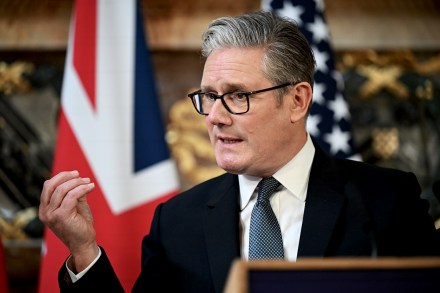
Keir Starmer has justified Britain’s declaration of Palestinian statehood by insisting that it will keep open the path to a two‑state solution and ultimately lead to peace. He has emphasised that Hamas could play no role in such a state, and seems to assume the move would position Britain as a key player in shaping the future of the Middle East. Is any of this accurate? Hamas welcomed the move, as did Husam Zumlot, the PLO representative in London, who went on television to say that Starmer’s declaration (made in concert with Canada and Australia) was simply recognition of an already existing fact. He even described historic Palestine as ‘the cradle of civilisation’ and ‘the birthplace of Christianity’.

Where is the outrage over the aid trucks hijacked in Gaza?

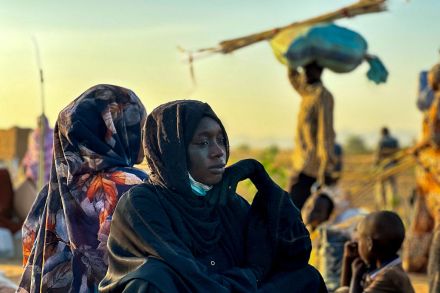
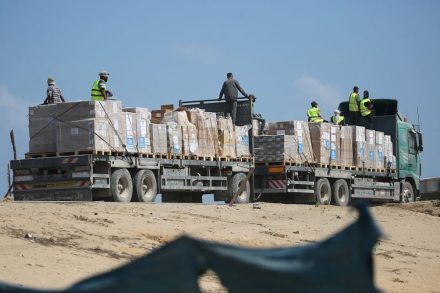
Unicef has confirmed it in black and white: armed men in Gaza hijacked aid trucks at gunpoint, stealing ready-to-use therapeutic food meant for thousands of severely malnourished infants. According to the UN, at least 2,700 children have been deprived of life-saving nutrition as a result. And yet, the world barely blinked. When Israel takes military action, the scrutiny is immediate and unforgiving. When images of hungry children emerge from Gaza, they are broadcast with relentless urgency, almost always with the implicit or explicit framing that Israel is to blame. But when terrorists intercept UN aid trucks, seizing food for their own infants in need, that story scarcely registers.

Did Trump convince Starmer to see sense on Palestine?

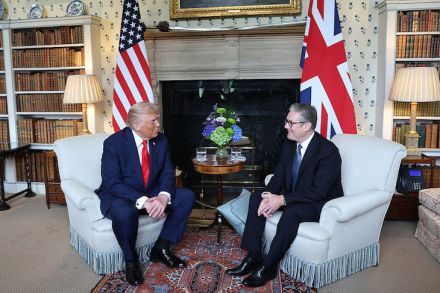
As Donald Trump visited the United Kingdom this week, the press seized the opportunity to confront both him and Keir Starmer about the issue of Hamas and Britain's posture towards Palestinian statehood. In a rare moment of lucidity, and perhaps influenced by the firm presence of the current US president, Starmer appeared, briefly, to align his moral compass. Faced with questions over why his government was proceeding with the recognition of a Palestinian state in the wake of the October 7th atrocities, Starmer delivered what may be his most unequivocal statement to date: "Let me be really clear about Hamas: They’re a terrorist organisation who can have no part in any future governance in Palestine. What happened on October 7th was the worst attack since the Holocaust.

The truth about the ‘Unite the Kingdom’ march

On Saturday morning, I skipped synagogue and went to the Tommy Robinson march instead. By the time I arrived at Whitehall to collect my press pass for the Unite the Kingdom rally, the sun was shining and the stage was still being set up. I had optimistically planned to go straight to Shabbat prayers and return by 1 p.m., when the march was expected to reach its endpoint. But that proved unrealistic. So I stayed put, somewhat overdressed in a suit, and spoke with two Scottish women setting up tables of homemade cakes and snacks backstage. One told me she had been volunteering for Tommy Robinson ever since she first heard him speak about the Pakistani Muslim paedophile rings. Years earlier, her daughter had been raped.

Free speech should never be fatal

Charlie Kirk was not storming a government building. He was not brandishing a weapon. He was not even shouting. He was on stage, mid-sentence, addressing a university audience at a speaking event. Then he was shot in the neck. And now he is dead. No civilised society can survive a situation in which public speech becomes a life-threatening act What occurred at Utah Valley University is not just a shooting, but an event that punctures the illusion that liberal democracies are still safe places to think aloud. However you viewed Kirk’s politics, whether you found him a bracing truth-teller or a contrary demagogue, he was, in the most basic sense, a political communicator. He built his career around public speech.

Israel is right to strike Hamas’s leaders in Qatar

When the government of Qatar condemned the Israeli airstrike in Doha as a ‘cowardly’ act, it revealed less about the operation itself than about the priorities of the state voicing the charge. In reality, the strike was an extraordinary and unprecedented move: Israel launched a precision airstrike inside Qatari territory targeting senior Hamas leadership, aiming to eliminate figures at the apex of the group’s external political and financial hierarchy. It was a direct and deliberate attack on the masterminds behind terrorism, carried out by Israeli fighter aircraft with exceptional range and accuracy. The operation marked a bold assertion of Israeli extraterritorial power and strategic doctrine.

The Jerusalem massacre and the illusion of peace

You can tell a great deal about countries and people by how they react to a horrific act of terror. And this morning’s massacre at the Ramot junction in Jerusalem came at a moment heavy with symbolism: just as the world was waking up to reports of Donald Trump floating a new plan for the release of Israeli hostages held in Gaza, the illusion of a negotiated, civilised discussion with the Palestinian movement was shattered. The gunfire in Jerusalem was a brutal reminder that such fantasies collapse the moment they are tested against reality. To speak of ‘bringing back peace’ in this context is not only ahistorical, it is delusional The official reaction of Hamas was to describe the killings as a ‘heroic operation’.

Rabbi Sacks’s legacy shines brighter than ever

When King Charles paid tribute to Rabbi Lord Jonathan Sacks following his death in 2020, he called him 'a light unto our nation'. It was a phrase that captured something profound and widely felt. Rabbi Sacks, who had served as Chief Rabbi of the United Hebrew Congregations of the Commonwealth from 1991 to 2013, was a towering figure in British public life and a moral voice of global reach. His speeches echoed in parliament and pulpits alike, his words sought out by broadcasters and schoolchildren, his counsel prized by religious and secular leaders across the world. This autumn sees the publication of a remarkable new edition of the Chumash, the Five Books of Moses, the foundational texts of the Hebrew Bible, accompanied by Rabbi Sacks' translation and commentary.

Hamas will struggle to recover from the elimination of Abu Ubaida

Despite its extraordinary discipline and repeated battlefield successes over the past two years, Israel has been judged in many quarters to have failed in one vital domain: the war of information. While Israel has neutralised enemy commanders, destroyed arsenals, and advanced through hostile territory, it has consistently been outflanked in the propaganda theatre, leading armchair generals to declare that no amount of military action can kill “an idea”. The elimination of Abu Ubaida shows that Israel constantly adapts Hamas and its allies have skilfully harnessed imagery, narrative, and the symbols of victimhood to mobilise global opinion, especially in the West. Yet in recent weeks, there has been a discernible shift.

Ed Davey’s pathetic Gaza boycott

Ed Davey has built an entire political career on pratfalls, water slides and staged wipe-outs, like a children’s entertainer who accidentally wandered into Westminster. Paddleboarding into the lake, hurling himself down a slip ’n’ slide, spinning on teacups at Thorpe Park, he’s like one of those tragically comic idiot acts on Britain’s Got Talent, selected specifically to be mocked by the entire nation, because at least it gets people talking. Davey long ago realised that nobody would ever remember him for policies, ideas, or even basic charisma. So instead he appears to have branded himself as the nation’s soggiest clown and seems content with that level of respect and notoriety.

The BBC’s Israel problem needs investigating

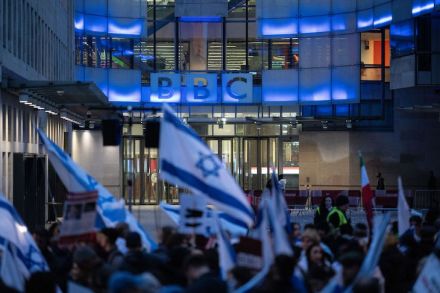
When the BBC was forced to admit that a woman it featured as a starving victim of the Gaza war was in fact also receiving treatment for cancer, it was not a minor correction. It was a collapse of credibility. The image of her wasted body, presented as evidence of Israeli starvation tactics, ricocheted across global media. It was powerful and emotive. And it is part of a broader and deeply troubling pattern. Time and again, when it comes to Israel or Jews, the BBC abandons the basic obligations of journalism: verify before broadcasting, contextualise before condemning, and correct with real transparency when errors occur. The list of failures is not merely anecdotal but institutional.

Israel will have to dig deep for its Gaza City offensive

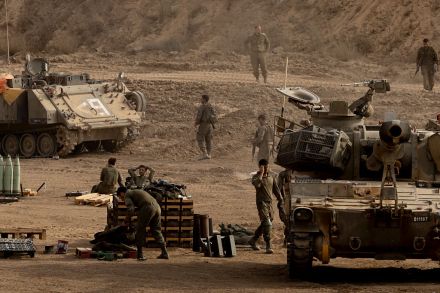
Since the renewal of ground operations in March this year under the Southern Command, the Israeli Defence Forces (IDF) have entered a defining phase of their campaign in the Gaza Strip. Under the framework of Operation 'Gideon’s Chariots', Israeli troops have achieved what military officials describe as operational control over approximately 75 per cent of the territory. This advance has laid the foundation for the IDF’s current positioning on the outskirts of Gaza City and the launch of the next phase of the war: a concentrated assault on the remaining Hamas strongholds in the urban core. There is an undercurrent of exhaustion across the Israeli public The gains under Operation 'Gideon’s Chariots' are considerable.

Israel risks rewarding Hamas’s kidnapping

What weapon is stronger than F-16s, drones, targeted strikes, disciplined and war-hardened ground troops, and even nuclear weapons? Hostages. Despite its formidable armed forces and weapons capabilities, in the long and bitter struggle between Israel and its enemies, no tool of war has proven more effective in bending the will of the Jewish state than the abduction of its own citizens. Missiles can be intercepted, tanks can be destroyed, but a single captive Israeli can paralyse decision-making at the highest levels of government, as we are seeing today. From the earliest wars, prisoner exchanges followed the conventions of armed conflict. After 1948 and again in 1967, soldiers were exchanged for soldiers in relatively balanced numbers. But over time, the symmetry vanished.

Hamas’s hostage deal is a catch-22 for Netanyahu

The fragile negotiations between Israel and Hamas have once again entered a decisive phase, marked by the unveiling of a new ceasefire-hostage release proposal brokered by Egypt and Qatar. This proposal, which Hamas has reportedly accepted, includes notable shifts in its previous demands. Yet the core dilemma confronting the Israeli leadership remains unchanged: whether to accept a partial agreement that could save lives in the short term but risks undermining its broader strategic aims. According to multiple sources, Hamas has moderated two of its key positions that previously stalled talks. It is now seeking the release of 140 prisoners serving life sentences instead of 200, and has agreed to a slightly wider Israeli buffer zone along Gaza's border.