Jonathan Sacerdoti

Jonathan Sacerdoti

Jonathan Sacerdoti is a broadcaster and writer covering politics, culture and religion

BBC editor accuses Trump of dishonesty – wrecking broadcaster’s impartiality

From our US edition

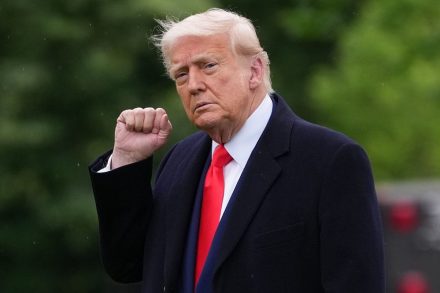
The BBC’s response to recent White House criticism over its Gaza coverage highlights the Corporation’s vulnerability on the question of impartiality in conflict reporting. What began as a public rebuke by Trump’s press secretary, Karoline Leavitt, over a disputed report quickly developed into a broader interrogation of the BBC’s editorial assumptions and its long-standing handling of the Israeli–Palestinian conflict. Jeremy Bowen, the BBC’s international editor, defended the Corporation and accused the Trump administration of dishonesty. Responding to Leavitt’s remarks, he said, “To be quite frank, the Trump administration does not have a good record when it comes to telling the truth itself. She’s making a political point, basically.

Donald Trump

When will the BBC admit it has an Israel problem?

When the White House uses a press briefing to lambast a foreign broadcaster by name, something seismic has shifted. That’s exactly what happened today when Donald Trump’s press secretary, Karoline Leavitt, publicly accused the BBC of treating 'the word of Hamas as total truth' and challenged the White House's description of the broadcaster rushing out anti-Israel claims only to later bury the corrections.

Jews in America are under attack

In Boulder, Colorado, eight elderly Jews were torched alive in a park. They wore red T-shirts bearing the names of hostages seized by Palestinian terrorists over 600 days earlier. Some carried Israeli flags. Walking peacefully in memory and solidarity, they were attacked with fire as a flamethrower and Molotov cocktails created flames as high as a tree. An 88-year-old Holocaust survivor was among the injured. The attacker, Mohamed Sabry Soliman, is reported to be an Egyptian national in the country illegally. He has been charged with 16 counts of attempted murder. Even as Jews in America are being attacked with increasing regularity, we have not seen the birth of a ‘Jewish Lives Matter’ campaign. No nationwide reckoning. No marches filling the streets.

The rush to blame Israel is bad for journalism

If the war in Gaza has taught the world anything, it is this: truth in war is rarely immediate. In the fog of conflict, facts take time, evidence can be manipulated and early narratives are often weaponised. Yet time and again, much of the international media – and too many public officials – refuse to learn this lesson. Faced with shocking claims, particularly when they implicate Israel, they rush to publish, to condemn, to headline. Rarely do they wait for verification. Even more rarely do they correct with the same urgency when the facts unravel.

Israel faces a brutal choice

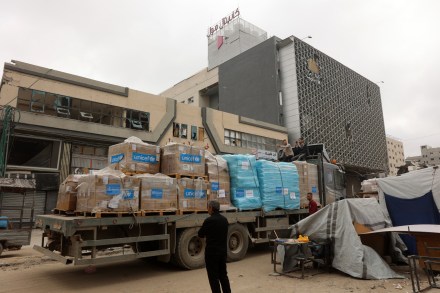
For months, Israel has faced a relentless barrage of criticism over its conduct in Gaza – from western governments, UN agencies, and media outlets that once claimed to be her allies. Central to the condemnation are the humanitarian circumstances: civilian suffering, limited aid access, and Israel’s temporary obstruction of some relief efforts. What has gone largely unreported, however, is that the bold new strategy in place may now be altering that equation entirely – a direct aid delivery mechanism, led by American contractors, that is not only reaching civilians more effectively but also weakening Hamas from within. You would never have guessed from the way some world leaders have condemned it. For years, aid to Gaza flowed through Hamas-linked channels.

The case for looking back in anger

Last week marked the anniversary of the Manchester Arena bombing – the deadliest terrorist attack on British soil since the 7/7 London bombings. Twenty-two people were murdered, most of them children and teenagers, at a pop concert targeted with deliberate cruelty. Among them was Saffie-Rose Roussos, just eight years old – the youngest known victim of terrorism in UK history. It was the first time a jihadist attack in Britain had deliberately targeted a music venue, the first of its scale in Northern England, and the deadliest ever on a civilian crowd in that region. Our love, we’re told, must be stronger than their hate. But I believe, deeply, that this is part of the problem The attacker used a homemade nail bomb – built to kill, but also to maim and disfigure.

Are British taxpayers funding Hamas?

British taxpayer funds, earmarked for humanitarian aid in Gaza, may have passed through Hamas-controlled structures, according to a report on Israel’s Channel 12 over the weekend. The core of the allegation is not that the UK sought to support terrorism, but that its aid strategy operated in concert with the very machinery that sustains Hamas’s rule. If that proves accurate, what does it say about the integrity of our government’s foreign assistance and the sincerity of its professed commitment to international law? A British Consulate-General policy plan warned that ‘UK Aid can be linked directly or indirectly with supporting the de facto authority (Hamas) in Gaza which is part of a proscribed group.

Israeli Embassy terror suspect formed by hard-left and BLM

From our US edition

The murder last night of two young Israeli embassy staffers, Yaron Lischinsky and Sarah Milgrim, on a street in Washington, DC was horrifying, but not surprising. The couple was gunned down outside the Capital Jewish Museum. A suspect then walked into the building, accepted water from those who thought he was a victim, and began chanting “Free Palestine.” He pulled a red keffiyeh from his pocket and invoked the old rallying cry: “There is only one solution. Intifada revolution.” The man now in custody, Elias Rodriguez, was once associated with the Party for Socialism and Liberation, a hard-left political group whose slogans echo in anti-Israel demonstrations across the country. In the hours before the shooting, the group posted: “End the genocide. Israel out of Gaza now.

Elias Rodriguez

The Washington shooting is a chilling warning to Jews everywhere

Waking early on Thursday in London, I read the news on a half-lit phone screen: two people, Israeli embassy staff, gunned down outside the Capital Jewish Museum in Washington D.C. A man shouted “Free Palestine,” – of course he did – after he had fired his weapon and walked inside the building – where, in an extraordinary confusion of roles, guests offered him water and comfort, believing he too had been a victim. In a way, maybe he had. A man shouted “Free Palestine,” – of course he did – after he had fired his weapon Though our airwaves and streets have been filled with talk of genocide, that word is rarely explored or explained with honesty.

Israel is prepared to go it alone in Gaza

As Israel presses ahead with Operation Gideon’s Chariots, its most ambitious military campaign in Gaza since the war began, the political landscape surrounding the conflict is shifting – and not in Israel’s favour. Britain’s suspension of trade talks, the summoning of Israeli Ambassador Tzipi Hotovely, and coordinated statements of condemnation from the UK, France and Canada mark the strongest international censure yet. For many in Jerusalem, this is not only short-sighted but morally confounding. Israel’s operation, launched with the stated aim of eliminating Hamas’s military infrastructure and securing the return of its hostages, comes after months of inconclusive ceasefires, failed negotiations, and mounting frustration.

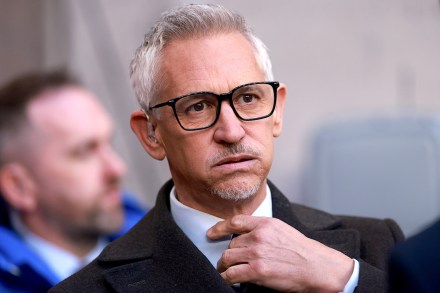
What does Gary Lineker know about Zionism?

When I was a schoolboy, on the rare occasions I was required to line up against the wall to be picked for a football team, I would be picked last. It was fair enough: my abilities matched my interest level – zero. Not much has changed in the intervening decades, and thanks to my lack of any real knowledge or ability in the game, I would be most unlikely to comment on the World Cup or the Euros. But when it comes to coverage of Israel and the Middle East, I’ve spent enough time on the ground amassing knowledge, sources, and experience that this publication entrusts me to explain it to others.

Palestine and the truth about the Nakba

The Nakba – Arabic for 'the catastrophe' and commemorated today – marks a profound moment of trauma in the Palestinian Arab consciousness. In 1948, following the Arab world’s rejection of the United Nations' partition plan and their subsequent military assault on the fledgling State of Israel, around 700,000 Palestinians were displaced. While Israel accepted the partition and declared independence, the Arab states and local militias initiated a war they would lose. Yet the memory of the Nakba, though born from an aggressive campaign that ended in defeat, has been carefully curated into a narrative of pure victimhood, a perennial wound severed from the choices and actions that preceded it. This phenomenon is not unique to the Palestinian case.

The ICC’s moral reckoning over sex abuse claims

From our US edition

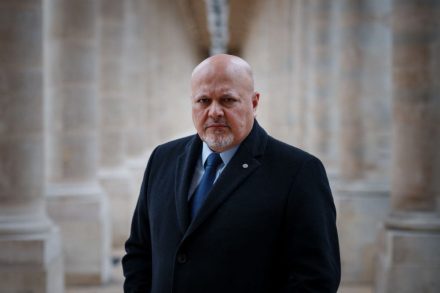
By any standard, the International Criminal Court (ICC) is in crisis. But the revelations in The Wall Street Journal – detailing explosive allegations of non-consensual sexual acts and abuse of office against its chief prosecutor, Karim Khan – have not just shaken the court’s credibility. They have obliterated it. The Journal reported that Khan faces “multiple allegations of coerced sexual intercourse,” based on documents, testimony and interviews with ICC officials. At the heart of the Journal’s investigation is a horrifying accusation: that Khan, while leading the most controversial prosecution in the ICC’s history, was allegedly engaged in a sustained pattern of sexual abuse against a junior female lawyer on his team.

The narcissism of Kanye West

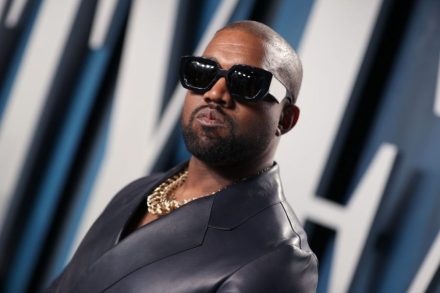
We live in an age of liberation, in which we are told endlessly by some that freedom of speech, taken to its furthest boundaries, is the crowning achievement of democratic culture. And freedom of speech, alongside freedom of thought and conscience, freedom of (or from) religion, freedom of the press, of movement, of assembly and to legal equality, all safeguard human dignity, personal autonomy, and the ability to participate meaningfully in civic life. But what if one of the clearest signs of civilisational decay is precisely that the right to say anything is now used most energetically by people with nothing worthwhile to say? ‘Ye’, formerly known as Kanye West, a man I am told was once a cultural innovator of some sort, now presents himself as one such cautionary tale.

Tehran’s cruelty is closer than we think

The arrest of eight men – seven of them Iranian nationals – across the United Kingdom in two separate counter-terrorism operations is a chilling reminder that the Islamic Republic of Iran is not a distant threat. It is here, embedded within our cities, probing the limits of our law, our patience and our willingness to defend our democratic integrity. Scotland Yard has revealed only sparse details: a suspected plot to target a ‘specific premises’, and a parallel but unrelated investigation into national security threats. But while the particulars remain classified, the pattern is anything but new.

Nike’s ‘Never again’ slogan is a disgrace

Fifty-six thousand runners completing the London Marathon yesterday may well have gasped the words ‘never again’ as they staggered across the finish line. I have never been a runner, but I imagine that even those who willingly endure the 26.2-mile ordeal must feel not only a profound sense of accomplishment but also, at the very least, a fleeting pang of regret. How could a giant like Nike fail to recognise the most solemn and famous usage of those words? Yet when I saw the Nike advertisement – hoisted from a crane like an executed Iranian dissident, swaying precariously in front of that modern-day emblem of our capital city, the London Eye – bearing the slogan "Never again. Until next year," my mind immediately traveled to darker places.

Renewing the promise of ‘never again’

What does it mean to say 'never again'? It is etched into memorials, inscribed in textbooks, whispered in the shadows of history’s darkest hour. It is a phrase uttered by world leaders at solemn ceremonies, by teachers guiding young minds through the horrors of the past, by those who stand in Auschwitz, tracing their fingers over the cold, cracked walls of the barracks. It is repeated so often that it risks becoming just that – a repetition. Is it a promise? A warning? A plea? A moral incantation to ward off the unthinkable? For some, 'never again' means that Jews will never again be led to slaughter – that the gas chambers, the mass graves, the methodical machinery of annihilation will never be allowed to return.

Parliament’s moral posturing on Israel is delusional

What’s the point of parliament’s foreign affairs committee holding mock-trial style hearings about Israel’s defensive war against Iranian-backed terror groups? Do its members genuinely believe that such performative enquiries contribute to peace in the Middle East? One wonders how Britain might respond if the Israeli Knesset held public hearings into British issues – on Muslim rape gangs, on two-tier policing, or on the stifling of political speech through Orwellian 'non-crime hate incidents'. The UK would howl in protest. Yet it presumes the right to dissect Israel’s wartime conduct as if from a position of moral superiority, devoid of historical context and strategic understanding.

Hamas is exploiting the freedoms it wants to destroy

In any sane world, it would be dismissed as grotesque fantasy: Hamas – the Iranian-backed terror group responsible for the 7 October massacre – petitioning British courts to lift its designation as a terrorist organisation. But this is one of those times it seems the entire world has gone mad.  For here we are, in Great Britain, witnessing Hamas, aided by British lawyers, seeking to launder its blood-soaked record under the false banners of ‘liberation’ and ‘resistance’. This is not mere absurdity. It is a direct assault on the integrity of British democracy – and on very survival of western civilisation.

Hamas has a history of using ambulances for war

Before the facts had even settled, western media outlets rendered their verdict: Israel was guilty. Guilty of deliberately targeting ambulances. Guilty of murdering humanitarian workers. Guilty because in the court of international opinion, Israel’s guilt is the default setting. Only later did the complicated reality emerge. Israeli forces near Rafah, acting on intelligence that Hamas operatives were exploiting ambulances for military purposes, opened fire on a suspicious convoy. People were killed, including members of the Palestinian Red Crescent and Civil Defence.