Jonathan Sacerdoti

Jonathan Sacerdoti

Jonathan Sacerdoti is a broadcaster and writer covering politics, culture and religion

Donald Trump has a plan

From our UK edition

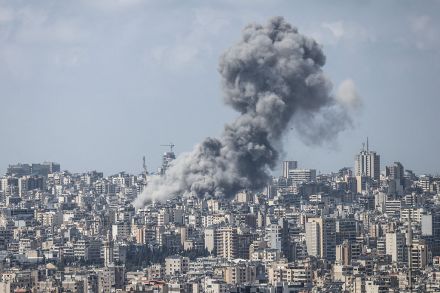
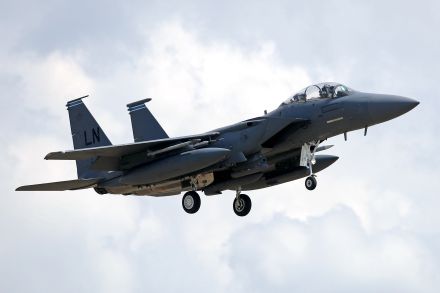
To the untrained eye, ceasefires in the Middle East can look a bit like war at a lower intensity. US Central Command spokesman Captain Tim Hawkins has confirmed that American forces conducted what were described as self-defence strikes in southern Iran in order to protect US personnel from Iranian threats during the ongoing ceasefire. Two Iranian vessels were also caught laying mines in the Strait of Hormuz and were subsequently destroyed. A surface-to-air missile site in Bandar Abbas that was reportedly targeting American aircraft was struck. But American officials have stressed that they do not signify the end of the ceasefire.
Why was Starmer afraid of the Unite the Kingdom rally?

From our UK edition

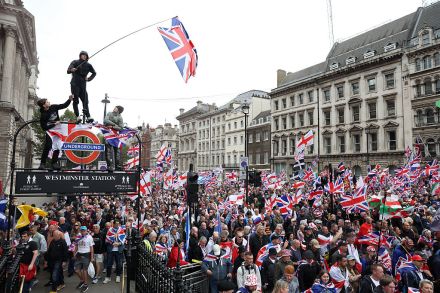
Perhaps the strangest thing about the Unite the Kingdom rally was just how unremarkable it felt. There were no mass chants calling for the death of particular groups, no calls for the eradication of foreign countries, and no flags of terrorist groups or tyrannical theocracies waved in the crowd. Nobody cited scripture to urge the slaughter of another people, nobody waved terrorist symbols, and nobody I saw during the entire day covered their face.

Why is Piers Morgan Uncensored giving conspiracy theories airtime?

From our UK edition

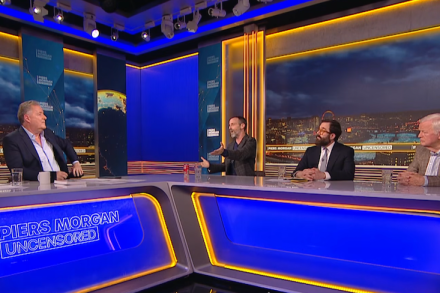
After the fourth invitation from Piers Morgan’s team to appear on his Uncensored show, I finally decided it might be time to accept. This programme, I was told, would be on American foreign policy and the war with Iran, following Morgan’s interview with John Bolton. That sounded, at least on paper, like the invitation least likely to lead to the circus of shouting and hatred the programme is known for. Three experts in a studio, responding to a former US national security adviser, sounded civilised. Almost old-fashioned. Piers and I have a short but revealing history. I once criticised his show in these pages for its decline into algorithmic bear-baiting.

The case that shows jihadism is for losers

From our UK edition

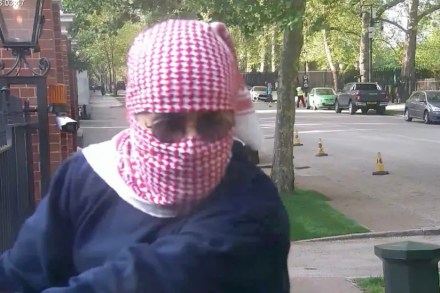
If anyone needs proof that jihadism is for losers, they need only look at the case of Abdullah Albadri. He was found guilty yesterday at the Old Bailey of preparation of terrorist acts and two offences of possession of a bladed article in a public place. On 28 April last year, he travelled across London to the Israeli embassy in Kensington, wrapped his head and face in a red-and-white shemagh, put on sunglasses, armed himself with two knives, and tried to climb the perimeter fence. Armed diplomatic protection officers stopped him within seconds. That was the whole grand operation. An hour of theatrical pilgrimage through London, a martyrdom note, two knives, a costume, a fence, and then the ground.

Why won’t Starmer take the safety of Britain’s Jews seriously?

From our UK edition

Another day, another attack on Jews. Two men were stabbed in Golders Green: one in his 70s, one in his 30s. This is not even the first time. In January 2024, a man was given a suspended sentence for an attempted stabbing at a Jewish shop in the same neighbourhood. We have been warning for years that this was coming. Now it is here. Keir Starmer finds it 'deeply concerning' and 'utterly appalling'. Like many Jewish Britons, I find him deeply concerning. I find Zack Polanski utterly appalling. I find the Palestine Solidarity Campaign reprehensible for its part in the climate of hate engulfing us all.

Britain’s Jews are quietly preparing to leave the country

From our UK edition

I sat in the synagogue where I grew up last night, waiting to interview Colonel Richard Kemp, the retired senior officer of the British Army who served for nearly three decades across Northern Ireland, the Balkans, the Middle East, and Afghanistan. Our conversation would end a service marking the transition between Israel’s Memorial Day for its fallen and its Independence Day. A British Jew and a British Colonel, in a room full of emotion, pride, and more than a little apprehension, after a week in which multiple arson attacks on Jewish-linked sites have taken place in London. There was an uncomfortable sense of the fall of Rome in the air. That place feels like home to me.

Driverless cars will kill the London taxi

From our UK edition

After an eleven hour flight, I stepped out of Phoenix International Airport into the balmy Arizona heat. It felt like I had stepped into the future. Weaving in and out of lanes of regular taxis and airport shuttle busses, I saw a constant flow of white Jaguars adapted with roof mounted cameras and sensors, gliding past. I recognised them instantly as Waymo driverless cars. I could not wait to try them. Once I’d been driven by a robot, I suddenly noticed how much worse almost every human driver was Over the last few weeks I've been flying in and out of different US cities to record a series of interviews for an upcoming documentary series. The trips have been busy and quick, with each airport and business hotel blurring into the next: Miami, Dallas, Vegas, Boston, Manchester.

Why attacks on British synagogues no longer surprise me

From our UK edition

The news of last night’s attempted fire bombing at Kenton United Synagogue in London, and of last week’s arson attack at Finchley Reform Synagogue in London, wasn’t even surprising. Just a few weeks ago, ambulances operated by a Jewish volunteer organisation were firebombed and destroyed. In Manchester, a synagogue was attacked on Yom Kippur, leaving two people dead. Over the last couple of years, there have been around 20 documented cases of arson or firebombing attacks targeting synagogues across the world, from North Africa to Europe, North America and Australia. A synagogue in London is simply the latest in what has become a global pattern. But this is not only about Jews. In the same period, churches have also been targeted.

Will the US blockade force Iran to negotiate?

From our UK edition

As Israel prepared to mark Yom HaShoah last night, remembering the Holocaust, the American blockade of the Strait of Hormuz moved into enforcement. At Yad Vashem, Israel’s Holocaust remembrance centre, Prime Minister Benjamin Netanyahu tied the present conflict directly to historical memory, declaring that Israel had ‘crushed the evil regime in Iran to dust’, framing the campaign as the fulfilment of a promise that there would not be another Holocaust. His language placed the current war in existential terms, in a clear continuum of Jewish history – a marked contrast with the sceptical and critical tone that continues to dominate much western coverage.

Washington and Tehran are locked in a jungle fight

From our UK edition

‘Iran never won a war, but never lost a negotiation!’ So tweeted Donald Trump in 2020. Like the man himself, it was blunt, slightly theatrical, but not empty. A Trumpian tweet that mocked the enemy but with just a hint of admiration. As he dismissed Iran militarily, he signalled a grudging respect for how it operates at the table. It was not a grand theory, more an instinct, from a dealmaker recognising another set of operators who know how to stretch, stall and extract. So Donald Trump went into this war and the subsequent negotiation, knowing Iran would play hard and play smart. Back in February last year, Mohammad Bagher Ghalibaf, speaker of Iran’s parliament, offered his own certainty.

Who is lying about the Iran ceasefire?

From our UK edition

Somebody is lying about the ceasefire. Iran has insisted that the agreement includes Israel stopping its military action in Lebanon. The US has made it clear that was never part of the deal. Vice President J.D. Vance was explicit that ‘we never made that promise.’ Benjamin Netanyahu, too, made a point of clarifying, almost as soon as the ceasefire was announced, that Lebanon was not part of the deal. Who to believe: the tyrannical Islamic Republic regime of Iran, or the democratic, pro-freedom President of the United States and his team? Who to believe: the tyrannical Islamic Republic regime of Iran, or the democratic, pro-freedom President of the United States and his team?

This ceasefire hasn’t ended the war

From our UK edition

As Donald Trump’s 8 p.m. deadline crept closer by the minute, accompanied by increasingly furious posts from the president online, the last-minute scramble to achieve a ceasefire by diplomacy became ever more desperate. Within the final 90 minutes it was announced that there would be a two-week pause in the fighting, based on a ten-point plan submitted by Iran. Details emerged only gradually overnight, alongside predictable claims of victory from all sides. The truth, as ever, will take longer to emerge. What is clear is that this is not a peace deal, nor even a fully implemented ceasefire. It is, at best, a pause – fragile, conditional and already under strain. This is not a peace deal, nor even a fully implemented ceasefire.

Kanye West should be banned from the UK

From our UK edition

Geert Wilders was refused entry to the United Kingdom in 2009. A sitting Dutch MP and leader of the Party for Freedom (PVV), he had travelled to screen his film Fitna in Parliament. Because the film, and Wilders, are critical of Islam, our government judged his visit to be threatening to community security and public order, and he was turned away at Heathrow. Since then, his message has become more mainstream within the UK, and more urgent for all of Europe to hear. Earlier this year, Eva Vlaardingerbroek, a Dutch right-wing activist, had her UK entry clearance revoked, after her presence was deemed not conducive to the public good, possibly owing to her promotion of the ‘Great Replacement’ theory.

Inside the fearless rescue of the second US airman

From our UK edition

‘WE GOT HIM!’ Donald Trump’s announcement was immediate and emphatic. The operation was ‘one of the most daring Search and Rescue Operations in US History,’ he said. Two American aircrew recovered from deep inside Iran, in separate missions, without a single US casualty. That was the headline. America has not lost control of the ongoing war with Iran. Cut through the triumphant tone of the President’s post, however, and there is truth. The Islamic Republic’s only tangible achievement in this incident was the original downing of an American aircraft. But in war, such things happen. Aircraft are tools, they fail, they are lost, they are replaced.

Why Israel is introducing the death penalty

From our UK edition

A state deciding when it may end a human life outside war is always crossing a line, even when it insists it is doing so for humane reasons. Two democracies are now approaching that line from opposite directions. Israeli hostages are taken because Israel places such value on individual lives. Prisoners are released because Israeli society will accept painful compromises to recover its own In Britain, MPs are moving towards legalising euthanasia. Doctors, families, and patients describe the slow cruelty of terminal illness and the desire to end it on one’s own terms. The state is asked to permit death as an act of compassion. In Israel, the argument runs in the opposite direction.

The Houthi attack spells trouble for Trump

From our UK edition

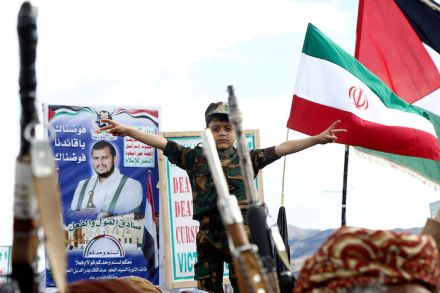
Houthi forces in Yemen have confirmed that they launched a barrage of ballistic missiles toward southern Israel overnight, with the Eilat region identified as the primary target. Their military spokesperson, Yahya Saree, stated that the missiles were aimed at sensitive Israeli military installations. Israeli air defence systems intercepted all incoming projectiles. No casualties were reported, and no physical damage was sustained. The launch comes as Iran faces sustained pressure on its infrastructure from American and Israeli operations The strike marks the first direct attempt by the Houthis to hit Israeli territory during the current phase of United States and Israeli military operations against Iran.

Will Trump do a deal with Iran?

From our UK edition

Less than 48 hours after issuing a 48-hour ultimatum for Iran to reopen the Strait of Hormuz or face strikes on its energy infrastructure, Donald Trump stepped back and granted the country a reprieve of five days – a now familiar pattern in Trump’s online diplomacy. In doing so, he dropped what can only be described as a different kind of bomb: an all-caps public declaration that negotiations with Tehran were already underway. No detail was given. Only the assertion that talks were ‘good and productive’. Systems built on religious legitimacy do not simply vanish under external pressure. They adapt The effect was immediate and disorienting. Confusion spread outward in concentric circles.

Is Britain braced for Iranian missiles?

From our UK edition

Where’s your nearest bomb shelter? And how long would it take you to get there? What about at work? Have you downloaded an early warning app for alerts when there’s an incoming missile attack? If you live in Britain, you probably can’t answer most of these questions. I have no idea where my nearest shelter is. So what will you do when the time comes? All this might be purely theoretical. But it is not impossible Israelis can answer all these questions and have been able to for years. Of course – they live under the constant threat of missile attack. They’ve had to implement effective monitoring, alerts and shelter provisions.

Iran tries to attack the Chagos islands

From our UK edition

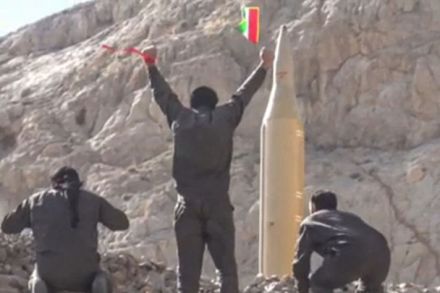
Shortly after midnight, Iran launched two long-range missiles towards the US base at Diego Garcia, the joint US-UK military base in the middle of the Indian Ocean, according to reports in the Wall Street Journal citing multiple US officials. This indicates a strike range of up to 4,000 kilometres. Neither missile struck the base, but the attack marked Iran’s first operational use of intermediate-range ballistic missiles and a significant attempt to project force far beyond the Middle East against US interests. One missile failed in flight, while a US warship fired an SM-3 interceptor at the other, though it remains unclear whether the interception was successful.

Is the disagreement between Israel and the US over striking Iran’s gas fields real?

From our UK edition

As the war approaches the end of its third week, US and Israeli strikes inside Iran continue to intensify and repeated missile launches toward Israel continue to send the civilian population into shelters constantly. President Donald Trump said he had instructed Israel to stop targeting Iranian oil and gas facilities, a request Prime Minister Benjamin Netanyahu confirmed Israel would honour going forward. This came as a hit was identified at Israel's oil refineries in Haifa, with Iranian media describing the strike as retaliation for earlier attacks on the South Pars gas field. It is not clear whether the disagreement between Israel and the US in this matter is genuine, or part of the theatre of war designed to permit some independence of action between the two nations.