
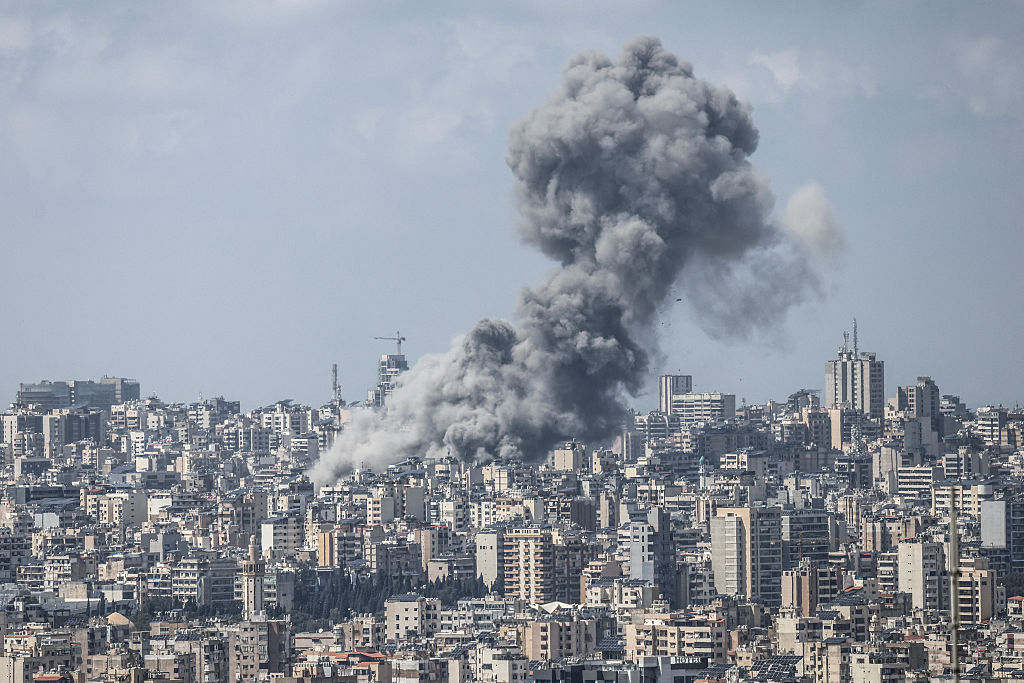
Somebody is lying about the ceasefire. Iran has insisted that the agreement includes Israel stopping its military action in Lebanon. The US has made it clear that was never part of the deal. Vice President J.D. Vance was explicit that ‘we never made that promise.’ Benjamin Netanyahu, too, made a point of clarifying, almost as soon as the ceasefire was announced, that Lebanon was not part of the deal.
Who to believe: the tyrannical Islamic Republic regime of Iran, or the democratic, pro-freedom President of the United States and his team?
Who to believe: the tyrannical Islamic Republic regime of Iran, or the democratic, pro-freedom President of the United States and his team? Perhaps predictably, many members of the western commentariat, including key voices at the BBC and Sky News, opted for the former, because it helps them paint President Trump as the hapless, disastrous leader of a chaotic war instigated by the aggressive and expansionist Jewish state under the leadership of the evil Benjamin Netanyahu. That’s been their narrative all along, so it would be a stretch to change it now. Never mind the facts.
Meanwhile, those who went to great lengths not to take part in the war, nor the negotiations to pause it, have had plenty to say from the sidelines. Reaching for the usual opaque language of modern, fantasy bureaucracy, Yvette Cooper bypassed any consideration of what was agreed, simply telling Sky News what she’d like to happen: ‘we do strongly want to see the ceasefire extended to Lebanon’, she said. Strongly wanting something is well known to be almost as effective as military pressure in such negotiations.
Likewise, UN secretary general António Guterres demanded all parties should ‘immediately cease hostilities’, which is sure to stop the terrorist Iranian proxy Hezbollah from attacking Israel, and Israel defending itself. Despite nearly half a century of the UN’s ironically named peacekeepers failing to stabilise southern Lebanon, he added that ‘there is no military solution’. I think this is what Gen Z calls ‘manifesting’ an outcome just by wishing for it. Keir Starmer even flew out to the Gulf to pretend he’d somehow been involved, expressing how keen he is ‘to have the discussions, to coordinate our actions and to go forward collectively.’
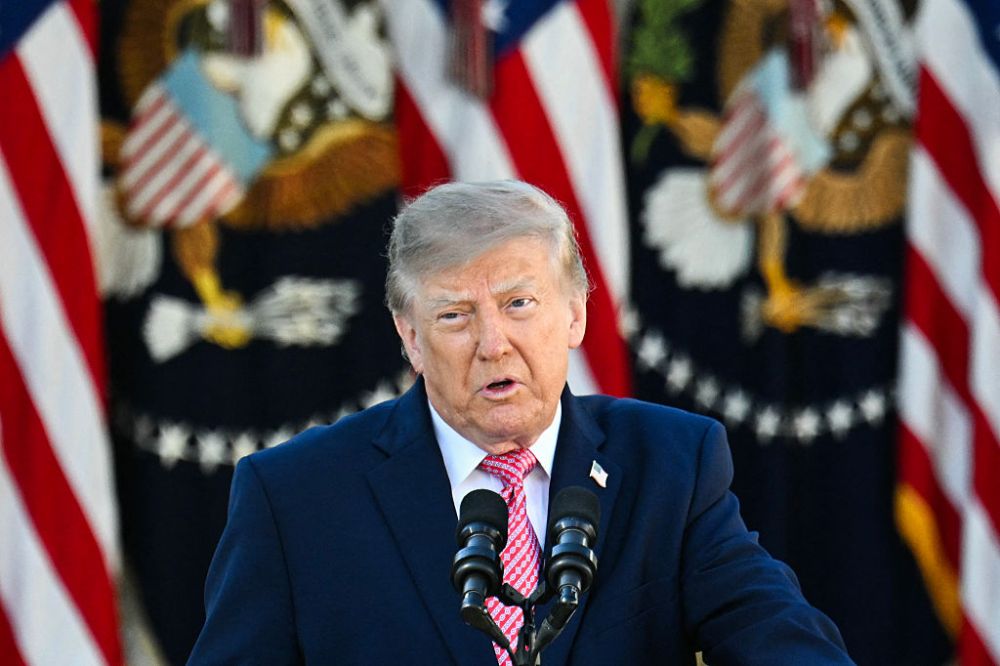
While Cooper, Starmer and Guterres did their best to exude main character energy with their waffly diplo-speak, Vice President Vance spoke more like a normal person, making a lot more sense as a result: ‘If Iran wants to let this negotiation fall apart… over Lebanon… that’s ultimately their choice,’ he said, emphasising ‘that would be dumb, but that’s their choice.’
The Islamic Republic in Iran lies and cheats as a matter of practice, especially in diplomacy, where deception is treated as a tool rather than a risk. It is one of its most effective weapons. During the years of negotiation over the Joint Comprehensive Plan of Action, talks advanced in public while work on nuclear and missile capabilities continued out of view, even as polished representatives met western diplomats with a cooperative face.
The same pattern is visible again this week. Iran signed up to a ceasefire arrangement it knew did not meet its own maximalist list of ten demands. Those were agreed as an opening position, rather than an agreed outcome. But Iran then presented the deal as settled, and pivoted to suggesting the other side was reneging.
So Iranian officials say that any continued negotiation track must now be explicitly conditioned on Israel halting its strikes in Lebanon. A foreign ministry spokesperson said an Iranian delegation would travel for talks in Islamabad only if ‘all attacks’ ceased. A similar message came from Iran’s deputy foreign minister: no pause in Lebanon, no negotiations.
Iran’s position is colliding with events on the ground, where Israeli operations in Lebanon have not slowed but intensified. Strikes have continued across the south and into Beirut’s southern suburbs, targeting Hezbollah command centres, weapons depots and transit routes.
In Beirut, a close associate of Hezbollah secretary-general Naim Qassem was killed. Further south, Israeli forces said they eliminated Maher Qassem Hamdan, identified as a commander in the Hezbollah-linked Lebanese Resistance Brigades, along with several others as they moved from the Chebaa area toward Sidon. The emphasis is increasingly on mobility as well as infrastructure, with Israeli units reporting engagements against militants in transit, the discovery of underground facilities and the dismantling of launch positions and observation posts.
Lebanese officials, meanwhile, report more than 200 killed and over a thousand wounded in a single day of strikes, with four Lebanese soldiers among the dead. Hezbollah has responded with limited rocket fire toward northern Israel, framing it as retaliation for what it calls Israeli violations of the ceasefire.
Meanwhile, Iran’s deputy foreign minister has conceded that his delegation will in fact go to peace talks in Islamabad, despite earlier suggestions to the contrary. And President Trump has complained on Truth Social that ‘None of these people, including our own, very disappointing, Nato, understood anything unless they have pressure placed upon them!!!’
Which seems to be true. In the end, it is not even what is agreed that matters, it is what can be enforced. It is hard to escape the conclusion that pressure, not persuasion, is what changes behaviour. Guterres is wrong: perhaps there is only a military solution to all this.




Comments