Jonathan Sacerdoti

Jonathan Sacerdoti

Jonathan Sacerdoti is a broadcaster and writer covering politics, culture and religion

Donald Trump makes his move against Iran

From our UK edition

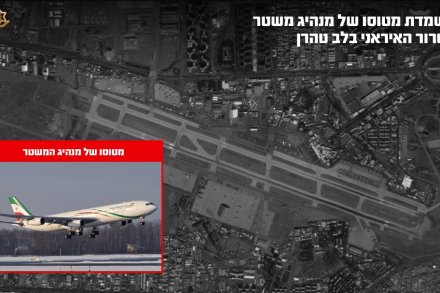
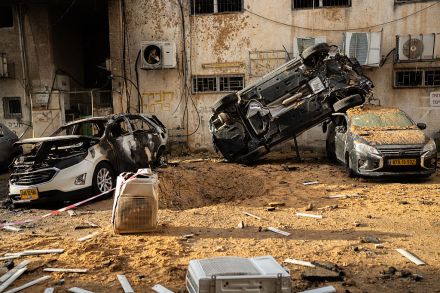
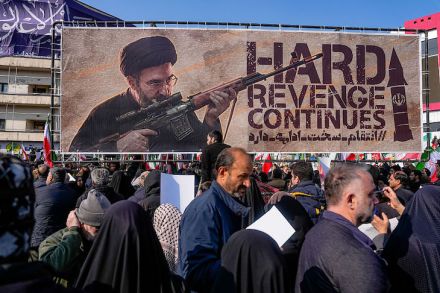
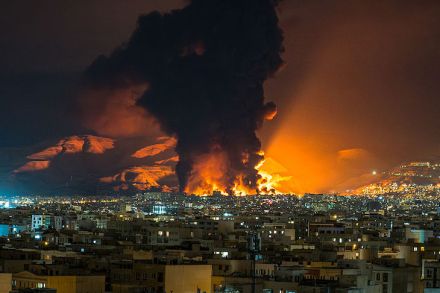
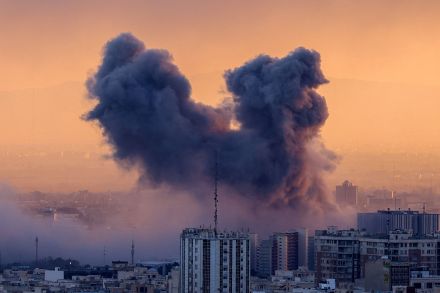
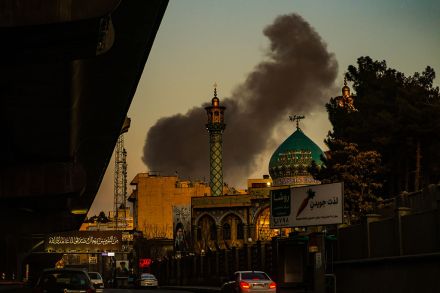
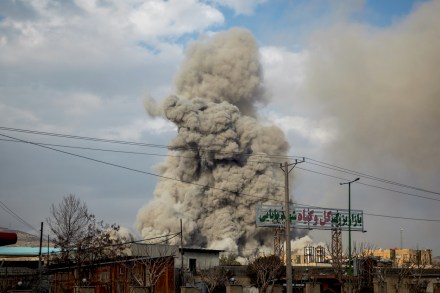
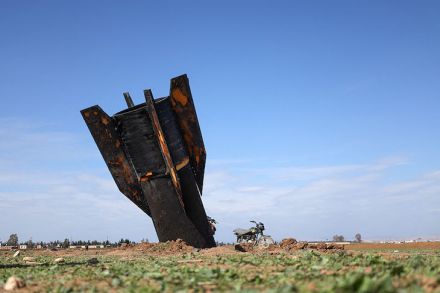
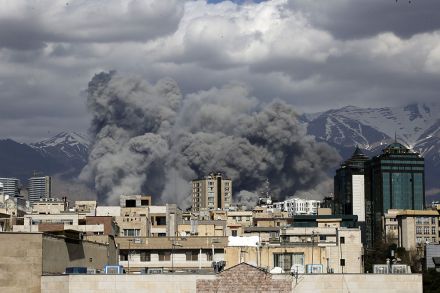
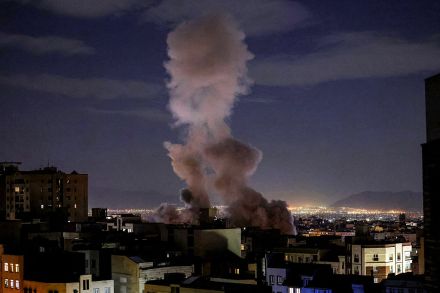
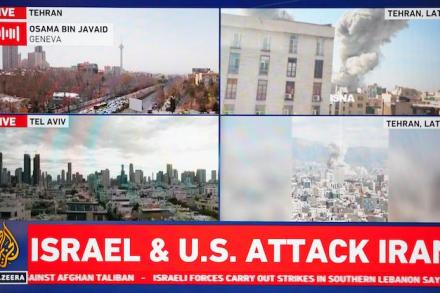
This morning, the long-anticipated Israeli and American strikes on Iran finally arrived. At 08:10 am local time, Israel and the United States began a coordinated military operation against Iran. Dozens of Israeli Air Force aircraft took part in the opening strike. Blasts were heard in Tehran. Within hours, explosions were reported in Isfahan, Qom, Karaj and Kermanshah. Videos circulated of Iranian citizens laughing and cheering as Israeli and American aircraft crossed the capital’s skies The news established something that had been contested for months: Donald Trump meant what he said. The thresholds he articulated were fixed and public. Those who accused him of bad faith, those who doubted that he would ever act, now have an answer measured in sorties and detonations.

The Gail’s attacks are brainless – and terrifying

From our UK edition

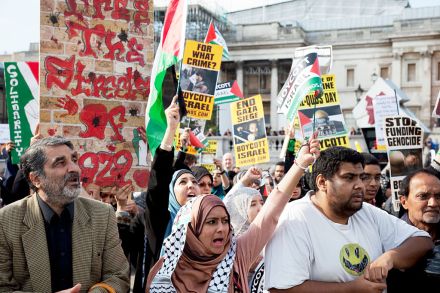
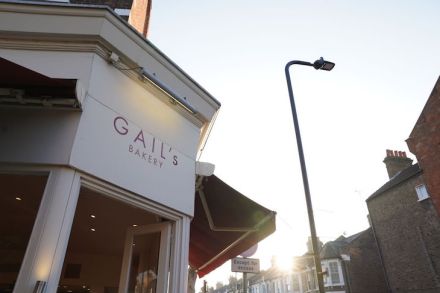
If anti-Israel agitators wish to avoid being described as terrorists, they might begin by ceasing to terrorise ordinary people. The smashing of the Gail’s branch in Archway, north London, red paint flung across its walls, slogans sprayed beside its door, is the latest instalment in a now familiar pattern: vandalism presented as virtue, intimidation dressed up as solidarity. The activists call it protest, but let’s call it by its real name: menace. To vandalise Gail's in the name of Gaza is a deliberate effort to intimidate and must be treated as such The branch’s windows were broken twice within a single week. Slogans reading “Reject corporate Zionism” and “Boycott” were sprayed across the frontage, an anarchist symbol scrawled beside the entrance.

Is Trump being played by Iran?

Half of America’s deployable air power sits within striking distance of Iran, and yet Washington is negotiating. Gaza is promised a gleaming future, and yet Hamas still refuses to disarm.Is this strategic patience, or proof that the US President has been dangerously misled, indulging adversaries who are buying time? By placing comprehensive proposals on the table, publicly, the administration creates a test for Iran Two US carrier strike groups sit in the eastern Mediterranean and the Gulf. Land-based fighters rotate through Jordan and the Gulf states. Long-range bombers have been repositioned.

What’s wrong with Zionism, Hugh Laurie?

From our UK edition

The question arose within hours of a death that should have remained a matter of grief. On 16 February, Dana Eden, co-creator and producer of the Israeli espionage series Tehran, was found dead in her hotel room at the Gatsby Athens. She was 52. Greek police are investigating and are treating the death as a possible suicide. Eden had been in Greece filming the programme’s fourth series. Tehran, first released in 2020, follows a Mossad hacker-agent sent to sabotage an Iranian nuclear facility, only to become trapped inside the country. Filmed partly in Greece and other locations standing in for Tehran, the series became an international success after its acquisition by Apple TV+, winning the International Emmy Award for Best Drama Series in 2021.

Hamas is inching towards another war

Perhaps the biggest talent of humanity is our gift to adapt to challenging circumstances with creativity and ingenuity. It may also be our biggest fault. Just two days after I stood in the central Gaza Strip, touring the area and seeing the Yellow Line for myself, the IDF yesterday announced another serious breach of the ceasefire. The Yellow Line is a mutually agreed demarcation. Both Israelis and Palestinians are supposed to remain on their respective sides. When I was there last week, officers explained how frequently that boundary is tested. They spoke about sniper fire, explosives planted near positions, and attempts to edge forward under cover. The pattern, they said, is persistent. Israel holds its fire unless a clear threat emerges. Hamas probes.

Terrorism no longer shocks Britain

From our UK edition

British Jews are under threat. That was the blunt warning from Sir Stephen Watson after a jury at Preston Crown Court convicted Walid Saadaoui and Amar Hussein of preparing acts of terrorism. The Chief Constable of Greater Manchester Police said that had their plan succeeded it would have been ‘one of the worst atrocities’ the world had seen. He was right. A civilisation cannot limit its terror response to surveillance, infiltration and the disruption of plots moments before execution. That is containment, not resolution Saadaoui, 38, of Wigan, and Hussein, 52, of Bolton, had set out to replicate the 2015 Paris attacks. Their chosen targets were synagogues, Jewish schools and a kosher supermarket in the north west of England.

Terror tunnels and snipers: Life on Gaza’s yellow line

From our UK edition

The first thing that struck me as I crossed into central Gaza yesterday was how ordinary the landscape looked. Grassy hills, dark sandy banks, a couple of stray dogs barking at the military jeep which drove me in. Warnings. Leaflets. Shots in the air. The idea is to avoid fatal misunderstandings As the gate opened for us to pass into the still mostly sealed off strip of coastal land we passed the unremarkable concrete blocks and barbed wire which separated Israel from its battlefield. We drove the stretch of road under the hot winter sun, along grassy fields that gave little away. After months of headlines, speeches and diplomatic theatrics, the entrance itself felt merely procedural. A short pause as the IDF (Israel Defense Forces) gave the all clear, and then we were inside.

Britain’s shameful tolerance for terrorism

From our UK edition

The news that Shahid Butt, a man convicted of terrorism who served five years for conspiring to bomb the British consulate in Yemen, is standing as a pro-Gaza candidate for Birmingham City Council has shocked many. Butt was jailed in 1999 as part of a terror plot linked to Abu Hamza, yet now seeks public office representing constituents in the Sparkhill ward. The spectacle of a man with a terror conviction campaigning on a platform of Palestinian solidarity while dismissing his past as youthful 'mistakes' has understandably provoked outrage. From Birmingham to Gaza, the pattern is consistent: British institutions have developed a tolerance for terrorism and extremism But if Butt wins his council seat, he will not be the first convicted terrorist to receive British taxpayer funding.

Why won’t Britain just ban the IRGC?

From our UK edition

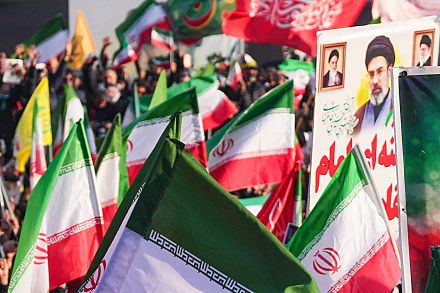
The European Union has finally done what it long argued it could not. Yesterday, the bloc formally designated Iran’s Islamic Revolutionary Guard Corps as a terrorist organisation, placing it in the same legal category as al-Qaeda and Islamic State. The decision was framed by Europe’s foreign ministers as a response to mass repression, extrajudicial killings and the systematic use of terror by the Iranian state against its own population. ‘Repression cannot go unanswered,’ said Kaja Kallas, vice-president of the European Commission, announcing the move. It was not a symbolic flourish. The designation means the EU can now freeze assets, assign criminal liability and enforce travel bans.

It didn’t take long to forget the lessons of the Holocaust

From our UK edition

Life expectancy across Europe is 81 years. An 81-year-old European dying today would have been born on the day Auschwitz was liberated. It has taken one average European lifetime for us to forget the lessons of the Shoah. How many Jews do you think there are in the world? Out of 8.1 billion people alive today, we are just 0.194 per cent of the world’s population. There are only around 15.7 million of us. The worldwide Jewish population has not yet fully recovered to its pre-Holocaust numbers. From 16.6 million before the war, only 11 million remained after. It was a genocide. In the 81 years since then, we have still not reached the population levels of 1939.

How Israel did the impossible – and brought the hostages home

From our UK edition

On 25 October 2023, speaking as Israel prepared to expand its ground campaign in Gaza, Israeli Prime Minister Benjamin Netanyahu publicly and unambiguously set out Israel’s two central war aims: the destruction of Hamas and the return of all the hostages the Palestinians had taken into Gaza. It was the first time he set out the two goals together in such a clear, paired manner, and that phrasing would go on to define the government’s strategic language for the duration of the war.Netanyahu presented the goals not as alternatives or competing priorities, but as parallel and non-negotiable commitments. Israel would prosecute a full-scale military campaign to eliminate Hamas while binding itself to the recovery of every single captive.

The US plan for Gaza is absurd

Donald Trump’s strangely artificial Board of Peace event in Davos on Thursday looked like a Hollywood rendering of an international summit. Everything was too slick, faintly uncanny. Like an AI-generated image, it was photo-real yet failed the most basic human glance test. Too perfect. No wabi-sabi. The first tell was visual: the set, complete with a crisp new institutional logo: a globe on a shield, flanked by olive branches. It carried the unmistakable whiff of Grok or ChatGPT, but the strangeness went deeper than design. The speeches themselves were weirdly messianic and utopian.

What good will Donald Trump’s ‘Board of Peace’ do?

From our UK edition

The Middle East has entered a phase where events no longer necessarily resolve into outcomes. They pause, harden, and then reappear elsewhere. Ceasefires freeze wars without settling them. New councils are announced before their purpose is fully explored or revealed. Violence recedes in one arena and resurfaces in another. What looks like diplomacy is often just deferral or distraction. Europe remained vocally engaged on Gaza, conspicuously restrained on Iran, strategically vague on Syria, and angrily petulant on Greenland Gaza is the clearest illustration. The ceasefire ended active fighting while leaving the logic of the war intact.

board of peace

What the Iranian uprising means for the Middle East

From our UK edition

The Middle East has long been organised around two competing logics: pragmatic alignment and ideological alignment. Before the 7 October war, these logics produced two regional blocs that structured most political, diplomatic and security behaviour. The Palestinian attack and invasion that triggered the war ruptured both systems. Incentives shifted, alliances frayed, and assumptions collapsed. What followed has not been the emergence of a calmer order, but a reconfiguration in which ideology has returned in new forms and pragmatism has narrowed, and hardened, requiring deliberate encouragement and support to survive. For more than a decade, regional politics moved along these two tracks. Pragmatic alliances rested on interests that could be negotiated, measured and enforced.

Saudi Arabia and the UAE’s proxy war in Yemen

From our UK edition

The escalation that emerged overnight in southern Yemen did not originate on the battlefield but in a relatively quiet logistical operation. It began with the arrival of two ships carrying weapons and military vehicles from the United Arab Emirates, docking at the port of Mukalla in Hadramawt. The cargo was unloaded without coordination with the Saudi-led coalition or with Yemen’s internationally recognised authorities. Early this morning, Saudi aircraft struck it at or near the port.  Mukalla marks a shift from managed rivalry to overt confrontation between Saudi Arabia and the UAE inside Yemen Saudi Arabia described the strikes as action against unauthorised external military support entering Yemen.

We need to talk about Islam

From our UK edition

I did not come to Islam through theology. I came to it through fear, threat and hatred directed at me and the world I live in. I think the first time I became aware of something called Islam was in 1989, when Salman Rushdie was sentenced to death by Iran’s ‘Supreme Leader’ for writing his novel, The Satanic Verses. Images of furious men immolating books spread around the world and seared themselves into my childhood mind, fixing fear and confusion to something I did not yet know how to name. My father, a bookseller, insisted on continuing to sell the book, but decided, soberly, that it would have to be kept behind the checkout desk, available only if a customer asked for it by name.

Why is Alaa Abd el-Fattah’s return a ‘top priority’ for Keir Starmer?

From our UK edition

Apparently it has been a “top priority” for Keir Starmer and his government, since the moment they came to office, to return Alaa Abd el-Fattah to the United Kingdom. A man granted British citizenship only in December 2021. A man who had previously described Britons as “british dogs and monkeys”, who wrote that he “rejoice[s] when US soldiers are killed, and support[s] killing zionists even civilians”, and who declared, without equivocation, “I’m a violent person who advocated the killing of all zionists including civilians, so fuck of [sic]”. Top priority. The Prime Minister’s enthusiasm was echoed in chorus. Yvette Cooper expressed her 'delight'.

Iran has a ceaseless obsession with Israel

From our UK edition

When Benjamin Netanyahu arrives in Florida at Donald Trump’s Mar-a-Lago estate in a few days’ time, near the top of his agenda will be a sober accounting of Iranian military activity and what it may yet presage. He will brief the President on a sustained sequence of Iranian ballistic-missile drills conducted across multiple regions, the visible movement of missile units, launchers and support infrastructure by the Islamic Revolutionary Guard Corps, and Israel’s assessment that these actions serve a dual purpose. They resemble routine exercises in form, yet replicate with unnerving fidelity the preparations that would precede an actual strike.

The crackdown on ‘globalise the intifada’ chants is too little, too late

From our UK edition

Protesters chanting 'globalise the intifada' will now be arrested, according to the heads of Greater Manchester Police and the Metropolitan Police. The announcement has been framed as a response to a 'changed context'. But what it actually represents is an admission, belated and heavy, that the authorities spent years refusing to see what was directly in front of them. The chant was never opaque. The intifadas were not metaphors or moods The chant was never opaque. The intifadas were not metaphors or moods. They were campaigns of organised violence: shootings, stabbings, bombings, lynchings, buses torn apart, cafés turned into graves.

Why won’t the West defend Jews?

From our UK edition

Bondi Beach is not occupied territory. Yet a Jewish celebration there ended in blood. It is not within a military zone, not contested land, not an ‘open air prison’, but still, among civilians, on a day marked for celebration, Jews were once again slaughtered, picked off by a Muslim father and son who were motivated to kill as if it were their God-given right. The images from Bondi are now etched into public memory, but the political reaction now taking shape confirms how little our leaders understand the nature of what they are facing. The war has not ended. It has migrated. The images coming out of Bondi as the horrors unfolded were a field report from a war already underway. It is a war without formal declarations, which does not depend on tanks or treaties.