John Power

John Power

John Power is The Spectator’s assistant content editor.

John Healey is more left-wing than you think

The appointment of John Healey as Chancellor sends a signal about defence funding. Healey resigned from Keir Starmer’s government over the former prime minister’s refusal to fund the £28 billion Defence Investment Plan, so it seems unlikely that he has accepted the position of Chancellor without a firm guarantee from Andy Burnham that defence spending will rise. But what other fiscal instincts does Healey have? He has a strong grounding in economic policy, having served as a minister in the Treasury for five years under Tony Blair. He is generally seen as a non-factional, uncontroversial figure within the Parliamentary Labour party. His Hansard contributions from his period in the Treasury reflect the orthodoxies of the time.

Is Ed Miliband preparing to take on Donald Trump?

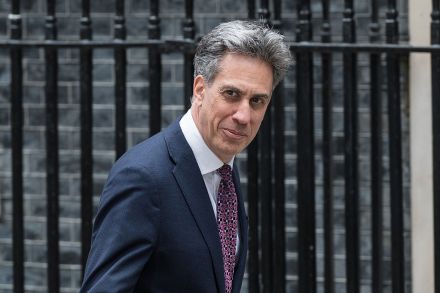
Just one day after Ed Miliband was made Foreign Secretary we heard in the Telegraph that the White House is upset about the appointment, and even warned against it. Donald Trump is apparently unimpressed by Miliband’s role in blocking North Sea oil drilling. Miliband has also railed against Trump in the past, calling him a ‘racist, misogynistic self-confessed groper’ on the BBC’s World at One in 2016, as an example – but in fairness his predecessor David Lammy called Trump ‘beneath contempt’ before he became foreign secretary. Trump can forgive and forget – so long as his interlocutor is willing to forget their own pride. Miliband could bend the knee, but there is also some appetite to confront Trump.

The new Energy Secretary hates North Sea oil

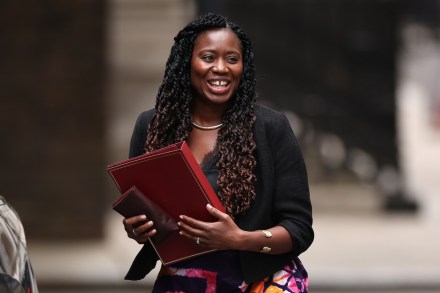
Miatta Fahnbulleh, who has just become the Secretary of State for Energy Security and Net Zero – and has been very involved with helping Burnham’s strategy over the past few months – is so far the most successful MP from the Labour party’s 2024 intake. She has risen from the backbenches to a full senior cabinet position within two short years, a very rare achievement made even more impressive by the fact that Labour won a landslide majority in 2024 after a dismal performance in 2019, meaning there are many new, sharp-elbowed MPs also trying to make their way up. Part of the explanation for her meteoric rise may be her experience in Westminster, both in the Cabinet Office and think tanks.

Yvette Cooper carries a lot of baggage as Health Secretary

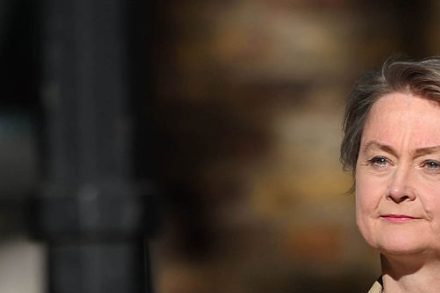
Yvette Cooper, who has been an MP since 1997, is by far the most experienced health secretary we’ve had in the past decade. She has had a range of heavyweight ministerial and shadow ministerial roles, including a stint as parliamentary under-secretary of state for health. Health secretary is also a brief in which Andy Burnham served at the end of the Brown government.  With this embarrassment of experience comes baggage. When Burnham was health secretary, he released a green paper proposing a ‘National Care Service’ (NCS) which could have made social care ‘free’ for all elderly and disabled people. An Act of Parliament was passed to facilitate this in April 2010 but the plans were abandoned by the Coalition.

Can Zia Yusuf really complain about inflammatory language?

Zia Yusuf gave a speech yesterday on the security of MPs, in which he accused several politicians of inciting violence against Ann Widdecombe through their words. He called out David Lammy for saying ‘we must stand up to them [Widdecombe] before it’s too late’. He criticised Wes Streeting for saying ‘if only science had a cure for Ann Widdecombe’, Jess Phillips for saying ‘Ann Widdecombe better go this week’ and Ed Davey for describing Reform as a ‘threat from within’ worse than Iran or Russia. He said we should not be surprised, given such ‘reckless rhetoric’ against Reform, that people could be moved to confront that apparent threat with violence. This is not the first time that Yusuf has complained about rhetoric endangering Reform politicians.

Social media has saved comedy

In 2022, a 16-year-old called Kane Parsons began to post a web series called ‘Backrooms’ on his YouTube channel, drawing inspiration from a famous 4chan meme. That year, the film studio A24 contacted him and began production on a full-length feature film of the same name, which was released in May. The film has grossed $350 million worldwide and Kane, who turned 21 last month, is the youngest director ever to have a film open at number one in the North American box office. Social media, for all its apparent flaws, has created a new meritocracy in the world of entertainment Parsons’s stunning success has started a race in Hollywood to scout for talent in the online world.

Farage isn’t the first MP to force a protest by-election

Reporting on the news that Nigel Farage is planning to resign his seat to force a by-election, Le Monde described the stunt as a ‘highly unusual move’, the Wall Street Journal called it ‘unconventional’ and the Australian Special Broadcasting Service called it ‘unusual’.  Now, few of us would call what happened yesterday ‘conventional’. Nonetheless, it may be of help to some parts of the foreign press if we provide a bit of extra context on Farage’s dramatic by-election resignation. While events like this are infrequent, taking the Chiltern Hundreds to make a point still has well-established precedent in British political history.

Inside Labour’s plot to sideline alternative media

Labour came to power in 2024 with five stated missions: to improve economic growth, the NHS, street safety, clean energy and the distribution of opportunity. If Keir Starmer had been honest about his plans, he would have pledged just one – restricting access to social media. This is the goal the government has pursued obsessively. Starmer turned to it as his premiership collapsed around him, imposing a social media ban for under-16s. As Andy Burnham seizes the reins, he will have to grapple with divisions in his party over defence and welfare – but his MPs remain united in their crusade against so-called online harms.

Labour’s ‘total failure’ on defence – and why Boris shouldn’t come back

30 min listen

For this week’s Edition, Lara Prendergast is joined by the Spectator’s deputy editor Freddy Gray, assistant content editor John Power and former Leader of the House of Commons Penny Mordaunt. This week: Labour’s lame duck period drags on, with Keir Starmer searching for a legacy before he leaves office. This week he has announced more money for Defence, though with several caveats, the biggest of which is unfunded billions left for the (presumably) incoming Burnham administration to fix. Penny Mordaunt, a former Conservative Defence Secretary, explains why Starmer has been a ‘total failure’ on Defence, saying Labour have failed to take Defence seriously and need to explain to the country that tough choices lie ahead.

Labour's 'total failure' on defence – and why Boris shouldn’t come back

Burnham won’t be the first prime minister to have tried levelling up

Every generation of politicians seems to believe that they are the first to discover the North. In Andy Burnham’s speech today he said that Britain was ‘over-centralised’ and that the ‘broken’ Westminster government was not working for the north-west of England. He promised ‘the biggest rebalancing of power our country has ever seen’, with decent infrastructure in all parts of Britain and ever more devolution. Burnham rails against the London-centric approach of our politics and economy. But has such a centralised system actually been in place in our recent history?

DEBATE: is Starmer right to ban social media for under 16s?

18 min listen

Keir Starmer has announced his plans to ban social media for under 16s in Britain. The ban is due to come in early next year and include all main social media apps. Age-recognition and digital ID checks will be used to keep children away from social media. But when it comes to child safety, will it make a difference? And what are the unintended consequences of a ban? Michael Simmons challenges The Spectator's John Power. This episode is brought to you by Artemis Fund Managers, for more information on our fund range please click here https://www.artemisfunds.com/ .

DEBATE: is Starmer right to ban social media for under 16s?

How popular will Starmer’s social media ban actually be?

Yesterday, the think tank the IPPR released YouGov polling showing that a majority of Britons, 83 per cent, believe there should be some form of restriction on social media for young people – either a blanket ban on social media for under-16s (44 per cent) or that social media companies should be forced to remove content and features that are inappropriate for children (39 per cent). Starmer appears to have gone for a mixture of these two options, announcing in a press conference in Downing Street this morning that there will be a ‘full ban’ on social media for under-16s as well as ‘world-leading action’ on gaming services and platforms.

What Kemi Badenoch told Tim Shipman

Kemi Badenoch was interviewed last night by The Spectator's Political Editor, Tim Shipman, in front of a live audience at Church House in Westminster. Much of what the Conservative leader said was a retreading over familiar ground. The Conservative party was a ‘distressed asset’ when she inherited the leadership, she said, but is now getting a second hearing. Badenoch said, of the economy, that the country must cut spending before it cuts taxes, and that it is time that the government gets out of the way of business. The Conservative party was ‘for the people who get up every day’, she insisted, and that what is needed in politics is more common sense.

Sixteen times that Trump nearly ended the Iran war

Today marks a hundred days since America and Israel began launching strikes on Iran on 28 February. The very next day, Donald Trump told the Atlantic that Iran’s leaders ‘want to talk’, saying they should have made a deal sooner and that ‘they played too cute’. Three days after Trump said this, Iran announced that the Strait of Hormuz was closed. Since then, we have been told dozens of times that we are on the brink of a lasting deal between Iran and America, often in the President’s statements on Truth Social. At the end of last month, Axios reported that US and Iranian negotiators had reached an agreement on a 60-day memorandum which would reopen the Strait, which simply needed Trump’s sign off.

Why don’t striking doctors tell the full story?

The British Medical Association announced yesterday that junior doctors will be going on strike again next month, with a four-day walkout beginning at 7 a.m. on 15 June. It will be the sixteenth time they have gone on strike since 2023. The BMA is pressing ahead with this despite being given a very generous offer in March. The government was willing to concede a 4.9 per cent average pay rise this year, meaning that junior doctors would be on average 35.2 per cent better off than four years ago. Some more experienced junior doctors could, with additional earnings such as for working unsocial hours, be paid more than £100,000. The BMA continues to insist that this is not enough and that they will settle for nothing less than full ‘pay restoration’.

If kids are banned from social media, adults will be next

‘Technology is addling young people’s brains, impacting on their education and attainment, impacting on their health and wellbeing,’ Wes Streeting said on the Today programme this morning. It followed his remarks yesterday that ‘social media should be treated like tobacco – it’s extremely addictive, and bad for our health’. He was commenting on the Academy of Medical Royal Colleges’ (AOMRC’s) response to a consultation, launched by Sir Keir Starmer at the beginning of the year, on the impact of social media on teenagers.

Why Labour’s fate will be decided in the Strait of Hormuz

36 min listen

For this week’s Edition, Lara Prendergast is joined by The Spectator's John Power, feminist campaigner Julie Bindel and former adviser to Boris Johnson – and co-host of the In The Room podcast, Cleo Watson. They explore the idea that the Strait of Hormuz, not Makerfield, will determine the fate of the current Labour government. Starmer may be facing a challenge to his authority from mayoral shapeshifter Andy Burnham, but neither the PM or the wannabe MP will be rewarded if grocery and energy prices continue to soar. How much can be done to insulate Britain from future pain? And do they trust Labour to do so? Also this week: is Wes Streeting a better option than Burnham?

Net emigration isn’t soaring

This morning the government was able to celebrate some sorely needed good news. Long-term net migration has fallen sharply to 171,000 per year, down from 331,000 this time last year. Net migration is now less than a fifth of what it was at the peak of the post-Covid immigration wave. If we discount the Covid years it is the lowest that net migration has been since 2012. It’s a remarkable achievement whichever way you cut it, though there is still clear room for improvement. The number of people immigrating for asylum has increased slightly from 87,000 to 88,000.

Burnham’s fate will be decided in the Strait of Hormuz

In the last few days, the government has performed two extraordinary about-turns. On Tuesday, it was revealed that the Treasury is covertly pressuring supermarkets to freeze prices on essential goods. This was odd: when Rishi Sunak floated a similar idea as prime minister, the Labour opposition accused him of acting like Ted Heath. On Wednesday, we woke up to even stranger news: Keir Starmer would be lifting some sanctions on Russian oil to ease our supply problems. This is a prime minister who has spent the past year telling anyone who will listen that Nigel Farage is in league with Vladimir Putin; a prime minister who loves nothing more than being pictured with Volodymyr Zelensky on the steps of No. 10. So how do you explain these two politically painful manoeuvres?

What Streeting won’t tell us about his record as Health Secretary

Wes Streeting’s resignation letter began with a paragraph praising his own record in managing the NHS. He said: “The results are in and I am pleased to report that I have delivered against the ambitious targets you set for me when I became your Secretary of State for Health and Social Care. Today's figures confirm that we surpassed our waiting times target despite strikes, and that waiting lists fell by 110,000 in March - the biggest monthly drop outside of Covid since 2008 - meaning that we are on track to achieve the fastest improvement in NHS waiting times in history. The only question that matters in government is whether we leave our successors a better situation than we inherited. Ambulance response times for heart attacks and strokes are now the fastest in five years.