
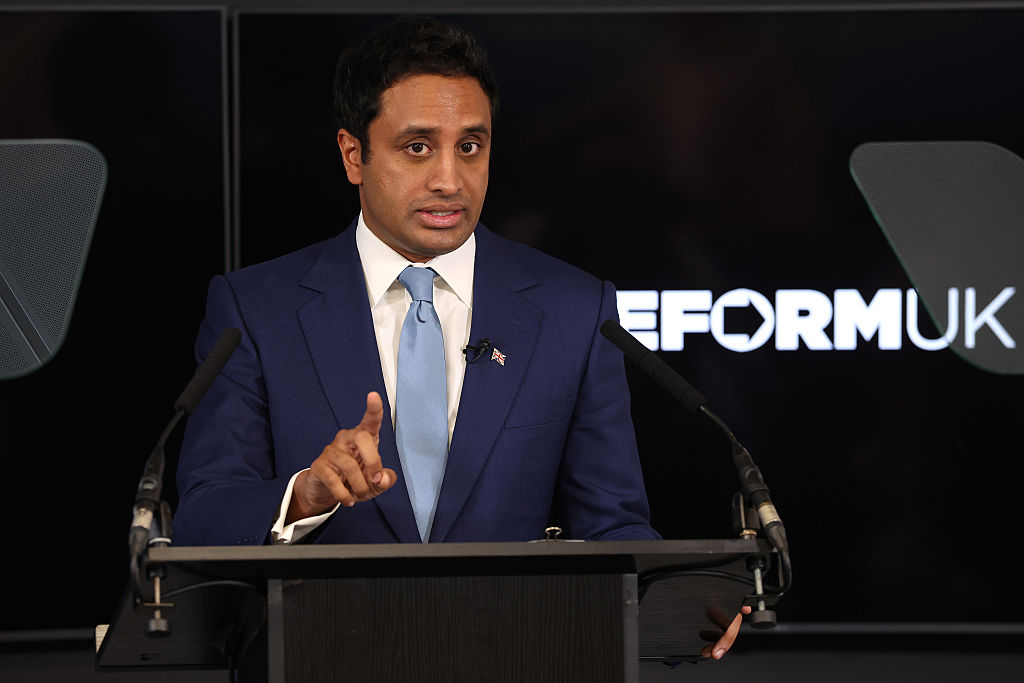
Zia Yusuf gave a speech yesterday on the security of MPs, in which he accused several politicians of inciting violence against Ann Widdecombe through their words. He called out David Lammy for saying ‘we must stand up to them [Widdecombe] before it’s too late’. He criticised Wes Streeting for saying ‘if only science had a cure for Ann Widdecombe’, Jess Phillips for saying ‘Ann Widdecombe better go this week’ and Ed Davey for describing Reform as a ‘threat from within’ worse than Iran or Russia. He said we should not be surprised, given such ‘reckless rhetoric’ against Reform, that people could be moved to confront that apparent threat with violence.
This is not the first time that Yusuf has complained about rhetoric endangering Reform politicians. In September of last year he posted on X that calling your enemies ‘racist’ or ‘the enemy’ would serve only one purpose, ‘inciting violence against Nigel Farage’, saying that the Prime Minister and his team were therefore engaged in ‘stochastic terrorism’.
Of course, a more extensive trawl through Yusuf’s back catalogue on X shows that he himself has not been afraid to use rather robust language. Back in November 2024, Yusuf described the British government as ‘the enemy of the British people’ because of a plan to cut the winter fuel allowance for pensioners while increasing international development aid. Presumably it is not ‘stochastic terrorism’ when he accuses the government of being the enemy.
‘Enemies’ aside, Zia also has a strange fixation with declaring his political opponents, political parties and sometimes just the political class in general to be traitors. He has said that the ‘traitors that have occupied high office in this country’ have done little to prevent the ‘invasion’ of the country. He has promised to prosecute traitors within the government abetting illegal immigration, elsewhere saying that as Home Secretary he would clear out ‘traitors’ in the Home Office.
He has also promised a ‘reckoning’ for the ‘Tory and Labour politicians who created the burning injustice of modern Britain’ who he views as ‘traitors to their country’, saying in another post that nothing changes when people vote Labour or Tory because ‘They’re globalist, open borders Britain-hating traitors’. In another post he grouped ‘Tory and Labour talking heads’ with ‘their assets in the press pretending they’re angry’ when they are really sellouts who ‘are traitors to their country’. He said an electoral ‘mortal blow’ to the Tories was coming and that this would be ‘Nothing less than those traitors deserve’ and called the Tories traitor again and again.
Yusuf has also described specific politicians as traitors multiple times. He has gone after Richard Hermer, calling him a ‘traitor’ to the country in two separate posts, and in another called him a traitor while promising that he would ‘face the consequences of his actions’ when there is a Reform government. He directly accused the immigration minister Mike Tapp of ‘treachery’. Amusingly enough he has also called his now colleague Robert Jenrick a traitor on multiple occasions, attacking him for not breaking the Official Secrets Act over Afghan refugees, saying ‘these people are traitors to their country’, also directly calling him ‘a traitor to your country’.
Being called a ‘traitor’ is clearly inflammatory language. The punishment for treason historically is death, after all. But it would be wrong to try and censure Yusuf simply for using it. Many people believe that the uniparty has betrayed the country by allowing too much immigration or wrecking the economy for ideological reasons. The problem is not his use of the phrase, it is the hypocrisy. You cannot call people traitors whilst also accusing them of trying to incite violence against you by using nasty words. Nobody deserves a monopoly on inflammatory language. No matter how justified they believe their cause to be.





Comments